Thailand is one of the few places in the world where a combat sport is not just a sport, a fitness activity, or a professional entertainment product. Muay Thai is part of the country’s cultural identity. It shapes how Thailand is viewed by fight fans, how foreign athletes travel to train, how local athletes develop from childhood, and how striking arts are understood across the global combat sports world.
A combat sports page for Thailand has to begin there. Boxing, MMA, Brazilian jiu-jitsu, judo, taekwondo, karate, and other martial arts all have a place in the country, but none of them sit at the center of Thailand’s fight culture the way Muay Thai does. The country’s combat sports identity is built around stadium fighting, technical striking, clinch work, conditioning, hierarchy inside the gym, and a deep connection between local competition and international training tourism.
For visitors, Thailand is often a dream destination for martial arts training. Bangkok, Phuket, Chiang Mai, Pattaya, Koh Samui, and other hubs attract beginners, amateur fighters, professional athletes, and fitness travelers. Some come for a single drop-in class. Others stay for weeks or months to live in a fight camp environment. For Thai athletes, the sport is not a vacation experience. It is a competitive pathway, a job, a family tradition, and in many cases a way to move from local circuits into national recognition.
That difference matters. Thailand’s combat sports scene has two overlapping identities: the domestic fight culture that produces stadium fighters and elite Nak Muay, and the international gym culture that brings in people from around the world to learn, compete, and train in the birthplace of Muay Thai.
Muay Thai as Thailand’s Fight Foundation
Muay Thai is the foundation of combat sports in Thailand. Known as the “art of eight limbs,” it uses punches, kicks, knees, elbows, sweeps, and clinch fighting. What separates Thai Muay Thai from many international versions is not only the technique list. It is the rhythm, scoring culture, balance, composure, and the expectation that fighters understand distance, timing, defense, and clinch control at a very high level.
In Thailand, Muay Thai has historically grown through a network of local gyms, provincial stadiums, temple fairs, regional promotions, and major Bangkok arenas. Fighters often begin young, especially in rural areas and fighting families, and build experience through repeated competition. That creates a different development model from countries where combat sports are usually entered through hobby classes, school athletics, or adult fitness programs.
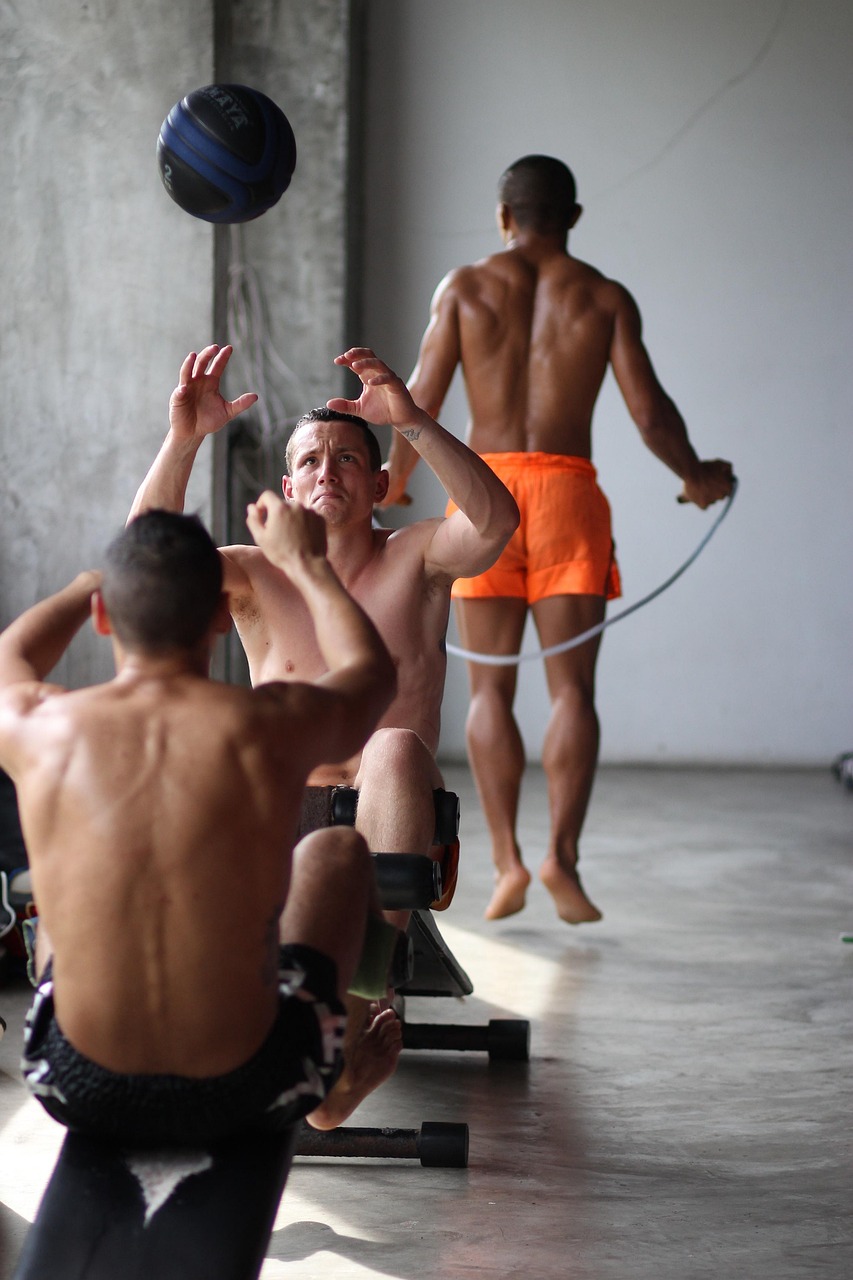
The Thai gym environment is also distinctive. Training often revolves around repetition: running, skipping, shadowboxing, pad rounds, bag work, clinching, sparring, and conditioning. The pad holder plays an important role because pad work in Thailand is not simply exercise. It is technical instruction, rhythm training, defensive drilling, and fight preparation all at once. Many Thai trainers are former fighters who have accumulated hundreds of bouts, which gives the coaching culture a lived-in quality that visitors often notice quickly.
The clinch is one of the clearest differences between authentic Thai training and many exported striking programs. In Thailand, clinching is not a small add-on at the end of class. It is a central skill, especially for fighters. Balance, posture, head position, arm control, knees, sweeps, turns, and endurance inside the clinch can decide fights. Foreign athletes who arrive with strong kickboxing or MMA striking backgrounds often discover that the Thai clinch is its own combat language.
Bangkok and the Stadium Tradition
Bangkok is the symbolic center of elite Muay Thai. The city’s major stadium culture has long represented the highest level of the sport inside Thailand. For serious fans, the names Rajadamnern and Lumpinee carry historical weight. These venues are associated with champions, gambling culture, technical scoring, famous gyms, and the atmosphere of traditional Thai fighting.
The Bangkok scene differs from the tourist-facing gym culture in beach destinations. It is more closely tied to the professional ecosystem of Thai fighters, promoters, trainers, gamblers, and established gyms. The sport’s rhythms are shaped by weight classes, stadium rankings, televised fights, and the long memory of champions who built reputations through repeated high-level competition.
For athletes and fans trying to understand combat sports in Thailand, Bangkok matters because it shows Muay Thai as a professional system rather than just a martial art class. The stadium fighter is not simply someone who trains hard. He or she is part of a competitive economy where matchmaking, style, scoring awareness, durability, and gym reputation all matter.
Bangkok also has an expanding international training scene. Alongside older Thai gyms, the city has modern combat sports facilities that serve foreigners, expatriates, fitness clients, and mixed martial artists. That creates a layered environment. A person can find traditional Muay Thai, boxing, BJJ, strength and conditioning, MMA, and fitness-oriented striking in the same metro area, but the deeper identity of the city remains tied to stadium Muay Thai.
Phuket, Chiang Mai, Pattaya, and the Training Tourism Circuit
Outside Bangkok, Thailand’s combat sports map is strongly shaped by training tourism. Phuket is one of the most important examples. The island has become a global destination for people who want to combine Muay Thai, MMA, Brazilian jiu-jitsu, fitness, recovery, and long-term travel. The training environment there is more international than traditional stadium-centered Bangkok. Gyms often serve a mix of beginners, serious amateurs, professional fighters, influencers, digital nomads, and travelers looking for a physically demanding experience.
Phuket’s fight culture is not only recreational. The island has produced serious training environments and has hosted athletes from around the world. Still, its identity is different from the classic provincial-to-Bangkok Muay Thai pathway. Phuket is a global combat sports marketplace, where Muay Thai sits beside MMA, BJJ, boxing, wrestling classes, strength programs, nutrition services, and recovery facilities.
Chiang Mai offers another version of the Thai training experience. It is often associated with a more relaxed pace, lower cost of living, and a strong appeal to long-stay visitors. Muay Thai gyms in Chiang Mai can be attractive to beginners and intermediate trainees who want serious instruction without the intensity or expense of the busiest tourist centers. The city also has enough international presence to support broader martial arts training, though Muay Thai remains the central draw.
Pattaya and Koh Samui also fit into Thailand’s fight tourism network. Pattaya has a long-standing gym culture connected to both local and foreign trainees, while Koh Samui offers island-based training that appeals to visitors looking for a combination of combat sports, fitness, and travel. Across these destinations, the key pattern is the same: Thailand has turned Muay Thai into both a national fight tradition and a global training industry.
Boxing and Thailand’s International Fight Reputation
Although Muay Thai dominates the country’s combat sports identity, boxing has an important place in Thailand as well. Thai athletes have succeeded internationally in professional boxing, particularly in lighter weight classes. The country’s boxing tradition is closely connected to its broader striking culture. Many Thai boxers come from Muay Thai backgrounds or train in environments where kicking sports and punching sports overlap.
Boxing in Thailand does not have the same cultural footprint as Muay Thai, but it benefits from the country’s comfort with fight sports. Thai fighters are accustomed to early competition, disciplined training, weight management, and the pressure of public performance. Those qualities can translate well into boxing, especially for athletes with strong toughness, balance, and ring experience.
For people searching for boxing in Thailand, Bangkok and major urban centers offer the clearest access. Boxing may be found in dedicated boxing gyms, Muay Thai gyms with boxing coaches, MMA facilities, and fitness-oriented striking programs. The level of instruction can vary widely. Some classes are designed for conditioning and beginners, while others are connected to active fighters and serious competition.
Thailand’s boxing identity is best understood as secondary but significant. The country is not a boxing-first nation in the way Cuba, Mexico, the Philippines, or the United States might be described, but it has produced respected champions and remains a credible force in regional and international boxing. In the Thai combat sports ecosystem, boxing is both a standalone sport and a complementary skill set for Muay Thai and MMA athletes.
MMA in Thailand
Mixed martial arts in Thailand has grown because the country already had one of the world’s most respected striking cultures. For MMA athletes, Thailand offers something extremely valuable: access to high-level Muay Thai training in the sport’s home environment. Fighters from around the world travel to Thailand to sharpen kicks, knees, elbows, clinch entries, conditioning, and striking confidence.
However, MMA in Thailand is not simply Muay Thai with grappling added. Serious MMA requires wrestling, cage work, Brazilian jiu-jitsu, submission defense, ground striking, and the ability to blend ranges. Thailand’s traditional combat sports base did not historically emphasize wrestling or ground fighting in the way that the United States, Russia, Brazil, Japan, or parts of Eastern Europe have done. That means the modern MMA scene in Thailand has developed largely through international gyms, imported coaching, cross-training, and the arrival of foreign athletes.
Phuket has become one of the most visible MMA training hubs in the country because its large international gym ecosystem can support multi-discipline training. Bangkok also has facilities where MMA, BJJ, boxing, and strength training sit alongside Muay Thai. In these environments, athletes can combine Thai striking with grappling systems from Brazil, wrestling concepts from the United States and Europe, and modern MMA coaching methods.
For Thai fighters, the transition from Muay Thai to MMA presents both opportunities and challenges. Elite striking experience is a major advantage, but MMA changes the tactical environment. A fighter must account for takedowns, wall wrestling, submissions, and ground control. Kicks and knees can be powerful weapons, but they must be used with awareness of level changes and clinch transitions. Some athletes adapt well; others remain more naturally suited to ring-based striking.
Thailand’s MMA scene is still best described as international and developing rather than deeply native in the same way Muay Thai is. The country is important to global MMA because fighters train there, not because MMA has replaced or equaled Muay Thai inside Thai sporting culture.
Brazilian Jiu-Jitsu, Grappling, and Cross-Training
Brazilian jiu-jitsu and submission grappling have grown in Thailand largely through expatriate communities, MMA gyms, international travelers, and local athletes interested in broader martial arts training. BJJ is most accessible in major cities and international training hubs. Bangkok, Phuket, Chiang Mai, and tourist-heavy areas are more likely to have consistent grappling classes than smaller towns or rural regions.
The growth of BJJ in Thailand reflects a wider trend in global combat sports. As MMA became more popular, martial artists began to recognize that striking alone was not enough for complete fighting. Ground defense, submissions, positional control, and takedown awareness became more valuable. In Thailand, that created demand for grappling instruction alongside Muay Thai.
For foreign trainees, Thailand can be an attractive place to combine daily Muay Thai with BJJ or no-gi grappling. This is especially common in gyms that cater to MMA athletes. A typical training schedule might include morning Muay Thai, afternoon grappling, strength work, and sparring sessions throughout the week. For long-stay athletes, that makes Thailand one of the more practical places in Asia to build a complete combat sports camp.
Still, grappling does not occupy the same cultural position as Muay Thai. It is a growing layer within the modern gym scene, not the country’s historical foundation. In many Thai gyms, especially traditional ones, grappling may be absent altogether. In international gyms, it may be a major part of the schedule. That contrast is important for anyone choosing where to train. A fighter seeking authentic stadium-style Muay Thai may choose a different gym than someone preparing for amateur MMA.
Judo, Taekwondo, Karate, and Olympic Martial Arts
Thailand’s combat sports landscape also includes Olympic and traditional martial arts such as taekwondo, judo, karate, and related disciplines. These sports usually operate through clubs, schools, universities, federations, and youth programs rather than the professional stadium environment associated with Muay Thai.
Taekwondo has been especially relevant in Thailand’s Olympic sports profile. It is a structured martial art with clear belt systems, youth participation, national competition pathways, and international tournament goals. For parents looking for martial arts classes for children, taekwondo can be appealing because it offers discipline, flexibility, kicking skills, and a recognizable progression system.
Judo and karate have smaller but meaningful roles. They are more likely to appeal to students, traditional martial arts practitioners, and athletes pursuing federation competition. Judo offers throws, grips, balance, and groundwork, while karate emphasizes striking, forms, movement, and tournament structure depending on the style and organization.
These martial arts do not challenge Muay Thai’s place in Thai culture, but they expand the country’s combat sports ecosystem. They are especially relevant for families, schools, youth athletes, and people who want a more formal martial arts environment than a fight gym. In Thailand, as in many countries, combat sports participation is not limited to people trying to become fighters. Many students train for confidence, discipline, fitness, self-defense, competition, or personal development.
Training in Thailand as a Beginner
Thailand can be both welcoming and demanding for beginners. The country has countless gyms that accept first-time students, especially in tourist areas. Many foreign visitors take their first Muay Thai class in Thailand, even if they have no combat sports background. These classes often include basic stance, punches, kicks, knees, elbows, pad work, bag work, and conditioning.
The beginner experience depends heavily on the gym. Some gyms are designed for visitors and offer structured group classes, English-speaking staff, beginner sessions, and rental equipment. Others are fighter-oriented camps where the training is less formal, more repetitive, and built around the needs of active competitors. Both can be valuable, but they serve different people.
A beginner looking for martial arts classes in Thailand should think carefully about goals. Someone who wants fitness, confidence, and a memorable travel experience may prefer a gym with beginner-friendly instruction and a supportive atmosphere. Someone who wants to fight may need a more serious camp with sparring, clinching, experienced trainers, and access to amateur or local competition. A family looking for children’s martial arts may be better served by taekwondo, karate, judo, or structured youth Muay Thai classes.
Training intensity is another part of the Thai experience. Even recreational Muay Thai classes can be physically demanding. Heat, humidity, high-volume kicking, pad rounds, and conditioning can challenge visitors who are used to standard fitness classes. For serious athletes, that intensity is part of the appeal. Thailand remains one of the best places in the world to experience combat sports as a daily lifestyle rather than a few evening classes per week.
Amateur Fighting and Fighter Development
Fighter development in Thailand is different from the model found in many Western countries. In the United States or Europe, an athlete might begin with youth wrestling, boxing, karate, BJJ, or MMA classes, then progress into amateur competition as a teenager or adult. In Thailand, many Muay Thai fighters have historically started young and built experience through frequent bouts. That creates fighters with deep ring instincts, even when they are still young by international standards.
The Thai system places enormous value on practical competition. Timing, composure, scoring awareness, clinch control, and the ability to manage a fight over multiple rounds are developed through repeated experience. A fighter who has grown up in Thai stadium culture may have a level of comfort in the ring that cannot be replicated through drilling alone.
For foreign athletes, fighting in Thailand can be an important milestone, but it should be approached with respect for the local system. Some visitors take fights after short training camps, while others come with significant amateur or professional experience. Matchmaking quality, rule sets, opponent level, and gym guidance matter. Thailand offers opportunities, but the best experiences usually come through reputable gyms that understand the athlete’s level and can navigate the local fight scene responsibly.
In MMA, BJJ, boxing, and other martial arts, development pathways are more varied. International gyms may host smokers, interclub events, grappling tournaments, amateur MMA bouts, or connections to regional promotions. These opportunities are more concentrated in major training hubs and may be less visible in traditional Muay Thai communities.
Thailand’s Place in Global Combat Sports
Thailand’s global combat sports influence is enormous because Muay Thai has become one of the essential striking systems for fighters worldwide. MMA athletes, kickboxers, self-defense practitioners, police and military trainers, fitness students, and recreational martial artists all borrow from Thai training methods. Even when a gym is thousands of miles from Bangkok, it may use Thai pads, low kicks, round kicks, knees, elbows, and clinch concepts shaped by Thailand’s fight culture.
That influence has created a two-way exchange. Thailand exports technique, trainers, fight culture, and credibility. In return, it receives athletes, coaches, tourists, media attention, and new martial arts systems. Modern gyms in Thailand may now include Brazilian jiu-jitsu, wrestling, boxing, MMA, strength training, yoga, nutrition, and sports recovery alongside traditional Muay Thai.
This global role makes Thailand different from most combat sports locations. Many countries have good gyms. Some have strong fighters. A smaller number have deep traditions in one discipline. Thailand has all three: a national combat sport, a professional fight system, and a global training-tourism economy. That combination gives the country an outsized place in the martial arts world.
For fans, Thailand is one of the best places to understand striking at its source. For beginners, it offers accessible entry points into Muay Thai and martial arts training. For fighters, it remains one of the most important destinations for sharpening technique, conditioning, and ring craft.
The Future of Combat Sports in Thailand
The future of combat sports in Thailand will likely continue to revolve around Muay Thai while expanding through MMA, BJJ, boxing, and international fitness culture. Muay Thai is not going away as the country’s central fight identity. Its roots are too deep, its stadium culture too important, and its global reputation too strong.
What is changing is the environment around it. More foreign athletes are cross-training. More gyms are offering multiple disciplines. More Thai fighters are exposed to MMA and international promotions. More visitors are treating Thailand not just as a place to watch fights, but as a place to train seriously for weeks or months at a time.
The strongest version of Thailand’s combat sports future is not one where MMA replaces Muay Thai or where tourist gyms define the whole country. It is one where the traditional fight system remains respected while modern combat sports continue to grow around it. Bangkok can remain the center of stadium prestige. Phuket can remain a global training hub. Chiang Mai, Pattaya, Koh Samui, and other areas can serve different types of athletes and visitors. Olympic martial arts, boxing, BJJ, and youth programs can continue to broaden participation.
Thailand’s combat sports identity is unusually clear. It is a Muay Thai country first. Everything else in the scene exists in relation to that fact. That does not make the broader landscape narrow. It makes it coherent. From local stadium fighters to foreign MMA athletes, from children in martial arts classes to professionals preparing for international competition, Thailand remains one of the world’s defining combat sports destinations.