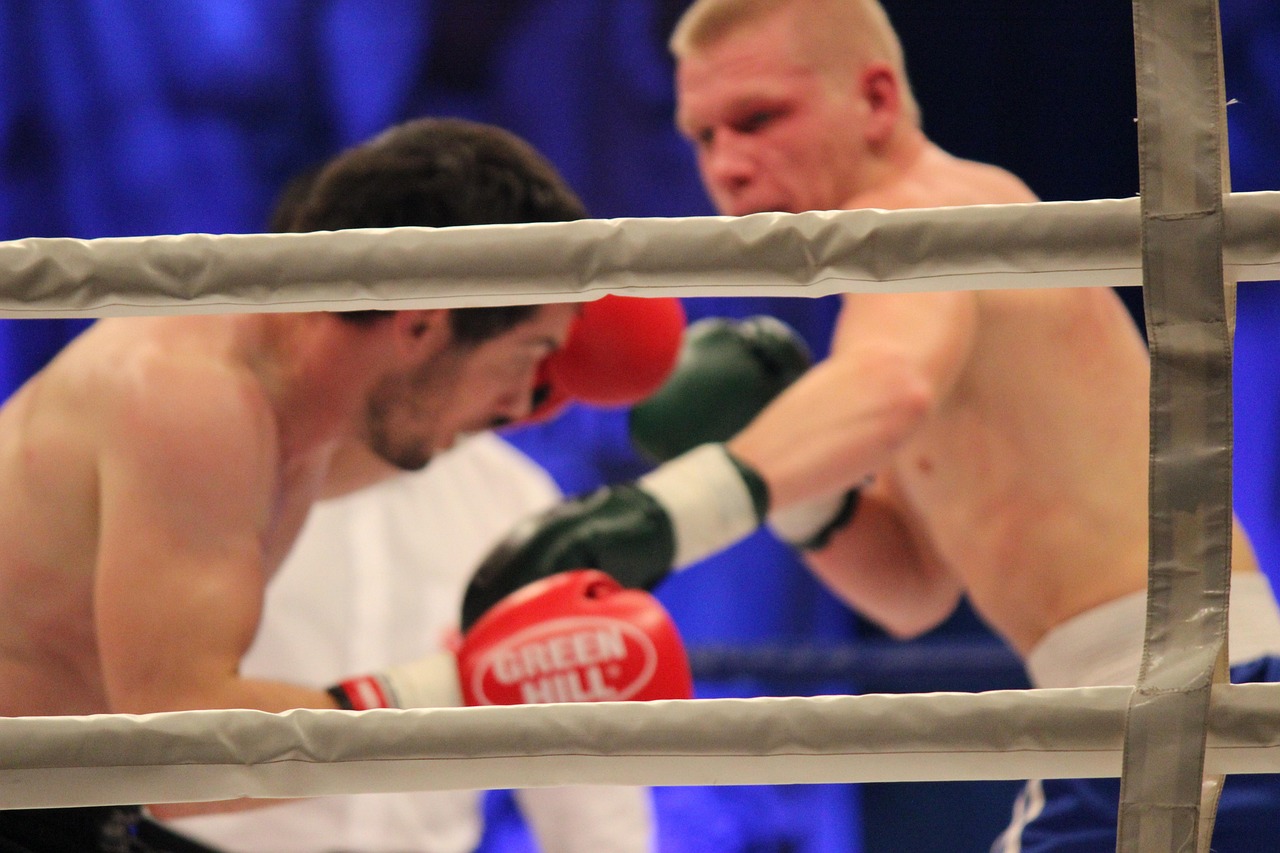
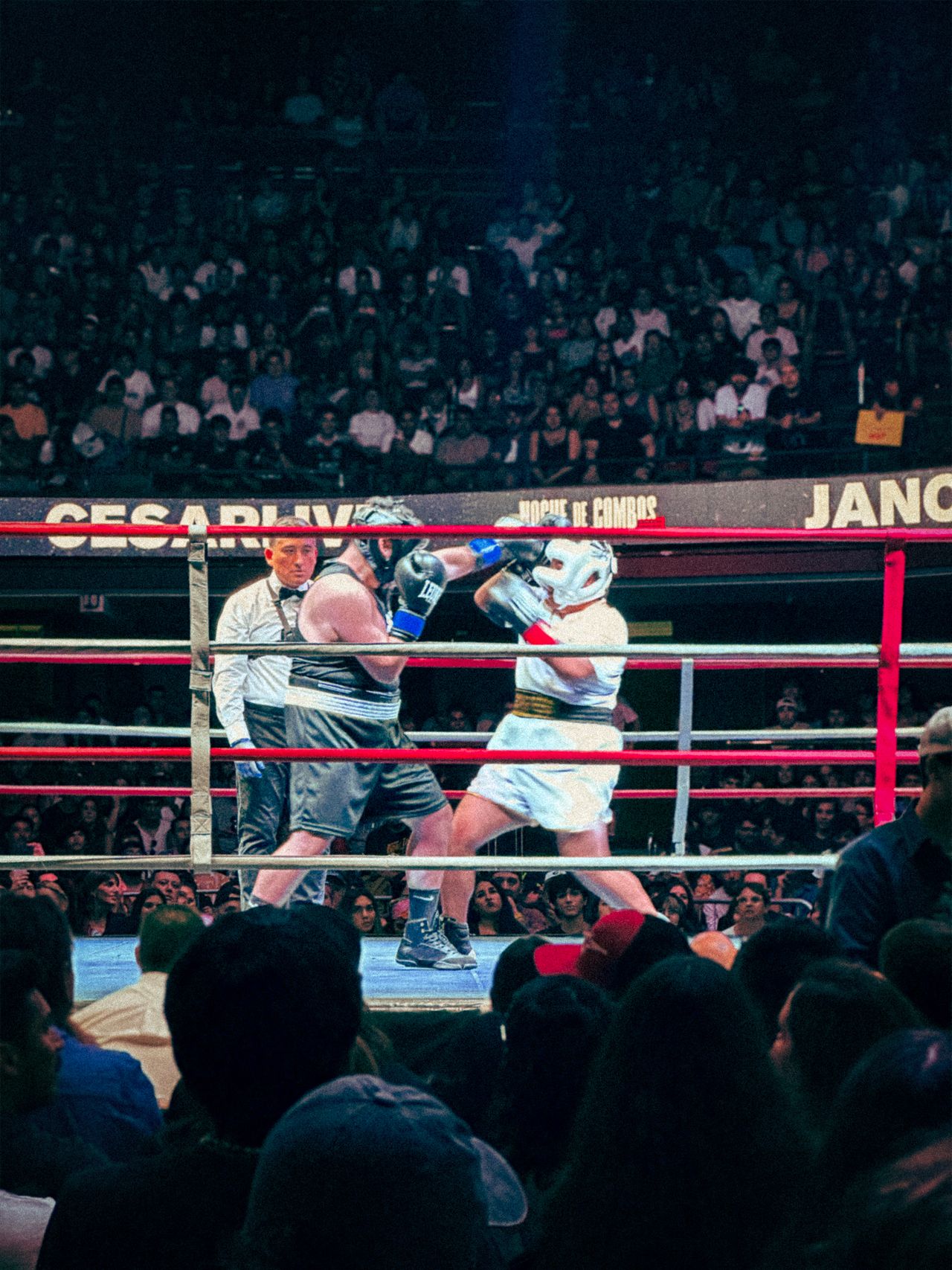
Cuba’s combat sports identity begins with boxing. Few countries in the world are as closely associated with amateur boxing as Cuba, and almost no country has built such a distinctive fight-sports reputation from a national system rather than a commercial professional circuit. Cuban boxing is not simply popular. It is part of the island’s international sporting image, tied to Olympic success, technical coaching, state-backed development, neighborhood gyms, and a long tradition of fighters who learned to win with timing, footwork, rhythm, defense, and discipline.
That boxing-first identity shapes the rest of the combat sports scene in Cuba. Mixed martial arts, Brazilian jiu-jitsu, kickboxing, karate, taekwondo, judo, and wrestling all exist within a country where the public imagination has long been trained to recognize the boxer as the central combat athlete. When people think of Cuba and fighting sports, they usually think first of Olympic boxing champions, national team training, and the polished amateur style that has made Cuban fighters so respected internationally.
Cuba’s combat sports culture is not limited to the ring, though. The country has also produced one of the greatest Greco-Roman wrestlers in Olympic history in Mijaín López, whose five consecutive Olympic gold medals in the same individual event made him a defining figure not only for Cuban sport but for Olympic wrestling as a whole. Judo has also been important, with Cuba producing Olympic medalists and a serious international reputation, including Héctor Rodríguez’s gold medal in 1976 and later stars such as Idalys Ortiz.
The result is a combat sports landscape with two different layers. On the surface, Cuba is a boxing country. Underneath that, it is a broader Olympic combat sports country, with wrestling, judo, taekwondo, and traditional martial arts supported by organized coaching systems, school-based development, and national competition structures. MMA and Brazilian jiu-jitsu have a smaller role than they do in the United States, Brazil, or parts of Europe, but Cuban athletes have many of the raw ingredients that translate well into modern mixed martial arts: boxing skill, wrestling, judo, conditioning, and a competitive sports culture built around technical training.
A Boxing Culture Built on Technique and National Pride
Boxing in Cuba has a different feel from boxing in many countries because it developed around amateur excellence rather than the professional prizefighting market. For decades, Cuban fighters were directed toward international amateur competition, especially the Olympics, Pan American Games, world championships, and national team events. That shaped the Cuban boxing style. Fighters were trained to score, move, defend, counter, and control rounds with clean work rather than to build careers through long professional records.
The classic Cuban boxer is not just aggressive or powerful. The reputation is built around balance, intelligence, distance control, and economy. Cuban fighters are often taught to stay relaxed under pressure, pick shots carefully, and combine athleticism with tactical patience. This is one reason Cuban boxing has traveled so well internationally. Even when Cuban fighters leave the island and enter professional boxing systems elsewhere, they often carry a technical foundation that is immediately recognizable.
Havana is the symbolic heart of the boxing scene, but Cuba’s boxing identity is national rather than limited to one city. Provinces and local sports schools have historically played an important role in identifying athletes early and moving them into more advanced training environments. That gives Cuban boxing a pipeline quality. A talented young boxer is not simply a customer at a gym. In the traditional Cuban model, the boxer can become part of a structured athletic system, moving from local training to provincial competition and, at the highest levels, national team consideration.
That system has produced some of the most admired amateur fighters in history. Teófilo Stevenson and Félix Savón remain central names in any discussion of Olympic boxing. Later Cuban champions carried that reputation forward in different weight classes and different eras. The island’s success has been deep enough that Cuban boxing is often discussed as a school of fighting, not only as a list of individual champions.
Professional boxing adds another layer to the modern picture. Cuba banned professional boxing in the early 1960s, and Cuban fighters were long associated with amateur competition unless they left the country. That changed in 2022, when Cuban authorities allowed selected boxers to participate professionally again under controlled arrangements. The shift did not erase the amateur tradition, but it changed the conversation. Cuba is no longer only a producer of elite amateur boxers. It is also cautiously re-entering the professional boxing world.
For people searching for boxing in Cuba, this history matters because it explains why the sport has such prestige. Boxing is not treated as a casual fitness trend or a fringe activity. It is one of the country’s signature sports. Even a beginner looking for boxing training in Cuba is stepping into a culture where the sport has a serious technical language and a long competitive memory.
Havana, Provincial Gyms, and the Geography of Fight Training
Combat sports training in Cuba is most visible in Havana, but the country’s athletic structure has never been only a capital-city story. Havana naturally concentrates major facilities, coaches, national institutions, and international attention. It is where visitors are most likely to associate Cuban boxing with historic gyms, national team culture, and recognizable boxing imagery. But the Cuban fight sports pipeline has also depended on provincial development, local clubs, sports schools, and competitive selection outside the capital.
For boxing, the most serious athletes often emerge through organized pathways rather than purely private gym networks. This distinguishes Cuba from countries where combat sports are driven mostly by commercial academies. In many places, a person searches for a boxing gym, pays membership dues, chooses between beginner classes and sparring, and then decides whether to compete. Cuba’s traditional system has been more institutional. Talent identification, coaching, and competition have been linked to school and state sport structures, especially for athletes with national potential.
That does not mean recreational combat sports are absent. Boxing, karate, taekwondo, judo, and other martial arts can be practiced at community or club level, particularly in urban areas. But the country’s strongest reputation comes from the serious end of the system: athletes who are developed for competition and trained in a disciplined environment. The difference is important for readers comparing Cuba with tourist-heavy fight destinations. Cuba is not Thailand, where Muay Thai camps are a major part of the international training economy. It is not Las Vegas, where elite professional gyms coexist with global fight promotions. Cuba’s identity is more institutional, national, and technical.
Havana remains the best-known center for visitors, fans, and international observers. It is also the place most closely associated with the country’s boxing mythology. But cities such as Santiago de Cuba, Camagüey, Holguín, Santa Clara, Matanzas, and other provincial centers matter because Cuban sport has historically drawn talent from across the island. In combat sports, geography often works through local discovery. A young athlete may start in a local setting, prove himself or herself in competition, and move toward higher-level coaching.
For martial arts access, the experience can vary sharply by discipline. Boxing and Olympic combat sports tend to have clearer institutional roots. Brazilian jiu-jitsu and MMA are more niche and less developed as mainstream training markets. Traditional martial arts such as karate and taekwondo may be more accessible in community settings, especially for youth and recreational practitioners. Judo and wrestling occupy a more competitive space, with stronger ties to national sport structures and international competition.
Wrestling and Judo Beneath the Boxing Spotlight
Boxing receives most of the attention, but Cuba’s broader combat sports profile cannot be understood without wrestling and judo. These sports have given Cuba a second combat identity: the island as a producer of elite Olympic fighters beyond the boxing ring.
Mijaín López is the defining figure in Cuban wrestling. His career turned Greco-Roman wrestling into a major part of Cuba’s modern combat sports story. Winning five straight Olympic gold medals in the same event is an achievement that goes beyond national pride. It places Cuban wrestling in the center of any serious conversation about Olympic combat sports history. For a country already famous for boxing, López gave Cuba another combat athlete whose name carries global weight.
Greco-Roman wrestling also fits Cuba’s broader training culture. Like boxing, it rewards discipline, repetition, technical coaching, and competitive control. It is not a sport built around spectacle in the same way professional MMA or professional boxing can be. It is a sport built around position, leverage, balance, pressure, and mat intelligence. Cuban success in wrestling shows that the country’s combat sports system is not just good at producing punchers. It can also produce athletes who understand body control and technical dominance in a completely different combat format.
Judo has a similar importance. Cuba has a respected judo history, including Olympic success from Héctor Rodríguez and major women’s judo achievements from athletes such as Idalys Ortiz. Judo’s place in Cuba matters because it provides a grappling and throwing tradition that complements boxing and wrestling. It also reinforces the country’s strength in Olympic combat sports, especially in disciplines that require structured coaching and long-term development.
For beginners, judo and wrestling offer a different entry point into combat sports than boxing. Boxing teaches stance, footwork, defense, punching mechanics, and ring control. Wrestling and judo teach balance, grips, takedowns, throws, mat awareness, and physical pressure. In a modern combat sports context, those skills are valuable not only in their own right but also as foundations for MMA and submission grappling.
Cuba’s grappling culture does not have the same international brand as Brazilian jiu-jitsu in Brazil or wrestling in Dagestan, but it is stronger than many casual observers realize. The country’s Olympic results prove that Cuba has deep coaching knowledge in combat sports where physical control matters. That gives the Cuban scene a broader base than boxing alone.
MMA in Cuba
MMA in Cuba is not the country’s dominant combat sport. It does not have the same national profile as boxing, wrestling, or judo, and it has not developed into the kind of large commercial gym market seen in the United States, Brazil, Mexico, Russia, or Western Europe. But Cuba is an interesting MMA country for a different reason: its athletes often come from disciplines that transfer extremely well into mixed martial arts.
A Cuban fighter with a boxing background already starts with a valuable skill set. The ability to manage distance, stay composed under strikes, and throw efficient combinations is central to MMA. A Cuban wrestler brings another essential layer: takedown defense, clinch control, top pressure, and body awareness. A Cuban judoka may add throws, trips, balance disruption, and grip fighting. When those backgrounds are combined with submission grappling, cage-specific training, and modern MMA conditioning, the athletic foundation can be strong.
The challenge is infrastructure. MMA requires a different training environment from single-discipline sports. A serious MMA gym needs striking coaches, wrestling or takedown coaches, jiu-jitsu or submission grappling instruction, sparring partners, strength and conditioning, and coaches who understand how to blend disciplines under unified rules. Cuba has many pieces of that puzzle, but the MMA ecosystem is less commercially visible and less internationally connected than in established MMA markets.
For this reason, MMA in Cuba should be understood as an emerging or secondary layer rather than the lead story. Cuban combat athletes may have excellent base skills, but the domestic MMA scene does not define the national fight identity. Instead, Cuba’s MMA potential comes from its boxing and Olympic combat sports foundation.
Fans looking at Cuban MMA should focus on the crossover question. What happens when a country with elite amateur boxing, respected wrestling, and serious judo development connects more directly with modern MMA? The answer depends on coaching access, competition opportunities, travel, promotion, and the growth of gyms that can integrate striking and grappling. The raw material is there. The question is how fully the system can support MMA-specific development.
For recreational athletes, MMA training in Cuba is likely to be more limited and location-dependent than boxing, judo, taekwondo, karate, or other more established combat sports. In Havana and larger cities, athletes may find more cross-training opportunities. Outside major urban areas, single-discipline martial arts are more likely to be the starting point.
Karate, Taekwondo, and Traditional Martial Arts
Traditional martial arts occupy a quieter but important place in Cuba’s combat sports landscape. Karate and taekwondo do not carry the same international Cuban identity as boxing, but they matter for youth participation, discipline-based training, self-defense interest, and Olympic-style martial arts development.
Taekwondo fits especially well within a country that values organized sport and international competition. Like boxing, wrestling, and judo, taekwondo has an Olympic pathway. That gives it a familiar structure: youth training, technical progression, competition, coaching, and national representation for the best athletes. It also appeals to families because it offers a clear class format, belt progression, discipline, flexibility, kicking technique, and a less intimidating entry point than boxing or wrestling for some beginners.
Karate plays a different role. It is often connected to traditional martial arts culture, striking basics, forms, self-control, and community instruction. In a country where boxing dominates the striking conversation, karate offers another way into stand-up combat training. It may not produce the same national headlines, but it gives children, teenagers, and adults a structured martial arts environment.
These disciplines also help broaden the meaning of combat sports in Cuba. Not everyone who searches for martial arts in Cuba is looking to become a boxer, judoka, wrestler, or MMA fighter. Some are looking for fitness, confidence, self-defense, discipline, or an activity for children. Traditional martial arts often serve that audience better than high-performance boxing gyms or elite competition programs.
That distinction matters on a landing page because combat sports audiences are not all the same. A parent searching for martial arts classes has different needs from an amateur boxer. A tourist interested in Cuban boxing culture has different expectations from a wrestler looking for serious training partners. A beginner adult may want structure and safety before competition. Cuba’s martial arts scene includes all of those layers, but boxing remains the reference point that gives the broader scene its intensity.
Women’s Combat Sports in Cuba
Women’s combat sports in Cuba are part of the country’s changing fight landscape. Judo has already produced some of the country’s most important female combat athletes, with Idalys Ortiz standing as one of the major figures in Cuban Olympic sport. Her career showed that women’s grappling and Olympic combat sports could carry national significance at the highest level.
Boxing has taken longer to open fully for women. Cuba historically built its boxing image around male amateur champions, while women’s boxing faced institutional limits. That began to change in the 2020s, when Cuba allowed women to compete in boxing tournaments after decades of exclusion. Reuters reported in December 2022 that Cuba had given women the green light to participate in boxing tournaments for the first time since the early revolutionary period.
That change matters because boxing is the country’s signature combat sport. When women gain access to the national boxing pathway, the entire meaning of Cuban boxing expands. It creates space for new athletes, new coaching demands, and a more complete version of the country’s fight culture. It also brings Cuba closer to the modern international boxing environment, where women’s boxing is increasingly visible at the Olympic and professional levels.
For girls and women interested in combat sports in Cuba, judo, taekwondo, karate, and other martial arts may have offered more accessible routes in certain periods, while boxing is now becoming a more open part of the landscape. The long-term impact will depend on coaching investment, competition frequency, public support, and whether women’s boxing receives the same seriousness that made the men’s program so successful.
Training in Cuba for Beginners, Athletes, and Visitors
The best way to understand combat sports training in Cuba is to separate three audiences: beginners, serious athletes, and visitors.
Beginners are most likely to look for boxing, karate, taekwondo, judo, or general martial arts classes. For this audience, the important questions are practical: Is there a class nearby? Is the coach experienced? Is the environment suitable for children or adults? Is the training recreational, competitive, or both? In Cuba, beginners may find that community-based clubs and organized sports programs are more relevant than commercial gym chains.
Serious athletes are looking for something different. They need coaching depth, competition access, sparring partners, and a pathway to improve. In boxing, Cuba’s reputation is built around precisely that kind of seriousness. The country’s best boxing environments are not casual fitness spaces. They are technical, competitive, and shaped by a culture that expects discipline. In wrestling and judo, the same principle applies. Serious development depends on structured coaching and regular competition.
Visitors have a third set of expectations. Some travelers are interested in Cuban boxing as a cultural experience. They want to see where the island’s boxing reputation comes from, learn about the training style, or take part in boxing-oriented fitness sessions. Cuba can be appealing for this kind of visitor, but it should not be confused with a fully commercialized fight-tourism destination. The country’s combat sports culture is authentic and historic, but access may be less standardized than in places where fight tourism is a major business.
For athletes from abroad, Cuba’s appeal is the technical culture. A boxer wants to understand Cuban footwork, rhythm, and amateur scoring intelligence. A coach wants to study how such a small country developed so many elite fighters. A fan wants to connect the names of Olympic champions to the gyms and systems that produced them. Those interests make Cuba different from combat sports destinations that sell convenience first. Cuba sells history, technique, and credibility.
Competition Pathways and Fighter Development
Competition in Cuban combat sports has traditionally been tied to organized development. Boxing, wrestling, judo, and taekwondo are not only recreational activities. They are sports with selection systems, tournaments, coaching hierarchies, and national ambitions. The best athletes are not simply trying to win a local event. They may be trying to enter a pathway that leads to provincial teams, national competition, international tournaments, and Olympic representation.
That pathway is clearest in boxing. Cuban fighters have long been developed for amateur international success, and that goal shaped the training culture. Amateur boxing rewards clean scoring, composure, movement, and tactical clarity. Cuban boxing became famous because its athletes repeatedly succeeded under those rules. The country’s professional boxing re-entry may change some incentives over time, but the amateur foundation remains central.
Wrestling and judo follow similar principles. Athletes must develop through repetition, coaching, tournaments, and high-level technical correction. A wrestler like Mijaín López does not emerge from a loose recreational environment. He represents the far end of a serious sporting system. The same is true of Olympic-level judokas. Their success reflects talent, but also the institutional ability to identify and train athletes over many years.
For MMA, the development pathway is less established. A Cuban MMA athlete may need to combine skills from different places: boxing from one environment, wrestling or judo from another, and submission grappling from a smaller or more specialized group. That kind of cross-training is normal in MMA worldwide, but the strength of the MMA pathway depends on whether coaches can integrate those skills into one competitive rule set.
For youth athletes, Cuba’s strongest combat sports opportunities are still likely to come through established Olympic disciplines. Boxing, judo, wrestling, taekwondo, and karate offer clearer structures than MMA or Brazilian jiu-jitsu. That may change over time, but Cuba’s current identity remains rooted in sports that have long-standing competitive systems.
Why Cuba’s Fight Sports Identity Is Different
Cuba is not a generic combat sports country. It is a boxing-first nation with a broader Olympic combat sports backbone. That combination gives it a distinct place in the global fight landscape.
The boxing tradition is the front door. It is what most fans recognize first, and it is the discipline most closely tied to Cuba’s international image. Cuban boxing carries the weight of Olympic champions, amateur mastery, national pride, and a technical style that coaches around the world respect. It is not just that Cuba has produced great boxers. It is that Cuba has produced a recognizable way of boxing.
The Olympic combat sports layer gives the country more depth. Wrestling, led historically by Mijaín López, shows Cuba’s ability to produce world-class grappling talent. Judo adds another serious combat tradition, including major achievements from both men and women. Taekwondo, karate, and other martial arts expand the scene into youth training, recreational participation, and traditional discipline.
MMA remains the question mark. Cuba has the ingredients for strong MMA athletes, but the domestic MMA scene does not yet define the country. If MMA continues to grow, Cuban fighters with boxing, wrestling, and judo backgrounds could become increasingly interesting. But the honest reading of Cuba’s combat sports identity still starts with the established disciplines.
For beginners, Cuba offers martial arts pathways shaped by discipline and tradition. For serious athletes, it offers a model of technical development, especially in boxing and Olympic combat sports. For fans, it offers one of the richest national fight cultures in the world: a small island with an outsized record of producing fighters who understand how to win under pressure.
Cuba’s combat sports scene is not broad because every discipline is equally visible. It is broad because boxing sits at the center, and around it are wrestling, judo, taekwondo, karate, and emerging MMA possibilities. That is the real Cuban fight identity: technical, competitive, Olympic-minded, and built on a boxing culture that still defines the country’s place in combat sports.