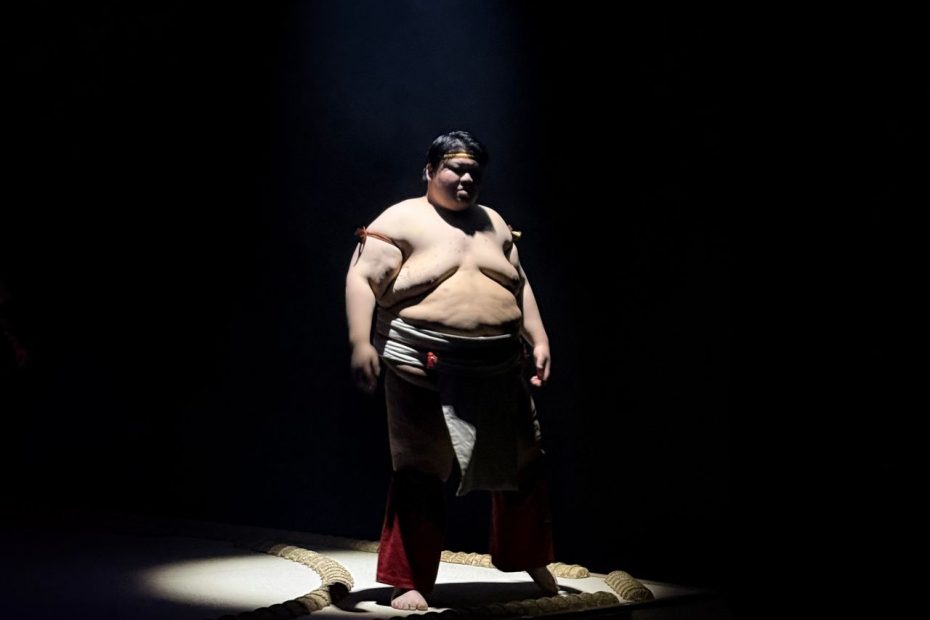
Yokozuna mythology matters because sumo’s highest rank is not simply awarded to the strongest wrestler of the moment. It turns a champion into a symbol of the sport itself. A yokozuna must win, but the rank also carries ceremony, restraint, dignity, and public expectation. That is what makes the title different from a normal championship belt. In sumo, the yokozuna stands at the meeting point of competition and ritual. The wrestler is expected to dominate on the dohyo, but also to represent sumo’s older ideals every time he enters the ring. That combination is why yokozuna mythology remains one of combat sports’ most distinctive traditions.
Yokozuna Mythology Begins With the Rope
The word yokozuna is tied to the great rope worn by the grand champion during ceremonial appearances. That rope is not just decoration. It visually separates the yokozuna from every other wrestler and connects the rank to sumo’s ritual world. When a yokozuna performs the dohyo-iri, the ring-entering ceremony, the moment is slower and more formal than a match. It presents the wrestler as something more than an athlete preparing to compete.
That is central to the mythology. A yokozuna is not only measured by wins and losses. He is expected to carry himself as a living representative of sumo. The rank is permanent, unlike lower rankings that can be lost through poor results. That permanence gives the title its force, but it also creates pressure. A yokozuna who can no longer perform at the necessary level does not get demoted. He is expected to retire.
That expectation changes the meaning of greatness. Reaching yokozuna is not just climbing to the top. It is entering a role that has almost no ordinary exit.
The Grand Champion Must Win With Dignity
The mythology of the yokozuna depends on two ideas that do not always sit comfortably together: dominance and dignity. Sumo is still a combat sport. The match is direct, physical, and often decided in seconds. A yokozuna is expected to win with authority, but the public standard reaches beyond the result.
That is why the rank carries a moral and ceremonial weight that is unusual in modern sports. A yokozuna’s posture, rituals, training habits, public behavior, and ability to absorb pressure all become part of the story. The title asks a wrestler to be both competitor and custodian. He must defeat opponents, but he must also show that he understands what the rank represents.
This is where yokozuna mythology becomes powerful. It turns athletic dominance into a public trust. The great yokozuna are remembered not only for tournament victories, but for the aura they brought into the arena. Their presence changes the atmosphere. A match involving a yokozuna is not just another bout on the schedule. It is a test of whether the sport’s highest figure can still carry the role.
Foreign Yokozuna Changed the Meaning of the Rank
For much of sumo history, the image of the yokozuna was deeply tied to Japanese tradition. That made the rise of foreign-born grand champions especially important. Akebono, born in Hawaii, became the first foreign-born yokozuna in 1993. Later champions from Mongolia, including Asashoryu, Hakuho, Harumafuji, Kakuryu, and others, expanded the rank’s global meaning.
Their success did not erase the traditional expectations around the title. It made them more visible. Foreign-born yokozuna had to win within sumo’s ancient structure while also proving they could carry its customs. That tension added a new chapter to the mythology. The rank was no longer only a symbol of Japanese sporting tradition. It became a place where global talent met one of Japan’s most demanding cultural institutions.
Hakuho’s career shows how far that story could go. His dominance made him one of the central figures in sumo history, while also raising questions about how the sport understands tradition, nationality, personality, and change. The yokozuna rank survived that complexity because the mythology is bigger than any single champion. It can absorb new figures, but it still asks them to bow to the role.
Yokozuna mythology endures because it gives sumo a kind of final standard. Winning is required, but winning alone is not enough. The rank asks whether a champion can embody the sport’s ritual memory, competitive authority, and public dignity at the same time. That is why the yokozuna remains one of combat sports’ most powerful titles.