Judo’s Olympic identity matters because the sport did not enter the Games as just another combat event. It arrived with a philosophy, a Japanese origin story, a strict technical language, and a global ambition. Created by Jigoro Kano in the late 19th century, judo was designed as more than fighting; it was a system of physical education, discipline, leverage, and moral development. The Olympics changed its scale. Once judo became an Olympic sport, national federations, state training systems, and medal expectations transformed it into one of the world’s most important combat sports. That tension between martial tradition and modern competition is what still defines Olympic judo.
Jigoro Kano Built Judo to Be More Than a Fighting Style
Judo began with a different purpose from many combat sports. Jigoro Kano drew from older jujutsu traditions, but he wanted to create a structured discipline that could teach physical skill, mental control, and personal development. The name itself points toward that philosophy: the “gentle way,” built around using balance, timing, and leverage rather than simply meeting force with force.
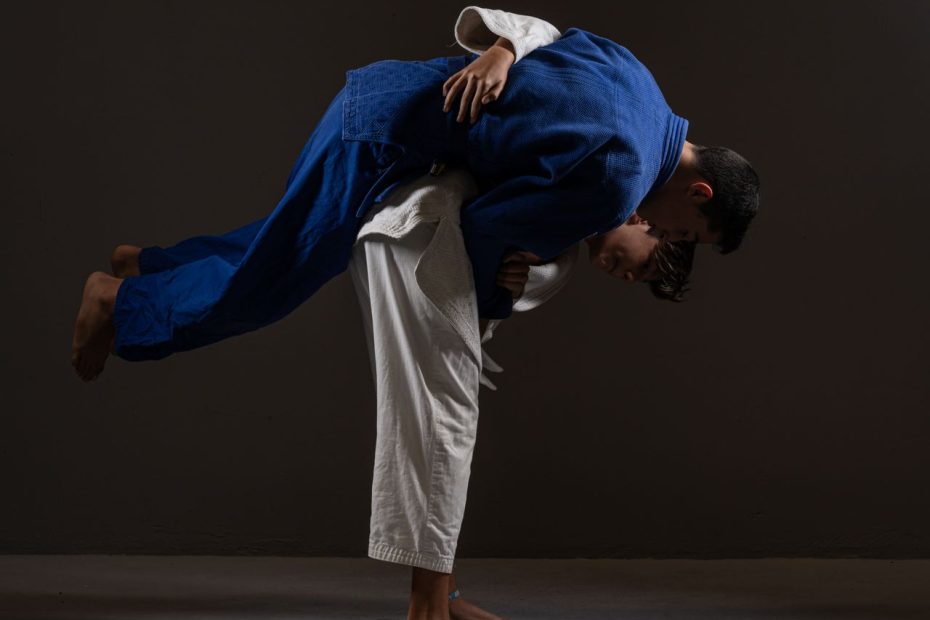
That made judo unusually well suited for international sport. It had codified techniques, a belt system, a teaching structure, and a philosophy that could travel beyond Japan. Throws, pins, chokes, and armlocks gave it a clear competitive framework, but etiquette and ritual gave it a deeper identity. The bow, the judogi, the respect for the mat, and the idea of mutual benefit all helped judo carry itself as both sport and discipline.
By the time judo reached the Olympic stage, it already had the architecture of a global martial art. The Olympics did not invent judo’s identity, but they gave it a worldwide arena.
Judo’s Olympic Identity Took Shape in Tokyo
Judo entered the Olympic program at the 1964 Tokyo Games, a fitting debut for a Japanese martial art on Japanese soil. That moment gave judo enormous symbolic weight. It was not only a new Olympic sport; it was a national tradition being presented to the world through the largest sporting platform available.
The debut also showed how complicated Olympic identity could be. Japan was expected to dominate, and Japanese athletes did win multiple gold medals. But the open category produced one of the sport’s most important early Olympic moments when Dutch judoka Anton Geesink defeated Akio Kaminaga. That result mattered because it proved judo had already become more than a Japanese possession. A European athlete could master the system well enough to win at the highest level, even in Tokyo.
Women’s judo later deepened that Olympic identity. After appearing as a demonstration event in 1988, women’s judo became a full medal sport in 1992. That expansion changed the sport’s reach and gave athletes from Japan, France, Cuba, China, Brazil, the Netherlands, and many other countries a larger Olympic stage. Judo became one of the rare combat sports where men’s and women’s competition both developed serious global depth.
Why Olympic Judo Still Balances Tradition and Modern Pressure
Olympic judo still carries the tension that made its rise so interesting. It is a martial art with formal etiquette, but it is also a medal sport shaped by national funding, ranking points, weight classes, rule changes, and tactical adaptation. Athletes are not only representing themselves; they often carry the expectations of countries where judo has deep cultural meaning.
Japan remains central to the sport’s identity, but Olympic judo is now unmistakably global. France has built one of the world’s strongest judo cultures. Brazil, South Korea, Georgia, Cuba, Mongolia, Kosovo, and many others have produced Olympic champions and national heroes. Heavyweight stars such as Teddy Riner, dominant champions such as Ryoko Tani, and breakthrough athletes from smaller nations have all helped make judo an Olympic sport with both tradition and surprise.
The rules have changed over time, sometimes controversially, as officials have tried to preserve judo’s throwing identity while limiting tactics that make matches less active or less distinct from wrestling. That ongoing adjustment is part of the Olympic version of the sport. Judo must remain recognizable as judo while still functioning as a modern spectator competition.
Judo’s Olympic identity is powerful because it never fully belongs to one category. It is Japanese and global, traditional and tactical, philosophical and fiercely competitive. The Olympics gave judo a larger stage, but judo brought something rare to that stage: a combat sport where winning still sits beside ritual, discipline, and the idea that technique can turn force against itself.