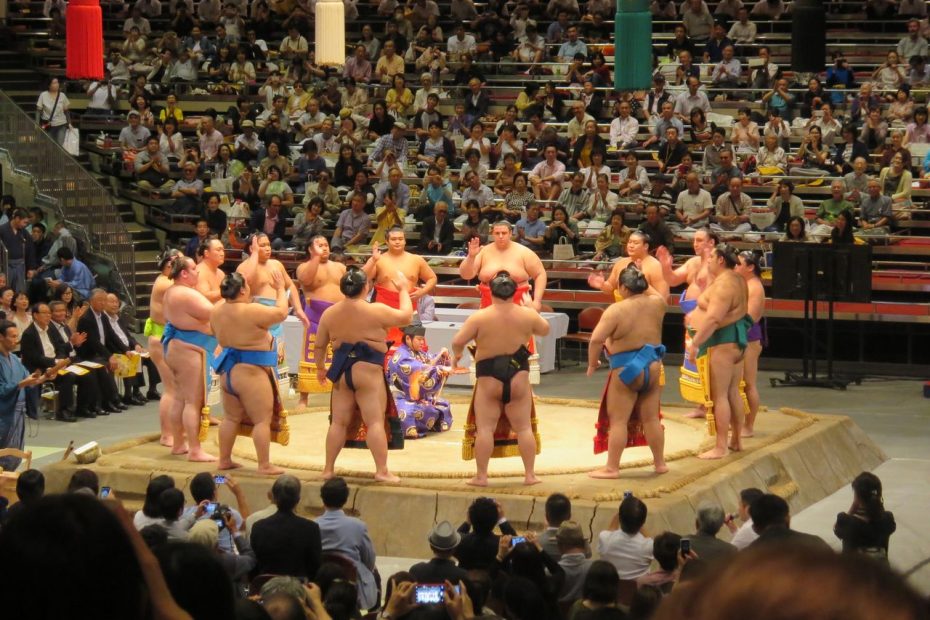
Hakuho and sumo dominance are inseparable because his career stretched the meaning of what a yokozuna could achieve. Born in Mongolia and listed by the Japan Sumo Association as the 69th yokozuna, Hakuho entered a sport built on Japanese ritual, hierarchy, and historical memory, then rose to its highest rank and stayed there longer than any yokozuna before him. His record 45 top-division championships made his career more than a long reign; it became a measuring point for every champion who followed. Hakuho mattered because he did not simply win. He forced sumo to confront greatness coming from outside Japan while still carrying the expectations of its most sacred rank.
From Mongolia to the Rank That Carries Sumo’s Heaviest Burden
Hakuho was born Mönkhbatyn Davaajargal in Mongolia, a country whose wrestlers reshaped modern sumo through power, mobility, and deep grappling tradition. His rise followed earlier foreign-born champions, but his scale was different. Sumo had already seen Hawaii-born Akebono become the first foreign-born yokozuna in 1993, and Mongolian wrestlers had become increasingly central to the sport’s top division. Hakuho entered that world and eventually surpassed its statistical boundaries.
The rank of yokozuna is not only competitive. It is symbolic. A yokozuna is expected to win, but also to embody dignity, consistency, and authority. That made Hakuho’s dominance more complicated than a championship count. He was not just another elite rikishi collecting trophies. He was a foreign-born grand champion operating inside a sport that treats tradition as part of the contest itself.
Hakuho and Sumo Dominance Became a Record-Setting Standard
Hakuho’s dominance was built on more than size. At 192 centimeters and 155 kilograms, he had the physical presence expected of a top rikishi, but his best sumo came from balance, timing, grip control, and the ability to win in multiple ways. His official profile lists migi-yotsu, yori, and uwatenage among his signature techniques, pointing to a wrestler who could win through inside grip position, forward pressure, and throws rather than relying on a single pattern.
The numbers made his reign historic. Guinness World Records credits Hakuho with 45 top-division championships, achieved between May 21, 2006, and July 18, 2021. That total stands as the record for most top-division sumo championships. His final championship came in Nagoya in 2021, the same year he retired from competition.
That longevity matters. Sumo is a punishing sport because every tournament compresses physical strain into repeated daily tests. A champion has to reset constantly: different opponents, different body types, different tactical problems, and little room for gradual recovery. Hakuho’s record was not the result of one peak season. It was the product of repeated dominance across eras, rivals, injuries, and the constant pressure attached to the white rope of yokozuna.
Why Hakuho Still Shapes the Meaning of Greatness in Sumo
Hakuho’s legacy sits at the intersection of performance and identity. By record, he belongs at the center of any discussion of the greatest sumo wrestler. By symbolism, he represents the globalization of a sport still deeply tied to Japanese ceremony. His career showed that sumo could remain traditional while its greatest champions increasingly came from beyond Japan’s borders.
That legacy has continued beyond his retirement. Hakuho later became associated with coaching and sumo development, and in 2025 he resigned from the Japan Sumo Association while announcing plans for a broader international sumo project. That post-retirement chapter only sharpened the larger meaning of his career: Hakuho was not just a champion inside sumo’s existing world. He became one of the figures pushing the sport’s future into a more global conversation.
Hakuho and sumo dominance still matter because his career changed the scale of greatness. He carried the pressure of yokozuna, broke the sport’s most important championship record, and became a defining figure in sumo’s modern international era. His legacy is not only that he won more than anyone else. It is that every future yokozuna will be measured against the standard he left behind.