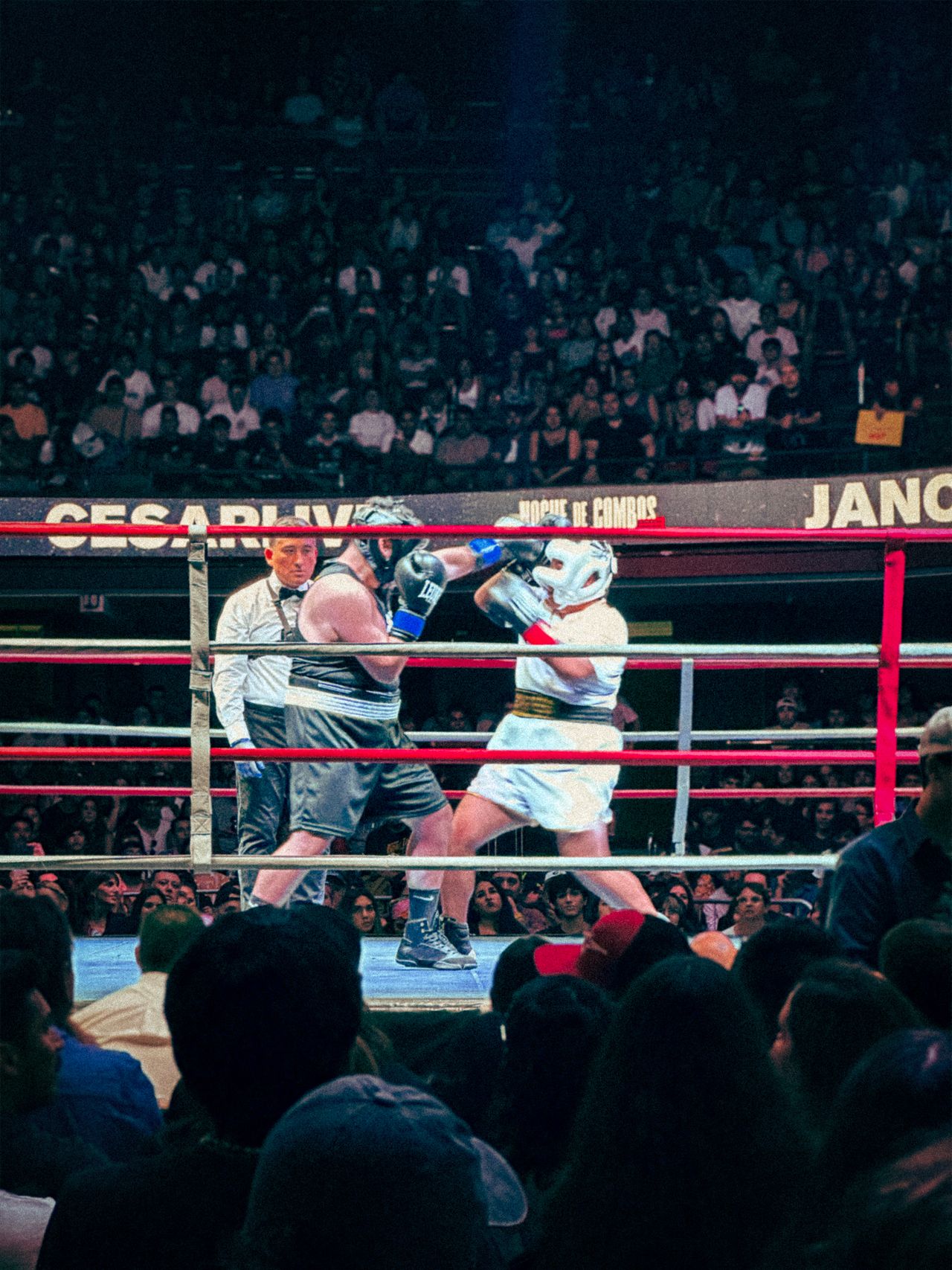
Boxing in Mississippi has never depended on one crowded fight capital or one constant professional circuit. Its identity is more scattered, older, and more personal. The state’s boxing story runs through Delta towns, Gulf Coast gyms, small amateur programs, military pathways, and fighters who often had to leave Mississippi to make their names nationally. That gives Mississippi boxing a particular shape: it is not a volume market, but it has produced figures whose careers reach far beyond the size of the local scene.
The largest name connected to Mississippi boxing is Archie Moore, born in Benoit in the Mississippi Delta. Moore became one of the defining light heavyweights in boxing history, famous for his longevity, defensive intelligence, knockout power, and tactical patience. His career stretched across eras, from the age of Joe Louis and Rocky Marciano to the early rise of Muhammad Ali. For Mississippi, Moore represents something important: the state’s boxing legacy is not measured only by local arenas or regular televised fight cards. It is measured by the people who began there and then carried Mississippi into the larger fight world.
Mississippi’s professional lineage also includes Freddie Little, from Picayune, who became world junior middleweight champion in 1969. Little’s career reflects a familiar pattern for fighters from smaller boxing states. The hometown may shape the fighter, but the opportunities usually come elsewhere. Southern boxing has often been regional rather than state-contained, and Mississippi fighters have historically connected to circuits in Louisiana, Tennessee, Texas, Georgia, and later Nevada. That made adaptability essential. A Mississippi boxer could not rely on a single major local market to build a full career. He had to travel, take difficult fights, and become comfortable fighting away from home.
Kennedy McKinney adds a different layer to the state’s boxing identity. Born in Hernando, McKinney won Olympic gold at bantamweight for the United States in 1988 and later became a professional world champion at super bantamweight. His story connects Mississippi to the American amateur system, the military boxing pipeline, and the lighter-weight professional divisions. McKinney’s career matters because it shows that Mississippi boxing is not only heavyweight folklore or old-school Southern toughness. It also includes elite amateur skill, international competition, and technical development.
At the grassroots level, Mississippi boxing depends on local gyms, youth programs, coaches, and regional amateur events more than on a dense professional industry. In many communities, boxing shares space with football, basketball, wrestling, and general athletic training. A young fighter may enter a gym for discipline, conditioning, self-defense, or competition, then slowly discover the amateur ladder through local shows and regional tournaments. The challenge is that the state’s boxing infrastructure is thinner than what exists in places like Texas, Florida, California, or New York. That makes coaching continuity and access to competition especially important.
The Gulf Coast gives Mississippi one of its better natural boxing corridors. Biloxi, Gulfport, and the surrounding region connect more easily to Louisiana, Alabama, and casino-event culture than many inland areas do. That does not make Mississippi a major fight destination, but it gives the state a practical route into Southern fight traffic. Inland, the Jackson area and north Mississippi can serve as development points, especially for amateur boxing and fitness boxing, but top prospects generally need regional travel to sharpen themselves.
Mississippi boxing is best understood as a state with a small base and an outsized historical echo. It has produced champions, Olympic success, and one of the most respected old masters the sport has ever known. Its future depends less on becoming a national fight capital and more on strengthening the local rooms where young fighters first learn how to box. For Mississippi, the question is not whether the state has boxing history. It does. The question is how much of that history can be turned into a stronger modern pathway for the next fighter from a small town, a local gym, or a military program who needs a bigger stage.