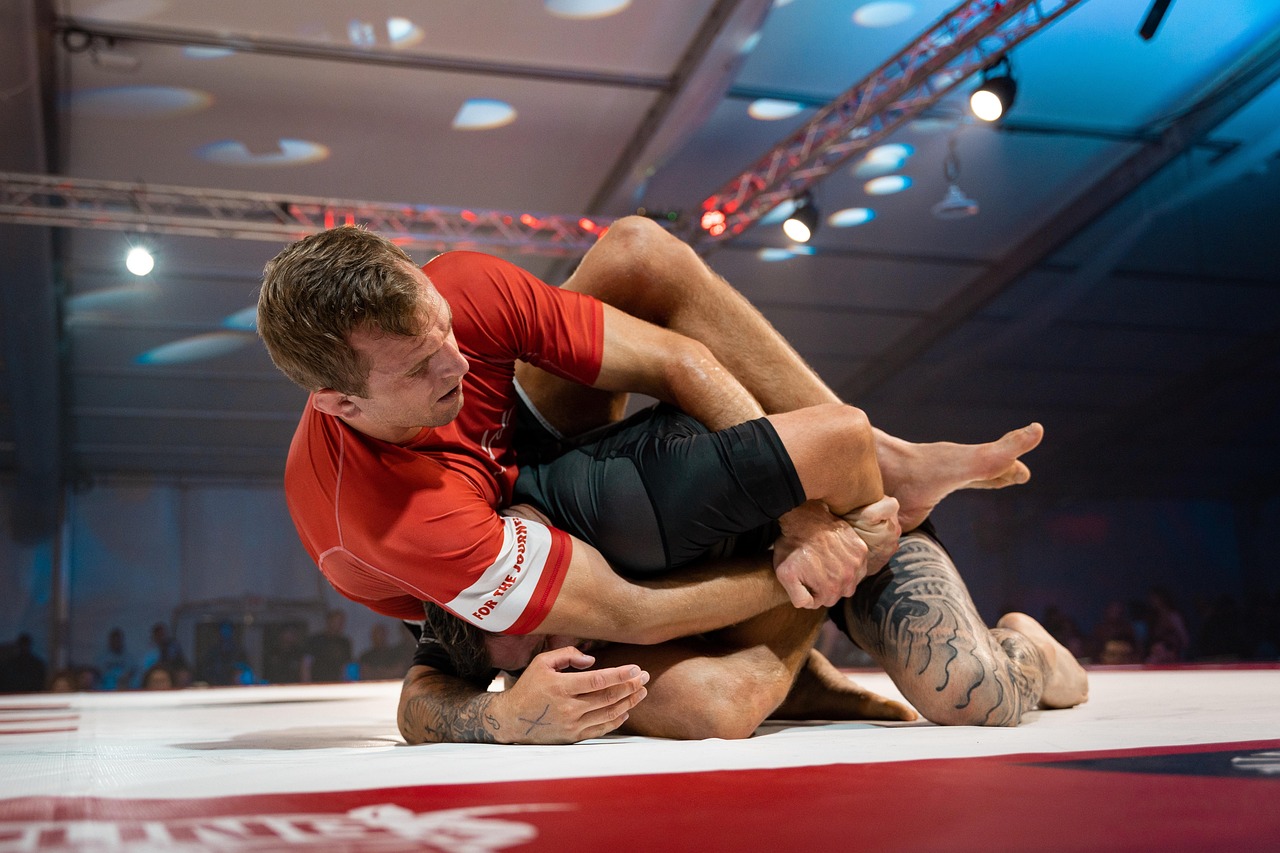
Georges St-Pierre and MMA professionalism became linked because he represented a different model of greatness in a sport still defining itself. Early MMA had specialists, brawlers, wrestlers, submission artists, and knockout stars, but St-Pierre made championship fighting look like a complete professional system. He blended karate, wrestling, boxing, Brazilian jiu-jitsu, conditioning, sports psychology, and opponent-specific game planning into one controlled package. His career mattered because he helped move MMA away from the idea of style-versus-style chaos and toward the modern expectation that elite fighters must be complete, disciplined, and adaptable. St-Pierre did not just win fights. He helped define what a prepared mixed martial artist was supposed to look like.
How Georges St-Pierre Became the Blueprint for the Modern MMA Athlete
Georges St-Pierre did not enter MMA as the most physically intimidating fighter in the sport, but he became one of its most complete. His background in karate gave him distance control, timing, and explosive entries. As his career developed, he added wrestling at a level that surprised opponents who had spent years inside American collegiate wrestling rooms. He improved his boxing, sharpened his top control, learned how to neutralize dangerous guards, and treated conditioning as part of his technical identity.
That breadth made him different. Many fighters came into MMA with one dominant base and tried to build around it. St-Pierre built toward balance. He could strike with grapplers, wrestle with strikers, and control where a fight happened. That versatility became central to his rise at welterweight.
His early loss to Matt Hughes in 2004 also became part of the story. Hughes was the established champion, a powerful wrestler, and the kind of opponent who showed St-Pierre what championship MMA demanded. When St-Pierre came back and beat Hughes in 2006, it was not simply a young fighter winning a belt. It was a sign that the next version of MMA had arrived: more blended, more analytical, and less dependent on one overwhelming skill.
Georges St-Pierre and MMA Professionalism Inside the Cage
Georges St-Pierre and MMA professionalism were most visible in the way he fought. His championship style was not built around recklessness or emotional surges. It was built around taking away an opponent’s best path to victory.
Against dangerous strikers, St-Pierre used timing, takedowns, jabs, and pressure to limit clean exchanges. Against grapplers, he controlled distance and forced them to defend his wrestling. Against explosive opponents, he slowed the fight into phases he could manage. He was not trying to prove he could beat every opponent in their preferred world. He was trying to make sure they could not stay there.
That approach was clearest during his long welterweight title run. Wins over fighters such as Matt Hughes, Josh Koscheck, Jon Fitch, B.J. Penn, Thiago Alves, Carlos Condit, Nick Diaz, and Johny Hendricks showed how many different problems he could solve. Some opponents brought wrestling. Some brought pressure. Some brought submissions, boxing, durability, or chaos. St-Pierre’s answer was usually structure.
His jab became one of the most important weapons in MMA because it was not just a scoring tool. It disrupted rhythm, hid level changes, managed range, and forced opponents to reset. His takedowns were not just athletic shots. They were timed off striking threats, footwork, and opponent reactions. His top game was not always built for quick finishes, but it drained rounds, limited danger, and made challengers fight from behind.
That is why his professionalism mattered. He showed that dominance in MMA could come from repeatable habits: preparation, discipline, technical layering, and tactical control. He made winning look less like surviving chaos and more like imposing order.
Why St-Pierre’s Legacy Still Shapes MMA
St-Pierre’s legacy reaches beyond his record because he helped raise the standard for what elite MMA preparation could be. Modern champions are expected to be more than specialists. They need teams, film study, strength and conditioning, nutrition, wrestling defense, striking systems, grappling awareness, and mental discipline. St-Pierre helped normalize that total approach.
He also changed how fans understood greatness. A fighter did not have to be defined only by knockouts, submissions, or public spectacle. St-Pierre’s greatness came from consistency, adaptability, and control. His fights often became demonstrations of how thoroughly one athlete could prepare for another.
His 2017 return against Michael Bisping added another layer. After years away, St-Pierre moved up to middleweight, submitted Bisping, and became a two-division UFC champion. It was not the same kind of long title reign he had built at welterweight, but it reinforced the larger point: St-Pierre’s success was not accidental, and it was not tied to only one narrow athletic window.
Georges St-Pierre remains one of MMA’s defining champions because he made professionalism itself feel like a fighting style. His career showed that preparation could be as decisive as power, that discipline could be as valuable as aggression, and that the best mixed martial artists would increasingly be the ones who could solve every part of the fight.