ADCC and submission grappling’s biggest stage are connected because the Abu Dhabi Combat Club World Championship gave no-gi grappling a global proving ground with stakes beyond any single gym, style, or national scene. Before ADCC became a landmark event, Brazilian jiu-jitsu, wrestling, judo, sambo, and catch-influenced grappling often met through MMA, smaller tournaments, or style-specific competition. ADCC helped create a different kind of test: a ruleset where elite grapplers could compete without the gi, across backgrounds, with takedowns, positional control, leg locks, guard passing, back attacks, and submissions all under pressure. Its importance comes from that blend. ADCC did not just reward one tradition. It helped define what world-class submission grappling could look like.
From Abu Dhabi to a No-Gi World Championship
The Abu Dhabi Combat Club World Championship grew out of the 1990s combat-sports moment, when the early UFC events had made grappling impossible to ignore. Brazilian jiu-jitsu had shown that a fight could be controlled on the ground, but the broader grappling world was still scattered across different rule sets, uniforms, and competitive cultures. ADCC gave that world a central stage.
Its creation mattered because it treated submission grappling as a sport worthy of its own elite championship, not merely as a supporting skill for mixed martial arts. The format drew athletes from Brazilian jiu-jitsu, wrestling, judo, sambo, and other grappling backgrounds. It also emphasized no-gi competition, which changed the rhythm of the matches. Without the grips of the gi, athletes needed different controls, faster transitions, stronger wrestling connections, and more adaptable submission attacks.
That combination made ADCC distinct. It was not simply another jiu-jitsu tournament. It became a meeting point for grapplers who wanted to test themselves under a ruleset built around control, advancement, and finishing.
ADCC and Submission Grappling’s Biggest Stage
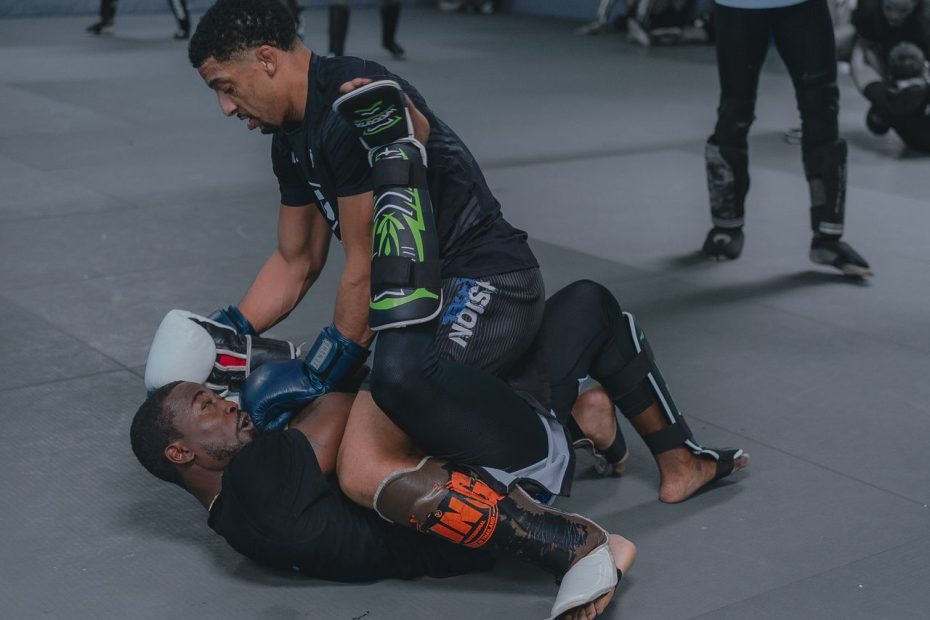
ADCC became submission grappling’s biggest stage because it created a rare kind of pressure. Winning required more than technical knowledge. Athletes had to manage wrestling exchanges, pass dangerous guards, defend leg locks, attack the back, survive overtime, and adjust to opponents from different grappling lineages. A champion had to be complete enough to win when the match became tactical, physical, or chaotic.
The prestige also came from scarcity. ADCC is not a weekly circuit title. The World Championship is an event that athletes build toward for years, often through trials, invitations, and long competitive arcs. That gives each bracket weight. A single run can define a career; a repeat title can establish an era.
The event has also produced a language of greatness that grappling fans understand immediately. ADCC medals, superfights, absolute division performances, and breakthrough runs have become shorthand for elite status. In a sport where athletes can win many titles under many systems, ADCC occupies a special place because its champions are measured against the deepest no-gi fields and the broadest technical demands.
Why ADCC Still Defines No-Gi Greatness
ADCC’s legacy is that it helped turn no-gi submission grappling into a global discipline with its own heroes, specialists, rivalries, and standards. It influenced how athletes train, how gyms structure no-gi programs, and how fans evaluate grappling skill outside MMA. A modern grappler cannot rely only on one area. The ADCC standard pushes athletes toward wrestling, guard work, leg locks, back control, passing, conditioning, and tactical patience.
It also changed the relationship between grappling and combat sports culture. For years, many fans encountered grappling mainly through MMA. ADCC showed that grappling could stand on its own as a spectator sport, with drama built from exchanges that do not require strikes: a takedown battle, a guard pass, a heel-hook escape, a back-take sequence, or a late submission attempt.
That is why ADCC still matters. It gave submission grappling a world championship that feels like a final exam for the no-gi game. The athletes change, the techniques evolve, and the meta shifts, but the meaning remains clear: ADCC is where grapplers go to prove that their skills work against the best version of the sport.