Romania’s boxing story is built less around casinos, pay-per-view spectacle, and global fight-week tourism than around the amateur ring, the national team, and a long tradition of disciplined technical fighters. The country has produced professional world champions, recognizable European contenders, and respected trainers, but its deepest boxing identity comes from the Olympic and amateur system that made Romanian fighters difficult opponents across the second half of the twentieth century.
That identity matters because Romania does not fit neatly into one of boxing’s louder global categories. It is not Mexico, where the sport is woven into national popular culture through world champions and historic rivalries. It is not Cuba, where amateur boxing became one of the defining symbols of state-backed sporting excellence. It is not the United States or Britain, where the professional circuit gives local fighters a steady ladder from small halls to televised cards. Romania sits somewhere between those models. Its boxing has been shaped by state clubs, Olympic ambition, technical coaching, regional toughness, and a professional path that often required fighters to look beyond Romania’s borders.
The result is a boxing country with a stronger legacy than casual fans may realize. Romania has won 25 Olympic medals in boxing, including Nicolae Linca’s gold medal at the 1956 Melbourne Games, nine silver medals, and fifteen bronze medals. That total places boxing among Romania’s important Olympic sports and gives the country a serious place in European boxing history.
Romanian boxing is therefore best understood as an amateur and Olympic tradition with a professional extension. Fighters are often admired for craft, conditioning, and resilience rather than for the mythology of the prizefighter. The ring has served as a place where provincial towns, state-backed clubs, and working-class athletic systems could produce athletes capable of competing with major boxing nations.
From Organized Clubs to Olympic Respectability
Organized Romanian boxing developed through clubs, federations, military and police-linked sports structures, and local athletic societies. The Romanian Boxing Federation traces its institutional history to the 1920s, with the sport’s national organization reaching its centenary in 2026. That long federation history helps explain why boxing in Romania has never been merely a recreational pastime. It became part of a wider sports system built to identify athletes, train them in structured environments, and move the best fighters toward national and international competition.
In Romania, boxing grew through the same forces that shaped many European fight cultures: urban clubs, army and police sports associations, factory-town athletic programs, and the prestige of international representation. Boxing appealed because it required relatively little equipment compared with many sports, but it demanded discipline, coaching, and repetition. A good gym could turn a young athlete with speed and toughness into a national-level fighter. A strong club could become a local institution. A national team could give that fighter a route into European championships, world championships, and the Olympic Games.
The sport’s development also reflected Romania’s geography. Bucharest naturally became a major center because of its population, institutions, and sports clubs, but Romanian boxing was never only a capital-city sport. Fighters emerged from smaller towns, industrial regions, and local club systems where boxing could be taught seriously without needing a large commercial fight economy. That gave Romanian boxing a broad base: not always visible internationally, but capable of producing athletes who were comfortable in tournament conditions.
The amateur structure mattered because Romanian boxers learned to fight for points, positioning, rhythm, and tournament survival. Olympic-style boxing rewards different instincts than the professional game. A fighter has to start quickly, read opponents fast, adapt across multiple bouts, and avoid giving away rounds through unnecessary exchanges. Romanian boxing at its best reflected those demands. It was practical, schooled, and competitive.
That does not mean Romania lacked punchers or personalities. It means the country’s most durable boxing strength came from preparation. Romanian fighters were often developed to compete inside a system before they became individual brands. That system gave the country decades of relevance in Olympic boxing and created the foundation for several professionals who later carried Romanian boxing into world-title fights.
The 1956 Breakthrough and Romania’s Olympic Standard
The defining early moment in Romanian boxing came at the 1956 Olympic Games in Melbourne, where Nicolae Linca won Romania’s first Olympic boxing gold medal. Linca’s victory in the light middleweight division became part of national sporting memory, especially because he won the final despite fighting with a fractured right hand. At those same Games, Romania’s boxing team produced a remarkable overall performance: Linca won gold, Mircea Dobrescu and Gheorghe Negrea won silver, and Constantin Dumitrescu won bronze.
That 1956 team established a standard that later Romanian generations would chase. It proved that Romania could stand on the Olympic boxing podium not as an occasional surprise but as a serious competitor. In a sport dominated at different times by the United States, Soviet Union, Cuba, and several major European programs, Olympic medals were not easily won. Romania’s ability to keep producing medalists gave the country credibility.
The Olympic tradition continued through names such as Vasile Tiță, Ion Monea, Ion Alexe, Simion Cuțov, Daniel Dumitrescu, Leonard Doroftei, Marian Simion, Dorel Simion, and Ionuț Gheorghe. Each represented a different period of Romanian boxing, but together they show the depth of the country’s amateur record. Romania did not rely on one golden athlete or one isolated generation. It returned to the podium across decades.
Marian and Dorel Simion gave Romania one of its most memorable Olympic family stories at Sydney 2000. Marian won silver at 71 kg, while Dorel won bronze at 67 kg, making them the first Romanian brothers to medal at the same Olympic Games. Their father, Gheorghe Simion, a former performance boxer himself, coached them to those medals. That story captures several things about Romanian boxing at once: family tradition, amateur discipline, coaching continuity, and the emotional weight attached to Olympic success.
Romania’s Olympic boxing reputation was not built on volume alone. It was built on the idea that Romanian fighters could enter international tournaments and trouble almost anyone. They were not always the most famous boxers in the field, but they often arrived with enough schooling, timing, and stubbornness to make the bracket uncomfortable.
Francisc Vaștag and the Value of the Romanian Boxing School
If Nicolae Linca represents the Olympic breakthrough, Francisc Vaștag represents the excellence of the Romanian amateur boxing school at world level. Vaștag, from Reșița, became one of Romania’s most decorated amateur boxers and one of the country’s strongest technical symbols. He won three world amateur titles between 1989 and 1995 and competed in three Olympic Games.
Vaștag’s career is important because it shows Romania’s ability to produce a boxer who was not merely durable or nationally successful, but genuinely elite in international amateur competition. Winning once at that level is difficult. Winning repeatedly across different tournaments and years requires more than form. It requires adaptability, tactical intelligence, and the ability to remain sharp against changing opponents and styles.
His success also came during a period of political and sporting transition. Romanian boxing, like many institutions in Eastern Europe, had to adapt as the country moved away from the old state-socialist system. Funding, club structures, and international pathways changed. Athletes and coaches had to navigate a less predictable environment. In that context, Vaștag’s accomplishments helped preserve the idea that Romania still had a serious boxing school.
The phrase “boxing school” matters. It does not simply mean a gym. It means a way of teaching the sport: stance, balance, distance, defense, counterpunching, ring position, and tournament strategy. Romania’s better amateur fighters were not just conditioned athletes. They were products of technical habits learned over years. Even when the country’s professional market lagged behind bigger boxing economies, the technical base remained one of Romanian boxing’s strongest assets.
Vaștag also represents the link between athlete and coach. After his competitive career, he became associated with national-team coaching, which reflects a common pattern in serious amateur boxing countries. The best fighters do not simply disappear from the system. They become part of the next generation’s education, carrying habits, expectations, and standards into the gym.
Professional Champions and the Romanian Fighter Abroad
Romania’s professional boxing history is smaller than its Olympic story, but it has produced genuine world champions. Mihai Leu, Leonard Doroftei, and Lucian Bute are the central names in that professional lineage. Their careers showed that Romanian fighters could move from the amateur structure into the global prizefighting business, even if they often had to do so through Germany, Canada, or broader international boxing networks rather than through a massive domestic professional circuit.
Mihai Leu became Romania’s first professional boxing world champion, winning the WBO welterweight title in the 1990s. Leu’s story is unusual even by boxing standards because he later became known in motorsport as well, but in Romanian boxing history his importance is direct: he proved that a Romanian fighter could win a professional world title in the modern era. His success opened symbolic space for the fighters who followed.
Leonard Doroftei carried a different kind of reputation. Before becoming a professional world champion, he was already an accomplished amateur and Olympic medalist. He won Olympic bronze medals in 1992 and 1996, then later became WBA lightweight champion as a professional. His career gave Romanian boxing one of its clearest bridges between Olympic credibility and professional achievement. He was not a manufactured pro prospect without foundation. He was a schooled fighter whose amateur pedigree translated into the professional ring.
Lucian Bute then became the most internationally visible Romanian professional boxer of the modern era. Born in Romania and later based in Canada, Bute held the IBF super middleweight title from 2007 to 2012 and made nine successful defenses. His career matters not only because of the belt, but because of the way he connected Romanian boxing to the Canadian fight market. In Montreal and Quebec, Bute became a major attraction, giving Romanian boxing a diaspora dimension that extended beyond national borders.
Bute’s rise also illustrated one of the central realities of Romanian professional boxing: elite fighters often need an international platform. Romania can produce the fighter, the fundamentals, and the identity. But the bigger promotional machinery may be elsewhere. For Romanian boxers, the path to world-level professional opportunities has often run through foreign promoters, foreign television markets, and foreign venues.
That does not diminish Romania’s role. It clarifies it. Romanian boxing has frequently been a development culture more than a commercial boxing empire. The country makes fighters. The world market decides how far those fighters can be seen.
Gyms, Clubs, and the Romanian Training Environment
Boxing gyms in Romania are important less as celebrity landmarks and more as development rooms. They are places where young fighters learn footwork before fame, defense before branding, and discipline before opportunity. The Romanian boxing gym has traditionally been a practical space: bags, ropes, mirrors, coaches, sparring partners, and tournament goals.
The country’s club structure has been central to that identity. Clubs tied to larger sports institutions, local municipalities, military or police traditions, and regional athletic programs have helped keep boxing alive even when the professional scene has been thin. For many fighters, the first meaningful boxing environment is not a glossy private fitness studio. It is a competitive club where the sport is taught as a craft.
Bucharest remains a natural anchor because of its size and sporting infrastructure, but the Romanian boxing map cannot be reduced to the capital. Places such as Reșița, Galați, Brăila, Ploiești, Bacău, Iași, Cluj-Napoca, Constanța, and other regional centers have all contributed to the broader fight culture in different ways. Boxing in Romania has long had a provincial strength: the ability of smaller cities and towns to produce serious athletes through committed coaches and local programs.
That provincial element gives Romanian boxing much of its character. A fighter from a smaller city may not grow up around major international shows, but he can grow up around hard training, local tournaments, and coaches who understand the amateur pathway. That environment can be demanding. The rewards are not always immediate. The audience may be small. But the technical education can be real.
In recent years, boxing fitness has also grown in Romania, as it has across Europe. Recreational boxing classes, fitness boxing, and mixed combat-sports gyms have introduced more people to the sport without necessarily feeding the competitive pipeline. This creates a split in the modern boxing scene. On one side is traditional amateur development, where the aim is competition. On the other side is boxing as conditioning, self-defense, and lifestyle training. Both can help the sport’s visibility, but only the competitive clubs preserve Romania’s deeper boxing tradition.
Women’s Boxing and a Broader Romanian Ring Culture
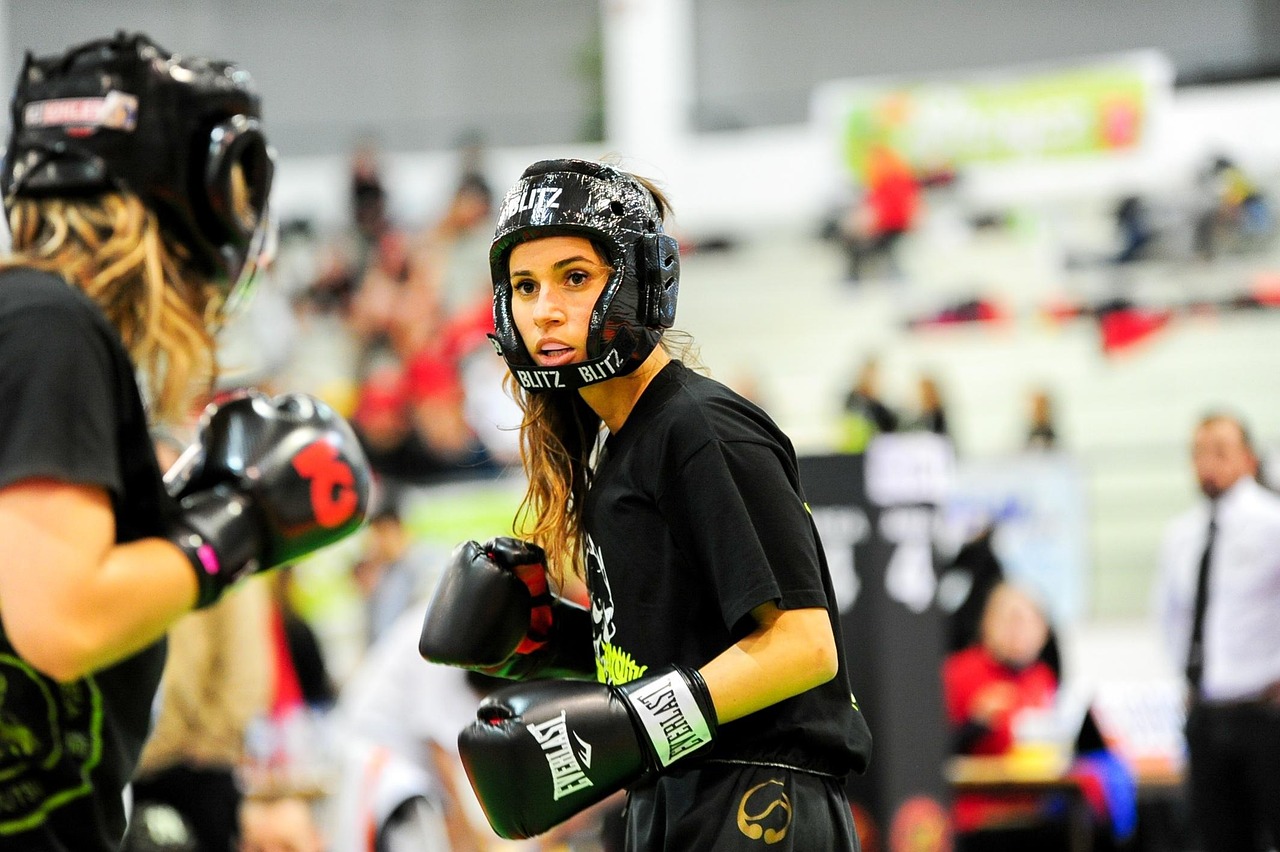
Women’s boxing gives Romania another path for development. Like many countries with older male amateur traditions, Romania has had to adapt to a boxing world where women’s participation is no longer peripheral. Olympic inclusion changed the stakes. More federations, clubs, and coaches began to view women’s boxing as part of the serious competitive program rather than as a side category.
Romania has produced notable female boxers at European and international level, and the presence of women in boxing gyms has become more normal over time. That matters for the future of the sport. A country that already has coaching knowledge and an amateur structure can expand its medal potential if women’s boxing receives consistent support, matchmaking, and international exposure.
The challenge is not only participation. It is depth. Successful women’s boxing programs require enough athletes in each weight class, enough sparring variety, enough coaching attention, and enough competition to prepare fighters for international tournaments. Romania’s boxing knowledge gives it a foundation, but development depends on whether clubs and federations can turn interest into a stronger pipeline.
Women’s boxing also fits Romania’s broader combat-sports culture. The country has interest in kickboxing, mixed martial arts, judo, wrestling, and other fight sports, which means boxing has to compete for athletes. A young Romanian combat-sports prospect may not automatically choose boxing. The sport has to offer structure, opportunity, and visibility. That competition can be a challenge, but it can also sharpen boxing’s role. Good boxing remains one of the most transferable combat skills, and strong boxing coaching benefits athletes across multiple fight disciplines.
For Romania, the future of women’s boxing could become one of the clearest measures of whether the sport is modernizing or merely preserving its past. The country has history. The question is whether that history can be expanded into a more inclusive and sustainable competitive structure.
Romania’s Place in European and World Boxing
Romania’s boxing geography gives it a distinctive place in the wider boxing world. It sits within Europe, but its boxing identity has often shared traits with Eastern European and post-socialist systems: structured amateur training, national-team emphasis, and technical schooling. At the same time, Romanian professional fighters have frequently moved toward Western European and North American markets when they needed bigger opportunities.
That puts Romania in a bridge position. Its amateurs have historically competed in European championships, world championships, and Olympic qualification systems. Its professionals have often had to travel, sign abroad, or build fan bases outside Romania. Its coaches work within a European boxing environment where standards are high and opportunities are uneven.
Romania’s regional context also matters. It is surrounded by countries with their own combat-sports traditions: Ukraine, Moldova, Bulgaria, Hungary, Serbia, Turkey, and others. Regional tournaments, cross-border competition, and European circuits give Romanian fighters a larger field of development. A Romanian boxer does not need to fight only domestically to be tested. Europe provides constant comparison.
At world level, Romania’s reputation is strongest among fans who follow amateur boxing history. The average casual professional boxing fan may know Bute, Doroftei, and Leu, but may not immediately understand the depth behind Romania’s Olympic record. That creates an interesting gap between legacy and perception. Romania has been more successful than its global boxing image sometimes suggests.
The country’s challenge is visibility. Olympic medals build prestige, but professional stars build public recognition. A nation with both can become a boxing brand. Romania has had both at different times, but not always simultaneously. When the amateur system is strong and a professional champion emerges, the sport gains momentum. When funding, promotion, or federation stability weakens, boxing becomes more dependent on isolated talents.
Why Romanian Boxing Still Matters
Romanian boxing still matters because it has a real tradition, not just scattered names. The country has an Olympic gold medalist, a deep list of Olympic medal winners, world-class amateurs, professional world champions, and a gym culture capable of producing technically serious fighters. That combination gives Romania a more complete boxing profile than many countries with larger populations or louder sports media.
Its identity is not built on spectacle. It is built on the quieter parts of boxing: the club, the coach, the tournament, the national vest, the disciplined stance, the difficult draw, the fighter who has to win abroad to be noticed at home. Romanian boxing has often lived in that space. It is a sport of systems and survivors.
The future depends on whether Romania can connect its old strengths to modern boxing realities. Amateur success now requires international travel, sports science, federation stability, and strong youth recruitment. Professional success requires management, promotion, television or streaming exposure, and access to foreign markets. Women’s boxing requires investment and depth. Recreational boxing can bring new participants into gyms, but competitive boxing needs a pathway that keeps the best athletes in the sport.
Romania does not need to become a copy of another boxing country. Its best route is to rebuild around what has always made it dangerous: technical coaching, serious clubs, regional development, and fighters who are comfortable in hard international competition. If that foundation is supported, Romania can continue to produce boxers who matter beyond its borders.
The country’s boxing identity is therefore best described as an Olympic and amateur tradition with professional flashes of world-class success. Romania has had champions, medalists, technicians, brothers on the same Olympic podium, and fighters who carried the flag into arenas far from home. Its boxing story is not the loudest in the sport, but it is one of Europe’s most substantial, and it remains a meaningful part of the international fight game.