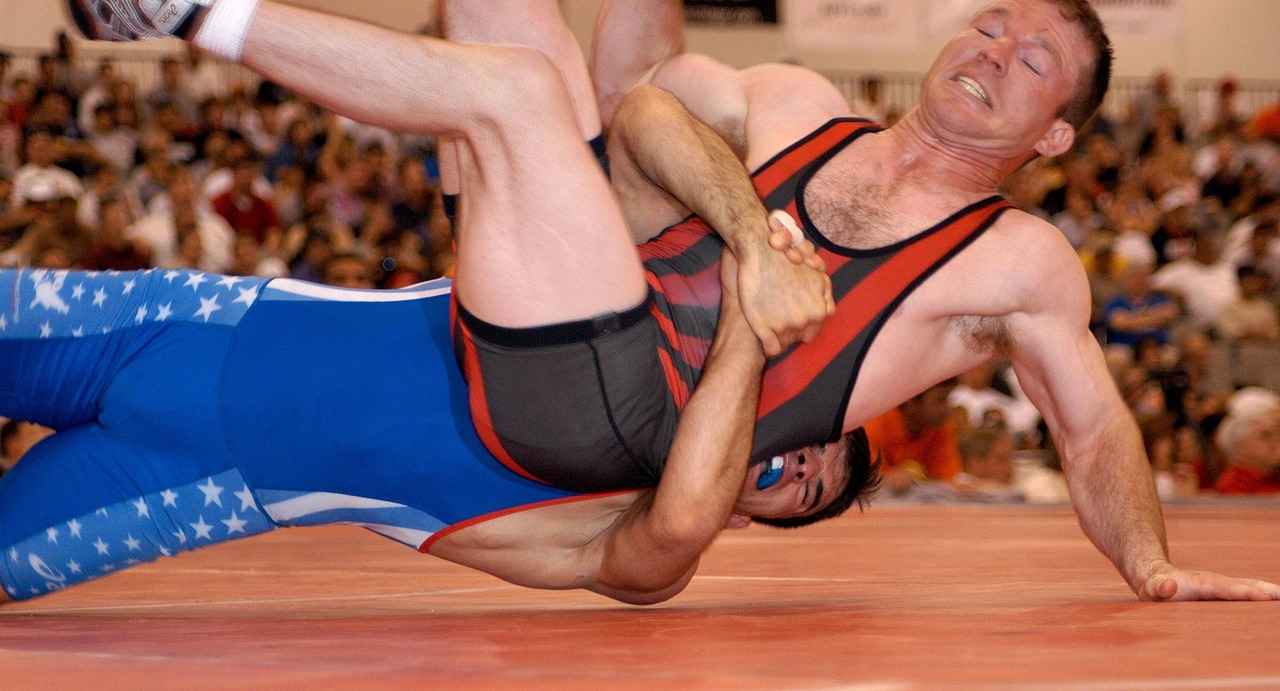
Sudan’s MMA identity begins with wrestling, not with the cage. The country has one of Africa’s most distinctive traditional grappling cultures through Nuba wrestling, a standing wrestling tradition associated with the Nuba peoples of South Kordofan. That does not mean Sudan has a large modern MMA industry. It does mean the country has a native combat-sports foundation that fits naturally with one of MMA’s most important truths: fighters who can control balance, grips, pressure, and body position often have a strong base for mixed rules competition.
Nuba wrestling gives Sudan a combat identity that is older and more culturally rooted than modern MMA itself. The style is built around throws, body control, balance, and the public celebration of strength. Its goal is not the same as collegiate wrestling, freestyle wrestling, sambo, or judo, and it does not automatically produce cage fighters. But as a cultural marker, it matters. In countries where modern MMA is still small, older combat traditions often serve as the deepest explanation for why fighting sports have local meaning. Sudan has that foundation.
The challenge is converting that heritage into contemporary MMA development. Modern MMA requires a broader technical mix: boxing or kickboxing for distance striking, wrestling or judo for takedowns, Brazilian jiu-jitsu or submission grappling for ground fighting, and enough sparring structure to combine them safely. Sudan has individual athletes listed in MMA databases and scattered representation in the sport, but it does not yet have a widely visible global pipeline. That puts it in a different category from African countries with more recognizable UFC representation or stronger regional event infrastructure.
Sudanese MMA is also shaped by geography and displacement. Fighters with Sudanese or South Sudanese heritage may develop outside the country, especially in Egypt, the Gulf, Europe, North America, or other African training centers. This is common for countries where domestic facilities, event schedules, and economic stability make full-time MMA development difficult. The athlete may carry Sudanese identity, but the training pathway often runs through foreign gyms, regional promotions, or diaspora communities.
That does not make the scene irrelevant. It makes it dispersed. Sudan’s combat-sports profile is more about raw cultural material than finished MMA infrastructure. The country has wrestling traditions, physical talent, and a fighting identity that could support MMA growth if paired with stable coaching, modern gyms, amateur competitions, and regional access. The missing piece is not toughness or cultural interest. It is the organized pipeline.
If Sudan develops a stronger MMA scene, it will likely come through a combination of traditional wrestling influence, boxing and kickboxing instruction, and athletes training abroad before bringing knowledge home. North and East Africa already have regional fight circuits that can give Sudanese athletes opportunities if the domestic scene becomes more organized. Egypt, the Gulf, and European diaspora gyms may also remain important stepping stones.
For now, MMA in Sudan is best described as a small modern scene sitting beside a much deeper grappling culture. The country is not yet a major MMA producer, but it has one of the more interesting traditional combat-sports foundations in Africa. If that foundation is ever connected to consistent MMA coaching and competition, Sudanese fighters could develop a recognizable style built around strength, balance, clinch pressure, and wrestling instincts.