MMA in the Netherlands begins with a simple truth: the Dutch fight identity was already internationally respected before modern mixed martial arts became a mainstream sport. The Netherlands did not need the UFC, PRIDE, Strikeforce, ONE Championship, or Bellator to prove it could produce elite fighters. It already had a fearsome reputation through Dutch kickboxing, Muay Thai-influenced striking, heavyweight standouts, and gyms that became known far outside the country’s borders.
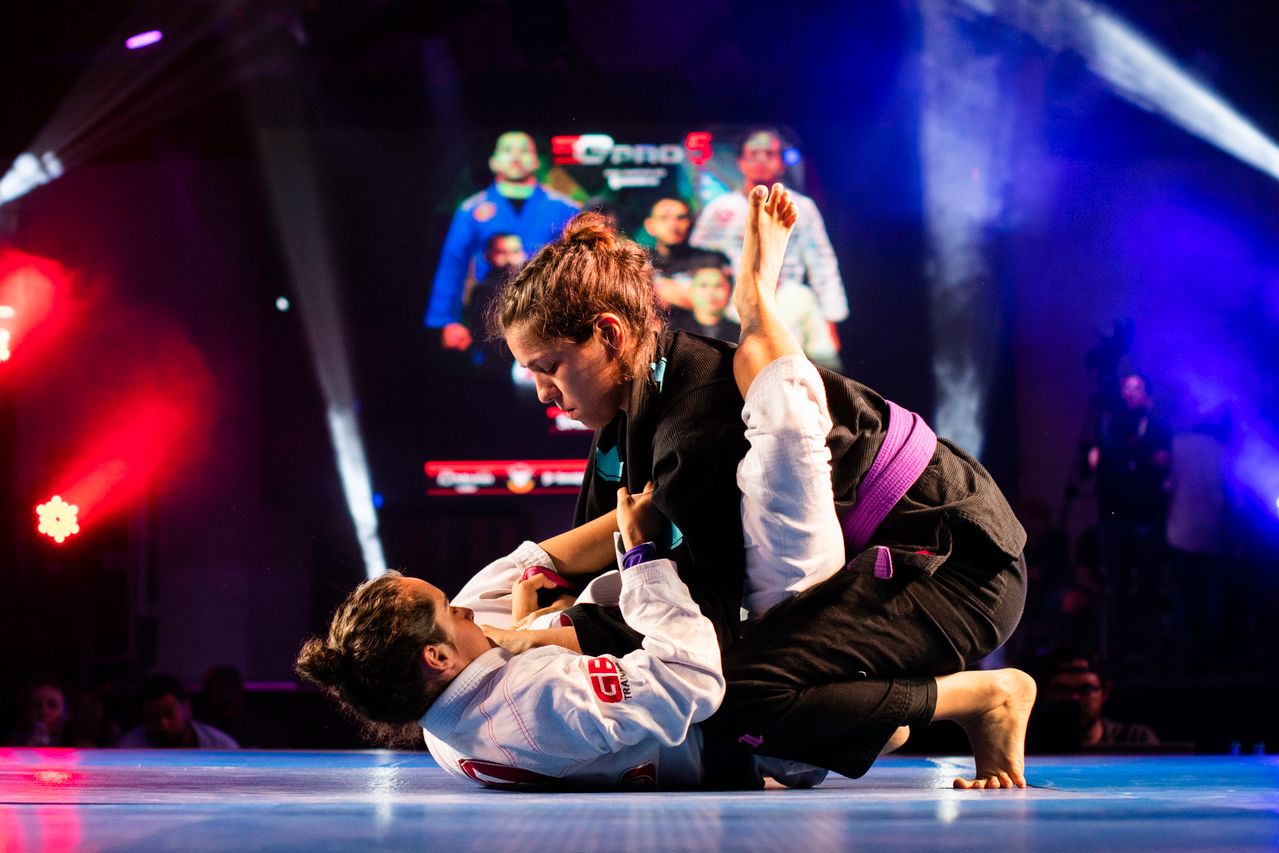
That history gives Dutch MMA a very specific character. The Netherlands is not a wrestling-first MMA country like parts of the United States or the Caucasus. It is not a Brazilian jiu-jitsu origin country like Brazil. It is not a sambo pipeline like Russia. The Dutch route into MMA has usually come through striking: pressure combinations, low kicks, clinch toughness, ring experience, and the kind of training-room intensity associated with Dutch kickboxing. The country’s MMA story is therefore about adaptation. Dutch fighters entered mixed martial arts with one of the strongest striking cultures in the world, then had to build the grappling, takedown defense, cage craft, and submission skills needed to compete in a broader rule set.
The result has been a compact but influential MMA scene. The Netherlands has produced UFC champions, major heavyweight contenders, elite middleweights, women’s MMA pioneers, submission specialists, and crossover fighters who built their names in kickboxing before testing themselves in the cage. Bas Rutten became a UFC Hall of Famer and one of the early Dutch faces of no-holds-barred and Pancrase-style fighting. Alistair Overeem became one of the most recognizable heavyweight names of his era. Gegard Mousasi built a long international résumé across multiple major organizations. Germaine de Randamie became the UFC’s inaugural women’s featherweight champion. Reinier de Ridder carried a newer Dutch identity into ONE Championship and then the UFC, showing that Dutch MMA is not limited to kickboxers trying to survive on the ground.
Dutch Kickboxing Gave MMA Its Base
To understand MMA in the Netherlands, it is necessary to understand why Dutch striking matters so much. Dutch kickboxing developed through a mixture of karate, boxing, Muay Thai, judo, and other martial arts influences, with gyms such as Chakuriki, Mejiro, Vos Gym, and later major professional camps shaping a direct, combination-heavy style. Chakuriki Gym, founded by Thom Harinck in 1972, became one of the historic names in the country’s stand-up fight culture.
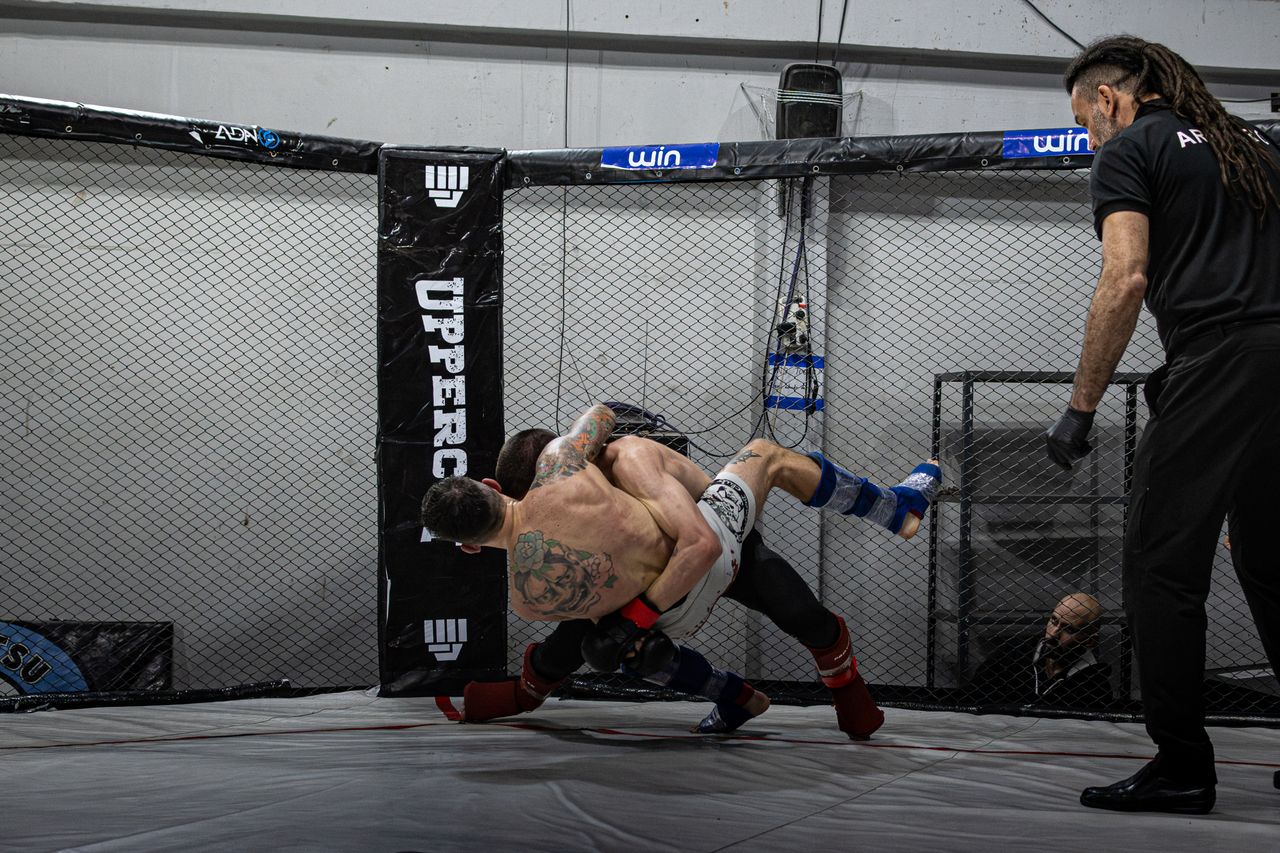
The Dutch approach to striking has often been associated with layered boxing combinations finished by low kicks, high-volume pad work, hard sparring, and a willingness to meet opponents in the pocket. In kickboxing, that identity was enough to build champions. In MMA, it became both an advantage and a problem. Dutch fighters could hurt opponents quickly, punish entries, and bring a level of stand-up confidence that many early mixed martial artists could not match. But MMA also exposed gaps. A fighter who could dominate in the ring could be taken down, controlled, submitted, or forced to fight off the fence.
That tension has defined much of the Dutch MMA evolution. The Netherlands had the striking before it had a fully mature MMA development system. The country’s best mixed martial artists were often the ones who either adapted their striking base to the cage or came from broader martial arts backgrounds before the Dutch scene had a deeper MMA-specific infrastructure.
This is why Dutch MMA has never been a simple extension of Dutch kickboxing. It is related, but not identical. The best Dutch MMA fighters had to become more than Dutch-style strikers. Rutten built a reputation around pressure, body attacks, submissions, and a practical understanding of early hybrid fighting. Overeem added clinch attacks, knees, size, and submission ability to his stand-up arsenal. Mousasi blended calm kickboxing with judo, positional awareness, and one of the most understated all-around games in European MMA. De Randamie brought elite striking credentials into women’s MMA but had to compete in divisions where grappling threats mattered constantly. De Ridder represents a different branch altogether, with a grappling-first identity that cuts against the old assumption that Dutch MMA must always start on the feet.
Bas Rutten and the Early Dutch MMA Standard
Bas Rutten is one of the essential figures in the history of Dutch MMA because he belongs to the bridge generation. He was not just a Dutch fighter who competed in MMA. He was part of the sport’s early international vocabulary, when fighters were still proving which combinations of skills could survive against different styles. Rutten’s résumé includes a UFC heavyweight championship, a place in the UFC Hall of Fame, and a long association with Pancrase, where he became one of the best-known names of the era.
Rutten mattered because he showed that a Dutch striker could become more than a kickboxer in smaller gloves. His body punching, low kicks, and finishing instincts were obvious, but his career also reflected the transitional nature of 1990s MMA. Fighters had to learn submissions, escapes, clinch entries, and anti-grappling in real time. Rutten became famous not only for winning, but for explaining fighting. His later media and commentary work helped make him one of the sport’s recognizable educators, especially for fans trying to understand the technical layers of MMA.
For the Netherlands, Rutten gave the country early credibility in a sport that was still forming its identity. He proved that Dutch combat sports could travel into hybrid fighting, not just into kickboxing rings. He also gave later Dutch fighters a model of adaptation. The lesson was not simply “strike harder.” It was that Dutch striking became far more dangerous when paired with submission awareness, balance, conditioning, and the ability to survive unfamiliar positions.
That distinction still matters. Many countries have produced fighters with one strong discipline. The Netherlands produced elite striking long before it produced a broad MMA pipeline. Rutten’s career helped frame the Dutch challenge: take a world-class stand-up culture and make it functional in a sport where the fight can change phases at any moment.
Heavyweights, Middleweights, and the Dutch International Résumé
The Netherlands has had a stronger impact on MMA at the elite-name level than its population size would suggest. Alistair Overeem is the obvious heavyweight example. He competed across eras, from PRIDE and Strikeforce to the UFC, and became one of the most famous heavyweight crossover athletes in combat sports. His style carried obvious Dutch and kickboxing influences, but his MMA career was broader than that. He could finish with knees, punches, kicks, ground-and-pound, and submissions, making him more versatile than the label of “Dutch striker” sometimes suggests. UFC coverage described him as a long-running top heavyweight and one of the notable Dutch presences in the division.
Gegard Mousasi represents another major Dutch MMA archetype: the calm, technical, internationally tested all-rounder. Born in Iran and raised in the Netherlands, Mousasi built one of the deepest résumés in European MMA, competing across organizations and weight classes while maintaining a style based on composure, efficient striking, balance, and underrated grappling. UFC coverage identified him as a Dutch-Armenian fighter and former Strikeforce light heavyweight champion, while also noting his connection to the Netherlands as his home base.
Stefan Struve gave the Netherlands a long-running UFC heavyweight presence of a different kind. His height, reach, submission ability, and willingness to fight through difficult matchups made him one of the country’s most visible Octagon regulars during his era. He did not fit the classic Dutch kickboxing stereotype as cleanly as Overeem or de Randamie, but that is part of the point. Dutch MMA has always been more varied than its striking reputation suggests.
Women’s MMA also has a major Dutch chapter through Germaine de Randamie. Before MMA, she was already highly accomplished in Muay Thai and kickboxing. In the UFC, she made history by defeating Holly Holm to become the first women’s featherweight champion. That achievement matters because it placed a Dutch striker directly into the UFC title lineage during a period when women’s MMA was expanding into new divisions and new main-event markets.
Marloes Coenen also belongs in the larger Dutch MMA conversation. As a pioneering women’s fighter and former Strikeforce champion, she helped establish the Netherlands in women’s MMA before the UFC’s women’s divisions had fully developed. Alongside de Randamie, she gives Dutch MMA a women’s legacy that is more substantial than a casual fan might expect.
Reinier de Ridder and the New Dutch Grappling Thread
Reinier de Ridder is important because he complicates the old Dutch MMA stereotype. His rise did not follow the simple kickboxer-to-MMA path. De Ridder became known internationally through grappling, submissions, pressure, and positional control. In ONE Championship, he won titles at both middleweight and light heavyweight, and UFC coverage later described him as bringing that championship background into the UFC middleweight division.
That matters for the Netherlands because it shows where the scene has matured. A Dutch fighter can still benefit from the national striking environment, but the next phase of Dutch MMA does not have to be built entirely around kickboxing conversions. De Ridder’s success points toward a more complete development model: fighters who are comfortable grappling from the beginning, who understand modern MMA pacing, and who can compete in international organizations without being treated as one-phase athletes.
The old Dutch export was the dangerous striker. The newer Dutch possibility is the complete mixed martial artist who happens to come from a country with elite striking infrastructure. That distinction is important. If Dutch MMA continues to develop, its best prospects will not simply be kickboxers learning takedown defense late. They will be athletes who grow up understanding kickboxing, BJJ, wrestling, cage wrestling, and submission grappling as connected parts of one sport.
De Ridder’s career also demonstrates that Dutch fighters do not have to rely only on the UFC pathway to become globally relevant. ONE Championship, Bellator, PFL, KSW, Cage Warriors, Oktagon, Brave CF, and other international promotions have all helped European fighters build careers outside the traditional UFC-only narrative. For a country like the Netherlands, with strong combat-sports credibility but a relatively small domestic MMA market, those international routes matter.
Gyms, Camps, and the Dutch Training Environment
The Netherlands has a gym culture that carries real international weight, especially in striking. Mike’s Gym, founded by Michael Passenier, is one of the country’s best-known modern combat-sports gyms and describes itself as a worldwide authority in kickboxing and combat sports. Hemmers Gym in Breda also presents itself as a major kickboxing, Muay Thai, and MMA training environment. These gyms are part of a broader Dutch ecosystem where serious striking rooms have long attracted both domestic fighters and international athletes.
For MMA, the question has always been how that striking infrastructure connects with grappling. A strong kickboxing gym alone does not automatically create elite mixed martial artists. Fighters need wrestling entries, cage defense, mat returns, submission chains, ground striking, positional escapes, and round-management skills. That has pushed Dutch MMA gyms and athletes to either build more complete in-house programs or collaborate across disciplines.
Tatsujin Dojo is one example of a Dutch MMA-specific institution with roots in multiple martial arts. Its own history traces the gym to Martijn de Jong in 1995 and emphasizes a blend of jiu-jitsu, Kyokushin karate, Brazilian jiu-jitsu, Shooto, Dutch kickboxing, judo, wrestling, and submission fighting. That kind of multi-disciplinary foundation is exactly what Dutch MMA needed to move beyond a purely striking-driven reputation.
Golden Glory also played a major role in connecting Dutch kickboxing and MMA to the international fight business. The team and management structure was associated with major names across kickboxing and MMA, including Alistair Overeem, Semmy Schilt, Marloes Coenen, Sergei Kharitonov, Gökhan Saki, and others. Its importance was not just technical; it helped show how Dutch-based fighters could operate in global promotions and manage careers across different combat-sports rule sets.
The Dutch training environment is therefore best understood as layered. At the foundation is kickboxing culture. Around that are MMA-specific gyms, jiu-jitsu academies, wrestling development efforts, and international fight camps. The country has the stand-up base to produce dangerous fighters quickly, but the best Dutch MMA athletes are the ones who avoid becoming trapped by that advantage. They use it as a weapon, not as a complete identity.
Why the Netherlands Has Not Become a Larger MMA Power
Given the country’s combat-sports history, it is fair to ask why the Netherlands has not become an even larger MMA powerhouse. The answer is not talent. The Netherlands has produced more than enough evidence that its athletes can compete internationally. The issue is structural.
First, kickboxing has long been strong enough to keep many athletes in its own lane. A young Dutch striker with elite potential does not necessarily need MMA to build a career. The Netherlands has a respected kickboxing circuit, a history of K-1 and GLORY relevance, and gyms where stand-up fighting has its own prestige. In countries without that kind of striking infrastructure, MMA can become the main professional outlet. In the Netherlands, it has had to compete with kickboxing for athletes, coaches, attention, and identity.
Second, MMA requires wrestling depth, and wrestling has not occupied the same cultural position in the Netherlands that it does in places like the United States, Dagestan, Iran, Turkey, or Georgia. Dutch fighters can learn wrestling, but they are less likely to come through a nationwide scholastic or collegiate wrestling pipeline. That changes the development timeline. An American wrestler may enter MMA with years of takedown and control experience. A Dutch kickboxer may enter with years of striking experience but must spend significant time closing the grappling gap.
Third, the Netherlands is a small country operating in a European MMA market that is fragmented by language, regulation, promotion geography, and travel. Fighters often need to move through regional shows, take international opportunities, or train abroad to reach the highest level. That is not necessarily a weakness, but it does mean the domestic scene alone is not large enough to function like a full-scale MMA industry.
Finally, Dutch MMA has often been star-driven rather than system-driven. Rutten, Overeem, Mousasi, de Randamie, Coenen, Struve, Manhoef, de Ridder, and others gave the country major names, but they did not all emerge from one unified national MMA machine. They came through different gyms, backgrounds, promotions, and eras. That makes the Dutch legacy impressive, but also somewhat scattered.
Events, Promotions, and the Dutch Fight Audience
The Netherlands has the fight audience to support MMA, but the country’s live-event identity is different from markets where the UFC or a national promotion dominates the calendar. Dutch fans understand striking at a high level because kickboxing has deep roots there. That can make the audience demanding. A sloppy stand-up fight is less likely to impress fans who have grown up around serious kickboxing culture.
The UFC has recognized Dutch interest at various points, including events connected to Rotterdam and Dutch fighters on European cards. UFC coverage in 2017 specifically noted demand from fans in the Netherlands and referenced a strong Dutch roster that included Germaine de Randamie, Gegard Mousasi, and heavyweight contenders at the time.
Still, the Netherlands is not primarily an MMA event market in the way Las Vegas, Abu Dhabi, London, São Paulo, or New York can be. It is better understood as a combat-sports market where MMA sits alongside kickboxing rather than replacing it. GLORY-style striking events, local shows, amateur development, and international MMA broadcasts all contribute to the fight culture. For many Dutch fans, MMA is one expression of a broader combat-sports identity.
That broader identity can be an advantage. Dutch fans do not need to be taught why a low kick matters, why range control matters, or why a fighter with dangerous knees can change a bout in the clinch. The challenge is that MMA also asks fans and athletes to care about the less visible parts of fighting: underhooks, wrist rides, half-guard pressure, fence-walking, submission defense, and the exhausting work of getting back to the feet. As the Dutch MMA audience has become more familiar with those layers, the country’s appreciation for complete fighters has grown.
The Dutch MMA Style: Pressure, Damage, and Adaptation
When people talk about a “Dutch style” in MMA, they usually mean striking first. That is understandable, but incomplete. The more accurate description is that Dutch MMA at its best carries a striking bias shaped by pressure, combination punching, low kicks, durability, and finishing intent. The weakness appears when that style is not adapted for takedowns, cage control, or grappling transitions.
A Dutch striker in MMA cannot stand as squarely as a kickboxer in the ring if the opponent is threatening level changes. The stance has to adjust. The combinations have to account for takedown entries. Kicks have to be timed carefully because a caught kick can become a round-losing position. Clinch work has to include underhooks and fence awareness, not just knees and body shots. Even the rhythm changes. MMA rounds involve different kinds of fatigue because a fighter may spend half the round defending takedowns or carrying weight against the cage.
The best Dutch MMA fighters understand this. Overeem adapted his striking through clinch work, size, knees, and opportunistic submissions. Mousasi fought with balance and patience, rarely looking rushed even against high-level opposition. De Randamie used elite striking technique while dealing with the realities of women’s MMA grappling threats. De Ridder inverted the stereotype by making grappling the center of his game.
That variety is why Dutch MMA should not be reduced to kickboxing in smaller gloves. The kickboxing base is the headline, but the country’s best MMA story is about the fighters who learned to bend that base into something more complete.
The Future of MMA in the Netherlands
The Netherlands is unlikely to become a volume-based MMA factory in the same way as larger countries with deeper wrestling systems or massive domestic MMA circuits. Its future is more likely to remain selective: high-level fighters emerging from strong gyms, elite strikers crossing over, grapplers like Reinier de Ridder expanding the national profile, and Dutch athletes using regional European promotions as stepping stones to global organizations.
The most important development area is youth-level MMA integration. If young Dutch athletes train striking, grappling, wrestling, and cage-specific skills earlier, the country can produce more complete fighters without losing the technical edge of its kickboxing culture. That is the real opportunity. The Netherlands does not need to copy the American wrestling model or the Brazilian jiu-jitsu model exactly. It needs a Dutch MMA model that preserves elite striking while closing the grappling gap sooner.
The country already has the combat-sports seriousness. It has gyms with international reputations. It has a list of fighters who have won titles, headlined events, fought in major organizations, and influenced how fans think about European MMA. What it needs for the next phase is consistency: more prospects, more MMA-specific coaching depth, more amateur pathways, and more fighters who see mixed martial arts as their first sport rather than their second career after kickboxing.
Dutch MMA will always be tied to Dutch kickboxing, and that is not a limitation by itself. It is the country’s competitive inheritance. The task is to keep turning that inheritance into complete cage fighting. When the Netherlands does that, it produces fighters who are not only dangerous on the feet, but capable of carrying Dutch combat sports into every phase of modern MMA.