MMA in Turkey is not best understood as a finished professional system. It is better understood as a combat-sports country gradually learning how to connect its older fighting traditions, modern striking culture, Olympic wrestling base, and large European diaspora into one MMA identity. Turkey has produced athletes who have reached the UFC, ONE Championship, OKTAGON, and other international platforms, but the country is still developing the domestic depth that turns isolated success into a reliable national pipeline.
That gives Turkish MMA a different profile from established MMA powers. It is not Brazil, Russia, the United States, Poland, or the United Kingdom, where promotions, gyms, amateur circuits, and international matchmaking have been feeding each other for decades. Turkey’s MMA scene is more fragmented. A fighter may come from wrestling, kickboxing, Muay Thai, boxing, judo, or Brazilian jiu-jitsu, but the move into MMA often requires extra travel, foreign management, European regional fights, or a training period outside the country.
The raw ingredients are strong. Turkey has a serious wrestling culture, a visible kickboxing and Muay Thai scene, competitive boxing, traditional grappling heritage, and a young audience that understands global fight sports through the UFC, ONE Championship, YouTube, social media, and regional European promotions. The challenge is not whether Turkish athletes can fight. The challenge is whether Turkey can create a deeper MMA ladder inside the country, from amateur competition to pro debuts, then from regional shows to international contracts.
Wrestling, Oil Wrestling, and the Turkish Grappling Base
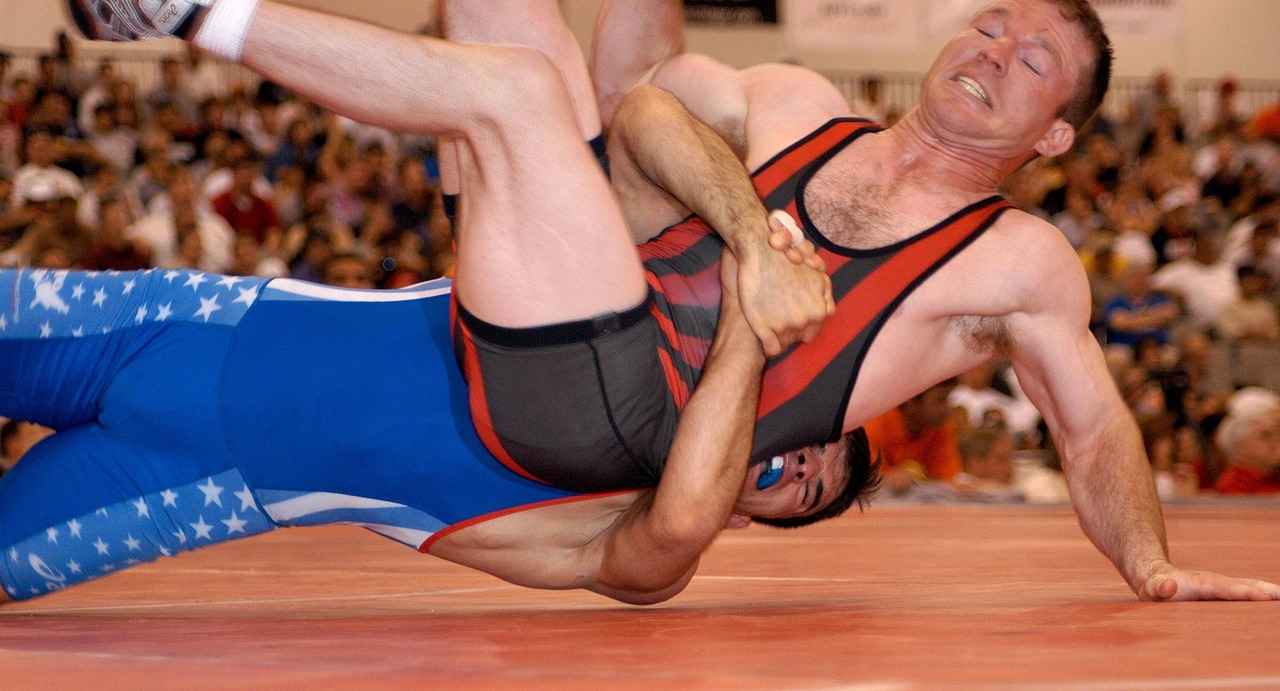
Turkey’s combat-sports story begins long before modern MMA. Wrestling is central to Turkish sporting identity, and that matters because wrestling remains one of the most valuable foundations in mixed martial arts. A fighter who can dictate where the bout takes place already controls much of the fight. In MMA terms, the wrestler decides whether the match is contested in open space, against the cage, in scrambles, or on the mat.
Turkey has several grappling traditions that shape how the country thinks about fighting. Olympic freestyle and Greco-Roman wrestling have produced serious athletes over generations, while yağlı güreş, or Turkish oil wrestling, remains one of the country’s most distinctive traditional sports. Oil wrestling is not a direct MMA style. The rules, equipment, grips, rhythm, and cultural setting are very different from a cage fight. But it does reflect something important: Turkey has long treated grappling as a prestigious and physical form of competition, not as a niche martial art imported from abroad.
That cultural familiarity gives Turkish MMA a useful base. Fighters do not need to be sold on the value of clinching, balance, body control, pressure, and toughness. Those ideas already exist in the broader sporting environment. What MMA requires is translation. A wrestler must learn how to enter without absorbing knees and uppercuts. A traditional grappler must learn how to finish takedowns against the fence. A strong clinch athlete must develop top control, submission defense, striking exits, and round management.
This is where Turkish MMA is still maturing. A country can have excellent wrestlers and still not automatically become an MMA power. MMA wrestling is its own craft. The cage changes angles. Gloves change grips. Ground striking changes urgency. Submissions change risk. Turkey’s long-term ceiling will depend on how well coaches can convert the country’s grappling talent into complete mixed martial artists rather than treating wrestling as a separate sport that only occasionally feeds MMA.
Striking Culture Gives Turkish MMA Its Flash
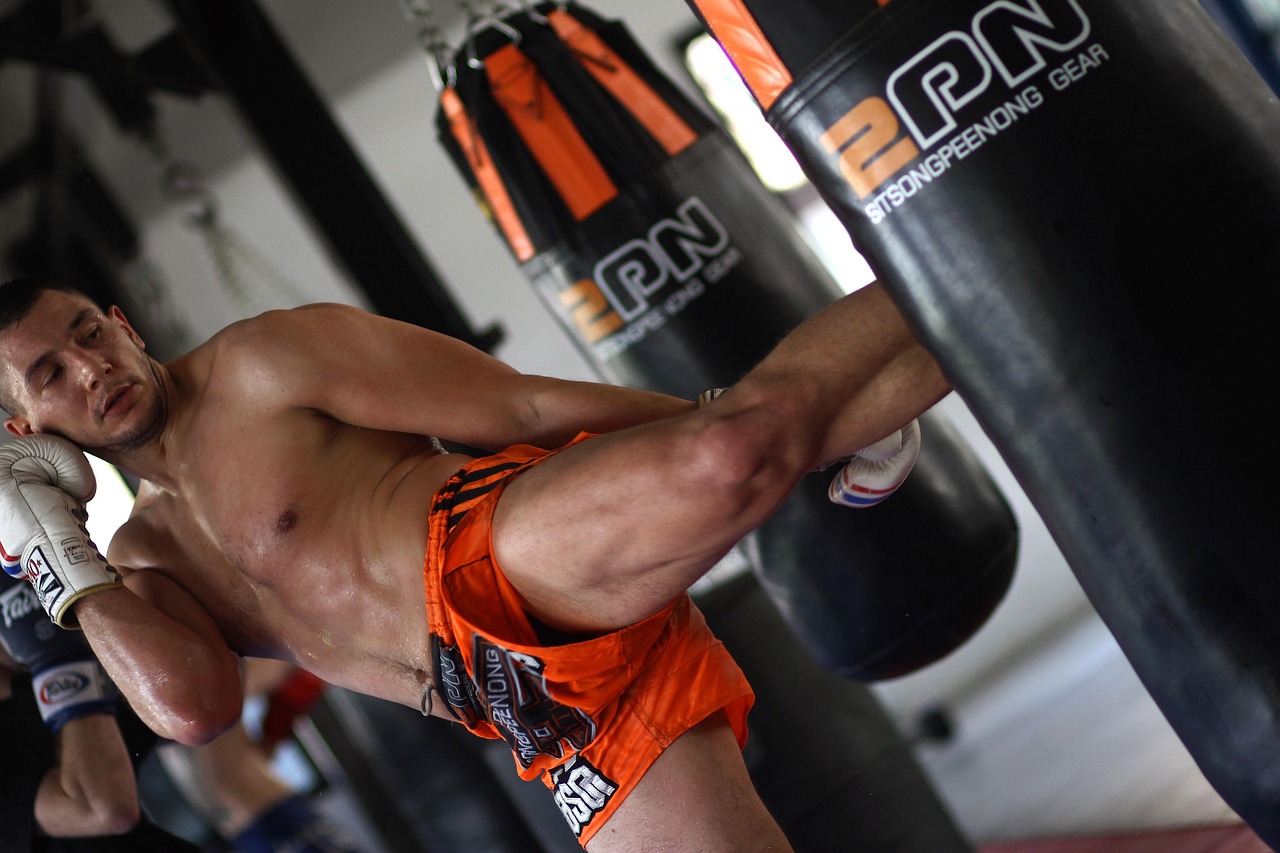
If wrestling gives Turkey its base, striking gives Turkish MMA much of its international visibility. Turkish and Turkish-diaspora fighters have been especially noticeable in kickboxing, Muay Thai, and knockout-oriented MMA. This matters because the Turkish fight identity that many international fans recognize is not only grappling. It is forward pressure, heavy hands, strong kicks, and emotional walkouts under the Turkish flag.
Gökhan Saki is the clearest example. Saki was already a major name in kickboxing before crossing into the UFC. His MMA career was short, but his arrival carried symbolic weight because he represented a style of Turkish-linked combat athlete that fans understood immediately: explosive, dangerous, technically sharp on the feet, and capable of producing a highlight at any moment. He was not proof of a complete Turkish MMA pipeline, but he was proof that Turkish combat-sports athletes could generate global attention in the MMA space.
That striking influence continues through fighters such as İbo Aslan, whose UFC rise has given Turkish fans a more modern MMA reference point. Aslan’s appeal is easy to understand. He fights in a glamour division, carries real finishing power, and represents the kind of aggressive light heavyweight that can quickly become visible to casual fans. For a developing MMA country, one UFC finisher can do more for public attention than dozens of quiet regional decisions.
Turkey’s striking base also comes through athletes competing outside the UFC. Halil Amir has represented Turkey on the ONE Championship stage, bringing an aggressive, finishing-oriented lightweight style into one of the sport’s most international promotions. Shamil Erdogan has added another Turkish flag-bearing presence in ONE, while Turkish and Turkish-diaspora athletes in Europe continue to move through regional circuits. The pattern is clear: Turkish MMA is often most recognizable when it has a dangerous striker or pressure fighter attached to a major international platform.
The key question is whether that striking identity can be rounded into a full MMA system. Kickboxers need wrestling defense. Wrestlers need hands. BJJ players need striking entries. Turkey has enough combat-sports variety to build those complete athletes, but the pieces have to be integrated earlier and more consistently.
The Diaspora Is Part of the Turkish MMA Story
Turkey’s MMA identity cannot be limited to fighters who trained entirely inside Turkey. The Turkish diaspora in Germany, the Netherlands, Austria, Belgium, and other parts of Europe plays a major role in how Turkish fighters reach international MMA. Many Turkish-linked athletes develop in European gyms, fight on European regional cards, and represent a mixed identity: Turkish by heritage, flag, language, or family background, but shaped athletically by the European MMA circuit.
That is not a weakness. It is one of the most important parts of the Turkish MMA map. European MMA has become increasingly competitive through promotions such as OKTAGON, KSW, Cage Warriors, Brave CF events in Europe and the Middle East, and smaller national circuits. For Turkish fighters based in Germany, Austria, Belgium, or the Netherlands, the route to serious fights may be clearer than it is for a young athlete trying to build entirely through domestic Turkish shows.
Kerim Engizek is an example of how the Turkish diaspora can become significant in European MMA. Based out of Germany, he became one of the more visible Turkish-linked middleweights in the European scene. His career belongs partly to German MMA, partly to the broader European circuit, and partly to Turkish combat-sports identity because fans often track him through heritage as well as geography.
Gökhan Sarıçam adds a similar layer. As a Turkish-linked heavyweight with a European base and UFC visibility, he reflects how Turkey’s modern MMA story often moves through cross-border development rather than a single domestic pathway. The same is true across many sports, but MMA makes it especially visible because fighters are marketed individually. A flag, nickname, walkout song, gym affiliation, and fight location can all pull a fighter’s identity in different directions.
For Turkey, this diaspora network is a real advantage. It gives Turkish MMA access to higher-volume fight markets, better-established gyms, stronger regional matchmaking, and European media attention. The long-term opportunity is to connect that diaspora success back to domestic development, so Turkish fighters abroad are not isolated examples but part of a broader national ecosystem.
Istanbul, Ankara, Antalya, and the Domestic Training Map
Turkey’s domestic MMA scene is most likely to develop through major urban centers rather than evenly across the whole country. Istanbul is the natural center of gravity. It has the population, media profile, international travel access, commercial base, and arena infrastructure to support higher-level MMA events. If Turkey is going to become a consistent MMA host market, Istanbul is the obvious lead city.
Ankara also matters because of its institutional and sporting role. A national combat-sports structure needs referee development, coaching education, amateur competitions, federation activity, and administrative consistency. That kind of work is less glamorous than a big knockout in Istanbul, but it is what gives MMA durability. Without trained officials, safe amateur rules, reliable matchmaking, and credible event standards, a scene becomes dependent on individual promoters and short-term hype.
Antalya is also part of the picture. It has produced fighters, including Halil Amir, and its position as a major Mediterranean city gives it a different combat-sports feel from Istanbul or Ankara. Coastal Turkey has the potential to support fight camps, tourism-linked events, and regional shows that connect Turkish athletes with fighters from the Balkans, the Caucasus, Central Asia, the Middle East, and Europe.
The Turkish gym map is still mixed. Some athletes train in gyms that are explicitly MMA-focused. Others start in kickboxing, boxing, wrestling, judo, or BJJ rooms and add MMA later. That is common in developing markets. The question is how quickly the country can move from “combat-sports athletes learning MMA” to “MMA athletes being developed from the beginning.” Those are not the same thing.
A true MMA gym must teach transitions. It must teach how to strike into takedowns, how to wrestle against the cage, how to stand up while being punched, how to pass guard with ground-and-pound threats, how to manage five-minute rounds, and how to build a game plan for different rule sets. Turkey has many of the component skills. The next step is producing more rooms where those skills are fused daily.
Fighters Who Put Turkey on the MMA Map
Alptekin Özkılıç holds an important place in Turkish MMA history because he helped put the Turkish flag into the UFC conversation. As an Istanbul-born flyweight, he competed during a period when the UFC’s lighter divisions were still developing their global identity. His career did not make Turkey an MMA power overnight, but it gave Turkish fans a reference point inside the sport’s biggest promotion.
Gökhan Saki brought a different kind of attention. He entered MMA with a reputation already built in elite kickboxing, which meant fans were not watching an unknown prospect. They were watching a proven striker test himself in a less forgiving ruleset. His UFC run was brief, but his presence mattered because it connected Turkish fight fans to the idea that world-class striking could cross into MMA and create immediate intrigue.
İbo Aslan is one of the most important modern names because he represents the current era of Turkish UFC visibility. Light heavyweight is a division where power, aggression, and confidence travel well, and Aslan’s finishing style gives Turkish MMA a recognizable contemporary figure. For young fans in Turkey, a fighter like Aslan is easier to rally around than a distant pioneer from an earlier UFC period. He is part of the current MMA media cycle, current highlight culture, and current Turkish sports conversation.
Halil Amir and Shamil Erdogan give Turkey additional relevance through ONE Championship. Their presence matters because MMA is no longer only measured by UFC representation. ONE has its own international audience and a strong Asian and global martial arts identity. Turkish fighters succeeding there help broaden the country’s MMA profile beyond one promotion or one region.
The deeper story is that Turkey’s best-known MMA names are still scattered across different systems. Some are domestic. Some are diaspora-based. Some are strikers who crossed over. Some are international prospects. That makes the scene interesting, but it also shows why Turkey is not yet a fully consolidated MMA nation. The pieces are visible. The pipeline is still forming.
Events, Promotions, and the Search for a Stable Fight Calendar
For Turkish MMA to grow, it needs more than fighters abroad. It needs domestic events that give young athletes rounds, losses, adjustments, and visibility. Fighters are not developed by training alone. They need amateur bouts, early professional matchups, local rivalries, commission oversight, medical standards, and enough frequency to stay active.
Turkey has seen federation-backed activity and domestic MMA events, including rankings, seminars, amateur competition announcements, and local promotions. Core Fighting Championship in Istanbul has also reflected a more ambitious event model, with arena presentation and the aim of giving Turkey a larger MMA platform. These developments matter because they create a visible stage inside the country rather than forcing every serious fighter to look abroad immediately.
Still, the domestic calendar has to become more dependable. One or two strong shows can generate attention, but a national MMA scene needs repetition. It needs events that prospects can plan around. It needs coaches who know where their amateurs will compete. It needs referees and judges who gain regular experience. It needs promoters who can build recognizable local names before those fighters are ready for international matchmaking.
Turkey’s geographic position gives it a natural advantage if the event scene becomes more stable. The country sits between Europe, the Caucasus, Central Asia, the Middle East, and North Africa. That gives Turkish promotions potential access to a wide range of opponents and fight styles. A card in Istanbul could logically feature Turkish fighters against athletes from Azerbaijan, Georgia, Kazakhstan, Iran, the Balkans, Germany, the Netherlands, and the Arab world. Few countries are better positioned to become a regional crossroads if the infrastructure is built correctly.
Fan Culture and the Turkish Fight-Sports Audience
Turkish sports fans respond strongly to national representation, and that can help MMA. When Turkish fighters succeed internationally, the flag matters. The walkout matters. The language of pride, toughness, and representation connects naturally with combat sports. MMA does not need to replace football, basketball, wrestling, or boxing to find an audience. It only needs enough fighters and events to give that audience a consistent reason to pay attention.
The challenge is education. MMA fans who follow the UFC every week understand grappling exchanges, judging controversies, cage control, and submission threats. Casual fans drawn in by Turkish strikers may initially respond more to knockouts than to tactical wrestling or slow positional control. That is normal in developing MMA markets. As local events grow and more Turkish fighters compete internationally, the audience becomes more fluent.
Social media has accelerated that process. Turkish fans do not need to wait for domestic television to discover fighters. They can follow UFC clips, ONE highlights, regional promotion posts, fighter interviews, and gym footage instantly. That helps prospects build followings before they reach the largest stages. It also makes diaspora fighters more accessible to fans inside Turkey.
A strong Turkish MMA audience would likely be emotional, national, and knockout-friendly at first, but it can mature into a more technical fan base if the sport receives enough consistent exposure. Wrestling pride, striking entertainment, and national identity are all already present. MMA simply combines them into a newer format.
What Turkey Needs to Become a Stronger MMA Country
Turkey’s MMA future depends on structure more than talent. The country has enough athletes. It has the size, sporting culture, urban markets, diaspora network, and combat-sports foundations to produce better MMA results. The missing piece is a deeper ladder.
That ladder starts with youth and amateur competition. Wrestlers, kickboxers, judoka, boxers, and BJJ athletes need safe ways to test MMA without being rushed into poorly matched professional fights. Amateur MMA is not just a beginner version of the sport. It is where athletes learn composure, pacing, cage awareness, and the emotional reality of combining disciplines under pressure.
The next step is coaching integration. Turkey does not need every gym to become an MMA super camp, but it does need more coaches who understand the sport as a whole. A great wrestling coach, boxing coach, or Muay Thai coach can contribute enormously, but MMA athletes need someone who can connect the parts. The best Turkish prospects will be the ones who are not simply good at one discipline, but good at forcing opponents into the part of the fight where they are weakest.
Domestic promotions must also become more consistent. Fighters need activity. Fans need continuity. Media needs stories. Sponsors need confidence. A serious Turkish MMA calendar would allow prospects to develop locally before moving into European, Middle Eastern, or Asian promotions. That would also help keep more of the country’s MMA identity inside Turkey instead of outsourcing development to Germany, Austria, the Netherlands, Belgium, or the wider European scene.
Turkey is not yet an MMA powerhouse, but it is not an empty market either. It is a combat-sports country with strong raw material, growing visibility, and several international reference points. Its best current identity is as a crossover market: wrestling tradition, striking talent, diaspora development, and an event scene still trying to mature. If those pieces become better connected, Turkey could move from occasional international success to a more recognizable and reliable MMA pipeline.