Boxing in Slovenia has never depended on size. The country does not have the population, commercial fight calendar, or deep professional boxing economy of the sport’s traditional powers. It is not Mexico, the United States, the United Kingdom, Cuba, Kazakhstan, or the Philippines. Slovenia’s boxing identity is narrower, but it is also sharper: a small European boxing nation capable of producing individual breakthroughs that travel far beyond its domestic market.
That is the best way to understand Slovenian boxing. It is not a mass-production system. It is a club-based, technically minded, regionally connected fight culture where the right athlete, coach, gym, and international opportunity can turn a small national scene into a world-level story. Dejan Zavec proved that on the men’s professional side when he became Slovenia’s defining boxing figure and won the IBF welterweight world title. Ema Kozin later gave the country another major international profile, carrying Slovenian boxing into the modern women’s professional era and winning WBC and WBO light-middleweight world titles in 2023.
Slovenia’s boxing landscape is also shaped by geography. It sits between several boxing worlds: Central Europe, the Balkans, Italy, Austria, Germany, and the wider European amateur circuit. That position matters. Slovenian fighters often need regional movement to develop. A boxer can begin in Ptuj, Maribor, Ljubljana, Celje, Koper, or another local club, but the higher levels of the sport require cross-border sparring, international tournaments, European promotions, and connections to stronger boxing markets.
That gives boxing in Slovenia a particular character. It is practical, disciplined, and often understated. The sport does not dominate national conversation the way skiing, basketball, football, cycling, handball, or winter sports can. But boxing has earned its place through durable clubs, committed coaches, amateur development, professional ambition, and a small number of fighters who have made the rest of Europe pay attention.
From Local Clubs to a National Boxing Culture
The foundation of Slovenian boxing is the club. That is true in many European countries, but it is especially important in Slovenia because the sport does not have a huge professional infrastructure to absorb young fighters. The first meaningful boxing identity is formed locally, through coaches, small gyms, amateur competitions, and the rhythm of training rather than through large-scale promotion.
Maribor and Ptuj are especially important in the Slovenian boxing story. Zavec’s rise gave the eastern part of the country a central place in the national boxing imagination. He was born in the region around Ptuj, developed through Slovenian boxing before building much of his professional career through Germany, and returned as the fighter who showed that a Slovenian boxer could reach the top of the professional sport. His career made boxing feel less like a niche activity and more like a legitimate pathway for a Slovenian athlete with world-level ambition.
Ljubljana, as the capital, gives boxing a different type of relevance. It has the population base, gyms, fitness culture, university-age athletes, and combat-sports crossover audience that allow boxing to live both as competition and as training. In Ljubljana, boxing is not only about producing professionals. It is also part of a broader urban fight-sport scene that includes kickboxing, Muay Thai, mixed martial arts, Brazilian jiu-jitsu, and boxing fitness. That crossover matters because in a smaller sports market, boxing often shares athletes, coaches, facilities, and spectators with neighboring combat disciplines.
The Slovenian Boxing Association provides the formal amateur structure, connecting clubs and competition under the national boxing framework. International boxing bodies list Slovenia through its national federation structure, and the country has also been active in the broader European boxing system. The presence of organized clubs is critical because it keeps boxing from becoming dependent only on isolated professional stars. Even when Slovenia does not have a long list of world-ranked pros, the club structure gives the sport continuity.
That continuity is visible in the way Slovenian boxing presents itself today: part amateur pathway, part professional ambition, part recreational combat-sports culture. The country has enough infrastructure to support a national scene, but not enough commercial mass for fighters to remain fully insulated at home. Serious Slovenian boxers usually need to test themselves internationally, whether through European tournaments, regional shows, German-speaking boxing markets, Balkan competition, or broader professional circuits.
Dejan Zavec and the Standard for Slovenian Professional Boxing
Any serious discussion of boxing in Slovenia has to begin with Dejan Zavec, also known internationally as Jan Zaveck. He is not just the country’s most important male boxer. He is the fighter who changed the ceiling of Slovenian boxing.
Zavec’s achievement was not symbolic. It was concrete and world-level. In 2009, he won the IBF welterweight world title in Johannesburg by stopping Isaac Hlatshwayo, becoming the first Slovenian to win a professional boxing world title. That mattered because welterweight is not an obscure division hidden away from the sport’s center. It is one of boxing’s classic weight classes, historically stacked with elite fighters, major champions, and global attention.
His reign also gave Slovenia something it had not previously possessed in boxing: a recognized professional champion whose career could be understood internationally. Zavec was not merely a local hero with a protected domestic record. He fought across Europe, built a base in Germany, defended his title, and eventually shared the ring with major names in the wider welterweight and junior middleweight landscape.
That path tells a larger story about Slovenian boxing. Zavec’s career had to be international because Slovenian boxing itself could not provide all the stages he needed. He used the European professional system, particularly Germany’s boxing market, to reach opportunities that were not available domestically at the same scale. That is a recurring pattern for fighters from smaller boxing countries. The national gym builds the fighter, but the regional and international market builds the career.
Zavec also gave Slovenian boxing a model of professionalism. He was known for discipline, conditioning, seriousness, and a public image that connected well beyond hardcore boxing circles. Slovenia did not need him to be a loud prizefighter or theatrical self-promoter. His appeal came from credibility. He represented the idea that a Slovenian athlete could be technically prepared, physically tough, internationally competitive, and respected inside a sport that often favors larger markets.
His success also affected the way young Slovenian fighters could imagine the sport. Before Zavec, professional boxing may have felt distant from Slovenia’s mainstream sports identity. After him, the dream had a name, a route, and a precedent. A Slovenian boxer could start locally, travel for development, enter the European rankings, win regional belts, and eventually fight for a world title. That does not make the path easy, but it makes it real.
Ema Kozin and Slovenia’s Place in Women’s Boxing
Ema Kozin gave Slovenian boxing a second major international pillar, and her rise is especially important because it came during the expansion of women’s professional boxing. Slovenia did not have to rely only on memory of Zavec’s title reign. Kozin brought the country back into world-title conversations in a newer and fast-growing part of the sport.
Kozin, from Ljubljana, became one of Slovenia’s most visible professional boxers and won the vacant WBC and WBO light-middleweight titles by defeating Hannah Rankin in Manchester in November 2023. She had already built a strong record before that fight and had competed internationally against elite opposition, including Claressa Shields. Her career placed Slovenian boxing inside a women’s boxing landscape that is far more global than it was a generation ago.
That matters for two reasons. First, Kozin showed that Slovenia could produce world-level boxing outside the men’s professional pathway established by Zavec. Second, she did it in an era when women’s boxing is gaining more television visibility, better matchmaking, stronger title fights, and a deeper international talent pool. Her career is therefore not simply a Slovenian boxing story. It is part of the broader growth of women’s boxing in Europe.
Kozin’s significance also comes from the difficulty of building a women’s boxing career from a smaller market. Women fighters often have to travel even more than men to find meaningful fights, title opportunities, and proper promotional platforms. Kozin’s major bouts in Germany, the United Kingdom, Norway, and elsewhere reflect that reality. Slovenia gave her identity and roots, but her career had to be built across borders.
Her 2025 fight with Cecilia Brækhus, one of the most important figures in modern women’s boxing, further connected Kozin to the sport’s highest historical tier. Brækhus defeated Kozin in Norway to win the WBC and WBO super welterweight titles, but the matchup itself showed the level of company Kozin had reached. For Slovenian boxing, that kind of fight has value even in defeat. It places a Slovenian boxer in the same ring as a global name and keeps the country visible in elite professional conversation.
Kozin’s career gives Slovenia something that many small boxing countries want but few sustain: a modern fighter who connects domestic pride to international relevance. She is not a novelty. She is a serious professional whose career has helped make women’s boxing part of Slovenia’s boxing identity.
The Gym Culture Behind Slovenian Boxing
Slovenian boxing gyms have to do more than teach punches. In a country without a massive professional fight industry, gyms carry the responsibility for recruitment, discipline, identity, conditioning, amateur preparation, and often the first serious connection between a young athlete and the wider boxing world.
That makes the gym environment central to understanding boxing in Slovenia. Clubs are where fighters learn the technical basics, but they are also where the sport competes for attention against more established athletic options. A Slovenian teenager with athletic talent may be pulled toward football, basketball, handball, skiing, cycling, judo, or other sports with deeper national visibility. Boxing gyms have to attract athletes who are comfortable with individual pressure, repetitive training, and the slower development curve of a sport where progress is often measured in rounds, sparring sessions, and small technical corrections.
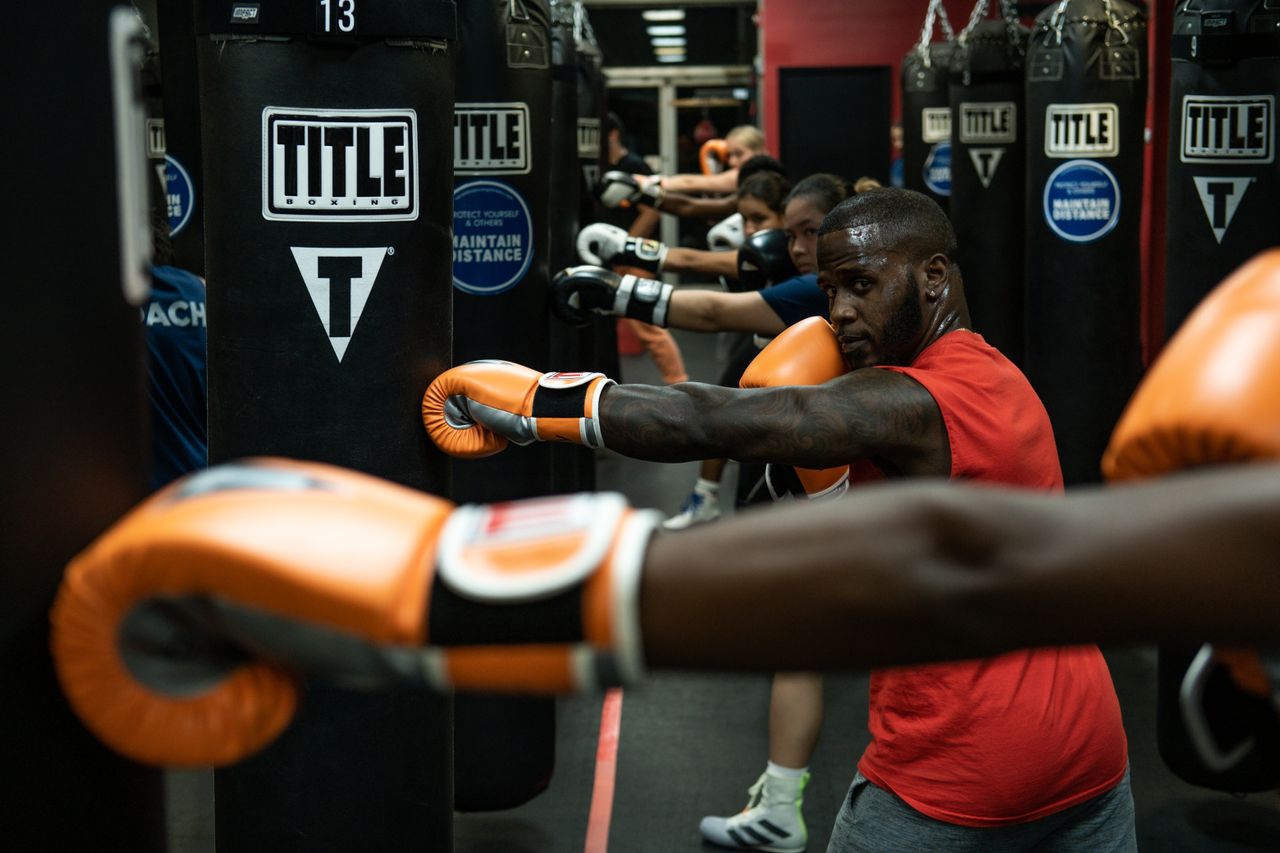
The best Slovenian boxing rooms tend to operate with a practical European club mentality. They serve different levels at once: youth competitors, senior amateurs, aspiring professionals, recreational boxers, and fitness members. That mix is important. Recreational boxing helps keep gyms alive financially and culturally, while the competitive side keeps the sport serious. In smaller boxing countries, a gym that only serves elite fighters may struggle for scale, while a gym that only serves fitness clients may lose its sporting edge. The healthiest boxing culture usually needs both.
Ljubljana’s combat-sports scene shows this hybrid model clearly. Some clubs and training centers present boxing alongside kickboxing, Muay Thai, MMA, Brazilian jiu-jitsu, and fitness boxing, reflecting how modern fight-sport participation often works in urban Slovenia. This does not weaken boxing. In many cases, it helps sustain it. A fighter might enter through fitness boxing, move into sparring, then discover amateur competition. Another athlete might cross over from kickboxing or MMA and sharpen their hands through boxing.
Outside the capital, clubs in places such as Maribor, Ptuj, Celje, Novo mesto, and other towns help give the sport a national footprint. The Slovenian Boxing Association’s club listings and national activity show that boxing is not limited to a single city. That distribution is important because Slovenia’s boxing identity is not purely metropolitan. It includes smaller communities where the relationship between coach and fighter can be direct, long-term, and highly personal.
The challenge is depth. A country can have many clubs and still lack the sparring volume of larger boxing nations. Slovenian fighters need enough domestic rounds to develop, but the best prospects eventually need international pressure. That is where tournaments, cross-border camps, and regional shows become essential. The gym begins the fighter. The region tests the fighter.
Amateur Boxing, Tournaments, and the European Pathway
Slovenia’s amateur boxing scene matters because it supplies the sport’s base. Professional stars may receive the attention, but amateur boxing creates the competitive habits that allow fighters to move beyond basic participation. Footwork, ring discipline, defensive responsibility, judging awareness, weight management, and tournament rhythm all come from the amateur system.
In Slovenia, the amateur pathway is tied to clubs, national competition, federation organization, and European boxing structures. The country is not one of Europe’s largest amateur powers, but it has enough organization to send fighters into international environments and to host meaningful competition. In 2022, Maribor was selected to host an IBA World Boxing Tour Silver Belt Series tournament, a notable event that brought international boxing attention to Slovenia and positioned Maribor as a temporary center of the amateur boxing world.
That kind of event matters for a smaller boxing country. Hosting does more than provide bouts. It gives local athletes exposure to different styles, raises organizational standards, brings foreign teams into the country, and reminds the domestic sports audience that boxing is part of the international calendar. For Slovenian boxing, events in Maribor or other cities help bridge the gap between local club activity and the larger European scene.
The European pathway is especially important because Slovenian boxers are surrounded by countries with different boxing strengths. Italy has a long professional and amateur tradition. Austria and Germany provide nearby professional markets and training possibilities. Croatia, Serbia, Bosnia and Herzegovina, and other Balkan countries offer regional rivalry and combat-sports depth. Hungary, Slovakia, Czechia, and Poland give Central European competition. Slovenia does not have to develop in isolation.
This regional setting creates opportunity, but it also raises the standard. Slovenian fighters are rarely going to be tested only by domestic opponents if they want to reach international level. They need tournaments and matchups that reveal whether their timing, defense, pace, and conditioning can hold up against athletes from stronger systems. That pressure can be difficult, but it is also the only way for a smaller boxing country to sharpen its best talent.
Olympic boxing remains a long-term challenge. Slovenia has produced respected fighters and world-level professionals, but it does not yet carry the Olympic boxing reputation of countries with deep state-supported systems or large national teams. That makes development at youth and junior level important. The more Slovenian fighters gain regular international amateur experience, the more realistic it becomes for the country to build a stronger Olympic presence in future cycles.
Professional Boxing in Slovenia: Small Market, International Ambition
Professional boxing in Slovenia has a clear limitation: the domestic market is small. There are not enough major shows, television dates, sponsorship streams, or packed arenas to build a large number of fully developed professional careers entirely inside the country. That does not mean professional boxing is weak or irrelevant. It means Slovenian professionals usually have to be mobile.
Zavec’s career is the classic example. He became a Slovenian sports figure, but his professional development depended heavily on fighting abroad and building connections in Germany and the wider European market. Kozin followed a similar international logic. Her championship opportunities came outside Slovenia, including major fights in the United Kingdom and Norway.
That is the practical reality for Slovenian boxers. A fighter may represent Slovenia, train in Slovenia, and carry Slovenian boxing identity, but the career often requires Germany, Austria, the Balkans, the United Kingdom, or broader European promotion. Smaller countries rarely control the entire boxing value chain. They develop athletes, but those athletes must travel to access opponents, purses, rankings, belts, and visibility.
Slovenia’s professional scene also has to compete with the fragmented nature of modern boxing. Fighters need managers, promoters, sanctioning opportunities, medical regulation, matchmaking, sponsorship, and media attention. In a country where boxing is not the dominant sport, those pieces can be hard to align. That is why individual champions matter so much. One successful fighter can draw attention, attract new athletes, and convince sponsors or broadcasters that boxing deserves space.
Local professional shows still have value even when they are not global events. They give prospects a way to debut, help amateurs transition, provide fans with live boxing, and keep the sport visible. But the ceiling for Slovenian professional boxing is usually international. The domestic scene can launch a fighter. It usually cannot complete the entire journey.
This gives Slovenian professional boxing a specific identity: selective, export-oriented, and dependent on exceptional individuals. When Slovenia produces a world-class boxer, that fighter becomes larger than the local market. Zavec and Kozin both illustrate that pattern. They did not come from a massive boxing economy, but they made Slovenia visible inside world boxing.
Boxing’s Place Among Slovenian Combat Sports
Boxing in Slovenia does not exist alone. It shares space with kickboxing, karate, judo, MMA, Muay Thai, wrestling, and other combat disciplines. This matters because Slovenia has often been more visible internationally in certain combat sports than its size would suggest. The country’s broader fight culture creates athletes who are comfortable with discipline, contact, and technical training, even if they do not all enter boxing first.
This crossover can help boxing. A kickboxer may use boxing to sharpen hand combinations. An MMA fighter may train boxing to improve striking defense. A recreational athlete may begin with fitness boxing before discovering the competitive version of the sport. In a small country, those shared pathways are valuable. They widen the audience and keep boxing gyms connected to a larger combat-sports ecosystem.
The risk is that boxing can become secondary if it is treated only as a component of other sports. Serious boxing requires its own habits. A boxer needs stance discipline, punch economy, round management, defensive layers, and ringcraft specific to boxing. The rhythm is not the same as kickboxing or MMA. Slovenian boxing’s continued development depends on maintaining clubs and coaches that teach boxing as a complete sport, not just as hand-striking for another discipline.
That distinction is important for the country’s future. Slovenia can benefit from combat-sports crossover while still protecting boxing’s technical identity. The best scenario is not competition between boxing and other fight sports, but a healthy ecosystem where boxing remains a respected discipline with its own champions, clubs, tournaments, and ambitions.
The Future of Boxing in Slovenia
The future of boxing in Slovenia depends on turning individual success into broader continuity. Zavec proved that a Slovenian man could become a world champion. Kozin proved that a Slovenian woman could win major world titles in the modern professional era. The next step is building enough depth that those achievements feel less isolated.
That does not mean Slovenia needs to become a boxing superpower. That is not a realistic or necessary goal. A better target is sustainable relevance: stronger youth development, better amateur tournament exposure, more cross-border sparring, improved coaching education, regular domestic shows, and clearer professional pathways for the best prospects. If the country can do that, it can remain a small but credible contributor to European boxing.
Women’s boxing should be a major part of that future. Kozin’s career gives young Slovenian women a visible example in a sport that once offered far fewer opportunities. As women’s boxing continues to grow internationally, Slovenia has a chance to participate in that growth without needing the same scale required on the men’s side. A small country can move quickly when the talent, coaching, and matchmaking align.
The amateur system will also be decisive. Without strong amateur boxing, professional success becomes accidental. With better youth competition and international experience, Slovenia can create more fighters who are prepared for regional and European levels before turning professional. Hosting tournaments, sending teams abroad, and building consistent national competition all help raise the floor.
Slovenia’s boxing identity will probably remain compact. It will not be defined by hundreds of professionals or constant world-title events. Its strength is more likely to come from disciplined clubs, regional mobility, occasional standout fighters, and a national scene that understands how to work within a small market. That is not a weakness if the system is honest about it.
Slovenian boxing is at its best when it is precise about what it is: a small-country boxing culture with serious technical roots, regional connections, and a proven ability to produce fighters who exceed the size of the domestic stage. Its history is not crowded, but it has landmarks. Its professional market is not large, but it has produced world champions. Its clubs are not famous worldwide, but they keep the sport alive. For Slovenia, boxing is not about volume. It is about the fighter who comes from a small room, crosses borders, and makes the boxing world learn the flag.