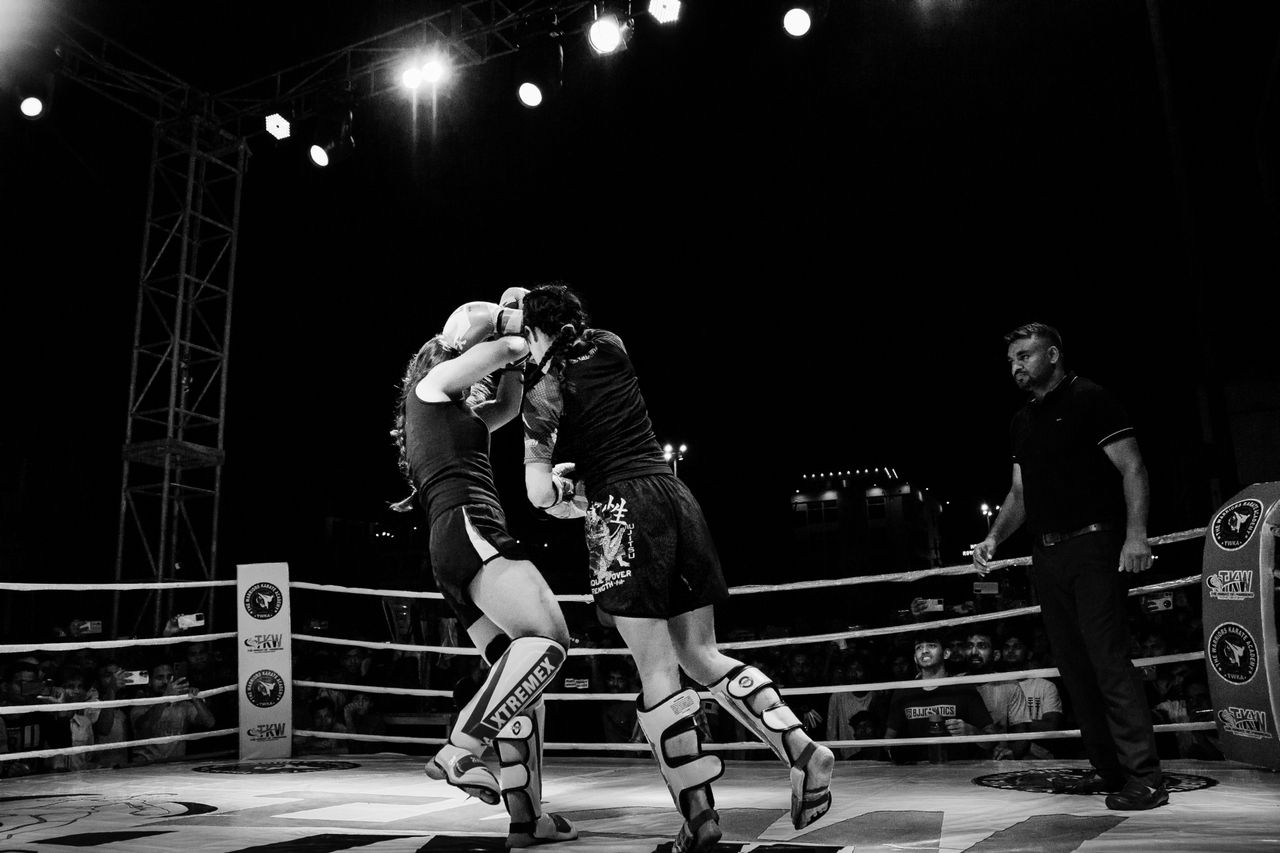
Wisconsin has one of the clearest MMA identities in the Midwest because it is not just a state with scattered gyms and local fight nights. It is the home of Roufusport, the Milwaukee academy that helped turn Wisconsin into a nationally recognized training market. If West Virginia’s MMA identity is regional and grassroots, Wisconsin’s is built around a real elite camp, a strong kickboxing lineage, notable world-level fighters, and a Milwaukee fight culture that has repeatedly reached major promotions.
Roufusport is the center of the story. Founded and led for years by Duke Roufus, the Milwaukee gym became one of the most influential MMA academies in the United States outside the traditional coastal hubs. Roufusport’s own history points to its work with UFC, WEC, Bellator, ONE, and PFL-level athletes, including Anthony Pettis, Sergio Pettis, Ben Askren, Tyron Woodley, Ben Rothwell, Paul Felder, Erik Koch, Maycee Barber, Jared Gordon, Emmanuel Sanchez, and others. Not all of those fighters are Wisconsin products in the same way, but the academy made Milwaukee a place where elite fighters could sharpen striking, prepare for major bouts, and build complete MMA games.
Anthony Pettis remains the defining Wisconsin MMA figure. A Milwaukee native, Pettis became WEC lightweight champion and UFC lightweight champion, and his style gave Wisconsin something more specific than just a successful fighter. He represented the Roufusport blend: taekwondo creativity, kickboxing polish, athletic scrambling, and a willingness to attack from unusual positions. Pettis’ famous “Showtime” identity helped make Milwaukee part of the national MMA conversation, especially during the WEC-to-UFC transition when lightweight became one of the sport’s deepest divisions.
Sergio Pettis added another layer to that legacy. He carried the Milwaukee and Roufusport connection into the lighter weight classes, built a long UFC run, and later became Bellator bantamweight champion. Ben Askren gives Wisconsin a different kind of MMA identity: wrestling-first, pressure-heavy, and stylistically stubborn. Askren’s career across Bellator, ONE Championship, and the UFC made him one of the most recognizable wrestling-based fighters of his generation, and his Wisconsin ties connect MMA in the state to the Midwest’s larger grappling culture.
Duke Roufus’ influence is especially important because Wisconsin MMA is not just about fighters who happened to come from the state. It is about coaching. Roufus brought a serious kickboxing mind into MMA at a time when the sport was still learning how to integrate striking with wrestling and jiu-jitsu. His death in 2025 was widely covered across the MMA world, and reports emphasized his role in developing fighters such as Anthony and Sergio Pettis, Ben Askren, Tyron Woodley, Paul Felder, and Ben Rothwell. That legacy keeps Wisconsin from being a generic regional scene. It has a coaching lineage that changed the careers of high-level fighters.
The Wisconsin scene is strongest around Milwaukee, but it is not limited to one room. Red Schafer MMA, Pura Vida BJJ & MMA, and other academies contribute to a wider training environment where Brazilian jiu-jitsu, boxing, kickboxing, submission grappling, wrestling, and MMA classes sit close together. Red Schafer MMA advertises BJJ, no-gi grappling, MMA, boxing, and kickboxing, while Pura Vida identifies itself as a Milwaukee Brazilian jiu-jitsu and MMA academy. That matters because a state’s fight culture is not sustained by one famous gym alone. It needs multiple rooms where amateurs, hobbyists, coaches, and aspiring professionals keep the pipeline alive.
Wisconsin also benefits from a real event platform. Anthony Pettis Fighting Championship has brought professional and amateur MMA to Milwaukee and has appeared on UFC Fight Pass. Tapology listed APFC 23 in Milwaukee for March 2026 with 24 MMA bouts at Landmark Credit Union Live, and local event material has framed APFC as a platform for regional prospects. That gives Wisconsin something many states lack: a direct bridge between local athletes and a national MMA streaming audience.
The state’s MMA identity is therefore unusually complete for a Midwestern market. It has a signature gym, recognizable champions, a coaching legacy, a live-event platform, and enough combat-sports infrastructure to support both hobbyists and serious fighters. Wisconsin is not as large as the deepest MMA states, but it has produced a sharper identity than many bigger markets. Milwaukee, in particular, has become the state’s MMA capital because Roufusport gave it credibility, the Pettis brothers gave it star power, and APFC gives the next generation a stage.
The future of Wisconsin MMA depends on whether that post-Roufus era can keep producing high-level athletes while broadening beyond one legendary academy. The foundation is strong. The state has already proved that it can develop champions, host meaningful regional cards, and attract national attention. Wisconsin’s place in MMA is secure because it has something every serious fight market needs: a recognizable style, a recognizable city, and a lineage people inside the sport understand.