Boxing in Ecuador has never depended on volume alone. It is not Mexico, Puerto Rico, Cuba, Argentina, or Colombia, where the sport has a deeper public footprint and a larger professional machinery. Ecuador’s boxing identity is narrower, but it is also sharper than many outsiders realize. The country’s ring culture has been shaped by durable amateurs, Olympic qualification campaigns, regional tournaments, and a handful of professionals who carried Ecuadorian boxing into conversations usually dominated by larger fight nations.
That makes Ecuador an interesting boxing country. It is not a global factory of champions, but it has produced serious fighters. It is not a constant host of major international prizefights, but it has staged important moments. It does not have the same professional circuit as the United States, Mexico, or the United Kingdom, but Ecuadorian boxers have repeatedly used amateur tournaments, Olympic pathways, and overseas professional opportunities to reach the wider boxing world.
The country’s boxing story moves between two lanes. One is the amateur and Olympic lane, where Ecuador has developed boxers capable of competing at Pan American Games, world qualifiers, and the Olympics. The other is the professional lane, where names like Segundo Mercado and Carlos Góngora gave Ecuador rare but meaningful visibility on the world stage. Together, those lanes define Ecuadorian boxing: disciplined, under-publicized, regionally competitive, and occasionally capable of producing fighters who break far beyond the size of the domestic boxing market.
From Local Gyms to the International Amateur Circuit
Ecuadorian boxing has often grown through the same foundations that build the sport in many developing fight markets: public gyms, provincial sports federations, military-style discipline, local coaches, and youth programs that give talented athletes a route into organized competition. The sport has not always had the commercial support needed to build a large professional ecosystem, so the amateur structure has carried much of the burden.
That structure matters because amateur boxing gives Ecuador a way to compete internationally without needing a massive domestic prizefighting industry. A talented young fighter can enter local tournaments, move through provincial and national competition, earn attention from coaches, and eventually represent the country in regional championships or Olympic qualification events. For a country where football dominates the sports imagination and other Olympic sports compete for limited attention, boxing’s institutional pathway has been essential.
Ecuador’s boxing development is also tied to geography. Coastal provinces, especially areas with strong Afro-Ecuadorian athletic traditions, have produced notable fighters. Esmeraldas, Guayas, Manabí, and other regions have all contributed to the country’s combat-sports identity in different ways. Quito brings another dimension because of its altitude, national institutions, and ability to host major events. Boxing in Ecuador is not evenly distributed, but it has enough regional spread to avoid being reduced to one city or one gym culture.
The sport’s appeal is straightforward. Boxing rewards conditioning, courage, timing, and discipline. It does not require the same large-field infrastructure as football, nor the same expensive equipment as many other sports. In Ecuador, that has made it attractive to young athletes who need a demanding individual sport with a visible competitive ladder. The challenge has always been turning that raw participation into sustained international success.
Segundo Mercado and the Fight That Put Ecuador in the Middleweight Conversation
For many boxing followers outside Ecuador, Segundo Mercado remains one of the country’s most historically important fighters. Born in Esmeraldas, Mercado represented Ecuador at the 1988 Olympic Games before turning professional and building a career that eventually placed him across the ring from Bernard Hopkins.
The most famous night of Mercado’s career came in December 1994 in Quito, when he fought Hopkins for the vacant IBF middleweight title. Mercado knocked Hopkins down twice, and the bout ended in a draw. For Ecuadorian boxing, the moment mattered far beyond the result. It placed an Ecuadorian fighter within touching distance of a world title against a man who would become one of the defining middleweights of modern boxing.
The rematch took place in the United States in 1995, and Hopkins won by stoppage. Mercado later challenged Frankie Liles for a super middleweight title, but the Hopkins fight in Quito remains the defining image of his career. It was Ecuador’s reminder that a fighter from its system could reach the top level of professional boxing, even if the country did not yet have the promotional depth to regularly produce world-title contenders.
Mercado’s legacy is also important because he connected Ecuador’s amateur and professional traditions. He was not simply a local tough fighter who happened into one major opportunity. He came through international amateur competition, transitioned into the professional ranks, fought in the United States, and then brought a major world-title fight back to Quito. That arc became a reference point for later Ecuadorian fighters chasing international relevance.
Carlos Góngora and Ecuador’s Professional Breakthrough
Carlos Góngora gave Ecuador one of its clearest professional boxing breakthroughs. Like Mercado, Góngora had an amateur background before making his professional rise. He represented Ecuador internationally, competed in major amateur tournaments, and then moved into the paid ranks as a southpaw super middleweight with size, patience, and punching power.
His career changed dramatically in December 2020, when he stopped Ali Akhmedov in the final round to win the IBO super middleweight title. The victory was significant because it gave Ecuador a rare world-level professional champion and provided a modern reference point for Ecuadorian boxing fans. Góngora was not just a domestic name. He became a fighter attached to major international broadcasts, global promoters, and the broader super middleweight conversation.
Góngora’s win also showed the difficult nature of Ecuador’s professional pathway. Ecuadorian boxers often need to leave home, sign with foreign promoters, train abroad, or take opportunities on short notice to break through. Góngora’s championship moment came outside Ecuador, in the kind of international setting where fighters from smaller markets frequently have to prove themselves without the protective matchmaking available to prospects from more powerful boxing economies.
That reality gives his success extra weight. Ecuador does not produce a steady stream of televised professional contenders, so each fighter who reaches that level carries more symbolic importance. Góngora became proof that Ecuadorian boxing could still produce a world-level professional, even in an era when the sport’s biggest commercial routes run through the United States, Mexico, the United Kingdom, Japan, and the Middle East.
Julio Castillo and the Amateur Standard
If Mercado and Góngora represent Ecuador’s professional ambitions, Julio Castillo represents the country’s durable amateur standard. A heavyweight with multiple Olympic appearances, Castillo became one of the most recognizable Ecuadorian boxers of his generation. His career showed the value of persistence in an amateur system where Olympic qualification, Pan American competition, and international tournaments can define a fighter’s reputation as much as professional belts.
Castillo’s importance is not just that he competed internationally. It is that he helped make Ecuador visible in heavyweight amateur boxing, a division often dominated by countries with deeper combat-sports resources. Heavyweight boxing requires more than size. It requires footwork, pacing, defensive awareness, and the ability to handle physically imposing opponents from different boxing schools. Castillo’s long presence gave Ecuador a measure of credibility in that environment.
His Pan American Games medals and Olympic appearances also made him a reference point for younger Ecuadorian boxers. In countries where boxing is still fighting for space, visibility matters. A boxer who reaches the Olympics provides a concrete example of what the sport can offer: national selection, international travel, public recognition, and the chance to compete against elite athletes from established boxing nations.
Castillo’s career also reinforced a broader truth about Ecuadorian boxing. The country’s most reliable route to recognition has often come through amateur success before professional opportunity. Ecuador can produce boxers with international quality, but the amateur system remains the place where many of those athletes first become visible.
Carlos Mina, Gerlon Congo, and the Heavyweight Line
Ecuador has had a notable modern presence in the heavier amateur divisions. Carlos Mina competed for Ecuador at the 2016 Olympics and reached the quarterfinal stage in the light heavyweight division. His Rio performance helped strengthen Ecuador’s reputation as a country capable of developing physically strong, internationally competitive boxers in heavier weights.
Gerlon Congo later continued that thread. Competing in the super heavyweight category, Congo became part of Ecuador’s Paris 2024 boxing story and delivered one of the country’s important recent qualification moments. In the modern Olympic boxing landscape, where super heavyweight divisions feature athletes from Cuba, Uzbekistan, Kazakhstan, France, Great Britain, the United States, and other well-supported programs, Ecuador’s ability to qualify and compete is not a minor achievement.
These fighters matter because Ecuador’s boxing identity is not built only around smaller-weight Latin American tradition. In much of Latin America, the most famous professional histories often run through flyweight, bantamweight, featherweight, lightweight, welterweight, and middleweight divisions. Ecuador has had meaningful representation in larger weight classes, especially in amateur boxing. That gives the country a slightly different profile from some of its neighbors and helps explain why its Olympic boxing story deserves attention.
The heavier divisions also require a specific development environment. Fighters need sparring partners with size, coaches who understand distance and physical management, and enough international exposure to avoid being overwhelmed by unfamiliar styles. Ecuador’s results in these divisions suggest that its amateur coaches have built pockets of real competency, even if the wider boxing infrastructure remains modest.
María José Palacios and the Growth of Women’s Boxing in Ecuador
Women’s boxing has become increasingly important to Ecuador’s modern boxing profile. María José Palacios has been central to that growth. Her Olympic participation and international results gave Ecuador a visible women’s boxing figure at a time when the sport is gaining more respect across Latin America and the Olympic movement.
Palacios’ presence matters for several reasons. First, she gives Ecuadorian boxing a broader identity than the traditional male amateur and professional pipeline. Second, she shows that women’s boxing in Ecuador is not merely a fitness trend or a secondary development area. It has produced athletes capable of reaching major international tournaments. Third, she represents a pathway for young female fighters who may not have had many national examples in earlier generations.
Women’s boxing still faces structural challenges in many countries: fewer gyms with deep female sparring pools, less media coverage, fewer sponsors, and limited professional opportunities. Ecuador is no exception. But Olympic boxing has helped change the conversation. Because women can now pursue international amateur goals with real visibility, the sport has more room to grow at the youth and national-team level.
For Ecuador, the next step is turning individual breakthroughs into a deeper women’s program. That means more coaching attention, more domestic competition, more international outings, and more pathways from junior development into elite competition. Palacios has already helped show that the pathway exists. The long-term question is whether Ecuador can widen it.
Where Fighters Are Made in Ecuador
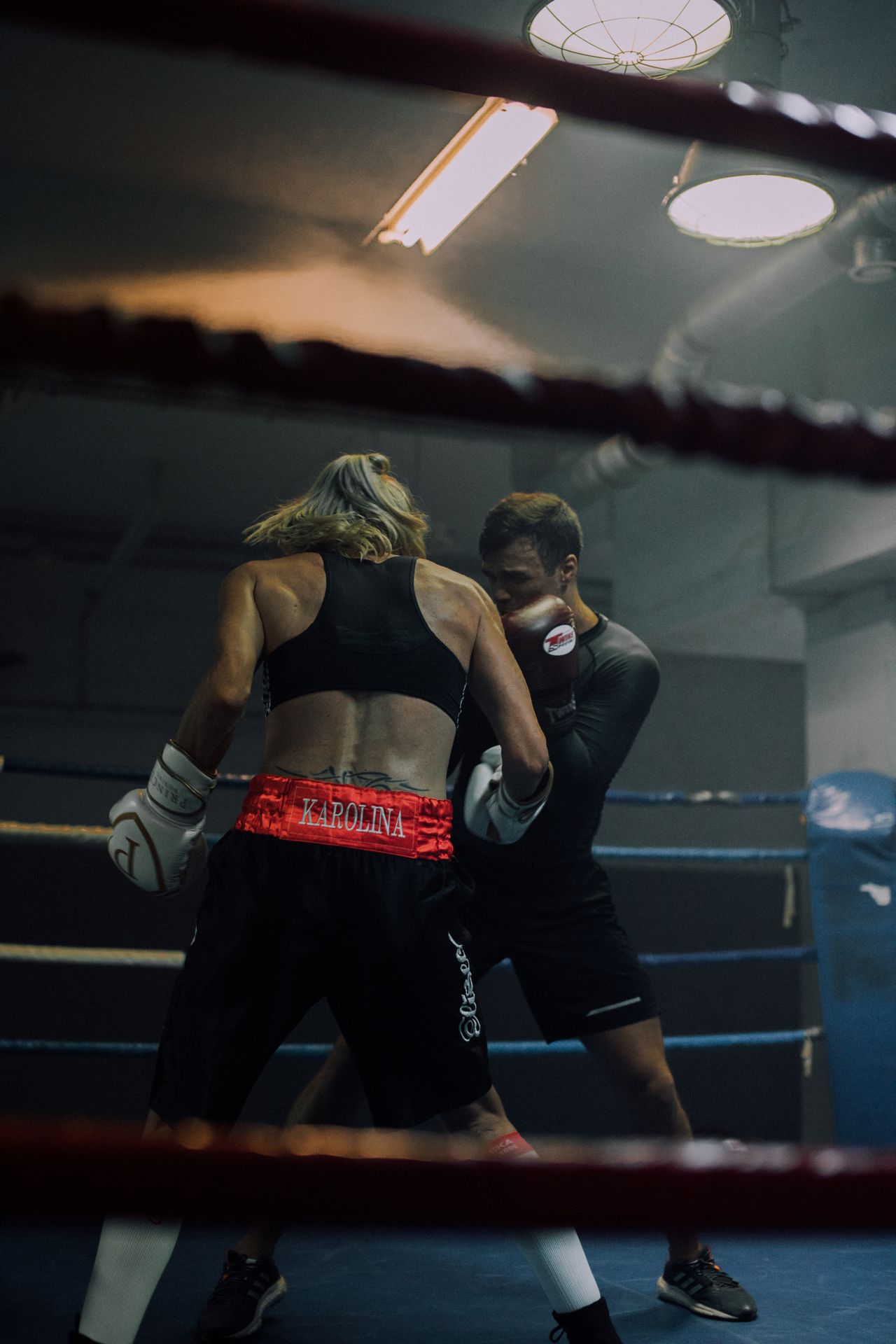
The boxing gym in Ecuador is usually less glamorous than the international stage, but it is where the country’s fighters are formed. Ecuadorian boxing gyms tend to carry the practical character of amateur fight schools: conditioning work, bag rounds, mitts, sparring, rope skipping, defensive drills, and coaches who often play several roles at once. In smaller programs, a trainer may be coach, mentor, organizer, travel coordinator, and advocate for athletes who need help staying in the sport.
Unlike major professional boxing centers, Ecuador does not have a large network of world-famous gyms known to casual international fans. Its training culture is more local and developmental. Fighters often come through provincial clubs, federation-backed programs, and national-team structures rather than high-profile commercial gyms. That gives Ecuadorian boxing a different rhythm. The gym is not primarily a brand. It is a proving ground.
This also means that amateur results are especially important. A young fighter in Ecuador may not become known through ticket-selling local shows or a heavily promoted professional debut. Recognition often comes from tournament success. Winning at the national level can lead to selection. Selection can lead to international competition. International competition can lead to Olympic qualification, professional offers, or training opportunities abroad.
Boxing fitness has also expanded the sport’s base. As in many countries, more people now enter boxing gyms for conditioning, self-defense, and recreation rather than competition. That can help keep gyms financially alive, but competitive boxing requires more than classes. It requires serious sparring, medical oversight, qualified coaching, event organization, and a culture that can move talented athletes from hobbyist training into disciplined competition.
Professional Boxing Still Has Room to Grow
Professional boxing in Ecuador remains a developing market. The country has produced important professional fighters, but it does not yet have the kind of domestic circuit that regularly turns prospects into world contenders while keeping them active at home. Ecuadorian professionals often need regional fights, foreign promoters, or opportunities abroad to move their careers forward.
That creates a familiar problem for fighters from smaller boxing economies. A talented boxer may have the ability to compete internationally but not the local matchmaking, sponsorship, television exposure, or promotional leverage needed to build slowly. Instead, Ecuadorian fighters may have to take difficult fights on the road, accept short-notice opportunities, or move through careers without the same protection given to prospects from larger markets.
Still, Ecuador’s professional scene has assets. The country has produced fighters with amateur experience, and that foundation can make them more prepared than raw novices when they enter the paid ranks. Ecuador also sits within a Latin American boxing region that offers possible connections to Colombia, Peru, Mexico, Panama, Argentina, and the United States. A stronger regional circuit could help Ecuadorian fighters find more regular competition and better career progression.
The challenge is continuity. One world-level fighter can inspire attention, but a boxing country grows when there is a steady chain behind him: local shows, national rankings, gyms producing prospects, promoters investing in development, and broadcasters willing to give the sport time. Ecuador has had breakthrough names. Its professional future depends on building more reliable structures around the next generation.
Ecuador’s Place in Latin American Boxing
Ecuador occupies a distinct place in Latin American boxing. It is not one of the region’s traditional boxing giants, but it is not absent from the conversation either. Its fighters have appeared in Olympic brackets, Pan American competition, world-title fights, and professional championship moments. That places Ecuador in the middle tier of regional boxing nations: not a superpower, but a country with enough history and talent to deserve serious attention.
Its comparisons are revealing. Mexico and Puerto Rico have deeper professional cultures and far larger championship traditions. Cuba has one of the greatest amateur boxing systems in history. Colombia and Venezuela have produced more prominent professional champions across different eras. Argentina has a long professional lineage and strong domestic boxing tradition. Ecuador’s identity is smaller, but it is not empty. It is defined by selective excellence rather than broad dominance.
The country’s strongest regional argument comes through amateur boxing. Ecuadorian fighters have shown they can qualify, compete, and occasionally threaten opponents from more established programs. That matters because Olympic and Pan American boxing remain central measures of national development. A country that can place boxers into those environments has a foundation, even if its professional market still needs growth.
Ecuador also benefits from the symbolic power of its breakthrough fighters. Mercado’s fight with Hopkins, Góngora’s title win, Castillo’s Olympic longevity, Mina’s Rio run, Congo’s Paris qualification, and Palacios’ role in women’s boxing all give the country a set of reference points. They do not make Ecuador a boxing superpower, but they make the sport part of the country’s international athletic identity.
The Future of Boxing in Ecuador
The future of boxing in Ecuador depends on whether the country can connect its best pieces more effectively. The amateur system has produced international competitors. Individual professionals have reached major stages. Women’s boxing has gained visibility. The heavier divisions have given Ecuador a profile that stands out within parts of Latin America. But the sport still needs depth, funding, domestic activity, and long-term planning.
The most important growth area is the bridge between amateur and professional boxing. Ecuador has shown that it can develop skilled amateurs. The next step is helping more of them transition into sustainable professional careers when they choose that path. That requires managers, promoters, regional matchmaking, medical standards, training stability, and international relationships. Without that bridge, talented fighters risk either staying amateur longer than they want or turning professional without enough support.
Youth development is another priority. Ecuadorian boxing needs more young athletes entering the sport early, more coaches trained in modern methods, and more competition that exposes fighters to different styles. Boxing countries improve when fighters are tested often and safely. Local tournaments, national championships, and international exchanges are all part of that process.
Women’s boxing could become one of Ecuador’s strongest growth areas if the country invests in it properly. The global rise of women’s boxing has opened space for countries that may not have deep professional traditions but do have disciplined athletes and Olympic ambition. Ecuador has already had visible representation. More participation and more coaching focus could turn that visibility into a stronger program.
Ecuadorian boxing is best understood as a sport with a compact but meaningful identity. It has produced Olympians, contenders, and a world-level professional champion. It has had moments in Quito, in Olympic arenas, and on international broadcasts. Its boxing culture does not overwhelm the national sports landscape, but it continues to create fighters capable of reaching beyond Ecuador’s borders. That is the real story of boxing in Ecuador: not mass dominance, but persistent development, serious amateurs, and breakthrough fighters who prove the country belongs in the wider fight game.