Boxing in Greece carries one of the oldest historical associations of any country in the sport, but the modern Greek boxing scene is not built on the same kind of global professional machinery found in the United States, Mexico, the United Kingdom, Japan, or Cuba. Greece’s boxing identity is more layered than that. It begins with antiquity, runs through Olympic symbolism, develops through amateur clubs and urban gyms, and continues today as a smaller but persistent combat-sports culture centered around Athens, Piraeus, Thessaloniki, regional athletic clubs, and Greek fighters who have often had to leave the country to chase the highest levels of professional opportunity.
That makes boxing in Greece different from boxing in a major prizefighting nation. Greece is not a constant producer of world champions, and it does not have a large domestic professional circuit capable of sustaining dozens of internationally ranked fighters at once. Its importance is instead rooted in tradition, amateur participation, technical development, diaspora stories, and the way boxing fits into a broader Greek combat-sports environment that also includes kickboxing, wrestling, Muay Thai, mixed martial arts, and traditional Olympic sports.
For readers searching for boxing in Greece, the best way to understand the country is not to look only for major title fights or current global rankings. Greece’s boxing story is found in the contrast between ancient prestige and modern scarcity. It is a country where boxing has symbolic depth, where the Olympic connection matters, where gyms keep the sport alive without massive commercial support, and where the most ambitious fighters often need international pathways to test themselves against deeper fields.
From Pygmachia to the Olympic Imagination
The Greek relationship with boxing begins long before modern gloves, ring ropes, sanctioning bodies, or professional title belts. Ancient Greek boxing, often referred to as pygmachia, was one of the combat sports associated with the ancient athletic world. It belonged to the same family of physical contests as wrestling and pankration, and it carried the intense public meaning that Greek athletics often held: toughness, discipline, status, courage, and the ability to perform under ritualized pressure.
That ancient legacy gives Greece a built-in connection to the language of boxing history. When the sport is discussed as one of the oldest forms of organized combat, Greece is almost always part of the conversation. The modern sport is not a direct continuation of the ancient version in any simple institutional sense, but the cultural association remains powerful. Boxing in Greece has a historical aura that many larger modern fight markets do not have.
The challenge is that historical prestige does not automatically create modern infrastructure. The ancient Olympic connection gives Greece a place in the mythology of the sport, but modern boxing depends on gyms, coaches, amateur tournaments, funding, television, professional matchmaking, athlete management, medical regulation, and international competition. Greece has pieces of that system, but not the full commercial ecosystem that turns a country into a regular global boxing power.
That tension defines Greek boxing. Greece can claim a deep historical relationship with the sport, yet its modern boxing scene has often operated on the margins compared with soccer, basketball, water polo, athletics, and other sports that have commanded more public attention. The result is a boxing culture with real roots, but one that has had to survive through dedicated clubs, individual coaches, and fighters willing to compete without the same level of national visibility enjoyed by athletes in bigger Greek sports.
The Amateur Foundation of Greek Boxing
Modern boxing in Greece is anchored more strongly in the amateur system than in the professional fight business. For many Greek boxers, the first serious pathway is not a casino undercard or a television deal. It is the local athletic club, the national championship environment, the federation structure, and international amateur tournaments that provide opportunities to represent Greece abroad.
Athens is the natural center of gravity. As the country’s capital and largest urban area, it offers the densest concentration of gyms, clubs, athletes, and sporting institutions. Piraeus, with its port-city identity and strong athletic tradition, also fits naturally into the country’s combat-sports geography. Thessaloniki gives northern Greece another important base, while smaller cities and regional clubs keep the sport from becoming entirely capital-centered.
Greek amateur boxing has produced athletes capable of competing internationally, but it has not consistently produced the volume of Olympic medalists associated with countries that have state-backed boxing factories or deeply entrenched amateur systems. That distinction matters. Greece has boxers, coaches, clubs, and tournaments, but it is not Cuba, Kazakhstan, Uzbekistan, Russia, Ireland, or Great Britain in terms of amateur boxing depth.
Still, the amateur scene gives Greek boxing its most stable structure. It provides a place for youth fighters to learn fundamentals, for coaches to develop athletes over time, and for Greek boxers to measure themselves against European and Mediterranean opposition. In a country where professional boxing has not always offered a reliable living, the amateur system has been the sport’s backbone.
The Mediterranean context is especially important. Greece’s boxing geography places it near the Balkans, Turkey, Italy, Cyprus, the Middle East, and North Africa. That gives Greek fighters a regional competitive identity that is different from purely western European boxing nations. Greek boxers often exist in a combat-sports corridor shaped by European amateur tournaments, Balkan rivalries, Mediterranean Games participation, and cross-border fight opportunities.
Anton Christoforidis and the Greek World Champion Story
Any serious discussion of famous Greek boxers has to begin with Anton Christoforidis, the country’s most historically significant professional boxing figure. Christoforidis became the first Greek world boxing champion when he won the National Boxing Association light heavyweight title in 1941, defeating Melio Bettina in Cleveland. His career belongs to an era when the light heavyweight division was rugged, internationally mixed, and filled with fighters who moved through Europe and the United States in search of opportunity.
Christoforidis represents more than a name on a championship list. His story reflects the way Greek boxing has often depended on movement beyond Greece itself. Born in the late Ottoman world and shaped by the upheavals of the early 20th century, he fought across Europe before establishing himself in the United States. His rise was not the product of a massive Greek professional boxing industry. It was the story of a Greek fighter entering the wider boxing world and proving himself there.
That pattern would echo in later generations. Greek fighters with serious professional ambition have often needed to look outward. The domestic scene could provide a beginning, but the United States, western Europe, and other larger fight markets offered the higher ceilings. For Greece, boxing greatness has often been tied to export: a fighter develops a Greek identity, then goes abroad to find the fights, money, rankings, and recognition that are difficult to secure at home.
Christoforidis remains important because he gives Greek boxing a legitimate world-championship reference point. Greece cannot be described as a country without boxing history. It has produced a world champion. But the fact that his title came through the American fight scene also says something essential about the Greek boxing condition. The country has produced serious fighters, but the biggest stages have usually been elsewhere.
Greek Fighters Who Carried the Sport Forward
After Christoforidis, Greek boxing history becomes less about a long line of world champions and more about individual fighters who kept Greece connected to international boxing. That includes amateur representatives, professional contenders, and Greek-born or Greek-heritage fighters who carried the flag into larger boxing markets.
Tigran Ouzlian is one of the important names in the Olympic and amateur conversation. Representing Greece, he competed at the 1996 and 2000 Olympic Games and reached the lightweight quarterfinal stage in Sydney. His career reflects the importance of the amateur pathway for Greek boxing, especially during a period when Olympic representation carried significant weight for a country deeply attached to the Games.
Michalis “Mighty Mike” Arnaoutis represents a different Greek boxing route. Born in the Athens area, Arnaoutis became a professional light welterweight and welterweight who fought largely in the United States. He challenged for the WBO light welterweight title in 2006 and held regional belts during his career. Like Christoforidis before him, Arnaoutis showed that Greek fighters with serious professional ambitions often needed to enter the American boxing economy to reach major opportunities.
Arnaoutis also matters because he came from the modern club-and-amateur environment before moving into professional boxing. His career bridges the Greek domestic system and the international fight business. For Greek boxing fans, he stands as one of the clearest modern examples of a fighter who took Greek training roots and tested them in a much deeper professional landscape.
There are also Greek fighters whose fame belongs partly to the wider combat-sports world rather than pure boxing. Mike Zambidis, for example, is known primarily as a kickboxing icon, but his profile has helped keep Greek striking sports visible internationally. His popularity shows how boxing in Greece often overlaps with kickboxing and other stand-up combat sports. In some countries, boxing is the dominant striking discipline. In Greece, the fight culture is more blended.
Why Greek Boxing Is Often a Gym Culture First
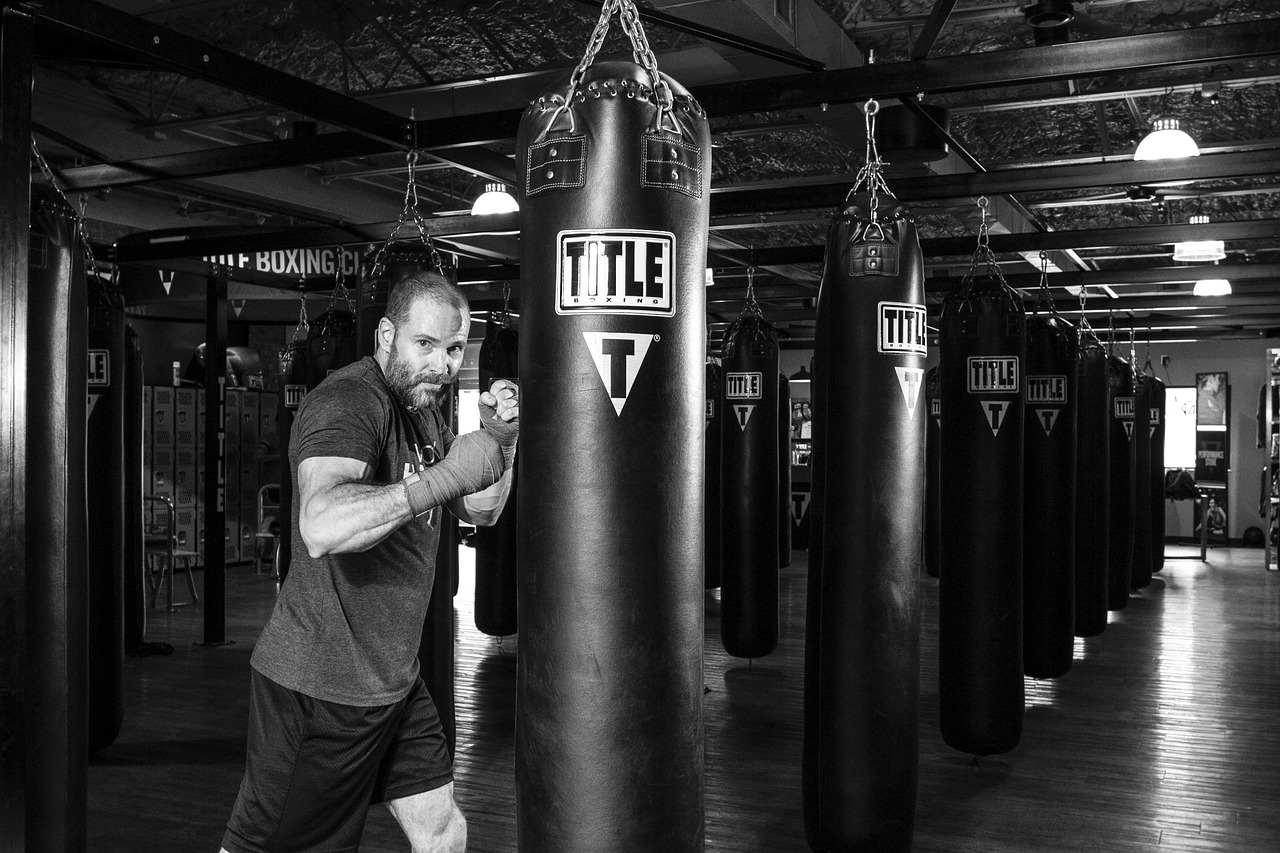
The heart of boxing in Greece is not a giant professional schedule. It is the gym. Greek boxing survives through clubs, coaches, and athletes who work in relatively modest environments compared with major boxing nations. These gyms serve multiple roles. They train competitive amateurs, prepare professionals, introduce beginners to the sport, provide fitness boxing, and connect young athletes to discipline-based training.
In Athens and surrounding areas, boxing gyms are part of the larger urban combat-sports scene. Some athletes train strictly in boxing. Others move between boxing, kickboxing, MMA, wrestling, or strength-and-conditioning spaces. This crossover culture can help participation, but it can also blur boxing’s identity. A talented young striker in Greece may not automatically see boxing as the only pathway. Kickboxing, Muay Thai, and MMA may all compete for attention.
That creates both a challenge and an advantage. The challenge is specialization. To produce world-level boxers, athletes usually need years of dedicated boxing development, deep sparring pools, elite coaching, and consistent amateur or professional competition. If boxing is only one piece of a broader combat-sports lifestyle, the pipeline can become fragmented.
The advantage is that Greece has a strong appetite for combat sports generally. Wrestling has deep historical and Olympic roots. Kickboxing has produced internationally known Greek names. MMA has grown as part of the global combat-sports boom. Boxing benefits from that environment because people are already comfortable with the idea of striking, conditioning, discipline, and gym-based combat training.
Greek boxing gyms therefore operate at two levels. At one level, they are competitive spaces for serious fighters. At another, they are entry points for recreational athletes who may never compete but help sustain the sport economically. This is important in a smaller boxing market. Fitness boxing, youth classes, and adult recreational training can help gyms stay open, which in turn gives competitive fighters a place to develop.
Athens, Piraeus, Thessaloniki, and the Shape of the Scene
Athens is the most important city for boxing in Greece because it concentrates population, institutions, clubs, media, and event possibilities. A fighter based in the Athens area has better access to sparring, coaching variety, and potential fight opportunities than a boxer training in a smaller town. The capital also carries the symbolic weight of Greek sport, particularly because of its Olympic identity.
Piraeus adds a different texture. As a port city with a tough athletic culture, it fits naturally into boxing’s traditional language of working-class gyms and hard local fighters. The broader Athens-Piraeus urban area is likely to remain the country’s most important boxing zone because combat sports need density. Fighters improve when they can find training partners, coaches, tournaments, and gyms within reach.
Thessaloniki gives Greek boxing a northern base. Its location matters because it connects Greece more naturally to the Balkans. For boxing, regional geography can be as important as national identity. Fighters need opposition. They need tournaments. They need access to nearby countries with their own amateur systems and professional scenes. Thessaloniki’s position helps place northern Greek boxing within that wider regional combat-sports map.
Other Greek cities and islands can support clubs and athletes, but the challenge outside the largest urban areas is depth. A single good coach can build a strong small gym, but fighters eventually need broader competition. That is one of the recurring problems in smaller boxing countries: local dedication can create athletes, but those athletes need regular tests against better and more varied opponents to keep improving.
Professional Boxing in Greece Is Smaller Than the Sport’s History
Professional boxing in Greece exists, but it has not developed into a large domestic industry. Greece does not have the kind of regular televised fight calendar that defines boxing economies in the United States, United Kingdom, Mexico, Japan, or Australia. It does not have a long list of major promoters staging frequent international title fights. It does not have a domestic professional circuit large enough to keep most elite fighters at home.
That does not mean professional boxing is absent. Greek professionals do fight, and Greece can host boxing events. But the scale is limited. For many Greek fighters, the professional route means fighting abroad, taking regional opportunities, appearing on undercards in other European countries, or using Greece as a training base while looking outward for career advancement.
This is one of the defining realities of boxing in Greece. The country has the historical legitimacy, the athletes, the gyms, and the combat-sports audience. What it lacks is the commercial boxing machine. Without consistent television money, major promoters, deep sponsorship, and frequent high-level cards, it is difficult to build a professional ladder that carries fighters from prospect to contender without leaving the country.
That limitation shapes the ambitions of Greek boxers. A talented amateur can become a national champion, compete internationally, and even turn professional. But to reach major rankings, that fighter often needs management connections beyond Greece. The path usually runs through Germany, the United Kingdom, the United States, or other markets where professional boxing has more infrastructure.
Greek Boxing and the Wider Combat-Sports Ecosystem
Boxing in Greece cannot be separated from the country’s wider combat-sports landscape. This is one of the most important distinctions for understanding the modern scene. In some countries, boxing dominates the fight conversation. In Greece, boxing shares space with several other combat sports that have strong identities of their own.
Kickboxing has had major visibility through Greek fighters such as Mike Zambidis. Wrestling has ancient roots and modern Olympic importance. MMA has attracted younger audiences who follow global promotions and train across disciplines. Muay Thai and other striking arts have also found places in urban gyms. This means boxing is part of a larger marketplace of combat training rather than the only obvious destination for young fighters.
That crossover can be productive. Boxers may sharpen their hands for MMA. Kickboxers may train boxing to improve punching mechanics. Fitness athletes may enter boxing gyms because they want conditioning without necessarily competing. Coaches may work across disciplines. Events may combine boxing, kickboxing, and MMA on the same bill.
But for pure boxing development, the crossover environment can be complicated. Boxing requires specific habits: stance, distance, punch selection, defense, footwork, rhythm, and rules that differ from kickboxing or MMA. A country can have many tough combat-sports athletes without producing many elite boxers if the athletes are spread across too many disciplines.
Greece’s future as a boxing nation may depend partly on whether its gyms can convert general combat-sports interest into focused boxing development. The audience for fighting exists. The question is how much of that energy becomes amateur boxing participation, professional boxing investment, and sustained fighter development.
Women’s Boxing and the Next Growth Area
Women’s boxing is one of the most important growth opportunities for Greece. Around the world, women’s boxing has become more visible through Olympic competition, professional champions, streaming platforms, and the rise of women’s combat sports generally. Greece has the chance to benefit from that wider movement if clubs and federations continue to support female participation from youth levels through elite competition.
For smaller boxing countries, women’s boxing can provide a meaningful competitive opening. The fields are still deep at the highest level, but many national systems are still developing. A country that invests seriously in women’s amateur boxing can make progress faster than it might in long-established men’s divisions where global depth is enormous.
Greek women entering boxing also help broaden the sport’s cultural base. A gym that trains both men and women, children and adults, competitors and recreational athletes, has a better chance of surviving financially and socially. Women’s boxing can change the public image of the sport from a narrow fight subculture into a broader athletic discipline based on skill, conditioning, confidence, and competition.
The challenge is consistency. Growth requires coaching, safe training environments, visible role models, competitive opportunities, and a clear pathway from beginner classes to amateur bouts. Greece does not need to become a women’s boxing superpower immediately for the area to matter. It needs enough structure that talented athletes can stay in the sport long enough to develop.
Greece’s Place in European and Mediterranean Boxing
Greece occupies an interesting position in the boxing map because it belongs to several overlapping regions. It is a European country, a Balkan country, a Mediterranean country, and a nation with a large diaspora. Each identity affects boxing differently.
As a European boxing nation, Greece competes in a crowded field. Europe includes major amateur and professional systems, from the British and Irish club traditions to the post-Soviet technical schools, the Balkan boxing countries, and the strong professional markets of Germany, France, Italy, Spain, and the United Kingdom. Greece has to find space in that competitive environment.
As a Balkan and Mediterranean country, Greece has more natural regional pathways. Competition with nearby countries can help Greek fighters gain experience without always needing to jump immediately into the deepest global pools. Regional tournaments, club exchanges, and professional cards across southern and southeastern Europe are important for development.
The diaspora adds another layer. Greek fighters and Greek-heritage athletes abroad can carry the boxing identity into places with bigger professional markets. This matters because boxing has always been shaped by migration. Fighters often represent more than one place: where they were born, where they trained, where their family came from, and where they made their professional name. Greek boxing fits that pattern well.
This international dimension is not a side note. It is central to the Greek boxing story. The country’s most famous professional champion won his world title in the United States. Later Greek fighters also looked abroad for opportunity. Greece’s boxing identity is therefore both domestic and external: rooted at home, but often proven elsewhere.
The Future of Boxing in Greece
The future of boxing in Greece depends on whether the country can turn its scattered strengths into a more connected pathway. The ingredients are present. Greece has historical legitimacy, urban gyms, amateur clubs, experienced coaches, a national federation structure, combat-sports interest, and athletes willing to compete. What it needs is greater continuity between youth boxing, amateur success, professional opportunity, media visibility, and international matchmaking.
The most realistic path is not for Greece to suddenly become a global boxing superpower. A better goal is for Greece to become a stronger regional boxing country: more consistent amateur results, more women’s participation, better youth development, more regular domestic events, and clearer professional routes for its best fighters. If that happens, Greece can produce more boxers capable of competing credibly in Europe and occasionally breaking through internationally.
The country’s boxing identity will likely remain hybrid. Greece will always have the ancient Olympic connection, but modern boxing cannot live on symbolism alone. It will continue to depend on gyms in Athens, Piraeus, Thessaloniki, and regional towns. It will continue to intersect with kickboxing and MMA. It will continue to send ambitious fighters abroad. It will continue to build through individuals rather than through a massive commercial machine.
That does not make Greek boxing weak. It makes it specific. Boxing in Greece is a sport of memory, persistence, and unfinished potential. Its past reaches back to the earliest athletic traditions of the Greek world. Its modern story runs through amateur clubs, determined professionals, diaspora pathways, and combat-sports gyms that keep the ring active even without major mainstream attention.
For Greece, boxing is not simply a relic of ancient sport and not yet a fully developed modern prizefighting industry. It sits between those poles. That space is where Greek boxing lives: old in heritage, modest in infrastructure, serious in its gyms, and still searching for the next fighter who can carry the country’s name onto a larger stage.