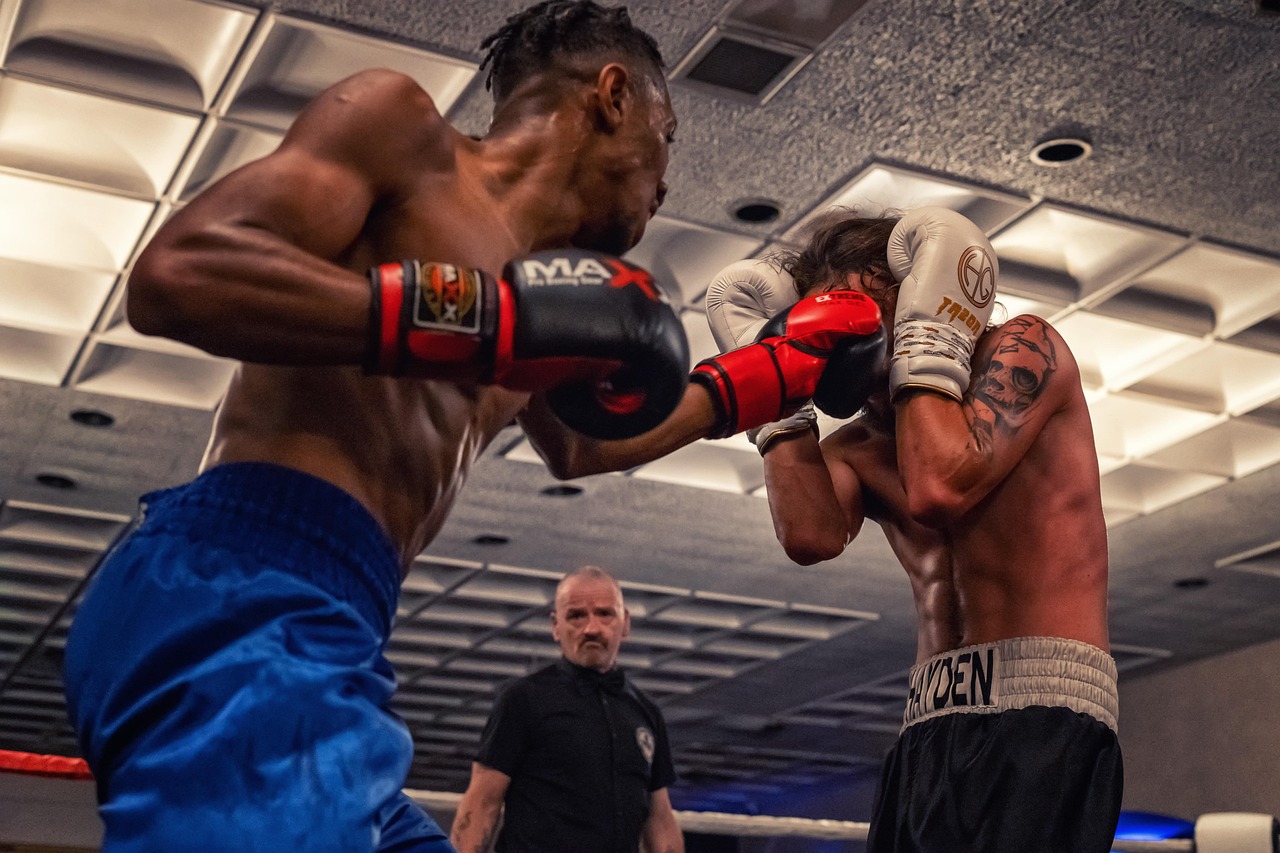
Boxing in Bulgaria is built less around spectacle than around schooling. The country’s boxing reputation comes from Olympic medals, disciplined amateur development, technical fighters, and a long record of producing boxers who can compete against larger nations. Bulgaria is not a global prizefight capital in the Las Vegas, London, or New York sense. It is not a country where professional boxing dominates the sporting conversation every weekend. Its real boxing identity is different: Bulgaria has been one of Europe’s most durable amateur boxing nations, with a tradition strong enough to produce Olympic champions, world-level contenders, respected trainers, and heavyweight professionals who carried the national name into major international arenas.
That identity matters because Bulgarian boxing is often underestimated outside Europe. The country does not have the population size of the United States, Mexico, Russia, Turkey, or the United Kingdom, but it has repeatedly created fighters with elite balance, ring intelligence, and tournament toughness. In Olympic boxing, where boxers must adjust quickly to different styles over several days, Bulgaria has been especially dangerous. Bulgarian fighters have won at the lighter weights, in the middle ranges, and even at heavyweight and super-heavyweight, which shows that the country’s boxing tradition is not tied to one body type or one narrow style.
Bulgaria’s boxing culture has always lived between two worlds. One is the amateur system, where clubs, national teams, youth tournaments, and international competitions shape fighters from an early age. The other is the professional world, where a smaller number of Bulgarian boxers have tried to turn amateur pedigree into world title opportunities. The amateur side remains the foundation. The professional side gives the sport visibility, especially through the Pulev brothers and other fighters who moved from national-team boxing into international prizefighting.
From Postwar Clubs to Olympic Medals
Modern Bulgarian boxing developed through the same broad European pathway that shaped many successful amateur boxing countries: local sports clubs, military and police sports structures, national championships, and international tournaments. Boxing was not simply a private gym activity. It became part of a broader sports system where talented young athletes could be identified, coached, and sent into structured competition.
That structure helped Bulgaria become an Olympic boxing country relatively early. Boris Nikolov’s middleweight bronze medal at the 1952 Helsinki Olympics gave Bulgarian boxing its first major Olympic marker. From there, the country built a record that stretched across decades. The results were not occasional accidents. Bulgaria kept returning to the Olympic podium, especially from the 1970s through the 1990s, when its amateur boxing system was at its most productive.
The 1972 Munich Olympics gave Bulgaria one of its defining boxing moments when Georgi Kostadinov won gold at flyweight. Kostadinov’s success mattered because it showed that Bulgaria could produce a boxer capable of winning the most technical, speed-dependent divisions in the Olympic program. Smaller-weight Olympic boxing requires fast feet, sharp timing, quick adaptation, and the ability to score cleanly without getting dragged into unnecessary exchanges. Bulgaria’s later success in lighter categories made Kostadinov’s gold feel less like a one-time surprise and more like the start of a national pattern.
Petar Lesov continued that tradition by winning flyweight gold at the 1980 Moscow Olympics. Ivaylo Marinov, listed in some Olympic records under Ivaylo Mustafov-Hristov, added another Bulgarian light-flyweight gold in 1988. Daniel Petrov then gave Bulgaria a major post-Cold War boxing triumph by winning light-flyweight gold at Atlanta 1996, after already taking silver in Barcelona in 1992. Across these generations, Bulgaria developed a clear identity: compact, disciplined, technically educated fighters who could survive the pressure of international tournaments.
The 1990s Made Bulgaria a Serious Boxing Name
The 1990s are central to any serious discussion of boxing in Bulgaria. That period combined the last strength of the older amateur system with the emergence of fighters who became internationally recognizable. Daniel Petrov was the leading figure, but he was not alone. Serafim Todorov, Toncho Tonchev, and Svilen Rusinov helped keep Bulgaria visible at the highest amateur level.
Todorov occupies a special place in boxing history because of the 1996 Atlanta Olympics. He won silver at featherweight and is widely remembered for defeating a young Floyd Mayweather Jr. in the Olympic semifinal. That result has become one of the most discussed amateur boxing decisions of the modern era, especially because Mayweather later became one of the most famous professional boxers in the world. For Bulgaria, Todorov represented more than a trivia answer. He represented the level Bulgarian amateur boxing could reach: clever, experienced, technically sharp, and fully capable of beating elite fighters from the biggest boxing countries.
Toncho Tonchev also won silver at Atlanta, giving Bulgaria another podium finish in the same Olympic tournament. Daniel Petrov’s gold at light-flyweight made the Bulgarian boxing team one of the notable stories of those Games. Atlanta was a peak moment because it showed Bulgaria’s depth across multiple divisions. The country was not relying on one exceptional athlete. It had a team capable of producing several medal-level boxers at once.
The 1990s also showed how Bulgarian boxing could adapt during political and economic transition. Many Eastern European sports systems changed dramatically after the end of state socialism. Funding, club structures, coaching networks, and athlete pathways all faced pressure. Bulgaria did not remain as dominant as it had been in some earlier periods, but its boxing culture survived because it had deep technical habits and enough local knowledge to keep producing fighters.
Bulgarian Boxing Technique and the Value of Tournament Fighting
The Bulgarian boxing style has often been associated with patience, footwork, balance, and efficient scoring. It is not always the most aggressive or crowd-pleasing style, especially in the amateur ring, but it has been effective in tournament boxing. Bulgarian fighters have often looked comfortable in bouts where the margins are narrow and the result depends on composure over three rounds.
This is one reason Bulgaria’s boxing story should not be judged only through professional title belts. The amateur version of the sport rewards different qualities. A boxer must manage distance, score clearly, control tempo, and adjust to opponents from several boxing cultures in a short period of time. Bulgarian boxers have historically been trained for that environment. The country’s best fighters were not only tough. They were educated in ring geometry.
That technical base also explains why Bulgaria has remained relevant even when it has fewer professional stars than larger boxing nations. A strong amateur country does not need a huge pay-per-view market to matter. It needs trainers who can teach balance, clubs that can develop young boxers, national competitions that test them, and international tournaments that expose them to different styles. Bulgaria has had all of those ingredients at different points in its boxing history.
The challenge is maintaining that structure in the modern era. Amateur boxing has changed. Scoring systems have changed. Olympic qualification has changed. Fighters now have more choices, including professional boxing, Olympic-style boxing, and crossover opportunities in kickboxing or mixed martial arts. Bulgaria’s task is to keep the technical strengths of its old amateur school while making the sport attractive to young athletes who have more options than earlier generations did.
The Strandja Tournament Keeps Bulgaria Connected to the World
One of Bulgaria’s most important boxing assets is not a single fighter. It is the Strandja Memorial Tournament. Held in Bulgaria and long associated with Sofia, Strandja is one of Europe’s most respected international amateur boxing tournaments. It has functioned for decades as a meeting point for national teams, Olympic hopefuls, rising prospects, and established amateur stars.
The importance of Strandja is hard to overstate. For Bulgarian boxing, it gives the country a regular place on the international calendar. Even when Bulgaria is not producing a large number of professional champions, it remains a host country for serious international boxing. That matters for visibility, coaching standards, officiating experience, and the development of young fighters. A Bulgarian boxer competing at Strandja does not have to leave home to meet opponents from major boxing nations. The world comes to Bulgaria.
Strandja also gives Bulgarian boxing a form of institutional prestige. Many countries have good fighters, but fewer countries host tournaments that attract elite international fields year after year. The tournament connects Bulgaria to the wider amateur boxing world, especially Europe, Central Asia, the Caucasus, and the broader Olympic boxing circuit. It helps keep Sofia relevant as a boxing city even though Bulgaria is not a major professional boxing market.
For fans, Strandja also offers a different kind of boxing culture. It is not built around celebrity entrances or major professional promotion. It is about national team tracksuits, weight classes, brackets, close decisions, young fighters trying to break through, and veterans trying to prove they still belong. That is the kind of environment where Bulgarian boxing has traditionally made the most sense.
Famous Bulgarian Boxers and What They Represent
The list of famous Bulgarian boxers begins with the Olympic names. Georgi Kostadinov, Petar Lesov, Ivaylo Marinov, Daniel Petrov, and Stoyka Krasteva are the country’s Olympic boxing champions. Each represents a different stage of the country’s boxing development. Kostadinov and Lesov belong to the era when Bulgaria was becoming a consistent amateur force. Marinov reflects the late-1980s strength of the system. Petrov represents the 1990s peak. Krasteva represents the modern women’s boxing breakthrough.
Serafim Todorov remains one of the most internationally recognized Bulgarian boxing names because of his Atlanta 1996 run and his place in the Floyd Mayweather Olympic story. His career also reflects the complicated line between amateur greatness and professional fame. Todorov did not become a global professional star, but his amateur skill gave him a permanent place in boxing history. For Bulgaria, that distinction is important. Some of the country’s greatest fighters are remembered more for Olympic and amateur achievements than for professional world title reigns.
Kubrat Pulev represents the professional heavyweight chapter. His amateur background was serious, but his wider fame came in the professional ranks, where he became one of Bulgaria’s best-known sports figures. Pulev fought Wladimir Klitschko for the unified heavyweight championship in 2014 and Anthony Joshua for major heavyweight belts in 2020. Those fights were difficult assignments against elite champions, but they placed a Bulgarian heavyweight on some of the biggest stages in world boxing. Pulev also helped bring major professional attention back to Sofia, especially late in his career.
Tervel Pulev, Kubrat’s younger brother, adds another layer. He won Olympic bronze at heavyweight in London 2012 before pursuing a professional career. Together, the Pulev brothers made heavyweight boxing more visible in Bulgaria than it had been for most of the country’s boxing history. They also gave Bulgarian sports fans a professional boxing reference point that was easier to follow than amateur tournaments.
Women’s Boxing Has Changed Bulgaria’s Modern Profile
Women’s boxing has become one of the most important parts of Bulgaria’s current boxing identity. Stoyka Krasteva’s gold medal at the Tokyo Olympics was a landmark achievement. It was not only a personal triumph. It proved that Bulgaria’s amateur boxing tradition could carry into the women’s divisions at the highest level.
Krasteva’s story is especially valuable because it connects generations. Bulgaria had already produced Olympic champions in men’s boxing, but women’s Olympic boxing is a much newer field. Winning gold in that context gave Bulgarian boxing a modern success story, one that did not depend on nostalgia for the 1970s, 1980s, or 1990s. It showed that the country could still develop a boxer with the technical discipline and mental control needed to win an Olympic tournament.
Stanimira Petrova and Svetlana Staneva have also helped keep Bulgarian women’s boxing visible internationally. Their presence matters because one Olympic champion alone does not create a sustainable women’s program. A real women’s boxing culture needs multiple athletes, coaching experience, national competition, and a pathway for younger girls to see the sport as realistic. Bulgaria has made progress in that direction.
This is one of the strongest future angles for boxing in Bulgaria. The country’s amateur tradition fits women’s boxing well because it already values technique, tournament preparation, and national-team development. If Bulgaria can continue supporting women’s clubs, youth participation, and international competition, women’s boxing may remain one of the country’s best routes to future medals.
Gyms, Clubs, and the Bulgarian Development Pathway
Boxing gyms in Bulgaria are not just fitness rooms. At the serious end of the sport, they are part of a club-based development system. Young boxers usually begin through local clubs, learn basic stance and footwork, compete domestically, and then try to rise into national-level tournaments. Sofia is the central hub because it has the strongest concentration of sports institutions, major events, and national attention, but Bulgarian boxing has never belonged only to the capital. Fighters have also come through regional towns and local clubs where coaches play a major role in identifying talent.
The training culture is practical. Bulgarian boxing has historically emphasized fundamentals: balance, guard position, straight punching, defensive responsibility, and the ability to box at a controlled pace. Young fighters are expected to learn how to win rounds, not only how to entertain. That can make the Bulgarian style look measured rather than explosive, but it is part of why the country has been effective in Olympic boxing.
The club pathway also creates a strong connection between amateur and professional boxing. A professional Bulgarian boxer usually carries the habits of the amateur system. Even when fighting longer professional rounds, many Bulgarian pros remain shaped by their early training: careful footwork, upright posture, selective punching, and a preference for structure over chaos.
Like many smaller boxing nations, Bulgaria faces challenges in keeping gyms funded, retaining young athletes, and turning amateur success into professional opportunity. The country has enough history to attract serious athletes, but boxing must compete with football, volleyball, wrestling, weightlifting, martial arts, and the broader fitness industry. The strongest Bulgarian boxing gyms are those that can offer both tradition and a clear modern pathway.
Professional Boxing in Bulgaria Is Selective but Visible
Professional boxing in Bulgaria is not as deep as the amateur scene, but it has become more visible because of the Pulev era. Kubrat Pulev’s career gave Bulgaria a rare heavyweight profile. Heavyweights draw attention in a way lighter divisions often do not, and Pulev’s fights against Klitschko and Joshua made him a recognizable name far beyond Bulgarian sport.
The professional scene also benefits when major cards are staged in Sofia. A high-profile heavyweight event in Bulgaria does more than sell tickets. It shows local fighters that professional boxing does not have to exist only abroad. It gives domestic sponsors, broadcasters, venues, and promoters a reason to invest in the sport. It also gives Bulgarian fans a chance to experience major boxing without traveling to Germany, the United Kingdom, or the United States.
Still, Bulgaria’s professional boxing future depends on more than one heavyweight. The country needs depth across divisions, good matchmaking, regional title opportunities, and promoters who can move fighters carefully from domestic shows to European and world-level fights. For Bulgarian amateurs turning professional, the biggest question is often where to base their careers. Some may need foreign promoters, training camps abroad, or regular fights outside Bulgaria to progress.
This is where Bulgaria’s location can help. The country sits close to several active boxing regions: the Balkans, Turkey, Central Europe, Germany, and the wider European circuit. Bulgarian fighters can build careers through cross-border opportunities if they have proper management and matchmaking. The local market may be limited, but the regional market is much larger.
Bulgaria’s Place in European and World Boxing
Bulgaria’s place in boxing is best understood as that of a respected amateur nation with professional flashes. It is not the largest boxing country in Europe, but it is one of the countries with a serious Olympic record. That gives Bulgaria a different kind of credibility from nations that only produce occasional professionals. Bulgarian boxing has a system behind it, and that system has produced results over many decades.
In Europe, Bulgaria belongs in the conversation with countries that have built strong national-team traditions. It does not have the same modern professional industry as the United Kingdom, but its amateur record is stronger than many countries with bigger commercial boxing scenes. It has also remained connected to world boxing through Strandja, through Olympic participation, and through fighters who have competed internationally across several eras.
The country’s boxing identity also has a Balkan dimension. Bulgarian fighters are part of a regional combat-sports culture that includes wrestling, weightlifting, judo, kickboxing, and other Olympic sports. Boxing fits that environment because it rewards discipline, toughness, and technical repetition. In Bulgaria, boxing is not isolated from the rest of the sporting culture. It is one part of a national tradition that has often valued individual combat and strength sports.
Globally, Bulgaria’s reputation rests on names, medals, and tournament respect. When Bulgarian boxers enter Olympic qualifiers, European championships, or international tournaments, they are not treated as outsiders. They come from a country with pedigree. That does not guarantee medals, but it gives Bulgarian fighters a baseline of respect.
The Future of Boxing in Bulgaria
The future of boxing in Bulgaria will depend on whether the country can protect its amateur strengths while creating better professional opportunities. Its history is already secure. Few countries of Bulgaria’s size can point to Olympic boxing champions across so many decades. The question is what the next era looks like.
Women’s boxing is one clear path forward. Stoyka Krasteva’s gold medal gave the sport a modern symbol, and continued success from fighters such as Stanimira Petrova and Svetlana Staneva can keep the women’s program visible. Youth development is another priority. Bulgaria needs young boxers who see the sport as more than a difficult amateur road with uncertain rewards. Clearer pathways to European championships, Olympic qualification, professional contracts, and coaching careers can help.
The professional side also has room to grow. Bulgaria may not become a major global fight market, but it can become a stronger regional host. Sofia has enough sporting infrastructure and boxing history to stage meaningful cards. If domestic promoters can connect Bulgarian fighters with regional opponents, European title routes, and international broadcasts, the professional scene can become more stable.
Bulgaria’s advantage is that it does not have to invent a boxing identity from nothing. The country already has one. It is an Olympic boxing country with deep technical roots, a famous international tournament, a proud list of champions, and a modern heavyweight chapter that brought professional attention back home. The next stage is about continuity. If Bulgaria keeps its clubs active, supports women’s boxing, uses Strandja as an international platform, and gives its best amateurs realistic professional options, it will remain one of Europe’s most respected boxing nations.