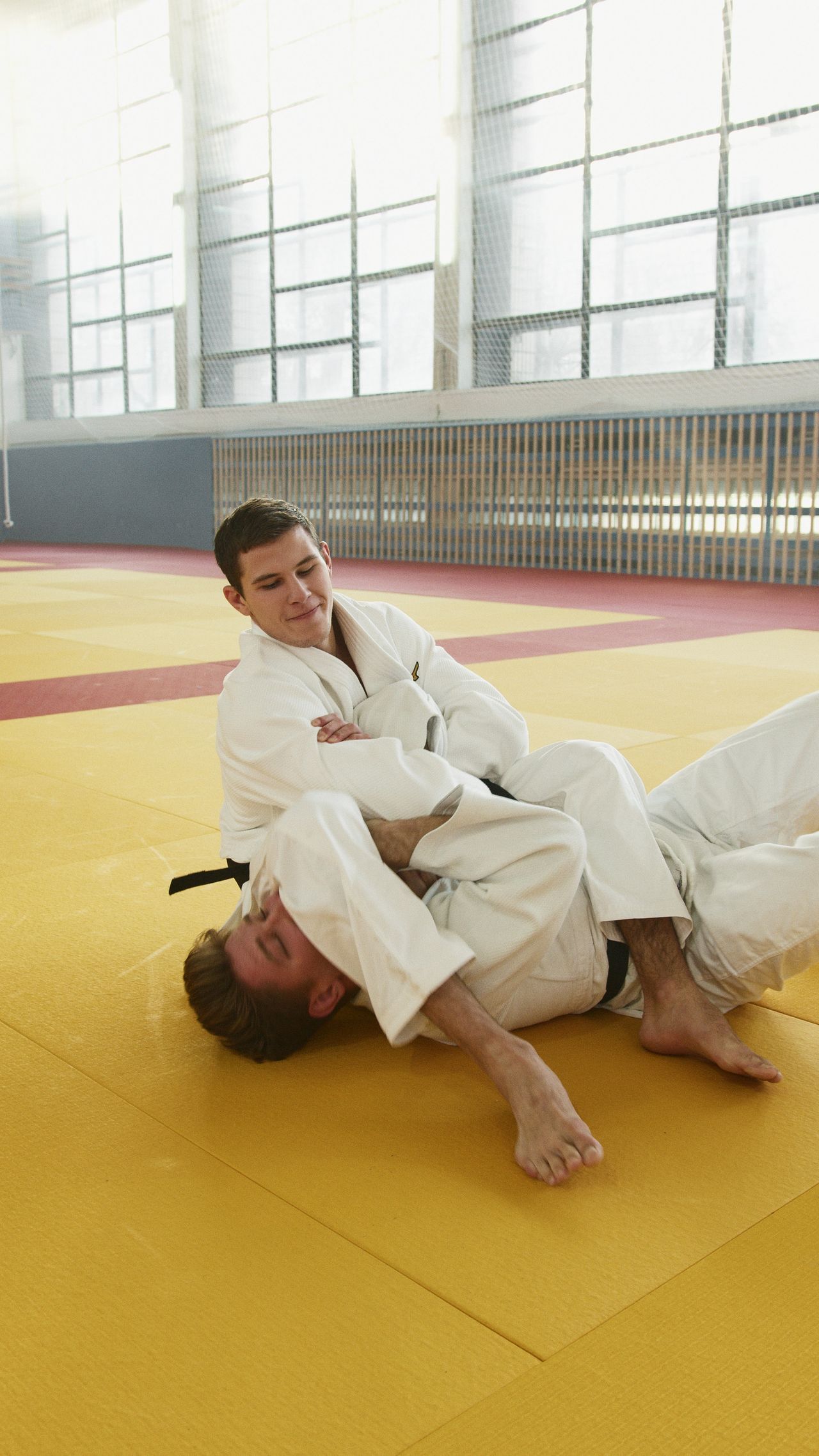
Boxing in Tunisia is best understood as a disciplined amateur tradition with flashes of world-level history rather than as a large professional prizefighting market. The country does not have the commercial boxing profile of Mexico, the United States, the United Kingdom, or Japan. It has not built its reputation through a constant calendar of televised title fights or a deep roster of international professional champions. Tunisia’s boxing identity is quieter, more institutional, and more closely tied to clubs, national-team development, African competition, Mediterranean tournaments, and the Olympic Games.
That makes Tunisia different from many countries where boxing is primarily a professional spectacle. Tunisian boxing is shaped by the training room before it is shaped by the arena. It is a sport of clubs, coaches, weight classes, national selections, and international qualifiers. Fighters are often measured less by promotional fame than by whether they can survive regional competition, reach Olympic tournaments, or bring home medals from African, Arab, Mediterranean, military, youth, or amateur championships.
Still, Tunisia’s boxing story has a remarkable range. It includes Victor “Young” Perez, the Tunis-born flyweight world champion whose life connects Tunisian boxing to Paris, Jewish North Africa, the interwar fight game, and one of the darkest chapters of the twentieth century. It includes Habib Galhia, whose Olympic bronze in 1964 helped put Tunisian boxing on the country’s early Olympic map. It includes Fathi Missaoui, whose bronze medal at the 1996 Atlanta Olympics became one of the defining modern achievements for Tunisian boxing. It also includes a contemporary women’s boxing movement, represented by athletes such as Khouloud Hlimi and Mariem Homrani, who carried Tunisia into newer Olympic-era conversations about women’s participation in the sport.
Tunisia is not a giant in global professional boxing, but it is not a blank space either. It is a North African boxing country with a serious amateur memory, a real Olympic record, and a development structure that continues to produce fighters capable of competing outside the country.
From Tunisian Streets to the Wider Fight World
The deeper history of Tunisian boxing begins before the country became independent. Under French colonial influence, boxing developed in urban spaces where European sporting culture, local athletic clubs, military structures, port-city exchange, and North African communities overlapped. Tunis, with its Mediterranean connections and mixed cultural history, became the natural early center for boxing activity.
The most famous figure from this early period is Victor “Young” Perez. Born in Tunis in 1911, Perez grew up in the city’s Jewish community and became one of the most significant Tunisian-born boxers in history. His boxing career took him to France, where he rose through the flyweight ranks and won the world flyweight championship in 1931. For Tunisia, Perez is not simply a famous boxer with a Tunis birthplace attached to his name. He represents the older Mediterranean boxing world, when fighters from North Africa often had to travel through French circuits to reach major opportunities.
Perez’s career also shows how boxing could become a route out of local obscurity for talented fighters from colonial or semi-colonial sporting environments. He was small, fast, ambitious, and part of a generation of boxers whose careers depended on mobility. Tunis gave him his beginning, but Paris gave him the stage. That pattern would become familiar across North African sport: local talent, regional identity, French-language sporting networks, and international ambition all intersecting.
Perez’s life ended in tragedy after he was deported during the Holocaust and killed in 1945. That makes his legacy heavier than a normal boxing biography. He belongs to Tunisian sports history, Jewish sports history, French boxing history, and Holocaust memory. His name gives Tunisian boxing one of its most internationally recognizable stories, but it is not a simple championship myth. It is a story of talent, migration, fame, persecution, and loss.
After independence, Tunisian boxing’s center of gravity moved more clearly toward national institutions and amateur competition. The sport became part of the country’s broader athletic development, connected to clubs, federated competition, military sport, youth programs, and national representation. Tunisia’s boxing identity after independence was not built around producing professional stars for Las Vegas or London. It was built around creating fighters who could represent the country in Olympic and regional competition.
That institutional character remains central. Tunisia’s best boxing achievements have usually come when its fighters are developed through structured amateur pathways and tested against opponents from Africa, the Arab world, Europe, and the broader Mediterranean region.
The Olympic Ring Defines Tunisia’s Modern Reputation
Tunisia’s strongest claim in international boxing comes through the Olympic Games. The country has produced Olympic medalists in boxing, and those medals carry special weight because Tunisia’s wider Olympic history is selective rather than massive. When a Tunisian boxer reaches the podium, the achievement becomes part of national sports memory, not just boxing trivia.
Habib Galhia’s bronze medal at the 1964 Tokyo Olympics remains one of the foundational moments in Tunisian boxing. Coming during the early decades of Tunisia’s independent sporting identity, Galhia’s medal gave boxing a place in the country’s Olympic story. It showed that Tunisian fighters could move beyond local and regional competition and earn recognition on the highest amateur stage.
Galhia’s success mattered because Olympic boxing was, and remains, an unforgiving route. Fighters have to survive short-format tournaments, stylistic contrasts, weight-class pressure, and opponents from countries with deeper boxing systems. A medal in that environment is not accidental. It reflects preparation, tactical discipline, and competitive nerve.
More than three decades later, Fathi Missaoui reinforced Tunisia’s Olympic boxing reputation by winning bronze at the 1996 Atlanta Games. Missaoui’s medal gave modern Tunisian boxing a second Olympic anchor. For a country without a large professional boxing industry, Olympic medals become the clearest evidence of international credibility. They prove that the system can produce fighters who are not merely active but competitive at world level.
Missaoui’s Atlanta run is especially important because the 1990s were a strong period for international amateur boxing. Eastern Europe, Cuba, the United States, Asia, and several African countries all had serious fighters in Olympic qualification systems. For a Tunisian boxer to reach the podium in that environment was a major achievement. It remains one of the reference points for anyone discussing boxing in Tunisia.
Tunisia’s Olympic boxing record also includes athletes who did not medal but still represented important steps in the sport’s development. Boxers such as Kalai Riadh, Mohamed Soltani, Kamel Chater, Mohamed Salah Marmouri, Abderrazak Houya, Yahia El-Mekachari, Bilel Mhamdi, Hassen Chaktami, and others have helped maintain Tunisia’s Olympic presence across different eras. Their results vary, but their participation shows that Tunisia has repeatedly maintained a place in elite amateur qualification.
That is the essential point about Tunisian boxing: its international reputation is not built on one continuous professional championship line. It is built through Olympic appearances, occasional podium breakthroughs, and the ability to keep producing technically prepared fighters who can enter global tournaments.
Famous Tunisian Boxers and What They Represent
The most recognizable name connected to Tunisian boxing remains Victor “Young” Perez. His championship career belongs to the professional era, but his importance extends far beyond his record. Perez represents the Tunisian-born fighter who became a world champion through the French and European boxing circuits. He gives Tunisia a direct connection to the classic age of flyweight boxing and the interwar professional fight scene.
Habib Galhia represents a different kind of Tunisian boxing figure. His importance comes from the Olympic ring and from the early post-independence sporting period. Galhia’s bronze medal showed that Tunisia could produce boxers capable of competing at the highest amateur level. For Tunisian boxing, he is not just an individual medalist. He is part of the country’s national sports foundation.
Fathi Missaoui belongs to the modern Olympic era. His bronze medal in Atlanta gave Tunisia another major boxing achievement and helped keep the sport visible to later generations. Missaoui’s place in Tunisian boxing history is secure because Olympic medals in boxing are difficult to win and rare enough to become defining landmarks.
Walid Cherif is another important name in the Tunisian boxing conversation, especially within the club and international amateur context. Connected to Espérance Sportive de Tunis, one of the country’s major sporting institutions, Cherif is often referenced among Tunisian boxing figures with achievements across world, African, and Mediterranean competition. His career reflects a version of Tunisian boxing built through clubs and national representation rather than commercial professional fame.
Riadh Klaii, Saifeddine Nejmaoui, Lotfi Belkhir, Khamis Refai, and Abderraouf Jerbi also belong to the wider Tunisian boxing ecosystem. These are the kinds of figures who matter in a country where boxing history is not only written by household-name world champions. In Tunisia, the sport’s reputation also depends on athletes who collect medals across African, Arab, Mediterranean, military, and international amateur events.
Women’s boxing has added another layer to Tunisia’s modern profile. Khouloud Hlimi became one of the country’s most visible women’s boxers through Olympic participation, including appearances in Tokyo and Paris. Mariem Homrani also represented Tunisia at the Olympic level. Earlier, Maroua Rahali’s strong Olympic showing in 2012 helped establish women’s boxing as a serious part of the Tunisian national-team picture.
This matters because women’s boxing has changed the global map of the sport. Countries that once treated boxing almost entirely as a men’s discipline have had to develop female athletes, coaches, training pathways, and qualification strategies. Tunisia has been part of that transition. Its women’s boxing program is still developing, but Olympic participation gives it a platform that recreational growth alone could not provide.
Together, these figures show the range of Tunisian boxing. Perez represents world professional history. Galhia and Missaoui represent Olympic medals. Hlimi, Homrani, and Rahali represent the women’s boxing era. Club-linked and national-team fighters represent the everyday competitive structure that keeps the sport alive between Olympic cycles.
Clubs, Coaches, and the Tunisian Training Pathway
The backbone of boxing in Tunisia is the club system. This is where fighters first learn stance, guard, footwork, balance, combinations, defense, and the discipline required to compete. For many Tunisian boxers, the club is more important than the commercial gym. It is not just a place to train for fitness. It is the environment where coaches identify talent, introduce young athletes to sparring, prepare fighters for local tournaments, and eventually push the best toward regional and national competition.
Tunis, as the capital and largest urban center, naturally plays a major role. The city has the population base, sporting institutions, and administrative importance to support boxing activity. But boxing in Tunisia should not be understood only through Tunis. Like many countries with an amateur boxing culture, the sport also depends on local clubs in other cities and communities where coaches keep programs alive with limited resources.
Espérance Sportive de Tunis is an important name because it reflects the connection between boxing and multi-sport club culture. In many countries, boxing grows not only through standalone fight gyms but through larger sports clubs that also operate football, handball, basketball, volleyball, or other sections. That model can give boxing a more stable institutional home than a purely private gym system, especially in markets where professional boxing revenue is limited.
Training in Tunisia tends to be shaped by amateur boxing priorities. Fighters need to be sharp over short bouts. They need conditioning, punch volume, defensive awareness, and the ability to score cleanly under tournament rules. The training room has to prepare them for different styles: aggressive pressure fighters, mobile counterpunchers, taller opponents using range, and compact fighters who work inside.
Because Tunisia competes in African and international amateur settings, its boxers often have to be adaptable. A Tunisian fighter may meet opponents from Algeria, Morocco, Egypt, Cameroon, Nigeria, South Africa, or other African boxing nations before reaching wider international tournaments. Each of those boxing cultures can produce different physical and tactical problems. Regional experience matters.
The challenge is resources. Tunisia has boxing talent and history, but it does not operate with the scale of the biggest amateur boxing powers. Countries with deeper funding, larger talent pools, more frequent international camps, and stronger professional pathways can provide their fighters with advantages in preparation. Tunisian boxing has to make development efficient. Coaching quality, tournament exposure, and talent identification become especially important.
That is why the club coach is central. A good Tunisian boxing coach is not only teaching punches. He or she is managing progression, discipline, competition readiness, and the psychological demands of the sport. In countries without large commercial boxing industries, the coach often becomes the bridge between local ambition and international opportunity.
Tunisia in African, Arab, and Mediterranean Boxing
Tunisia’s boxing geography matters. The country sits in North Africa, faces the Mediterranean, and has sporting connections to Africa, the Arab world, and Europe. That gives Tunisian boxers several competitive identities at once.
Within Africa, Tunisia is part of a serious boxing region. North African boxing has produced Olympic medalists, world-level amateurs, and strong women’s boxing figures. Algeria, Morocco, Egypt, and Tunisia often operate in overlapping competitive spaces. These countries see each other in qualifiers, continental championships, Arab competitions, and Mediterranean events. For Tunisian fighters, regional competition is not soft preparation. It can be the hardest step before the global stage.
The Arab sporting world provides another layer. Arab boxing competitions give Tunisian fighters opportunities to test themselves against athletes from North Africa, the Gulf, the Levant, and other Arabic-speaking countries. These events can matter for development, visibility, and confidence, especially for fighters who are trying to build international experience before Olympic qualification.
The Mediterranean connection is also important. Tunisia’s geography puts it in a sporting zone that includes Southern Europe, North Africa, and parts of the Middle East. The Mediterranean Games and related competitions are especially relevant because they bring Tunisian fighters into contact with countries that have different boxing traditions, including Italy, France, Turkey, Spain, and Balkan or Eastern Mediterranean programs. For a Tunisian boxer, Mediterranean competition can serve as a bridge between African-level success and broader international readiness.
This layered geography gives Tunisia a useful boxing position. It is not isolated. Its fighters can measure themselves through multiple circuits. The challenge is turning that access into consistent medals, deeper Olympic runs, and more professional opportunities for elite athletes after their amateur careers.
Tunisia’s regional role is also visible at youth level. Strong junior or youth performances matter because they show whether the pipeline is producing the next generation. For a country like Tunisia, youth success is especially valuable. It suggests that boxing is not only surviving through older institutions but still attracting and developing young fighters.
Professional Boxing Remains the Missing Stage
The clearest limitation in Tunisian boxing is the relatively modest professional scene. Tunisia has produced professional fighters and has a historic world champion in Victor Perez, but the country has not become a major global professional boxing market. It does not host title fights at the scale of Las Vegas, London, Riyadh, Tokyo, Mexico City, or New York. It does not regularly export large numbers of professional contenders into the biggest promotional circuits.
This creates a common problem for amateur boxing countries. A fighter can become technically skilled, win regional tournaments, qualify for the Olympics, and still face uncertain professional options. Turning an amateur career into a paid professional career requires promoters, managers, matchmaking, broadcast interest, sponsorship, medical and regulatory structure, and access to international opponents. Without those pieces, many talented fighters either remain in amateur systems, retire early, move into coaching, or look abroad for opportunities.
For Tunisia, the professional question is not simply whether the country has good fighters. It is whether there is enough boxing economy to support them. Professional boxing requires more than talent. It requires a marketplace. It needs venues, ticket buyers, broadcast distribution, sponsors, sanctioning pathways, and promoters who can build fighters gradually.
That does not mean professional boxing has no future in Tunisia. The country has advantages: a strong sporting culture, a strategic location, a history of combat-sports participation, and access to African, Arab, and European networks. But any professional growth would likely need to be realistic. Tunisia is more likely to develop a selective professional pathway than suddenly become a major fight capital.
The most practical model may be hybrid. Tunisia can continue using amateur boxing as the foundation while creating better routes for elite boxers to compete professionally abroad or in regional shows. Fighters who succeed in African, Arab, Mediterranean, or Olympic competition can use that credibility to pursue professional opportunities in Europe, the Middle East, or other international markets.
That path would fit Tunisia’s actual boxing identity. The country does not need to pretend to be a heavyweight commercial boxing power. Its stronger role is as a developer of disciplined fighters who can move through amateur systems and, in select cases, transition into broader professional boxing.
Women’s Boxing Is a Major Part of the Future
Women’s boxing is one of the most important growth areas for Tunisia. The rise of women’s boxing at the Olympic level has changed what national programs need to prioritize. Countries that want to remain relevant in amateur boxing now have to develop both men’s and women’s teams with serious coaching, competition planning, and support.
Tunisia has already taken meaningful steps in this direction. The presence of athletes such as Khouloud Hlimi, Mariem Homrani, Maroua Rahali, Rim Jouini, and other women boxers in Olympic and international competition shows that Tunisia is not treating women’s boxing as an afterthought. The country has produced women capable of entering the Olympic qualification pathway and competing against strong international opposition.
The significance goes beyond medals. Women’s boxing creates new entry points for young athletes. It expands the talent pool. It changes the culture of boxing gyms. It also gives national federations more chances to compete internationally because the Olympic program now includes multiple women’s weight classes.
For Tunisia, women’s boxing can become a strategic advantage if the development system continues to improve. In countries where men’s boxing has a long-established hierarchy, women’s boxing can sometimes move faster because the global field is still evolving. A well-coached, disciplined women’s program can make progress quickly if athletes receive enough tournament experience and institutional backing.
The next step is depth. Olympic participation is important, but long-term growth requires more than one or two elite names. Tunisia needs a broader base of girls and women training consistently, competing domestically, and moving into international events. It also needs coaches experienced in developing female fighters across different weight classes.
If Tunisia can build that depth, women’s boxing may become one of the strongest areas of the country’s fight-sport future.
What Makes Tunisian Boxing Distinct
Tunisia’s boxing identity is not built on volume. It is built on selective achievement, institutional persistence, and regional relevance. The country has a historic world champion, Olympic medalists, respected amateur fighters, and a developing women’s program. It also has the limitations of a smaller boxing economy, especially when compared with countries that have larger professional circuits.
That combination gives Tunisian boxing a particular character. It is serious but not loud. Competitive but not always visible. Historically important but not always internationally marketed. Its best fighters often have to earn recognition through difficult amateur routes rather than through the promotional machinery that turns professional boxers into global names.
The sport’s future in Tunisia depends on several connected pieces. Youth development has to remain strong. Clubs need coaching stability. Fighters need more international exposure before major qualifiers. Women’s boxing needs continued investment. The professional pathway needs better connections to regional and European markets. The federation and clubs need to keep boxing relevant in a crowded sports environment where football dominates public attention.
Tunisia does not need to copy another country’s boxing model. Its own model is already visible: local clubs, national-team development, North African competition, Mediterranean testing, Olympic ambition, and selective international breakthrough. That is the foundation.
The most compelling thing about boxing in Tunisia is that the sport has survived across very different eras. It has a pre-independence world champion in Young Perez. It has post-independence Olympic medalists in Habib Galhia and Fathi Missaoui. It has modern women’s Olympic representatives. It has clubs that continue to train fighters even when the professional spotlight is limited.
That gives Tunisia a real place on the boxing map. Not as a global fight capital, and not as a mass producer of professional champions, but as a North African boxing country with history, structure, and enough competitive memory to keep producing fighters who matter beyond their own gyms.