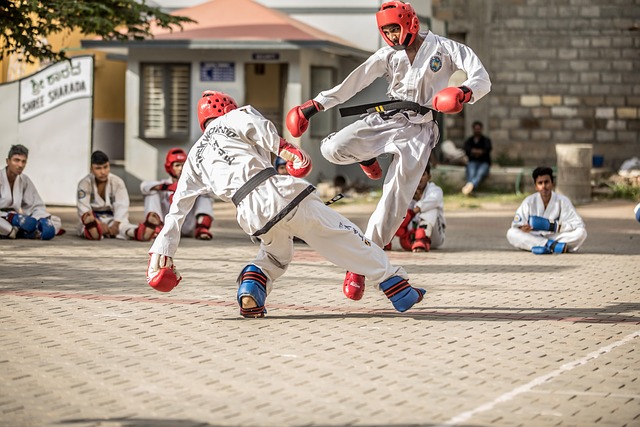
Boxing in Nepal sits between tradition, national-team ambition, and the hard reality of competing in one of the toughest amateur boxing regions in the world. Nepal is not a global professional boxing power, but it has a meaningful amateur boxing history, a national federation structure, and a competitive identity shaped by the South Asian Games, Asian-level tournaments, and Olympic participation.
The country’s boxing story begins with amateur representation. Nepal first appeared in Olympic boxing in the 1960s, and that early connection to the Games gave the sport a formal national pathway. For a country better known internationally for mountains, endurance, football, cricket, taekwondo, and martial arts participation, boxing has held a quieter but durable place inside Nepal’s sports system. It is a sport of clubs, national championships, regional competition, and disciplined athletes trying to break through against larger boxing nations.
Nepal’s boxing geography is centered heavily around Kathmandu Valley and other urban or semi-urban sports centers where clubs, training halls, and institutional support are easier to organize. The Nepal Boxing Federation provides the national structure, while district associations and local clubs help keep the sport moving outside the capital. That district-level base matters because boxing cannot grow only through elite national camps. It needs young fighters learning footwork, balance, defense, punching mechanics, and ring discipline before they ever reach a national tournament.
Nepal’s strongest boxing identity is amateur and regional rather than professional. The South Asian Games have been especially important because they place Nepali boxers in a competitive environment against India, Pakistan, Sri Lanka, Bangladesh, and other neighboring programs. In that setting, boxing becomes a test of national development. Nepal’s medal performances at South Asian level have shown that the country can produce capable fighters, particularly when preparation, coaching, and tournament structure align.
The list of Nepali Olympic boxers gives the sport historical depth. Names such as Nam Singh Thapa, Ram Prasad Gurung, Om Prasad Pun, Rabi Raj Thapa, Bishnu Malakar, Dal Bahadur Ranamagar, and others belong to the country’s amateur boxing record. These fighters are not household names globally, but they represent something important inside Nepal: the idea that boxing has been part of the country’s international sports presence for decades. In smaller boxing nations, Olympic participation itself carries legacy value because it proves that a domestic pathway existed.
Nepal has also seen encouraging signs in women’s boxing. Female fighters such as Sushma Tamang have helped give the sport a more modern profile, especially through Asian youth and under-22 competition. That matters for the future of boxing in Nepal because women’s participation expands the talent base and makes the sport less dependent on older male club structures. If the country continues to develop female boxers through school, youth, and national programs, women’s boxing could become one of Nepal’s most important growth areas.
Professional boxing in Nepal is still limited compared with the amateur scene. There are professional events and sanctioning efforts, but the country’s boxing identity remains much closer to national teams, regional tournaments, and Olympic-style boxing. For fighters who want bigger professional opportunities, international links are essential. India, Southeast Asia, the Middle East, and wider Asian boxing circuits may become more important for Nepali boxers who want paid bouts and broader exposure.
The challenge for Nepal is not interest. It is infrastructure. Boxing needs coaching education, modern equipment, safe rings, medical standards, competition frequency, and a clear ladder from junior athletes to elite tournaments. The country has the raw ingredients: toughness, altitude-conditioned athletes, martial arts interest, and a national sports culture that respects discipline. Turning that into consistent boxing success requires continuity.
Nepalese boxing is still a builder’s project. It has history, federation structure, regional credibility, and athletes capable of making noise in South Asian and Asian competition. Its next step is to turn scattered promise into a deeper system, where local clubs feed national championships, national champions receive international preparation, and the best Nepali boxers enter the ring with the confidence that they are part of a serious boxing country.