Boxing in Peru does not have the mass championship machinery of Mexico, the Olympic factory reputation of Cuba, or the global prizefight stage of Las Vegas. Its identity is different. Peruvian boxing is a smaller but deeply resilient fight culture, shaped by Lima and Callao gyms, Afro-Peruvian sporting history, South American rivalries, and a handful of fighters who turned limited infrastructure into international recognition.
That makes boxing in Peru a story of uneven visibility. The sport has produced serious fighters, world-level contenders, women’s champions, regional titleholders, and respected amateurs, but it has often had to compete for attention with football and other national sporting priorities. Boxing has never disappeared from Peru, yet it has rarely enjoyed the consistent commercial ecosystem needed to turn every generation of talent into a full professional wave.
The Peruvian boxing scene is strongest when understood as a fighter-development culture rather than a large entertainment industry. Its gyms matter. Its amateur base matters. The relationship between Lima, Callao, Chincha, Trujillo, and other regional boxing centers matters. The country’s best fighters often become symbols not only because they win, but because they carry the burden of proving that Peru belongs in a sport dominated by larger boxing nations.
Peru’s boxing identity sits somewhere between historic legacy, emerging scene, and champion-lineage culture. It has icons, but not a deep list of globally famous champions. It has a national federation and Olympic participation, but not a dominant Olympic record. It has professional fight nights, but not a year-round promotional machine on the scale of Mexico City, Buenos Aires, Las Vegas, London, or Tokyo. The result is a boxing country where every breakthrough carries extra weight.
Mauro Mina and the Fighter Peru Still Measures Against
Any serious discussion of Peruvian boxing eventually returns to Mauro Mina. Born in Chincha, Mina became one of the defining Peruvian fighters of the twentieth century and is widely remembered as one of the finest boxers Peru has produced. He fought as a light heavyweight, built a record of 52 wins, 3 losses, and 3 draws, and became known by names such as “El Bombardero de Chincha” and “El Expreso de Chincha.”
Mina’s significance is not just statistical. He represents the version of Peruvian boxing that came closest to full global arrival before circumstances intervened. During the 1960s, he beat major names, including future light heavyweight champion Bob Foster, and became highly ranked in the division. His rise put Peru into the international boxing conversation at a time when South American fighters were fighting for credibility against North American and European boxing markets.
The cruel center of Mina’s story is that he never received the world title fight his ranking suggested he deserved. A retinal injury blocked his path to the championship stage, turning him into one of those fighters whose reputation rests partly on what he did and partly on what the sport never allowed him to complete. That unfinished quality is one reason Mina remains so important to Peruvian boxing memory. He is not remembered simply as a good local fighter. He is remembered as a fighter who had world-class ability in a country that did not always have world-class boxing infrastructure around him.
Mina also matters because of where he came from. His connection to Chincha gives Peruvian boxing a regional and cultural depth beyond Lima. Chincha, with its strong Afro-Peruvian heritage, has long held an important place in Peru’s sporting and cultural imagination. Mina’s rise gave boxing a figure who embodied mobility, toughness, national aspiration, and technical quality. He did not become a global celebrity in the modern pay-per-view sense, but inside Peru’s boxing story, he remains foundational.
His post-fighting life also fits the country’s boxing pattern. Like many important fighters from smaller boxing markets, Mina’s contribution did not end when he left the ring. He later worked in boxing instruction, passing knowledge into the gym environment. For a country like Peru, where continuity often depends on trainers, neighborhood gyms, and individual mentors, that second career matters almost as much as the first.
Lima, Callao, and the Urban Core of Peruvian Boxing
Peruvian boxing is heavily tied to urban life, especially Lima and Callao. These areas provide the country’s largest concentration of gyms, events, coaches, sparring partners, and media attention. For many Peruvian fighters, the path to national visibility runs through the capital region, even if their roots are elsewhere.
Lima gives boxing its administrative and commercial center. It is where major national events can attract attention, where media coverage is most available, and where fighters are more likely to connect with promoters, sponsors, and international opportunities. The capital’s sports venues have hosted significant fight cards, including world title events involving Peruvian fighters. When Alberto Rossel won the WBA interim light flyweight title in Lima in 2012, the result was treated as a historic national moment for Peruvian professional boxing.
Callao gives the sport a different texture. As Peru’s major port city, Callao has a longstanding reputation for toughness, street sport, and working-class athletic identity. In boxing terms, that matters. Port cities often become fight cities because they bring together labor culture, migration, physical trades, dense neighborhoods, and a tradition of gyms serving as both athletic and social institutions. Callao’s boxing identity is not just about producing champions. It is about producing fighters who are expected to be durable, proud, and hard to discourage.
This Lima-Callao relationship helps explain why boxing in Peru often feels more local and personal than institutional. The country does have formal structures, but the sport’s emotional center is still the gym: the coach holding pads, the amateur learning footwork, the local fighter selling tickets, the young boxer trying to convert discipline into a way forward. That gym culture is one of Peru’s most important boxing assets, even when it does not always translate into international rankings.
The challenge is scale. Peru has enough boxing culture to produce talent, but not always enough professional depth to keep that talent active at the right level. A promising fighter may need regional fights, international matchmaking, sponsorship, and foreign exposure to develop properly. Without those pieces, even talented boxers can stall. That is the recurring tension in Peruvian boxing: the country can produce fighters, but the system around them has to work hard to produce careers.
Alberto Rossel and the Meaning of a Peruvian World Title
Alberto “Chiquito” Rossel occupies a central place in modern Peruvian boxing because he gave the country a professional title breakthrough that could be celebrated nationally. In 2012, Rossel defeated José “Torito” Rodríguez by unanimous decision in Lima to win the WBA interim light flyweight title, a result reported in Peru as a historic achievement for the country’s boxing scene.
Rossel’s achievement matters because of the context. Peru is not a country where world title fights arrive regularly. When they do, they are not just sporting contests; they become tests of national boxing legitimacy. Rossel was not fighting from inside a massive promotional machine. He was carrying a smaller boxing country into a global sanctioning-body structure where Latin American fighters from Mexico, Argentina, Puerto Rico, Venezuela, Panama, and Nicaragua have often received more attention.
At light flyweight, Rossel also represented an important truth about Peruvian boxing: the country’s best opportunities have often come in lighter divisions. This is common across much of Latin American boxing. Smaller weight classes reward sharp technique, conditioning, rhythm, and ring intelligence as much as raw size. For Peruvian fighters, those divisions have offered a path into international competition without requiring the kind of heavyweight or middleweight infrastructure that larger boxing markets often dominate.
Rossel’s title run also helped reset expectations. He showed that Peruvian fighters could win at world level, defend a belt, and stage meaningful fights at home. In 2013, the WBA noted Rossel defending his interim title at Coliseo Miguel Grau in Callao, placing a Peruvian fighter, a Peruvian venue, and a world-title framework in the same story.
The broader value of Rossel’s career is that he gave Peruvian boxing a modern reference point. Mauro Mina represented the great almost-champion, the fighter whose world title chance was interrupted. Rossel represented the fighter who actually brought a belt into the contemporary Peruvian sporting conversation. For young boxers, that distinction matters. It turns ambition from an abstract dream into something that has happened before.
Women’s Boxing Has Given Peru Some of Its Strongest Modern Visibility
One of the most important parts of Peru’s boxing story is women’s boxing. In fact, some of Peru’s most visible world-level boxing success in the modern era has come through women fighters, especially Kina Malpartida and Linda Lecca.
Kina Malpartida became a major figure in Peruvian sports when she won and held the WBA world super featherweight title. Born in Lima, Malpartida held that WBA title from 2009 to 2013, giving Peru a globally recognized women’s boxing champion during a period when women’s boxing was still fighting for broader mainstream recognition.
Malpartida’s career is important because she expanded the image of what a Peruvian boxing champion could look like. She was not simply a local fighter who won a belt. She became a public figure whose success crossed into national media, women’s sports visibility, and the broader conversation about Peruvian athletes succeeding internationally. Her background as both a boxer and a national surfing champion also made her a distinctive figure within Peruvian sport.
Linda Lecca added another layer to that legacy. Known as “La Princesa Inca,” Lecca became associated with the WBA female super flyweight title picture and defended her title in Peru. Andina reported in 2017 that Lecca had become world female super flyweight champion after defeating Simone Da Silva in 2014 and had retained the belt against challengers from Venezuela and Mexico.
Lecca’s importance lies in continuity. One women’s champion can be treated as an exception. Multiple women fighting at title level suggest a more meaningful pattern. Peru has not become one of the world’s deepest women’s boxing nations, but Malpartida and Lecca gave the country legitimate representation in the sport’s modern women’s era.
That matters for the future of boxing in Peru. Women’s boxing is one of the clearest growth lanes for countries outside the traditional men’s boxing powers. The global talent pool is still expanding, Olympic women’s boxing has increased visibility, and professional opportunities are broader than they were a generation ago. For Peru, women’s boxing is not a side note. It is one of the country’s strongest claims to modern relevance.
Jonathan Maicelo, Carlos Zambrano, and the Professional Path Abroad
Peruvian professional boxing has often required fighters to look beyond Peru for the fights that define a career. Domestic bouts can build records and local followings, but international recognition usually requires travel, regional titles, and fights against opponents connected to larger promotional circuits.
Jonathan Maicelo is one of the modern Peruvian fighters most associated with that pursuit. A lightweight with a public profile inside Peru, Maicelo became known for chasing world-level opportunity and speaking openly about his ambition to become a world champion. In 2012, Peruvian state news agency Andina reported Maicelo’s goal of fighting for world championship status, reflecting his role as one of the country’s more visible professional boxing personalities of that period.
Maicelo’s career shows both the possibility and difficulty of being a Peruvian professional boxer. He helped keep boxing visible, built a recognizable name, and represented Peru in meaningful international contexts. At the same time, his path showed how difficult it is to turn national fame into global championship success when a fighter comes from a market with fewer elite-level professional opportunities.
Carlos Zambrano represents another version of the international route. Zambrano, a Peruvian featherweight, held the WBA interim featherweight title and signed with Mayweather Promotions, a notable step for a fighter from Peru trying to reach the larger U.S.-centered boxing economy. The WBA described him as a former WBA Fedelatin featherweight champion who won the interim title in 2015 and defended it later that year.
Zambrano’s career also showed the unforgiving nature of international boxing. In 2017, he lost by first-round knockout to Claudio Marrero in a fight connected to the interim featherweight title picture. For Peruvian boxing, that result did not erase his accomplishments. It showed the thin margin between being a national standout and surviving at the top end of a global division.
Together, Maicelo and Zambrano reveal the professional reality for Peru’s best fighters. They can become national figures. They can enter the international system. They can win regional or interim titles. But to stay in the world-title conversation, they need matchmaking, activity, elite sparring, financial backing, and the ability to adapt outside Peru. That is a difficult ladder, and only a small number of Peruvian fighters have climbed high on it.
Amateur Boxing and the Importance of the Federation System
Peru’s boxing future depends heavily on amateur development. Professional champions draw attention, but amateur boxing is where the country can build a broader base. It is where young fighters learn fundamentals, where coaches identify talent, where national tournaments create standards, and where athletes begin to see boxing as more than fitness or neighborhood competition.
The Federación Deportiva Peruana de Boxeo is the formal national body connected to Peru’s amateur and Olympic boxing structure. Its public presence reflects the administrative side of the sport: national organization, athlete development, tournaments, and participation in the broader international boxing system.
Peru has Olympic boxing history, though not the medal-heavy record of countries such as Cuba, the United States, Kazakhstan, Uzbekistan, or Great Britain. Olympedia’s Peru boxing records show Peruvian boxers connected to Olympic competition dating back to the 1936 Summer Olympics. That long timeline matters even without a large medal count because it shows that boxing has had a place in Peru’s national sports structure for generations.
The challenge is turning participation into international results. Olympic boxing success usually requires more than tough athletes. It requires a technical coaching system, regular international tournaments, sports-science support, funding, selection transparency, and enough domestic competition to sharpen fighters before they face the best in the world. Peru has pieces of that structure, but not yet the depth of the leading amateur boxing nations.
This is why the amateur scene is so important. For Peru, the next major boxing breakthrough may not begin with a promoter. It may begin with a youth tournament, a regional coach, a national-team camp, or a young fighter who gets enough international rounds before turning professional. The countries that rise in boxing often do so when amateur systems become consistent enough to produce multiple prospects instead of isolated stars.
The future of Olympic boxing also matters to Peru. The international governance of amateur boxing has changed significantly, with World Boxing emerging as a key organization in the sport’s Olympic future after the IOC’s break with the IBA. Reuters reported in 2025 that the IOC had granted World Boxing provisional recognition, a major step toward keeping boxing in the Olympic movement. For countries like Peru, Olympic stability matters because it gives national federations a clearer development target.
The Gym Culture Behind Peruvian Fighters
For most people searching for boxing in Peru, the practical question is simple: where does the sport actually live? The answer is in gyms, clubs, municipal programs, amateur tournaments, and small professional shows. Peru’s boxing culture is not built around one massive national training center or one globally famous fight district. It is more scattered and more personal.
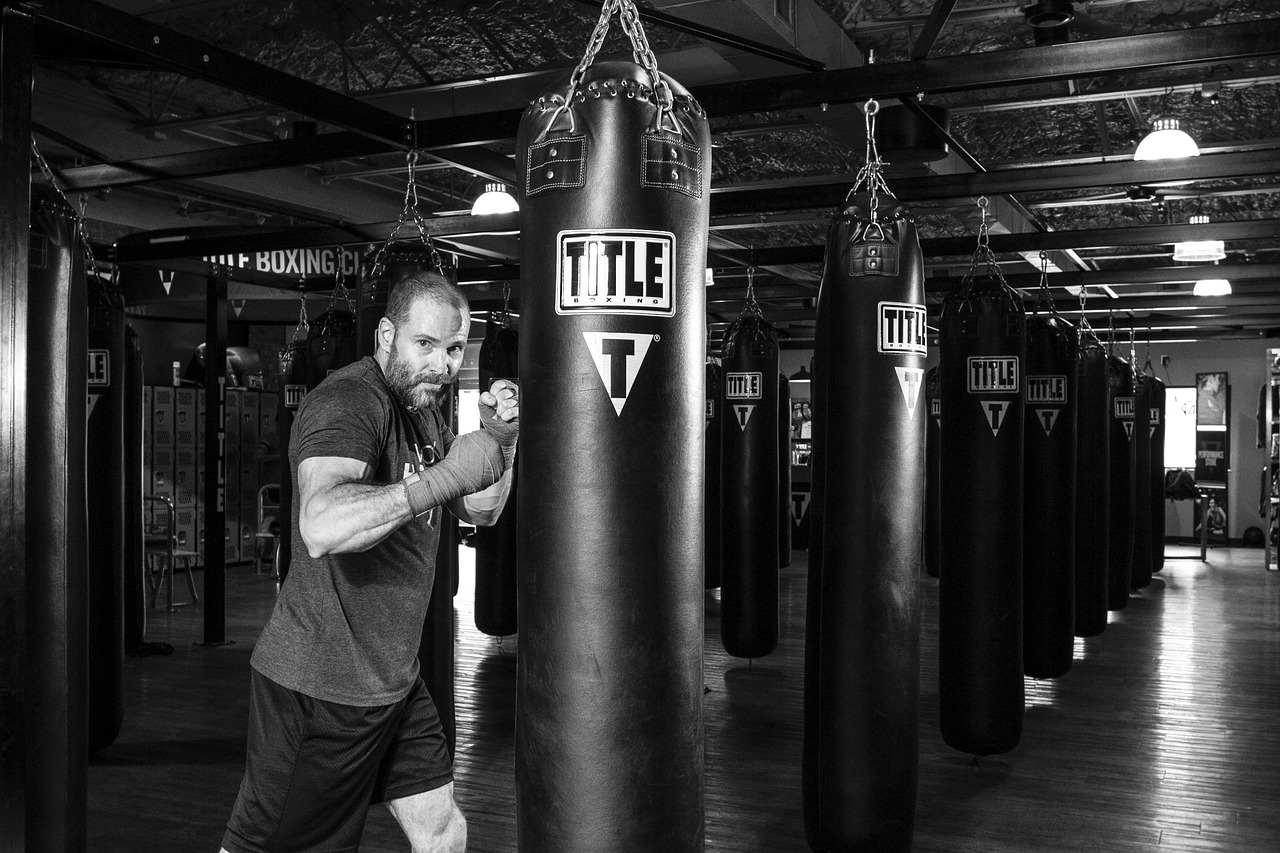
A Peruvian boxing gym is often more than a place to hit bags. It is a development room, a discipline structure, a social space, and sometimes a survival mechanism. Young fighters learn how to move, how to breathe, how to take instruction, how to spar responsibly, and how to handle the mental pressure of individual competition. In a country where football dominates the sports conversation, boxing gyms preserve a different athletic tradition: quieter, harder, less glamorous, and more demanding.
Lima has the highest concentration of opportunity, but the wider boxing map matters. Chincha matters because of Mauro Mina. Callao matters because of its fighting reputation. Trujillo and other regional cities matter because they extend the sport beyond the capital. The long-term health of Peruvian boxing depends on whether talent outside Lima can access coaching, tournaments, and pathways without having to disappear into the capital too early.
Peru’s gyms also feed different kinds of boxing participation. Some athletes train for amateur competition. Some pursue professional careers. Others use boxing for fitness, discipline, or self-defense. That recreational layer should not be dismissed. In many countries, boxing fitness keeps gyms financially alive, and those same gyms then support competitive fighters. The person paying for fitness classes may indirectly help keep the ring open for the teenager preparing for nationals.
The strongest boxing countries usually have a deep relationship between grassroots gyms and elite pathways. Peru’s version of that relationship is still developing. The talent is there. The tradition is there. The question is how consistently the system can move a young boxer from local promise to national competition, then from national competition to international readiness.
Peru’s Place in South American Boxing
Peru belongs to a South American boxing region with a complicated hierarchy. Argentina has the deepest historic professional tradition on the continent. Venezuela and Colombia have produced significant champions. Brazil has had major figures and Olympic success. Chile, Ecuador, Uruguay, Bolivia, and Paraguay all have their own boxing stories, but with varying levels of international visibility.
Peru sits in the middle of that regional picture. It is not an invisible boxing country, but it is not a dominant one either. Its best fighters have had to prove themselves against opponents from countries with stronger professional pipelines and more established boxing economies. That makes regional competition essential. South American title fights, Latin American belts, and cross-border cards are not secondary details for Peruvian boxers. They are often the bridge between domestic recognition and global opportunity.
This regional context also shapes styles. Peruvian fighters often operate in a Latin American boxing environment that values toughness, rhythm, body punching, counterpunching, and emotional resilience. But Peru does not have one globally branded style in the way Mexican boxing is associated with pressure or Cuban boxing with amateur technical movement. Peruvian boxing is more varied. Its fighters are usually understood individually rather than as products of a single national school.
That can be an advantage if developed properly. A smaller boxing country does not have to copy a larger neighbor. Peru can build around disciplined amateur fundamentals, smart matchmaking, regional mobility, and stronger support for women’s boxing. Its route forward is not to become Mexico or Cuba. It is to become a more organized version of itself.
Why Peruvian Boxing Still Has Room to Grow
The future of boxing in Peru depends on infrastructure, visibility, and continuity. The country has already shown that it can produce notable fighters. Mauro Mina proved Peru could develop a world-class boxer. Kina Malpartida and Linda Lecca proved Peruvian women could win and defend major titles. Alberto Rossel proved that a Peruvian male fighter could bring a title moment home. Jonathan Maicelo and Carlos Zambrano showed that Peruvian professionals could enter broader international conversations.
The missing piece is density. Peru needs more fighters reaching that level at the same time. A healthy boxing country cannot rely on one name every generation. It needs a pipeline: youth participation, amateur tournaments, coaching education, regional competition, sponsor interest, media coverage, and professional shows that give prospects meaningful rounds.
Women’s boxing may be one of the best opportunities. Peru already has credible history there, and the international women’s boxing scene continues to expand. If Peruvian gyms and federations invest seriously in girls’ and women’s development, the country could build on a legacy that is already stronger than many casual fans realize.
The amateur side is another major opportunity. A more consistent national amateur structure would give Peru a better chance to qualify boxers for major international tournaments and improve the technical level of future professionals. Olympic boxing remains a powerful development target for countries that do not have massive professional promotional industries.
Professional boxing will require a different solution. Peru needs cards that keep fighters active, matchmaking that develops prospects instead of protecting records too long, and international partnerships that allow the best boxers to test themselves abroad without being rushed into bad opportunities. For a Peruvian fighter, the jump from national success to world-class opposition can be severe. Better development fights would make that jump less brutal.
The Real Identity of Boxing in Peru
Boxing in Peru is not defined by volume. It is defined by moments, figures, and stubborn continuity. The country’s boxing story runs through Mauro Mina’s missed world-title destiny, Kina Malpartida’s championship visibility, Linda Lecca’s title defenses, Alberto Rossel’s breakthrough, Carlos Zambrano’s international opportunity, Jonathan Maicelo’s public ambition, and the gyms that keep producing fighters without constant attention.
That makes Peru a compelling boxing country precisely because its story is not overbuilt. It is not a factory. It is not a global fight capital. It is not a nation where boxing dominates every sports conversation. It is a country where boxing survives through pride, coaching, memory, and the occasional fighter who forces the wider world to pay attention.
For readers looking for boxing in Peru, the most important thing to understand is that the sport has both history and unfinished potential. It has produced enough success to matter, but it still has room to become deeper, more organized, and more visible. The next major Peruvian boxing figure will not come from nowhere. That fighter will come from the same ecosystem that has always carried the sport: a local gym, a demanding coach, a regional tournament, a hard sparring room, and the belief that Peru’s boxing story still has another chapter worth writing.