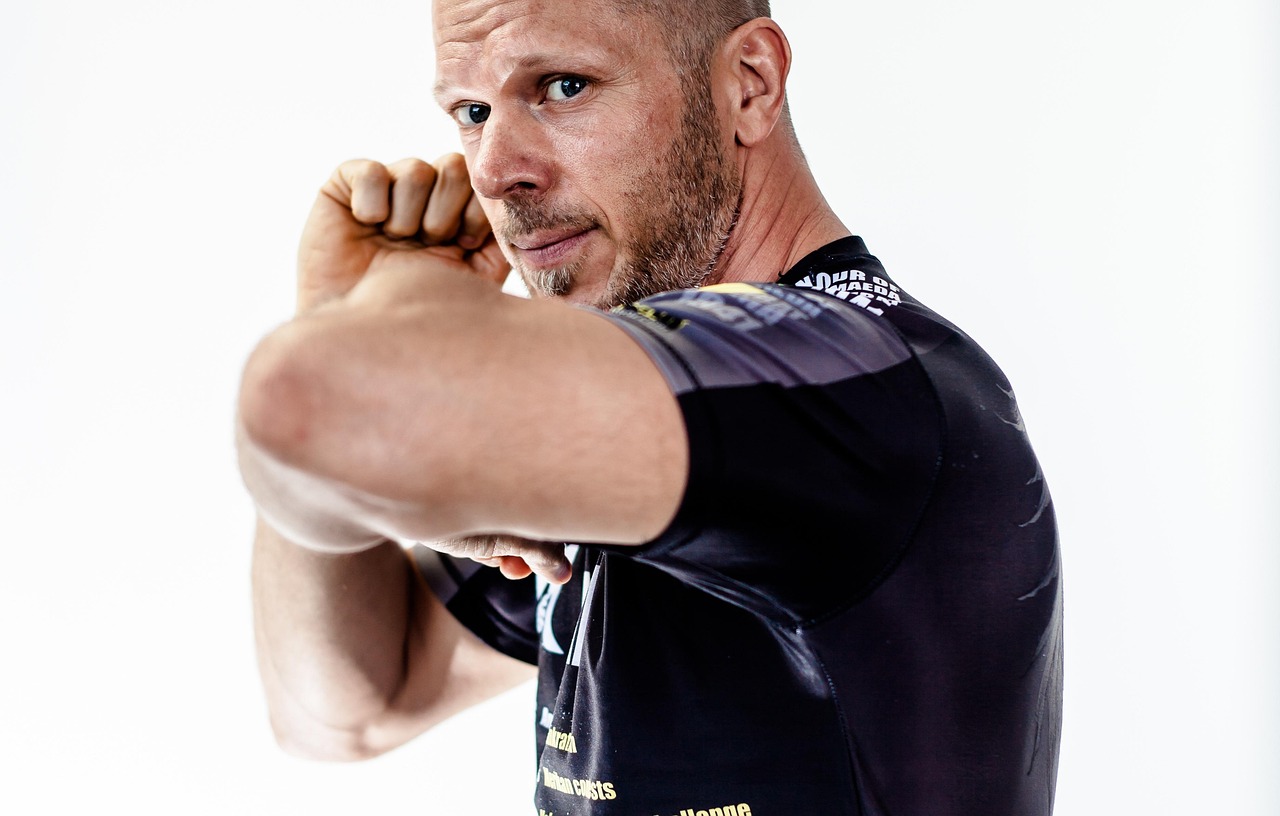
MMA in Denmark is not built like the giant fight markets of the United States, Brazil, Russia, or the United Kingdom. It is smaller, more concentrated, and more dependent on a limited number of elite athletes, gyms, and promotions. But that does not make Danish MMA thin. Denmark’s MMA identity is best understood as a compact Nordic scene with a surprisingly strong record of producing technically mature professionals, especially from Copenhagen and the wider urban combat-sports network.
The country’s modern MMA profile has been shaped by a few clear pillars: early international pioneers, a strong grappling and striking crossover culture, serious athletes coming from wrestling and Brazilian jiu-jitsu, and a domestic event scene that has become more organized over time. Denmark has produced UFC veterans, Cage Warriors champions, Bellator and PFL-level fighters, and one of the more recognizable Olympic-wrestling-to-MMA stories in Europe. Martin Kampmann, Nicolas Dalby, Mark O. Madsen, Mads Burnell, and Joachim Christensen have all helped define what Danish MMA looks like internationally.
Denmark’s scene also matters because it sits inside the broader Nordic fight ecosystem. Danish fighters often interact with Swedish, Norwegian, Finnish, British, German, and Polish circuits rather than developing entirely inside one domestic system. That gives Danish MMA a practical character. Fighters must be technically prepared, travel-ready, and comfortable entering regional European shows before they ever reach the UFC, PFL, Bellator, Cage Warriors, KSW, Oktagon, or other major platforms.
The Combat-Sports Roots Behind Danish MMA
Denmark’s MMA development did not come from one single national martial art. It grew from a mixture of wrestling, boxing, kickboxing, Brazilian jiu-jitsu, submission grappling, karate, Muay Thai, and broader Scandinavian combat-sports exchange. That blend is important because Denmark has rarely had the depth of professional MMA events needed to develop fighters only through cage experience. Instead, Danish athletes have often entered MMA after building serious ability in a base discipline.
Wrestling is part of the Danish MMA story because of Mark O. Madsen. Madsen was not just a wrestler who tried MMA; he was an Olympic-level Greco-Roman wrestler who won silver at the 2016 Olympics before transitioning deeper into professional MMA. His career gave Denmark one of Europe’s clearest examples of a world-class amateur combat-sports athlete moving into the cage with a fully formed physical and technical identity. His UFC run was built on pressure, control, clinch strength, takedown threat, and competitive discipline rather than on the looser striking-first style often associated with early European MMA.
Brazilian jiu-jitsu has been just as important in Copenhagen. Arte Suave, one of Denmark’s key BJJ and MMA institutions, traces its foundation to 2002, when BJJ was still undeveloped in the country and early practitioners were traveling to Malmö to train. That kind of cross-border learning is central to Danish MMA: the country’s athletes and coaches have often imported knowledge, refined it locally, and then tested themselves across European circuits.
The striking side has also mattered. Danish MMA has produced fighters with strong kickboxing, karate, Muay Thai, and boxing influences. Nicolas Dalby’s game, for example, has long combined durability, rangy striking, pressure, scrambling, and the ability to win hard rounds rather than relying on a single specialty. Martin Kampmann, one of Denmark’s early international MMA figures, came through wrestling, karate, Muay Thai, boxing, submission wrestling, and BJJ before becoming a high-level UFC welterweight and middleweight.
The result is a Danish MMA style that is less about mass production and more about well-rounded adaptation. Denmark does not overwhelm the global scene with fighter volume. Instead, its best athletes tend to be technically educated, internationally mobile, and developed through a mix of local gyms and foreign competitive experience.
Martin Kampmann and the First International Danish Standard
Any serious history of MMA in Denmark has to give Martin Kampmann a central place. Born in Aarhus, Kampmann became one of the first Danish fighters to establish himself at a high level in the UFC. He competed in both the middleweight and welterweight divisions, fought out of Las Vegas, trained with Xtreme Couture, and became known for his technical boxing, underrated grappling, composure under pressure, and ability to compete with elite opposition.
Kampmann’s career mattered because he gave Danish MMA an early proof of concept. Before there was a deeper Danish MMA infrastructure, Kampmann showed that a fighter from Denmark could move through European competition, enter the UFC, and become relevant in one of the sport’s toughest eras. He won the Cage Warriors middleweight title before his UFC career, which also connected Denmark’s MMA development to the British and European regional systems that have long served as stepping stones for fighters from smaller markets.
His influence continued after his own fighting career. Kampmann later became associated with coaching and was involved in Mark O. Madsen’s transition into the UFC, linking one generation of Danish MMA to another. That connection is part of Denmark’s MMA pattern: because the country is not huge, the elite fight community is relatively connected. The same names often appear as fighters, coaches, gym leaders, promotion builders, or mentors.
Kampmann also set a standard for what Danish MMA could be. He was not marketed as a novelty fighter from a small country. He was a serious UFC contender with a complete skill set. That distinction matters. Denmark’s global MMA identity was not built on spectacle. It was built on a handful of professionals who could compete credibly against international opposition.
Nicolas Dalby and the Modern Danish UFC Identity
If Kampmann represents the early Danish benchmark, Nicolas Dalby represents the modern Danish MMA identity in the UFC era. Dalby, from Sønderborg and fighting out of Copenhagen, became one of Denmark’s most recognizable active MMA figures. He is a former Cage Warriors welterweight and interim welterweight champion, and his UFC career has included multiple runs at the highest level.
Dalby’s story is important because it reflects the difficulty and resilience of coming from a smaller MMA market. He did not emerge from a massive national pipeline with dozens of UFC-level peers. His career has required reinvention, travel, and repeated proof against international opposition. His style also fits Denmark’s broader MMA profile: durable, conditioned, technically balanced, and comfortable in long, physical fights.
His association with Rumble Sports in Copenhagen also matters. Rumble Sports is one of the clubs that appears repeatedly in discussions of Danish combat sports, and Dalby’s presence helped give Copenhagen a visible MMA identity beyond general martial arts participation.
Dalby’s UFC Copenhagen win in 2019 was one of the symbolic moments for Danish MMA. On a card held at Royal Arena in Copenhagen, Dalby returned to the UFC and won in front of a home crowd. Mark O. Madsen also won that night, giving Denmark two major local victories on the country’s biggest UFC stage to date.
That event helped frame Denmark as more than a place with isolated fighters abroad. It showed that Danish MMA had an audience, recognizable athletes, and enough local credibility to host a UFC event. For a country with a relatively small population and a still-developing domestic fight calendar, that was a major visibility point.
Mark O. Madsen and the Wrestling Bridge
Mark O. Madsen gave Danish MMA something different from Kampmann or Dalby. He brought Olympic credibility. His move into MMA was not simply a fighter changing disciplines; it was one of Denmark’s most decorated combat-sports athletes entering the cage and forcing the domestic scene to think bigger.
Madsen’s Greco-Roman wrestling background gave him a clear identity from the start. He did not need to be rebuilt from scratch as an MMA athlete. He needed the right striking defense, cage adaptation, submission awareness, and pacing to let his wrestling work under MMA conditions. That made his fights compelling in a different way from the classic striker-grappler development story. He arrived with an elite engine, elite body control, and high-pressure competitive instincts.
His UFC debut at UFC Copenhagen in 2019 gave Danish MMA one of its most direct crossover moments. He entered the UFC with Olympic recognition and fought in front of a Danish audience, creating a natural bridge between mainstream Danish sports fans and the MMA public. ESPN’s coverage at the time emphasized the unusual nature of his decision: he had a strong wrestling position and Olympic credentials, but he chose the UFC challenge instead of staying in a more established amateur-wrestling path.
Madsen’s post-fighting role may become just as important as his active career. In 2024, he launched Dominance Fighting Championship, later associated with Airtox Dominance FC, with the first event planned for K.B. Hallen in Copenhagen. That matters because Denmark’s next MMA step is not only about producing individual fighters. It is about building the domestic platforms that let fighters compete, attract attention, and stay connected to Danish audiences before they leave for larger international promotions.
Mads Burnell and the Copenhagen Grappling Standard
Mads Burnell gives Denmark another important MMA profile: the elite grappler who turns submission skill into a professional career across major promotions. Burnell, from the Copenhagen area, has competed in the UFC, Bellator, PFL, and Cage Warriors, and he became a Cage Warriors featherweight champion. His background in Brazilian jiu-jitsu is central to his identity, and he has been associated with Arte Suave Copenhagen.
Burnell’s significance is not only that he reached international promotions. It is that he represents the technical maturation of Denmark’s grappling scene. Earlier Danish MMA had to import much of its BJJ knowledge. By Burnell’s generation, Copenhagen had produced fighters whose grappling was not just serviceable for MMA but central to their success.
His later gym role also reinforces the domestic development picture. Burnell MMA & BJJ in Søborg presents itself as a training environment for MMA, BJJ, Muay Thai, and boxing under Burnell’s leadership, with competition-focused pathways across combat-sports disciplines.
That kind of gym is exactly what Denmark needs if it wants to move from a few standout names toward a deeper MMA base. Fighters need places where MMA is not treated as an occasional add-on to kickboxing or BJJ, but as an integrated sport requiring wrestling, striking, grappling, cage work, conditioning, and fight-specific coaching. Burnell’s presence in that space gives the Copenhagen scene a direct link between international professional experience and local athlete development.
Copenhagen as the Center of Danish MMA
Danish MMA is not limited to Copenhagen, but Copenhagen is clearly the country’s most important MMA center. The capital area has the strongest concentration of gyms, athletes, media visibility, and major-event infrastructure. It is where many of the country’s best-known fighters have trained or fought out of, and it is where the biggest international moments have been staged.
Tapology’s Denmark gym listings show a spread across the country, including clubs in Copenhagen, Søborg, Aalborg, Aarhus, Silkeborg, Odense, and other locations. But the most visible names cluster around the capital: Arte Suave, Rumble Sports, CSA.dk, Burnell MMA & BJJ, and related combat-sports spaces.
The Copenhagen advantage is practical. Fighters there have access to more sparring variety, better coaching overlap, easier travel, a larger population base, and stronger connection to event promotion. A Danish fighter from a smaller city can train locally, but the capital area often becomes the place where serious MMA ambitions are sharpened.
That does not mean the rest of Denmark is irrelevant. Odense, Aarhus, Aalborg, Kolding, Frederikshavn, and other cities have all played roles in the broader combat-sports ecosystem. Great Danes Fight Club in Odense, for example, advertises MMA, Muay Thai, K-1 kickboxing, BJJ, boxing fitness, and no-gi grappling, reflecting the kind of multi-discipline club structure that supports MMA outside the capital.
Still, the Danish map is not evenly weighted. Copenhagen is the main engine. The rest of the country forms a supporting network of local gyms, regional athletes, amateur competition, and event stops.
Danish MMA Events, Regulation, and the Fight for Legitimacy
One of the most important turning points for MMA in Denmark was regulatory recognition. In 2017, IMMAF reported that Denmark had moved to regulate MMA and other full-contact striking sports by law after a long campaign by the Danish MMA Federation. That was a major legitimacy step for a sport that had faced uncertainty and potential restrictions.
That regulatory background matters because MMA scenes do not grow only through fighters. They grow through legal clarity, safe event standards, amateur pathways, coaching accountability, medical expectations, and promotion stability. Without those pieces, even talented athletes have to develop in fragmented conditions or leave the country to compete.
Denmark’s event scene has become more visible through organizations such as MMA Galla and Airtox Dominance FC. MMA Galla describes itself as Denmark’s largest and longest-running MMA organization, with events across major Danish cities. Sherdog’s event database lists MMA Galla activity across multiple recent volumes, including shows in Kolding, Brøndby, Odense, and other Danish venues.
Airtox Dominance FC represents a newer, more ambitious layer. Its connection to Mark O. Madsen gives it instant credibility inside Danish MMA, while its partnership with the Danish Mixed Martial Arts Federation as sponsor of the Danish MMA National Team points toward a more structured relationship between promotion, federation, amateur development, and national branding.
That is a meaningful development. Denmark’s next leap will not come only from waiting for another Kampmann, Dalby, Madsen, or Burnell to break through. It will come from building a competitive ladder where amateur athletes can fight regularly, learn safely, gain exposure, and move into professional opportunities without needing to leave the country too early.
The Role of Cage Warriors and the European Circuit
For Danish fighters, Cage Warriors has been one of the most important bridges to the wider MMA world. Kampmann won a Cage Warriors middleweight title before his UFC career. Dalby became a Cage Warriors welterweight champion and interim welterweight champion. Burnell became a Cage Warriors featherweight champion. That pattern is not accidental.
Cage Warriors has long served as a European proving ground for fighters outside the biggest MMA countries. For Denmark, it has offered something the domestic scene historically could not always provide: frequent high-level matchups, international matchmaking, broadcast visibility, and a clear scouting connection to the UFC and other major promotions.
The same principle applies to other European and Nordic circuits. Danish fighters often need to operate regionally. They may train in Denmark, fight in Britain, compete in neighboring Nordic countries, take opportunities in Germany or Poland, and eventually reach global promotions. That makes Danish MMA more outward-facing than self-contained.
This is also why Denmark’s MMA identity should not be judged only by the number of domestic shows. The real question is how well Danish fighters move through Europe. On that measure, Denmark has done better than its size might suggest. It has produced fighters who did not merely appear internationally but won titles, built UFC careers, and became respected names in serious divisions.
Fan Culture and the Meaning of UFC Copenhagen
UFC Copenhagen in September 2019 remains one of the clearest markers of Danish MMA’s public visibility. Held at Royal Arena, the event brought the UFC to Denmark and featured Danish wins from Nicolas Dalby and Mark O. Madsen. Even though the main event was not built around a Danish headliner, the local significance came through the home-country performances and the sense that Danish MMA had reached a new stage.
For Danish fans, that event mattered because MMA can otherwise feel geographically distant. UFC cards are usually associated with the United States, Brazil, the United Kingdom, Abu Dhabi, Australia, or larger European stops. A Copenhagen card gave Danish fans a direct connection to the global product and gave local fighters a rare chance to compete at home under the sport’s biggest banner.
The long-term effect of a UFC event is not automatic. One major show does not create a complete national system. But it can change perception. It tells athletes that the sport is visible. It tells sponsors that MMA has an audience. It tells gyms that their work can lead somewhere. It tells casual sports fans that Danish fighters are not just fringe participants in an imported sport.
That visibility is now being reinforced at the domestic level by MMA Galla and Airtox Dominance FC. The question for Denmark is whether the country can turn occasional international spotlight into regular domestic momentum.
Why Denmark Produces Fewer Fighters But Stronger Individual Stories
Denmark’s MMA footprint is not broad in the way Brazil’s or the United States’ is broad. There are not endless regional pipelines feeding major promotions. There are not dozens of Danish fighters on the edge of UFC contention at any given time. But the fighters who do break through tend to carry strong individual identities.
Kampmann was the early UFC standard-setter. Dalby became the durable modern UFC representative. Madsen brought Olympic wrestling into the cage. Burnell carried Danish grappling into major promotions. Christensen gave Denmark another UFC-level name from the light heavyweight side. Each figure represents a different route into MMA rather than a single national formula.
That diversity is one of the strengths of Danish MMA. The country is not producing one repeated fighter type. Its best-known athletes have come through striking, wrestling, BJJ, regional MMA, and international gym migration. That makes the scene harder to summarize, but also more interesting.
The limitation is depth. Denmark needs more amateur volume, more professional fight opportunities, more coaching specialization, more wrestling-for-MMA development, and more consistent international matchmaking. The positive sign is that many of those pieces are now more visible than they were a decade ago.
The Future of MMA in Denmark
The future of MMA in Denmark will depend on whether the country can connect its strongest pieces into a deeper system. The elite examples already exist. Denmark has produced UFC fighters, Cage Warriors champions, Bellator and PFL competitors, and an Olympic medalist who successfully crossed into MMA. The challenge is not proving that Danish fighters can compete. That has already been proven.
The challenge is scale. Denmark needs more fighters who can move from amateur competition to domestic pro shows, from domestic pro shows to European regional platforms, and from there to major international promotions. That requires strong gyms, safe amateur regulation, ambitious promoters, credible matchmaking, and enough fan interest to sustain regular events.
The rise of Airtox Dominance FC and the continued activity of MMA Galla suggest that Denmark is entering a more organized phase. The Danish Mixed Martial Arts Federation’s role, including its national-team structure and partnership activity, also points toward a scene that is trying to professionalize rather than remain dependent on isolated stars.
Denmark’s MMA identity is likely to remain compact. It is not going to become a mass-production fight nation overnight. But compact does not mean minor. Danish MMA has already built a record around technical fighters, resilient careers, credible gyms, and international success disproportionate to the country’s size.
The best version of Danish MMA is not an imitation of larger markets. It is a Nordic model built around disciplined athletes, strong cross-training, serious grappling and striking rooms, smart use of European circuits, and domestic promotions that give local fighters a reason to stay connected to the Danish scene. If that structure keeps improving, Denmark can remain one of Europe’s smaller but more respected MMA countries.