Canada has one of the broadest combat sports landscapes in the world because its fight culture does not come from a single source. The country is not defined only by boxing, MMA, wrestling, judo, Brazilian jiu-jitsu, karate, taekwondo, or kickboxing. It has credible roots in all of them. That makes combat sports in Canada unusually layered: part Olympic sport system, part immigrant martial arts culture, part urban boxing tradition, part wrestling pipeline, part modern MMA success story, and part recreational training market spread across a vast geography.
The Canadian combat sports scene is strongest in its major urban corridors. Toronto, Montreal, Vancouver, Calgary, Edmonton, Ottawa, Winnipeg, Hamilton, Quebec City, and Halifax all support different versions of the fight-sports ecosystem. Toronto has the scale, diversity, and gym density of a major North American market. Montreal has one of the country’s clearest MMA identities, helped by Quebec’s deep combat sports following and the legacy of elite mixed martial artists. Vancouver and the Lower Mainland have strong access to boxing, kickboxing, BJJ, judo, wrestling, and traditional martial arts. Alberta’s cities bring together wrestling, MMA, boxing, and hard-nosed amateur sport culture. Smaller cities and suburbs often rely on multi-discipline gyms, judo clubs, karate dojos, taekwondo schools, boxing clubs, and wrestling programs rather than single-sport fight academies.
What separates Canada from many countries is the way recreational martial arts, Olympic combat sports, and professional fighting coexist. A beginner may enter through a karate, taekwondo, or judo club. A child may start through wrestling or boxing. A fitness-focused adult may search for kickboxing or self-defense classes. A serious athlete may move toward BJJ competition, amateur MMA, Golden Gloves-style boxing, national wrestling events, or the Olympic judo pathway. Canada is not the easiest country to summarize as a fight-sports market, but that is exactly what makes it important. It has produced world-class fighters while also maintaining a large, accessible base of local martial arts participation.
MMA and the Canadian Fight Identity
Modern Canadian combat sports cannot be discussed without MMA. Canada became one of the world’s most important MMA countries not because it had the largest number of fighters, but because it produced several athletes who shaped the sport’s global image. Georges St-Pierre remains the defining figure. His career gave Canada a central place in modern mixed martial arts, and his technical style reflected several Canadian strengths at once: disciplined striking, wrestling development, athletic preparation, tactical grappling, and a professional training environment.
St-Pierre’s success also helped give Montreal a special place in MMA geography. The city became associated with high-level training, international fight camps, and technical coaching. Fighters from outside Canada have long treated Montreal as a serious training destination, and Quebec fans have supported combat sports with an intensity that gives the province a distinctive fight culture. In a country where hockey dominates much of the sporting conversation, MMA found a serious public audience in Quebec earlier and more visibly than in many other regions.
Canada’s MMA identity extends beyond one fighter and one city. Rory MacDonald, Carlos Newton, Mark Hominick, Patrick Côté, Sam Stout, Sarah Kaufman, Alexis Davis, John Makdessi, Olivier Aubin-Mercier, Tanner Boser, and other Canadian athletes helped show that the country could produce fighters across weight classes, styles, and eras. Some came from striking backgrounds. Others came through grappling, wrestling, judo, or hybrid MMA gyms. That variety matters because Canadian MMA has never been tied to one narrow pipeline. It grew from a mix of boxing clubs, kickboxing gyms, jiu-jitsu schools, wrestling rooms, and early mixed martial arts academies.
For people searching for MMA gyms in Canada, the strongest options are usually in and around major cities. Toronto and the Greater Toronto Area have a dense network of MMA, BJJ, Muay Thai, boxing, and wrestling-based facilities. Montreal remains one of the country’s most respected fight markets. Vancouver, Calgary, Edmonton, Ottawa, Winnipeg, and Halifax all offer legitimate training for beginners and competitive athletes. In smaller communities, MMA access may depend on whether a local gym has qualified grappling and striking coaches under one roof. The best Canadian MMA gyms usually combine fundamentals: boxing or Muay Thai for striking, wrestling or judo for takedowns, Brazilian jiu-jitsu for ground work, and conditioning built around combat sports rather than general fitness alone.
Boxing Across Canada
Boxing has a deeper Canadian history than MMA and remains one of the country’s most important combat sports. Canadian boxing culture has been shaped by urban clubs, immigrant communities, working-class neighborhoods, amateur programs, professional fight nights, and international champions. In Toronto, Montreal, Vancouver, Hamilton, Halifax, Winnipeg, and other cities, boxing gyms have long served as places where athletes learn discipline, conditioning, footwork, toughness, and ring craft.
Canada’s boxing legacy includes major names with different kinds of meaning. Lennox Lewis, born in London and raised partly in Canada, represented Canada at the Olympics and won heavyweight gold before becoming one of the defining professional heavyweights of his era. George Chuvalo became a symbol of durability and Canadian boxing grit. Arturo Gatti, strongly associated with Montreal and Canadian boxing culture, became one of the most beloved action fighters of his generation. Donovan “Razor” Ruddock, Adonis Stevenson, Jean Pascal, Lucian Bute, Shawn O’Sullivan, and others added to Canada’s reputation as a country capable of producing elite amateur and professional talent.
Quebec has played a particularly important role in Canadian boxing. Montreal has hosted major professional fights, supported world-level fighters, and maintained a fan base that understands boxing as both sport and spectacle. The province’s boxing culture has often blended French-Canadian sporting pride, immigrant boxing traditions, and a strong appetite for high-level fight nights. Toronto’s boxing scene is different but equally important, shaped by the scale and diversity of the GTA. In a city where Caribbean, African, European, South Asian, Middle Eastern, Latin American, and East Asian communities all contribute to local sport, boxing becomes one of the most accessible forms of combat training.
For beginners, boxing in Canada is often the easiest combat sport to understand. A new student can join for fitness, self-defense, competition, or technical development. Many gyms offer non-contact classes, bag work, footwork sessions, youth boxing, women’s classes, and competitive training. Serious athletes can move into sparring, amateur bouts, provincial competition, and eventually national-level boxing. The sport’s structure is clearer than MMA because boxing has a long-standing amateur pathway and a recognizable gym culture.
Boxing also remains important because it feeds other combat sports. Many MMA fighters use boxing coaches to refine stance, defense, combinations, and ring awareness. Kickboxers and Muay Thai athletes often cross-train in boxing to sharpen their hands. Even recreational martial artists benefit from boxing’s direct approach to distance, timing, and conditioning. In Canada, boxing is not just a legacy sport. It remains a living part of the broader combat sports ecosystem.
Wrestling, Judo, and Canada’s Olympic Combat Sports Base
Canada’s combat sports identity is strengthened by Olympic disciplines. Wrestling and judo provide the country with a technical base that supports both standalone competition and crossover into MMA and grappling.
Wrestling has a serious presence in Canada, especially through school, club, university, and national development systems. It does not have the same public profile as hockey, basketball, football, or soccer, but within combat sports it matters deeply. Canadian wrestlers have achieved international success, and the sport has produced athletes with the physical tools that translate well into MMA: balance, takedown defense, pressure, mat control, grip fighting, conditioning, and competitive toughness.
The country’s wrestling legacy includes Olympic and international standouts such as Daniel Igali, Erica Wiebe, Carol Huynh, Tonya Verbeek, and others who helped establish Canada as a respected wrestling nation. Wrestling’s regional strength varies, but the sport has a meaningful presence in provinces such as Ontario, Alberta, British Columbia, Quebec, and Saskatchewan. University wrestling and club systems also provide important development opportunities for athletes who want to continue beyond youth participation.
Judo is another major piece of Canada’s combat sports profile. The sport has a long club-based structure across the country, with strong programs in Quebec, Ontario, British Columbia, Alberta, and other provinces. Judo is especially important because it sits between traditional martial arts and elite Olympic sport. It is accessible to children, disciplined enough for lifelong practice, and technical enough to produce world-level athletes.
Canadian judo has produced major international competitors, including Nicolas Gill, Antoine Valois-Fortier, Jessica Klimkait, Catherine Beauchemin-Pinard, and Christa Deguchi. Deguchi’s Olympic gold at Paris 2024 gave Canadian judo a landmark achievement and reinforced the country’s place in the global judo conversation. Judo also contributes to the broader combat sports scene by developing throws, trips, balance, gripping, falling skills, and pressure transitions that can be valuable in MMA, submission grappling, and self-defense training.
For parents looking at martial arts classes in Canada, judo and wrestling often provide some of the best foundations. They teach body control, discipline, safe falling, strength, balance, and competition under rules that reward skill rather than aggression alone. For adult athletes, they offer a demanding path into grappling that differs from Brazilian jiu-jitsu but complements it well.
Brazilian Jiu-Jitsu and Submission Grappling in Canada
Brazilian jiu-jitsu has become one of the fastest-growing combat sports in Canada over the past two decades. Its growth mirrors the broader rise of MMA, but BJJ has also become a major standalone sport. Across Canada, jiu-jitsu schools serve beginners, hobbyists, competitors, self-defense students, children, law enforcement professionals, and MMA athletes.
The strongest BJJ markets are usually found in the country’s largest metros. Toronto and the surrounding GTA have a deep and diverse grappling scene, with academies representing many lineages and competition styles. Montreal has long been a major BJJ and MMA training city. Vancouver and the Lower Mainland offer strong access to gi and no-gi training, often alongside judo, wrestling, boxing, and kickboxing. Calgary and Edmonton have built serious grappling communities, supported by the broader growth of MMA in Alberta. Ottawa, Winnipeg, Halifax, Quebec City, Saskatoon, Regina, Victoria, and other cities also have established BJJ schools.
One reason BJJ has grown so well in Canada is that it works for many types of students. A teenager may join for competition. A parent may enroll a child for confidence and discipline. An adult may start because they want a combat sport that is technical, challenging, and less dependent on striking. An MMA athlete may use it to build submissions, escapes, guard passing, back control, and defensive grappling. A former wrestler or judoka may find BJJ a natural extension of existing skills.
Canadian BJJ also benefits from the country’s immigrant and international character. In major cities, it is common to find instructors and students connected to Brazilian, American, European, Asian, and Latin American grappling communities. Seminars, tournaments, affiliation networks, and no-gi events help keep the scene connected to global trends. Canada is not usually treated as a single dominant BJJ nation in the same way as Brazil or the United States, but its local scenes are serious, active, and increasingly competitive.
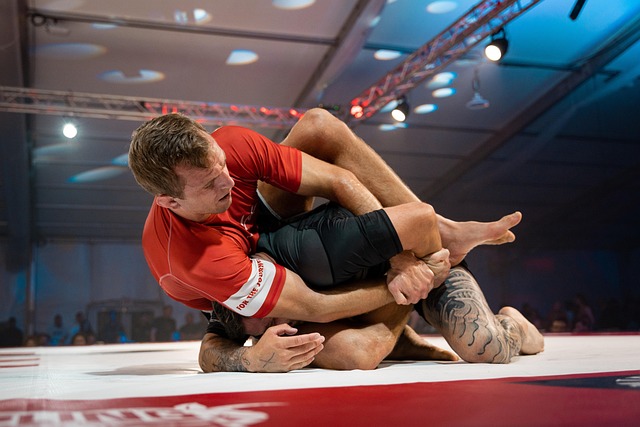
Submission grappling and no-gi training have also expanded. This is partly because of MMA, partly because of global grappling events, and partly because many students prefer the athletic pace and wrestling-influenced style of no-gi. In Canada, the best grappling gyms often blend BJJ with wrestling, judo, and MMA-specific ground work. That hybrid approach suits the country’s broader combat sports identity: technical, multi-discipline, and spread across several sporting traditions.
Kickboxing, Muay Thai, Karate, and Taekwondo
Striking sports in Canada extend well beyond boxing. Kickboxing and Muay Thai have grown steadily, especially in large cities and suburbs where students want practical striking, fitness training, and competition options. Toronto, Montreal, Vancouver, Calgary, Edmonton, Ottawa, and Winnipeg all have gyms that offer Muay Thai or kickboxing either as standalone disciplines or as part of MMA programs.
Muay Thai in Canada has become especially important for MMA and recreational striking. Many students enter through fitness-based classes, then progress into pad work, sparring, clinch work, and amateur competition. The sport’s appeal comes from its completeness as a striking system: punches, kicks, knees, elbows, clinch control, balance, and conditioning. While Canada is not a traditional Muay Thai country, its gyms have absorbed the sport into the broader North American fight training model.
Kickboxing has a similar role. Some gyms teach Dutch-style combinations and pressure. Others teach a more general striking curriculum for MMA. Karate and taekwondo schools remain widespread, especially for children and families. They are often the first martial arts experience for Canadian students because they are accessible, structured, and common in suburban communities. Taekwondo has a particularly strong youth presence because of its Olympic identity, belt system, and family-friendly class structure. Karate continues to attract students who want discipline, striking basics, forms, self-defense, and traditional martial arts culture.
The quality and emphasis of these schools vary widely, so the Canadian striking scene should be understood in layers. At one end are competitive boxing, Muay Thai, and kickboxing gyms preparing fighters for real bouts. At another are recreational martial arts schools focused on confidence, coordination, discipline, and fitness. Between those poles are many hybrid gyms that offer practical striking without necessarily pushing every student toward competition.
For someone searching for martial arts classes in Canada, this diversity is useful. A beginner who wants controlled striking can start with boxing or kickboxing. A child may begin with taekwondo or karate. A future MMA fighter may need Muay Thai plus wrestling and BJJ. A fitness-focused adult may prefer non-contact kickboxing. Canada’s combat sports landscape is large enough to support all of those paths.
Where Combat Sports Training Is Strongest in Canada
Canada’s geography shapes its combat sports scene. The country is large, but the deepest training markets are concentrated in major metropolitan areas. Toronto and the GTA have the broadest range of options: boxing gyms, BJJ academies, MMA schools, Muay Thai gyms, wrestling clubs, judo dojos, taekwondo schools, karate programs, and self-defense classes. The sheer size of the market means students can usually find anything from beginner-friendly recreational training to serious competition preparation.
Montreal stands out for MMA, boxing, judo, and BJJ. Quebec has a strong fight-sports audience and a history of supporting major combat sports events. The city’s training culture has a technical reputation, and its bilingual, international character makes it a natural hub for athletes from different backgrounds. Quebec City and other parts of the province also contribute to the boxing, judo, karate, taekwondo, and grappling scene.
Vancouver and the Lower Mainland offer another major training corridor. The region supports a large martial arts market, with strong access to BJJ, boxing, kickboxing, judo, wrestling, karate, taekwondo, and MMA. The area’s international population and West Coast fitness culture help sustain both competitive and recreational schools.
Calgary and Edmonton bring a different flavor. Alberta’s combat sports scene has a direct, athletic quality, with boxing, wrestling, MMA, BJJ, Muay Thai, and judo all present. The province’s sports culture tends to support hard training and competitive development, and both cities have produced or supported serious fighters and grapplers. Winnipeg, Saskatoon, Regina, and other Prairie cities may have smaller scenes, but they often have strong wrestling, boxing, judo, and martial arts communities built around dedicated clubs.
Ottawa benefits from its size, university population, military and government presence, and proximity to both Ontario and Quebec sport systems. Halifax and Atlantic Canada have a smaller but active combat sports scene, with boxing, MMA, BJJ, judo, karate, and taekwondo forming the backbone. In the North and in smaller rural communities, access can be more limited, but boxing clubs, traditional martial arts schools, judo programs, and community-based training can still provide meaningful entry points.
Competition Pathways and Fighter Development
Canada offers several pathways for combat sports athletes, but the route depends heavily on the discipline. Boxing, wrestling, judo, and taekwondo have clearer amateur and federation structures. Athletes can begin at local clubs, compete provincially, move into national competition, and pursue international opportunities if they reach the elite level. These sports are supported by coaching systems, age divisions, rules, rankings, and national development models.
MMA is less centralized. A Canadian MMA athlete often develops through a gym-based pathway, combining striking, grappling, wrestling, and conditioning before entering amateur competition. Regional promotions are important because they give fighters experience before they attempt to move to larger organizations. The best MMA prospects usually come from gyms that can provide consistent sparring, experienced coaches, safe training partners, and a realistic understanding of fight progression.
BJJ and submission grappling have their own tournament culture. Students can compete locally, provincially, nationally, and internationally, depending on ambition and resources. Because BJJ is accessible to hobbyists as well as serious competitors, many Canadian academies maintain a mixed culture: some students compete often, while others train for skill, fitness, or community.
Youth development is one of the most important parts of the Canadian scene. A child who starts in wrestling, judo, boxing, karate, or taekwondo can build coordination, confidence, discipline, and competitive habits that carry into other sports. Some will stay with their original discipline. Others will eventually move into MMA, kickboxing, BJJ, or submission grappling. Canada’s best combat sports future likely depends on this cross-pollination. The more young athletes can move safely between wrestling rooms, judo dojos, boxing gyms, BJJ schools, and striking programs, the stronger the national combat sports base becomes.
Why Canada Has a Distinct Combat Sports Scene
Canada’s combat sports identity is not built around one national style. It is built around adaptability. The country has produced elite MMA fighters, world-class boxers, Olympic wrestlers, Olympic judoka, respected grapplers, and thousands of recreational martial artists training in cities and towns across the country. Its scene is urban, multicultural, technical, and spread across many disciplines.
For beginners, Canada offers a wide range of entry points. Boxing, kickboxing, karate, taekwondo, judo, BJJ, wrestling, and MMA are all available in different parts of the country. For serious athletes, the strongest opportunities are usually found in major metros with deep coaching networks and active competition scenes. For fans, Canada has enough history to matter internationally, especially through MMA, boxing, judo, and wrestling.
The country’s combat sports scene is strongest when it leans into its variety. Quebec’s MMA and boxing culture, Ontario’s scale and diversity, British Columbia’s martial arts depth, Alberta’s athletic fight scene, the Prairie wrestling and club-sport base, Atlantic Canada’s local fight communities, and the national Olympic combat sports system all contribute something different. Canada is not a one-discipline fight country. It is a multi-discipline combat sports nation, and that is the best way to understand its place in the global fight landscape.