China’s MMA story is not simply the story of a new imported sport gaining attention. It is the story of a large combat-sports country learning how to translate older fighting systems into modern mixed martial arts. The country already had deep traditions in sanda, wrestling, boxing, judo, wushu, and other striking and grappling disciplines before MMA became a recognizable professional pathway. What changed over the past two decades was the creation of a competitive bridge between those foundations and the global cage-fighting economy.
China is now one of Asia’s most important MMA markets, but it is not yet a fully mature MMA superpower in the same way Brazil, the United States, Russia, or Japan have been at different points in the sport’s history. Its identity is more specific: China is a fast-developing MMA country with a strong striking base, a growing women’s MMA legacy, several internationally recognized UFC and ONE Championship names, and a major institutional footprint through the UFC Performance Institute in Shanghai.
The scene is also uneven in an important way. China has produced elite fighters, including Zhang Weili, Yan Xiaonan, Song Yadong, Li Jingliang, Xiong Jing Nan, Tang Kai, Meng Bo, Su Mudaerji, Zhang Mingyang, and others, but the full domestic pipeline is still catching up to the level of its best athletes. The top end of Chinese MMA has already reached world-championship level. The broader base is still building depth, coaching consistency, regional competition, grappling sophistication, and international experience.
That combination makes China one of the most interesting MMA countries in the world: not a blank-slate market, not a fully established powerhouse, but a major combat-sports nation whose modern MMA identity is still being assembled in real time.
Why Chinese MMA Begins With Sanda
To understand MMA in China, the starting point is not the UFC. It is sanda.
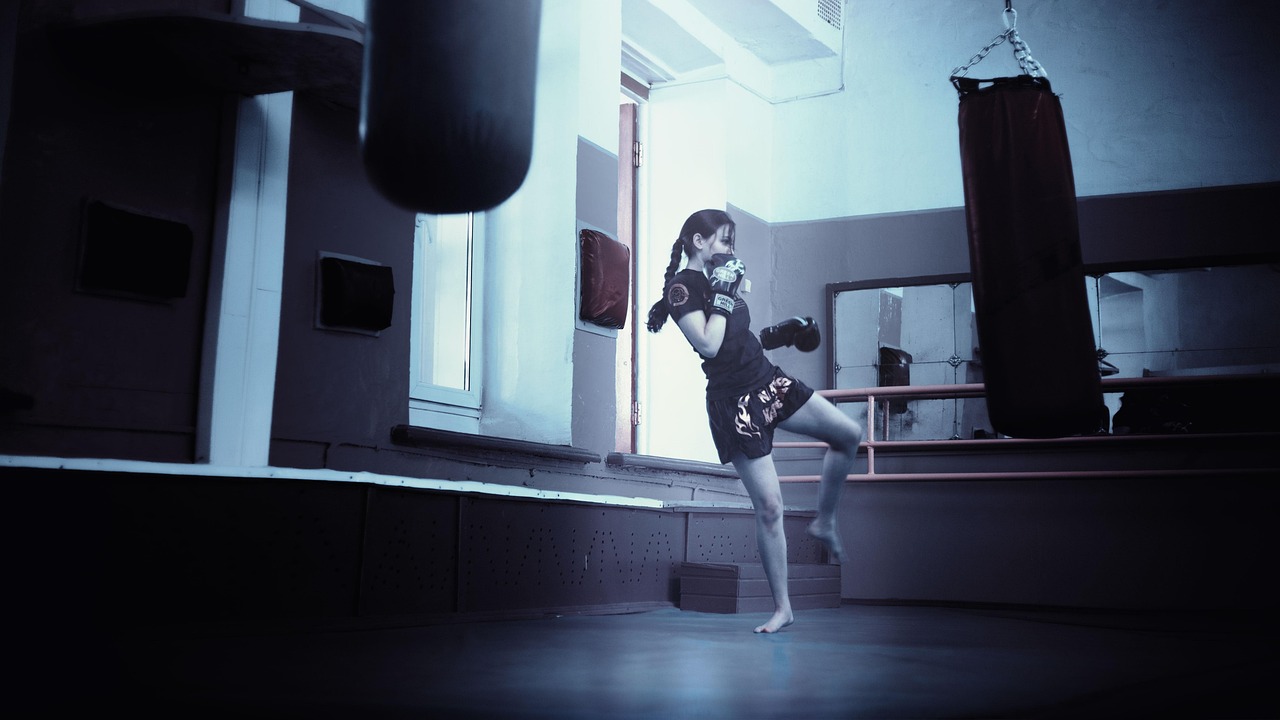
Sanda, sometimes called Chinese kickboxing, has been one of the most important combat-sports foundations for Chinese MMA fighters. Its emphasis on punches, kicks, catches, sweeps, throws, and explosive stand-up transitions gives many Chinese athletes a practical base for early MMA success. Sanda does not automatically create complete mixed martial artists, but it gives fighters a comfort with distance, rhythm, kicking exchanges, and the kind of striking-to-takedown transitions that fit naturally into cage fighting.
That is why so many Chinese MMA fighters have carried a sanda influence into the cage, even when their later development required more wrestling, Brazilian jiu-jitsu, cage control, and defensive grappling. Song Yadong is often associated with a sanda background, while many other Chinese fighters have emerged through a broader mix of striking gyms, provincial sports systems, and combat-sports academies before moving into MMA-specific training.
The sanda base also explains some of the style patterns that have appeared in Chinese MMA. Chinese fighters are often comfortable in open-space exchanges, throwing kicks from range, blitzing with straight punches, and attacking with fast entries. Where the development gap has often appeared is in prolonged clinch work, defensive wrestling against elite international opponents, submission defense, and the ability to win slow, grinding rounds against high-level grapplers.
This does not mean China lacks grappling traditions. Chinese wrestling, judo programs, and regional grappling systems all matter. But modern MMA requires a very specific combination of cage wrestling, submission awareness, positional control, and tactical pacing. Building that blend across an entire national scene takes time.
China’s best fighters show how that transition can work. Zhang Weili’s evolution from an aggressive pressure striker into a physically dominant, well-rounded champion is the most obvious example. Her career changed the way Chinese MMA was perceived because she did not win at the highest level through novelty or national-market momentum. She won by developing a complete MMA game: pace, strength, striking, takedowns, ground control, scrambles, and championship composure.
Zhang Weili and the Breakthrough Moment
Every serious profile of MMA in China eventually turns toward Zhang Weili. She is the defining figure in the country’s MMA history because she turned Chinese MMA from a promising regional story into a world-title story.
Zhang became the first Chinese fighter to win a UFC championship, and her success gave China something it had not previously had in modern MMA: a globally recognized champion at the center of the sport’s most powerful promotion. UFC has described Zhang and Yan Xiaonan’s UFC 300 bout as the first time two Chinese fighters competed for a UFC title, a milestone that showed how far the country’s women’s MMA scene had advanced since the early years of Chinese participation in the Octagon.
Zhang’s importance goes beyond the belt itself. She provided a model for how a Chinese fighter could survive the jump from domestic and Asian competition into the UFC title picture. Early in her career, she competed in Chinese and regional promotions, including Kunlun Fight, before moving into the UFC and eventually becoming a two-time strawweight champion. Her rise created a template that other Chinese fighters could study: develop at home, seek stronger training environments, adapt to international coaching, and keep improving after reaching the global level.
Her rivalry with Joanna Jędrzejczyk, her title fights with Rose Namajunas, her rematch success, and her win over Yan Xiaonan all made her part of the broader history of women’s MMA, not just Chinese MMA. That distinction matters. Zhang is not simply a national pioneer. She is one of the major strawweights of her era.
Yan Xiaonan’s role is also significant. She helped prove that Zhang was not an isolated case. Yan’s rise into title contention gave China a second elite UFC women’s strawweight and helped create the first all-Chinese UFC title fight. That fight mattered for Chinese MMA because it changed the national narrative from “China has a champion” to “China has a title-level women’s MMA rivalry.”
That is a much healthier marker for a developing scene. One star can happen through exceptional individual talent. Two title-level fighters in the same division suggest a deeper competitive base.
The Male Pipeline: Li Jingliang, Song Yadong, and the Search for Depth
Men’s MMA in China has followed a different arc. The country has produced recognizable UFC fighters and serious contenders, but it has not yet produced a male UFC champion. The male side of the scene is defined by important breakthroughs, durable veterans, and rising prospects rather than one dominant title-winning figure.
Li Jingliang, known as “The Leech,” has been one of the most important names in Chinese men’s MMA. He became a familiar UFC welterweight, built a long Octagon career, and helped normalize the idea of Chinese male fighters competing regularly on major international cards. UFC’s own history of Chinese fighters has described Li as arguably the face of male Chinese mixed martial arts after his UFC debut in 2014.
Li’s career is important because he represented the first sustained wave of Chinese UFC visibility. He was not just a one-off signing. He fought repeatedly, won meaningful bouts, took difficult matchups, and became a recognizable personality for fans outside China. In a country where the sport was still working to build mainstream credibility, that kind of long-running presence mattered.
Song Yadong represents a different kind of Chinese MMA figure: younger, faster into the elite conversation, and connected to one of the best-known American MMA gyms, Team Alpha Male. UFC lists Song as a Heilongjiang-born bantamweight who trains at Team Alpha Male and has been a professional since 2013.
Song’s career highlights one of the central realities of Chinese MMA development: many elite athletes eventually need international training exposure. That does not diminish the Chinese scene. It reflects the structure of global MMA. Fighters from all over the world travel to the United States, Thailand, Brazil, Dagestan, the Netherlands, and other training centers to sharpen specific parts of their games. For Song, the move into a high-level wrestling and MMA environment helped refine the tools that made him one of China’s strongest male UFC contenders.
Other male fighters have added depth to the picture. Su Mudaerji brought attention to Chinese and Tibetan representation in the UFC flyweight and bantamweight range. Zhang Mingyang has carried interest at light heavyweight, a division where Chinese MMA has had fewer major international names. Aoriqileng, Rongzhu, Maheshate, and other Chinese athletes have shown the expanding range of fighters entering the UFC system.
The challenge is consistency. China has enough talent to place fighters on major cards, but the next step is producing more athletes who can stay ranked, defeat elite international opponents, and create title pressure across multiple divisions. That requires not just talent, but matchmaking experience, coaching depth, recovery systems, wrestling development, and high-level sparring partners.
ONE Championship, Xiong Jing Nan, and China’s Asian MMA Footprint
China’s MMA identity is not limited to the UFC. ONE Championship has also played a major role in shaping how Chinese fighters are seen across Asia and internationally.
Xiong Jing Nan is central to that story. ONE lists Xiong as a Chinese fighter from Shandong and a former strawweight MMA world champion, while her long reign made her one of the most accomplished Chinese MMA athletes outside the UFC structure.
Xiong’s importance is slightly different from Zhang Weili’s. Zhang became the Chinese face of MMA inside the UFC’s global machine. Xiong became a major champion within ONE’s Asia-centered ecosystem. Her career helped Chinese MMA gain credibility in a promotion that reaches deeply into Southeast Asia, East Asia, and the broader martial arts market. She also embodied the cross-training path common to many Chinese fighters, combining boxing, sanda-influenced striking, and evolving grappling.
Tang Kai added another major achievement by becoming ONE’s featherweight MMA world champion. ONE identifies Tang as originally from Shaoyang in Hunan Province and notes that he began with wrestling at a sports university before moving into MMA.
Tang’s rise is valuable because it shows a different developmental model from the sanda-first stereotype. His wrestling background gave him a base that translated well into MMA, and his success in ONE helped expand the picture of what Chinese fighters could become. He was not merely a striker trying to survive grappling exchanges. He represented a more rounded athletic pathway.
Together, Zhang Weili, Yan Xiaonan, Xiong Jing Nan, and Tang Kai show that the strongest part of Chinese MMA has often been at the elite individual level. China has already produced world champions and title challengers. The question is whether the country can turn those elite outliers into a more regular pipeline.
Shanghai, Beijing, and the Training Infrastructure Question
For a long time, one of the central questions about Chinese MMA was infrastructure. Could China develop enough MMA-specific coaching, sparring, strength and conditioning, nutrition, and recovery support to compete with established fight hubs?
That question changed significantly with the UFC Performance Institute in Shanghai. UFC announced a major China expansion in 2018, including plans for a Shanghai Performance Institute, and the facility opened in 2019. UFC Performance Institute’s own facility page describes the Shanghai site as a 92,000-square-foot facility and the largest UFC Performance Institute built.
The Shanghai Performance Institute matters because it gives Chinese and Asian MMA athletes access to a level of technical and performance support that many regional scenes lack. Modern MMA is not just about tough sparring and fight experience. It is about injury prevention, biomechanics, weight management, nutrition, film study, strength programming, and recovery. Those support systems can be decisive for fighters trying to move from regional competition into the UFC.
Shanghai’s role is especially important because Chinese MMA is geographically broad. The country’s fighters do not come from one single fight city. They emerge from places such as Hebei, Heilongjiang, Xinjiang, Yunnan, Shandong, Hunan, Inner Mongolia, Beijing, Shanghai, and other regions with different athletic cultures. A centralized performance hub gives the scene a place where talent can be assessed, refined, and exposed to international standards.
Beijing has also mattered historically as a combat-sports and MMA center. Several early Chinese MMA institutions, gyms, and promotions were connected to Beijing or used the city as a base for talent development. The capital’s broader sports infrastructure, media visibility, and martial arts culture made it a natural place for early MMA experiments.
Still, China’s gym ecosystem remains a work in progress. The best Chinese fighters often combine domestic training with international camps. Zhang Weili has spent time working with high-level teams outside China. Song Yadong’s association with Team Alpha Male is one of the clearest examples of overseas development. Xiong Jing Nan has also trained in major Asian MMA environments outside mainland China.
That pattern is not a weakness by itself. It is common in global MMA. But it does show that Chinese MMA is still building the kind of dense domestic gym network that allows fighters to get everything they need without leaving the country.
Promotions, Road to UFC, and the Domestic Fight Scene
China’s MMA event history includes several important stages. Early promotions helped introduce the sport to domestic audiences and gave Chinese fighters a place to compete before the UFC and ONE became major destinations.
Art of War was one of the early names associated with Chinese MMA, running events in Beijing in the 2000s. Ranik Ultimate Fighting Federation, better known as RUFF, became another important promotion in the early development of Chinese professional MMA. RUFF was based in Shanghai and was described as the first Chinese MMA organization sanctioned by the General Administration of Sport of China, with its first event held in Shanghai in 2011.
RUFF’s importance was not only that it staged fights. It tried to create a national MMA structure, including title belts and a clearer professional pathway. That was a major step for a country where MMA had to distinguish itself from traditional martial arts performance, kickboxing, sanda, and other combat sports.
Kunlun Fight also played a role in the wider Chinese combat-sports ecosystem. Although best known for kickboxing, Kunlun Fight provided opportunities for athletes who crossed into MMA and gave fighters such as Zhang Weili early professional experience before they reached the UFC level.
In the modern era, Road to UFC has become one of the most important pathways for Chinese and Asian prospects. UFC describes Road to UFC as a tournament-style series for Asian MMA prospects competing for UFC contracts, and recent seasons have included Chinese fighters and events tied to Shanghai and Macau.
This pathway matters because it gives Chinese fighters something earlier generations did not have: a visible, recurring, UFC-linked bridge from regional competition to the world’s biggest promotion. Instead of relying only on isolated scouting or one-off signings, prospects can enter a tournament structure, face international opponents, and prove whether they are ready for UFC contracts.
For Chinese MMA, that is a major development. It creates pressure, but also clarity. Fighters can no longer succeed only by looking good domestically. They have to beat opponents from Japan, South Korea, India, Australia, Southeast Asia, and other parts of the Asian-Pacific talent pool.
That competition is exactly what China needs if it wants to deepen its MMA pipeline.
Women’s MMA as China’s Strongest Global Statement
One of the most distinctive features of MMA in China is the strength of its women’s scene at the top level. In many countries, men’s MMA produces the first major names and women’s MMA follows later. China’s global MMA identity developed differently. Its most important UFC champion is Zhang Weili. Its first all-Chinese UFC title fight came in women’s strawweight. Xiong Jing Nan became a defining Chinese champion in ONE.
That gives Chinese MMA a profile that stands out from many other national scenes.
The success of Chinese women in MMA is not accidental. The country has long developed female athletes through structured sports systems, and combat sports such as sanda, boxing, wrestling, and judo have given women a base for professional fighting. When those athletes transitioned into MMA, they entered weight classes where speed, discipline, strength, and technical adaptability could close gaps quickly.
Zhang Weili’s championship career also helped change perception inside and outside China. She became a marketable, respected, internationally known fighter in a sport where national representation matters. Her fights were not treated as fringe events for a developing market. They became major global MMA moments.
Yan Xiaonan’s rise added competitive legitimacy. Xiong Jing Nan’s long ONE Championship run added another layer. Meng Bo, Shi Ming, and other Chinese women have continued to show that the women’s side of Chinese MMA is not a single-athlete story.
This may remain China’s clearest route to sustained MMA influence. While the men’s side is still searching for its first UFC champion, Chinese women have already reached the top of major promotions. That changes expectations for the next generation. Young Chinese women entering MMA are not chasing an abstract dream. They have visible examples of Chinese fighters who have won world titles.
Fan Culture and the Meaning of Big Events in China
China’s MMA fan culture has grown through a mix of UFC visibility, national pride around star fighters, online combat-sports communities, and the broader popularity of martial arts. MMA does not replace traditional Chinese martial arts in the public imagination, but it does occupy a different space: competitive, global, modern, and tied to international sports media.
Big events matter because they create moments where casual fans can see Chinese fighters in a global context. UFC events in China, including shows in Shanghai, Beijing, Shenzhen, and Macau, have helped connect the domestic audience to the international product. Zhang Weili winning the UFC strawweight title in Shenzhen in 2019 was especially important because it linked a Chinese championship breakthrough to a Chinese host city.
Macau and Shanghai are particularly important for the future. Macau has long been a combat-sports and entertainment destination, while Shanghai now has institutional weight through the UFC Performance Institute. When UFC cards, Road to UFC events, or major regional shows come through those markets, they do more than stage fights. They create scouting opportunities, media attention, local sponsor interest, and moments that make MMA feel more tangible to young athletes.
The challenge is converting event attention into grassroots participation. A sold-out event or a successful Chinese fighter can spark interest, but a national MMA culture needs more: amateur shows, safe gyms, competent coaching, youth development, regional matchmaking, and a ladder from beginner training to professional competition.
China has the population, sports systems, and martial arts culture to build that ladder. The work is making it MMA-specific.
The Future of MMA in China
The future of MMA in China depends on whether the country can turn star power into system power.
The star power already exists. Zhang Weili is a historic UFC champion. Yan Xiaonan has fought for UFC gold. Song Yadong has become a serious bantamweight contender. Li Jingliang gave China a durable male UFC presence. Xiong Jing Nan and Tang Kai have carried Chinese championship credibility in ONE. Road to UFC continues to create opportunities for Chinese prospects. Shanghai gives the country one of the most important MMA performance facilities in Asia.
The system power is still developing. China needs more high-level MMA coaches, deeper grappling rooms, stronger amateur circuits, better regional matchmaking, and more fighters who can handle the transition from domestic success to elite international pressure. The country’s athletes are physically capable and technically promising, but MMA punishes narrow development. A great striker can be held down. A good wrestler can be submitted. A strong athlete can lose rounds through cage-position mistakes. The sport rewards completeness.
China’s next major step is likely to come from fighters who grow up with MMA itself as the goal, rather than arriving from sanda, wrestling, boxing, or wushu after years in another discipline. The first generation had to convert. The next generation can integrate.
That is where the country’s ceiling becomes interesting. China does not need to copy Brazil, Russia, Japan, or the United States. Its MMA identity can be its own: sanda-influenced striking, strong women’s divisions, improving wrestling and grappling, major Asian tournament pathways, and a national sports culture capable of developing elite athletes once the right systems are in place.
MMA in China is no longer a curiosity or a marketing experiment. It has champions, contenders, infrastructure, history, and a growing competitive base. The scene is not finished, and it should not be described as if it already has the depth of the world’s most established MMA nations. But China has moved past the question of whether it belongs in global MMA.
The better question now is how many world-class fighters it can produce next.