MMA in Finland has never been defined by sheer volume. It is not Brazil, the United States, Russia, Japan, or the United Kingdom, where the sport has either deep historical roots, major commercial machinery, or a large pool of fighters moving through professional circuits every year. Finland’s MMA identity is more precise than that. It is a disciplined Nordic fight scene with a strong regional backbone, a handful of recognizable international names, and a development culture shaped by practical training, technical seriousness, and a willingness to travel for bigger opportunities.
The Finnish scene is best understood as a compact but legitimate MMA ecosystem. It has produced UFC fighters, European-level veterans, respected regional competitors, and a long-running domestic promotion structure. Its fighters have often carried themselves with the understated profile common to smaller MMA markets: less promotional noise, more emphasis on preparation, durability, and technical competency. For readers looking at MMA in Finland, the story is not one of sudden explosion. It is a story of gradual infrastructure, combat-sports crossover, and fighters earning visibility through regional circuits before stepping onto larger stages.
Finland’s MMA scene also sits inside a wider Nordic context. Sweden has had the most visible Scandinavian MMA boom, especially through names like Alexander Gustafsson and the Stockholm gym scene. Norway, Denmark, Iceland, and Finland have each developed their own smaller but meaningful pathways. Finland’s place in that map is distinctive because it has a domestic fight infrastructure, a credible list of professional fighters, and a clear connection between local gyms, regional promotions, and international opportunities. CAGE MMA Finland, based in Finland and widely associated with Helsinki shows, has been one of the central promotional pillars of that ecosystem.
Before MMA: The Combat Sports That Shaped Finnish Fighters
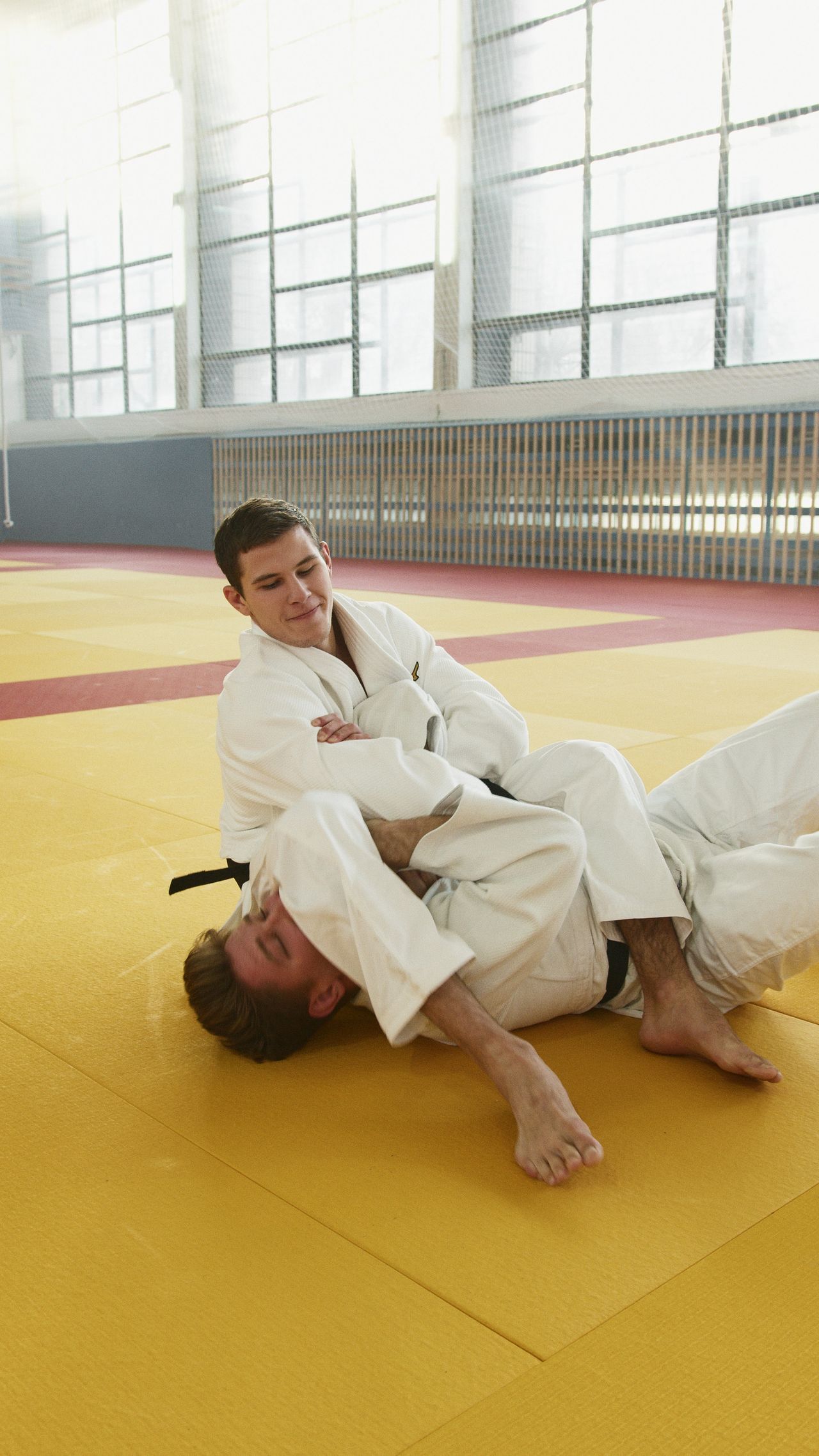
Finland did not enter MMA as a blank slate. Like many European countries, its MMA development grew out of existing combat-sports communities rather than a single national martial art. Boxing, wrestling, judo, karate, kickboxing, submission grappling, and Brazilian jiu-jitsu all helped form the base that Finnish MMA athletes would later draw from. The result is a scene where fighters often arrive in MMA with one strong discipline, then build the rest of their game through gym environments that emphasize full-range competence.
The Finnish approach has often leaned toward measured, technical development rather than theatrical fight culture. That matters because MMA requires a different type of athlete from traditional single-discipline sports. A boxer can become elite by sharpening one skill set to a world-class level. A wrestler can dominate through positional control and pressure. A kickboxer can thrive through distance, timing, and damage. MMA demands that each of those athletes learn what happens when the rules change: what a kickboxer does after being clinched, what a grappler does when forced to strike at range, and what a striker does when takedown defense becomes the difference between winning and losing.
In Finland, that transition has been especially important because the country does not have the same massive professional MMA pipeline as larger markets. A Finnish fighter who wants to reach the UFC, PFL, Bellator legacy circuits, ONE Championship, Cage Warriors, KSW, Oktagon, or Brave CF usually has to become comfortable outside the domestic bubble. That means building enough fundamentals at home to compete regionally, then taking fights abroad or against imported opposition to prove the level.
The country’s sporting culture also gives Finnish MMA a particular personality. Finland is associated internationally with endurance, winter sports, hockey, track-and-field history, motorsport, and a general respect for disciplined athletic preparation. MMA fits into that culture not as a mainstream national sport, but as a demanding niche that rewards the same traits: conditioning, resilience, technical repetition, and competitive composure.
The Finnish Fighters Who Put the Scene on the Map
The most visible Finnish MMA name for many international fans is Makwan Amirkhani. Born in Iran and raised in Finland, Amirkhani became one of the country’s most recognizable MMA exports during his UFC run. His 2015 UFC debut, an eight-second finish, gave Finnish MMA one of its most replayable global moments and introduced him to fans beyond the Nordic and European regional scenes. Finnish broadcaster Yle described him at the time as the fourth Finnish fighter in UFC history, alongside Tom Niinimäki, Anton Kuivanen, and Tina Lähdemäki.
Amirkhani’s importance goes beyond one finish. He represented a version of Finnish MMA that could break through internationally without coming from a massive commercial scene. His grappling-heavy style, athletic entries, and charismatic presence gave Finland a fighter casual UFC fans could remember. In a smaller MMA country, that matters. One recognizable UFC athlete can change how local fighters view the pathway from domestic gyms to global promotions.
Anton Kuivanen is another key figure in Finnish MMA. A lightweight associated with Helsinki and Finnish gym infrastructure, Kuivanen built a long professional career and fought in the UFC after establishing himself in Europe. His profile is important because he represents the durable veteran model: the fighter who helps define a national scene not only through one major opportunity, but through years of professional work across regional and international competition. CAGE’s own fighter listings identify Kuivanen with a strong record and Finnish club ties, showing how closely domestic promotion, gym culture, and national fighter identity are connected in Finland.
Tom Niinimäki also belongs in any serious discussion of MMA in Finland. A featherweight veteran from the earlier generation of Finnish professional MMA, Niinimäki reached the UFC after building his name through European competition. He helped establish that Finland could produce fighters with the experience, toughness, and skill set required to compete beyond the Nordic scene. For a country without constant UFC representation, each fighter who reaches that level becomes part of the national MMA archive.
Tina Lähdemäki holds a different but equally important place. As one of Finland’s UFC representatives, she stands out in the women’s side of the country’s MMA story. Women’s MMA has had uneven development across many countries, often depending on access to gyms, amateur competition, role models, and promotions willing to invest in female divisions. Lähdemäki’s appearance on the global stage gave Finland a women’s MMA marker that smaller countries do not always have.
Teemu Packalén added another UFC chapter for Finland. A lightweight from Turku, Packalén represented the kind of athlete who can emerge from outside the capital and still reach the sport’s largest promotion. That geographic point matters. Finnish MMA cannot be reduced only to Helsinki, even though Helsinki is naturally central because of population, gyms, travel access, and event infrastructure. Turku, Tampere, Espoo, Oulu, and other areas have all contributed to the broader picture.
Beyond the UFC names, Finnish MMA has been shaped by fighters such as Toni Tauru, Marcus Vänttinen, Joni Salovaara, Janne Elonen-Kulmala, Mikael Silander, Juho Valamaa, Juha-Pekka Vainikainen, Olli Santalahti, Niko Puhakka, Abdul Hussein, Aleksi Mäntykivi, and others who have helped fill out the domestic and European scene. Not every important fighter from a country becomes globally famous. In smaller MMA markets, the veterans who build records, headline local cards, take regional fights, and test younger fighters are often the backbone of the scene.
CAGE and the Importance of a Domestic Platform
A country’s MMA scene needs more than fighters. It needs places for those fighters to compete. Finland’s strongest structural advantage has been the presence of organized domestic shows, with CAGE MMA Finland serving as a major reference point. The promotion has branded itself as a leading MMA promotion in Northern Europe and has provided a recurring stage for Finnish fighters as well as international opponents.
That matters because MMA development is difficult when fighters have to leave the country for every meaningful bout. Local and regional promotions give athletes the chance to build records, gain experience under lights, learn the rhythm of fight week, and test whether gym skills hold up in a cage. They also create visibility for coaches, teams, commentators, photographers, sponsors, and media outlets. A fight scene is an ecosystem, not just a list of athletes.
For Finland, CAGE has helped form the connective tissue between gym culture and international ambition. A Finnish prospect can begin locally, fight on domestic cards, draw attention from Nordic media, and then move toward larger European or global promotions. The pathway is not easy, but it is visible. That visibility is important for younger fighters because MMA is a demanding sport with a high attrition rate. Athletes need to see that there is a ladder, even if the ladder is narrow.
Domestic promotions also help define fan culture. Finland is not a country where MMA dominates the sports conversation. Hockey remains far more central in national sporting life. Football, athletics, motorsport, winter sports, and other sports all occupy major space. MMA exists as a dedicated fight-sports niche. In that environment, recurring events are critical because they give fans something concrete to follow. A local fighter on a CAGE card can mean more to Finnish MMA than a distant international event featuring no Nordic athletes.
Training Culture: Compact, Technical, and Connected to Europe
Finnish MMA training culture is defined by compactness. There are not hundreds of elite MMA gyms producing waves of professional fighters. Instead, the scene depends on a network of gyms, coaches, and athletes spread across key cities, with the strongest fighters often needing to connect beyond their immediate local environment.
Helsinki and the surrounding capital region naturally play a major role. The capital area offers population density, training partners, transportation links, and proximity to event infrastructure. Espoo and other nearby communities have also appeared repeatedly in Finnish fighter backgrounds and club affiliations. Turku and Tampere matter as well, giving the scene regional depth outside Helsinki. This is important because a national MMA culture becomes stronger when it is not trapped in one city.
The Finnish training model often requires athletes to be practical. A young fighter may begin in kickboxing, boxing, judo, wrestling, or BJJ before finding an MMA gym. Once in MMA, the athlete has to learn how to blend disciplines with limited access to world-class specialists compared with larger markets. That can produce well-rounded fighters, but it also creates pressure. To reach a higher level, Finnish athletes often need international sparring, camps abroad, or fights against opponents from larger European scenes.
This is where Finland’s geography cuts both ways. On one hand, Finland is not isolated from European MMA. Fighters can connect to Sweden, Estonia, the Baltic region, the United Kingdom, Poland, Germany, and other European circuits. On the other hand, it is not located in the densest part of the European fight economy. A Finnish fighter may have to travel more, network harder, and accept less convenient opportunities than a fighter based in London, Manchester, Warsaw, Paris, Dublin, or Stockholm.
That reality shapes the athletes. Finnish MMA fighters often have to be adaptable. They cannot rely on a huge domestic market to carry them. They need to win regionally, perform consistently, and make themselves relevant to matchmakers outside Finland. For that reason, the country’s best fighters tend to be judged not only by their domestic success, but by whether their games translate when they face deeper European opposition.
A Scene With Nordic Ties, Not Nordic Dependence
It is tempting to discuss Finnish MMA only as part of Scandinavian or Nordic MMA, but Finland’s identity deserves separate treatment. The Nordic label is useful because Swedish, Finnish, Norwegian, Danish, and Icelandic fighters often move through overlapping circuits and media ecosystems. MMA Viking and similar regional coverage have long treated Nordic MMA as a connected fight world, tracking Finnish fighters alongside other Nordic athletes.
Still, Finland is not simply a smaller version of Sweden. Sweden’s MMA rise became strongly associated with Stockholm, Allstars Training Center, Alexander Gustafsson, and a wave of UFC visibility. Finland’s rise has been more incremental. It has produced UFC fighters, but not a sustained flood of top-ten contenders. It has domestic promotions, but not the same international perception as a primary European fight capital. It has serious gyms and veterans, but its broader sports market has not reorganized around MMA.
That difference is not a weakness. It is the reality of Finland’s MMA profile. The country’s scene has value because it is steady, technical, and regionally credible. It has enough infrastructure to matter, enough fighters to create lineage, and enough international success to avoid being dismissed as purely grassroots. At the same time, it remains small enough that each breakthrough fighter carries unusual weight.
Nordic ties remain important for competitive development. Finnish fighters benefit when they can face Swedish, Danish, Norwegian, Baltic, British, Polish, or Central European opponents. Those matchups expose weaknesses that may not appear in a smaller domestic scene. They also help Finnish athletes build records that international promotions can evaluate. In MMA, geography is not just cultural. It is matchmaking infrastructure.
The Role of Identity: Finnish, Immigrant, Regional, and Global
One of the more interesting parts of Finland’s MMA story is that its most recognizable international fighter, Makwan Amirkhani, reflects both Finnish and immigrant identity. His story connects Finland to the broader global nature of MMA, where athletes often represent more than one cultural or national frame. That is increasingly common in modern combat sports. Fighters may be born in one country, raised in another, train in a third, and compete under promotions based in a fourth.
For Finland, this matters because the country’s MMA identity is not limited to ethnic or traditional national categories. It includes athletes from immigrant backgrounds, regional Finnish towns, urban gyms, and international training networks. A small MMA country often grows through these mixed pathways. The sport rewards anyone who can find the right gym, the right training partners, and the right competitive opportunities.
This also gives Finnish MMA a broader appeal. A fighter like Amirkhani could connect with Finnish fans, Kurdish and Iranian communities, European MMA followers, and UFC audiences at the same time. That kind of layered identity can make one athlete unusually important to a smaller country’s fight profile.
At the domestic level, Finland’s MMA culture is also shaped by local club identity. Fighters are often attached to gyms and teams in ways that matter deeply inside the scene, even if casual international fans do not know those names. In countries with smaller MMA media ecosystems, gyms often function as the sport’s real institutions. They develop fighters, maintain amateur participation, organize sparring networks, and preserve knowledge across generations.
Why Finland Has Not Become a Major MMA Power
Finland has produced real fighters, but it has not become a major MMA power. That distinction is important. A serious profile should not inflate the scene beyond its actual scale.
The main reason is numbers. Finland’s population is relatively small, and MMA is not one of its dominant sports. A smaller talent pool means fewer athletes entering the pipeline, fewer elite training rooms, fewer professional shows, and fewer chances for iron-sharpens-iron development. Even when coaching is good, the lack of depth can slow progress. Fighters need a constant supply of training partners who can challenge them in wrestling, striking, grappling, cage work, and fight-specific conditioning.
Another reason is competition from other sports. Finland has a strong sporting culture, but many of its best athletes are drawn toward hockey, winter sports, football, motorsport, athletics, and other established pathways. MMA asks athletes to accept physical risk, uncertain income, and a long development timeline. In a smaller market, that can make the professional path especially narrow.
Commercial scale is also an issue. The UFC has not made Finland a regular event destination in the way it has used London, Paris, Abu Dhabi, Sydney, Toronto, New York, Las Vegas, and other major markets. Without frequent major events, MMA has fewer mainstream breakthrough moments. Domestic promotions can sustain the scene, but they cannot fully replicate the media effect of a major UFC card built around local stars.
The final reason is the European MMA map itself. Finland sits in a competitive regional environment. A Finnish fighter trying to become a major European name has to stand out not only domestically, but against athletes from the United Kingdom, Ireland, France, Poland, Sweden, Russia, the Balkans, the Caucasus, and other strong fight regions. The path is possible, but it is crowded.
The Future of MMA in Finland
The future of MMA in Finland is likely to be steady rather than explosive. The country has enough infrastructure to keep producing professional fighters, enough regional connection to remain relevant in Nordic and European MMA, and enough history to inspire new athletes. What it does not yet have is the combination of population scale, commercial investment, and repeated global stars that usually turns a country into a major MMA power.
The most realistic growth path is through stronger amateur development, deeper gym networks, and more Finnish fighters reaching major European promotions before moving toward the UFC or other global organizations. Promotions such as Cage Warriors, Oktagon, KSW, Brave CF, PFL Europe-style platforms, and regional Nordic events can all serve as bridges. For many Finnish fighters, the next major step may not be directly from a domestic show to the UFC. It may be through a layered European career that proves they can win away from home.
Women’s MMA is another area where Finland has room to develop. With Tina Lähdemäki already part of the country’s UFC history, the foundation exists. The challenge is building enough participation and competition to create a deeper women’s pipeline. That requires gyms, coaching, amateur fights, role models, and promotions that consistently book women’s bouts.
Finland’s best advantage may be its seriousness. The country does not need to pretend to be an MMA superpower. Its scene is strongest when understood on its own terms: technical, regional, patient, and connected to a broader European fight network. Finnish MMA has produced UFC athletes, domestic veterans, credible promotions, and a recognizable Nordic profile. Its next chapter will depend on whether that structure can turn isolated breakthroughs into a more consistent development pipeline.
Finland’s Place on the MMA Map
MMA in Finland occupies a respected middle ground. It is not a global center of the sport, but it is not an empty market either. It has history, names, gyms, promotions, and a clear competitive identity. The country has given the sport memorable UFC moments through Makwan Amirkhani, durable professional careers through fighters like Anton Kuivanen and Tom Niinimäki, and a domestic platform through CAGE and other regional activity.
The Finnish scene is best described as a serious Nordic MMA market with selective international impact. Its fighters usually have to earn attention the hard way, through regional fights, technical improvement, and performances that travel beyond Finland. That has made the country’s MMA story less flashy than some, but also more grounded.
For fans researching MMA in Finland, the key is to look past the size of the market and focus on the structure. Finland has a real MMA culture. It is built through gyms, regional shows, combat-sports crossover, and fighters willing to test themselves outside their home country. That combination has already put Finland on the global MMA map, and it gives the next generation a path to follow.