Slovakia’s MMA identity is best understood as a compact but unusually influential Central European fight scene. It is not a global MMA superpower in the way Brazil, Russia, the United States, or the United Kingdom are. It does not have the same depth of UFC representation as larger European countries. But Slovakia has produced enough high-level fighters, champions, and regional stars to matter far beyond its population size.
The country’s modern MMA story is tied closely to the Czech-Slovak fight market. Slovak fighters often develop inside a shared regional ecosystem with Czech gyms, Czech promotions, and Central European fan bases. That makes Slovakia different from countries where MMA grows almost entirely inside national borders. Slovak MMA is domestic, but it is also cross-border by design. Fighters move between Bratislava, Trnava, Trenčín, Prague, Brno, Vienna, Budapest, and other Central European training and event markets.
The clearest expression of that identity is OKTAGON MMA. The promotion’s Czech-Slovak base gave Slovak fighters a professional stage close to home, while also connecting them to bigger arenas, television audiences, German-speaking markets, and international opponents. Ronald Paradeiser, Ivan Buchinger, Attila Végh, Samuel Krištofič, Lucia Szabová, Vojto Barborík, Monika Chochlíková, and others have all helped make Slovak MMA visible in a way that a small country rarely achieves without a strong regional platform. OKTAGON’s own fighter profiles describe Paradeiser as a former lightweight champion and Buchinger as a former Cage Warriors, M-1 Global, and OKTAGON champion, which captures the range of Slovakia’s MMA presence: part local star system, part European proving ground, part export pipeline.
Slovakia’s scene has also reached the UFC through Ľudovít Klein and Martin Buday. Klein became a symbolic figure as the first Slovak athlete to fight in the UFC, while Buday gave Slovakia a heavyweight presence on the world’s biggest MMA stage. Their success matters because Slovakia’s MMA system is not massive. Every fighter who breaks through internationally carries more representational weight than they would from a larger combat-sports nation. Klein and Buday proved that a Slovak fighter could come through Central European circuits and still compete at UFC level.
Before MMA, Slovakia Had a Combat-Sports Foundation
MMA in Slovakia did not appear out of nowhere. Like many European MMA scenes, it grew from older combat sports that already had gyms, coaches, and competitive habits in place. Boxing, karate, kickboxing, judo, wrestling, Brazilian jiu-jitsu, and other striking or grappling systems all played roles, but Slovakia’s development was not dominated by one single base in the way Dagestan is associated with wrestling or Brazil is associated with jiu-jitsu.
That mixed foundation shaped the type of Slovak fighter who emerged. Instead of producing one uniform national style, Slovakia developed athletes from different technical backgrounds. Some came through boxing and kickboxing. Some built their careers around grappling. Some were karate-based strikers. Some were regional MMA lifers who developed across multiple rule sets because they had to. In a smaller MMA market, fighters often cannot afford to be narrow specialists. They need enough striking to survive against kickboxers, enough wrestling to handle pressure fighters, and enough submission defense to compete across European circuits.
Ľudovít Klein is a good example of that blended pathway. His public profile is built around striking, southpaw attacks, and his “Mr. Highlight” reputation, but his development was not simply a straight boxing-to-MMA story. He became known as a Slovak striker who could compete internationally, then stabilized his UFC career by becoming more rounded at lightweight. UFC coverage in 2025 described Klein as unbeaten in seven fights after moving up to 155 pounds, with four straight wins before his matchup with Mateusz Gamrot. That run helped change the perception of Klein from early highlight fighter to serious lightweight professional.
Monika Chochlíková shows another side of the Slovak combat-sports base. Her profile is rooted heavily in Muay Thai and kickboxing, with major achievements under IFMA, WAKO K1, and WMC before and alongside her MMA work. OKTAGON lists her as a professional MMA fighter and a full-time soldier with the Armed Forces Sports Center in Banská Bystrica, with Victory Gym Trenčín as her home gym. That combination of striking pedigree, institutional sport, and MMA crossover is important for understanding Slovakia’s broader scene. The country’s MMA future will not come only from kids who start in MMA gyms. It will also come from athletes who begin in specific combat sports and later adapt to the cage.
The Fighters Who Put Slovak MMA on the Map
The history of Slovak MMA begins with pioneers who made the country visible before there was a deep domestic star system. Ivan Buchinger belongs near the center of that story. A long-time European veteran, Buchinger built a résumé that extended well beyond Slovakia. OKTAGON identifies him as a former Cage Warriors, M-1 Global, and OKTAGON champion, with SFG Trnava listed as his home club. That matters because Buchinger was not only a domestic name. He was part of the broader European MMA circuit at a time when the sport was still finding its structure on the continent.
Buchinger’s career also connects Slovakia to some of the most recognizable European MMA history. His Cage Warriors run placed him in the same competitive universe that produced fighters who later reached the UFC. Even when Buchinger’s name appears in international coverage, it is often as a respected veteran with a deep submission game and a long career against high-level opposition. For Slovak MMA, his value is not only in belts or records. It is in longevity. He gave the country a fighter who could represent Slovak MMA across eras, promotions, and weight classes.
Attila Végh gave Slovakia a different kind of landmark. Végh became one of the country’s most recognizable MMA figures through his international success and later through his rivalry with Czech star Karlos Vémola. His Bellator championship win was a major achievement for a Slovak fighter in the pre-UFC boom years of European MMA visibility. Coverage at the time described him as a Slovakia-born light heavyweight who moved his Bellator record to 5-0 after defeating Christian M’Pumbu.
Végh’s rivalry with Vémola also shows how Slovak MMA exists inside a Czech-Slovak sports culture. Their fights were not simply athlete-versus-athlete matchups. They became national and regional sporting events, with identity, media attention, and fan loyalty attached. Their trilogy concluded at OKTAGON 72 in Prague in front of more than 25,000 fans, which shows how far the Czech-Slovak MMA market has developed from small-hall fight nights into stadium-scale entertainment.
Then came the UFC generation. Klein’s arrival in the UFC was historically important because it gave Slovakia a direct representative in the promotion most casual MMA fans follow. His first UFC appearance was more than just another debut. UFC coverage later noted that when he stepped into the Octagon in September 2020, he became the first Slovak athlete to do so. That single fact gave Slovak MMA a new reference point.
Martin Buday expanded that picture at heavyweight. Heavyweight is not an easy division for smaller MMA markets to populate because the athlete pool is limited and the physical demands are extreme. Buday’s path showed that Slovakia could produce not just lighter, faster technical fighters, but also a legitimate heavyweight. UFC materials list Buday as a Slovak professional mixed martial artist in the heavyweight division, and UFC preview coverage noted that he punched his ticket to the promotion through a first-round stoppage on Dana White’s Contender Series.
OKTAGON and the Czech-Slovak MMA Engine
No serious profile of MMA in Slovakia can separate the country from OKTAGON. The promotion has become the key platform for the Slovak and Czech scenes, giving local fighters visibility, narrative, production value, and regular opportunities against international opposition. For Slovakia, that matters because a country of its size needs more than gyms. It needs events that make fighters matter to fans before they reach the UFC.
OKTAGON has done that by turning regional fighters into recognizable sports personalities. Slovak fighters do not need to disappear into obscure international cards to build a career. They can fight in Bratislava, Prague, Ostrava, or other major Central European venues and still participate in a promotion with international reach. That has helped create a middle tier between local amateur MMA and the UFC. In many countries, that middle tier is weak. In Slovakia, the Czech-Slovak market has made it unusually strong.
Ronald Paradeiser is one of the clearest examples. His official OKTAGON profile lists him as a former lightweight champion, born in 1997, with wins over fighters such as Ryšavý, Brichta, Farkaš, and Široký, plus multiple title fights against Buchinger and Keita. That kind of résumé shows what OKTAGON has provided: repeated high-stakes fights, domestic relevance, and enough international matchmaking to test whether a Slovak fighter can move beyond local status.
Samuel Krištofič represents another part of that system: the marketable regional fighter whose identity is tied to personality, promotion, and rivalry as much as pure ranking. Slovak MMA needs those figures. A scene cannot grow only through technically respected athletes. It also needs fighters who sell tickets, carry storylines, build fan loyalty, and create events that casual viewers want to watch. Krištofič, Végh, Paradeiser, Buchinger, and others have given Slovak fans recognizable names around which the sport can organize itself.
This promotional ecosystem also gives Slovakia a healthier domestic MMA culture than many countries with similar population sizes. A young Slovak fighter can look at the scene and see several possible career paths: become an OKTAGON regular, win regionally and move toward the UFC, build a career across Central Europe, specialize in a base discipline first, or use Slovak and Czech gyms as a stepping stone to larger international camps.
Bratislava, Trnava, Trenčín, and the Training Map
Slovakia’s MMA infrastructure is concentrated but not limited to one city. Bratislava matters because it is the capital, the media center, and a natural event market. It connects easily to Vienna, Brno, Budapest, and Prague, making it part of a larger Central European fight corridor. For events, sponsorships, and attention, Bratislava is the obvious anchor.
Trnava is important because of SFG Trnava and its connection to fighters such as Ivan Buchinger and Ľudovít Klein. For a smaller country, having a gym that appears repeatedly in major fighter biographies gives the scene an identifiable development point. Gyms like that matter because they become more than training rooms. They become credibility centers. When a fighter from a known Slovak gym succeeds, the next generation can point to a real domestic pathway rather than assuming that serious MMA requires immediate relocation abroad.
Trenčín has relevance through Victory Gym and Monika Chochlíková’s combat-sports career. Her profile illustrates how Slovak MMA development often runs through hybrid combat-sports environments. A gym may not be only an MMA gym. It may be a striking gym, a kickboxing room, a Muay Thai program, a grappling academy, or a mixed facility where athletes gradually transition toward the cage. For small and mid-sized MMA countries, these hybrid gyms are often the backbone of the sport.
Banská Bystrica also appears in the broader picture through institutional sport. Chochlíková’s association with the Armed Forces Sports Center is notable because military and state-linked athletic systems can support combat-sports development in ways that commercial gyms cannot always match. That does not mean Slovakia has a centralized MMA machine. It means some athletes may benefit from wider combat-sports structures that existed before MMA became commercially popular.
The Slovak training map is therefore not a single mega-gym model. It is a network model. Fighters come through local clubs, cross-train when needed, compete in Czech and Slovak promotions, and sometimes seek higher-level preparation abroad. That is common in Europe, but Slovakia’s advantage is geographic. It sits close to several fight markets, allowing athletes to move between domestic familiarity and international exposure without crossing continents.
The Slovak Style Is Not One Style
Some countries develop a recognizable MMA style because one base dominates. Slovakia has not produced that kind of single technical identity. That can make the scene harder to summarize, but it also makes it more interesting.
Klein is associated with striking, timing, kicks, and southpaw offense. Buday represents heavyweight size, clinch work, durability, and a more grinding professional style. Buchinger’s legacy is tied heavily to experience, grappling, submissions, and veteran craft. Paradeiser brings length, striking, and a karate-influenced background, with OKTAGON listing karate as his background. Chochlíková brings elite striking credentials from Muay Thai and kickboxing into the MMA conversation.
That variety means Slovakia’s MMA identity is less about one technique and more about adaptation. Slovak fighters often have to become practical professionals rather than products of a single national system. They need to fight different styles across Central Europe, where they may face Czech wrestlers, Polish pressure fighters, Balkan strikers, German-based athletes, Hungarian grapplers, or imported opponents from Western Europe and beyond.
This makes the Slovak scene valuable as a developmental test. A fighter who succeeds there is not just beating local opposition. He or she is often navigating a regional circuit with different languages, fan bases, rule interpretations, and promotional environments. That creates pressure. It also creates maturity.
Fan Culture and the Czech-Slovak Rivalry Effect
Slovak MMA benefits from the emotional charge of Czech-Slovak sport. The countries share history, language proximity, media overlap, and sporting rivalry. That gives MMA a built-in cultural frame. A Slovak fighter facing a Czech fighter can carry stakes that casual fans understand immediately. A Slovak star winning in Prague or a Czech star fighting in Bratislava can feel bigger than a normal regional bout.
The Végh-Vémola rivalry is the defining example. It turned MMA into mainstream entertainment for many fans in the Czech-Slovak market. The scale of their trilogy, including the stadium atmosphere around OKTAGON 72, showed that MMA in the region could become a mass event rather than a niche combat-sports product. For Slovakia, Végh’s role in that rivalry remains significant even beyond wins and losses. He helped prove that a Slovak fighter could be central to one of European MMA’s biggest domestic storylines.
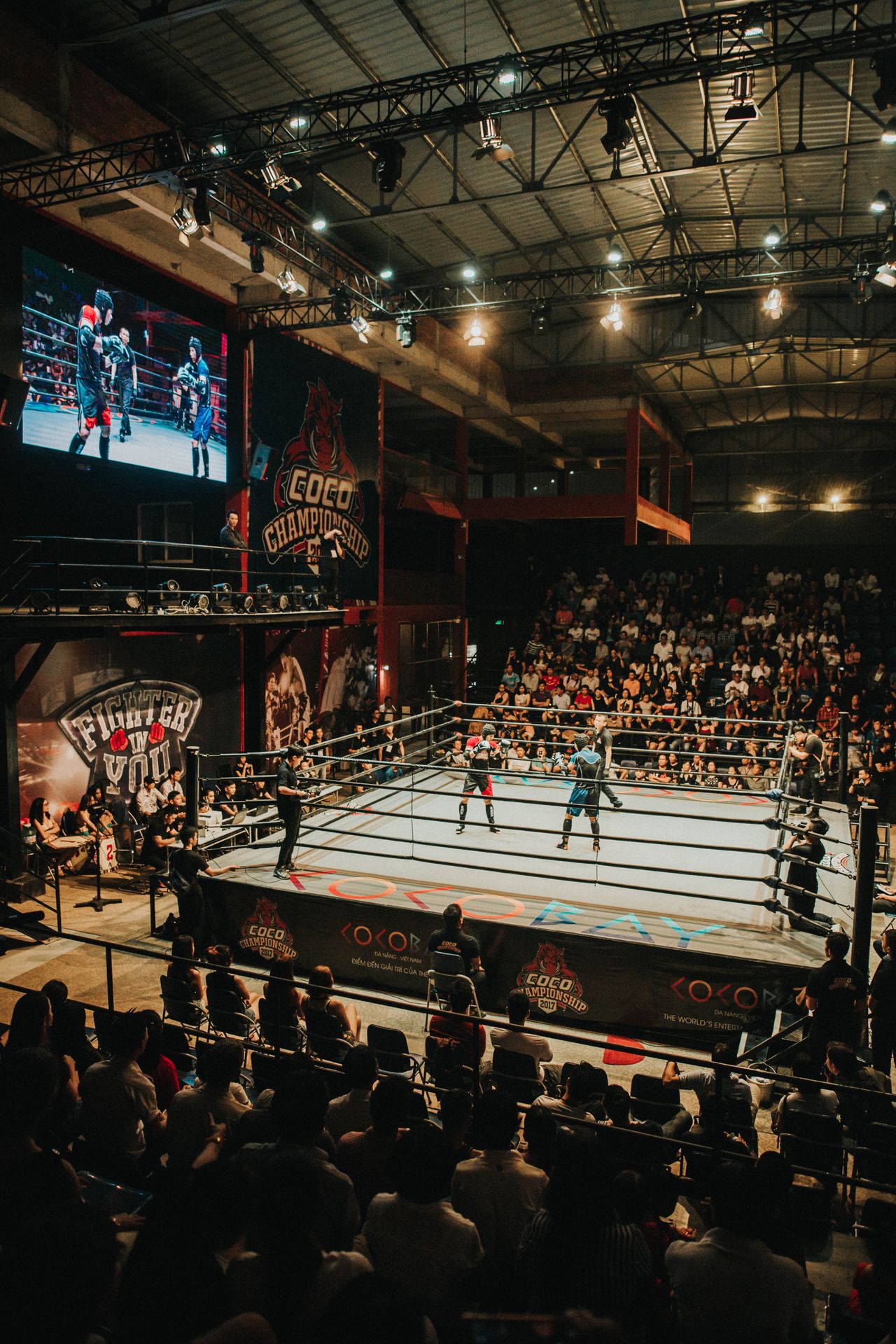
Bratislava events are also important because they allow Slovak fighters to perform in front of a home crowd. For a small country, home events create continuity. Fans can see fighters before they become international names, follow rivalries across multiple cards, and attach national pride to the sport. Without those events, Slovak MMA would risk becoming something fans only consume through the UFC. With them, the country has its own MMA calendar and its own fight-night culture.
Where Slovak MMA Goes Next
The future of MMA in Slovakia depends on whether the country can keep turning individual breakthroughs into repeatable development. Slovakia has already had pioneers, champions, UFC fighters, OKTAGON stars, and elite combat-sports crossovers. The next step is depth.
Depth means more amateur structure. It means more youth athletes entering wrestling, grappling, boxing, kickboxing, Muay Thai, judo, and MMA with a realistic understanding of how to become professionals. It means more coaches who understand modern cage fighting, not only single-discipline training. It means regional matchmaking that develops fighters instead of rushing them. It also means a healthy connection between domestic fame and international ambition.
Slovakia is well placed for that. It has a strong promotional platform nearby, recognizable fighters, cross-border access, and a combat-sports culture that has already produced serious athletes. It does not need to become a massive MMA country to matter. Its best role may be as a compact Central European producer of technically varied, tough, experienced fighters who learn early how to compete across styles and markets.
The country’s MMA identity is therefore neither small nor overstated. Slovakia is a serious regional MMA nation with global touchpoints. It has produced historically important fighters, developed stars through OKTAGON, reached the UFC through Klein and Buday, and built a fan culture that can support major events. Its scene is still growing, but it is no longer merely emerging. Slovak MMA has its own history, its own names, its own rivalries, and its own place in the European fight map.