Azerbaijan’s MMA identity is not built from nowhere. It comes from a national sporting culture that has long respected wrestling, judo, boxing, karate, taekwondo, and other combat disciplines. Modern mixed martial arts is still younger than those Olympic and traditional systems, but Azerbaijan already has the kind of athletic base that translates naturally into cage fighting: strong hips, balance, clinch work, pressure, hand fighting, toughness in close quarters, and a deep national familiarity with individual combat.
That matters because Azerbaijan is not best understood as a country where MMA simply arrived as a television product. It is better understood as a country where MMA entered an already competitive fight-sports environment. The athletes were there. The instincts were there. The regional appetite for combat sports was there. What has changed is the platform.
For years, Azerbaijani fighters had to build their reputations through regional promotions, Russian-language MMA circuits, Japanese organizations, European shows, and international training camps. The country had talent, but the global spotlight was inconsistent. That began to shift as names such as Tofiq Musayev, Vugar Karamov, Rafael Fiziev, and Nazim Sadykhov gave Azerbaijani MMA a more visible identity across Rizin, Bellator, the UFC, and other international stages.
The UFC’s arrival in Baku pushed that identity further. The promotion held a Fight Night event in Azerbaijan in June 2025, with Azerbaijani-associated fighters including Rafael Fiziev, Tofiq Musayev, and Nazim Sadykhov on the card. A return UFC event was also scheduled for June 27, 2026, with Fiziev headlining against Manuel Torres and Sadykhov appearing in front of the home crowd.
That is the larger story of MMA in Azerbaijan: a country with old combat-sports strength, a newer MMA infrastructure, and a growing chance to turn individual success into a more recognizable national fight scene.
Wrestling, Judo, and the Fighting Base Beneath Azerbaijani MMA
The foundation of Azerbaijani MMA begins with the country’s Olympic combat-sports culture. Azerbaijan has historically won a large share of its Olympic medals in wrestling, boxing, judo, and taekwondo, which gives the country a different kind of MMA starting point than places where cage fighting grows mainly through commercial gyms.
Wrestling is especially important. In MMA, wrestling is not only about takedowns. It shapes the way fighters control space, defend against pressure, scramble off the fence, manage weight distribution, and turn clinches into offense. Countries that produce high-level wrestlers often produce MMA athletes who understand balance and positional control before they ever enter a cage. Azerbaijan fits that profile.
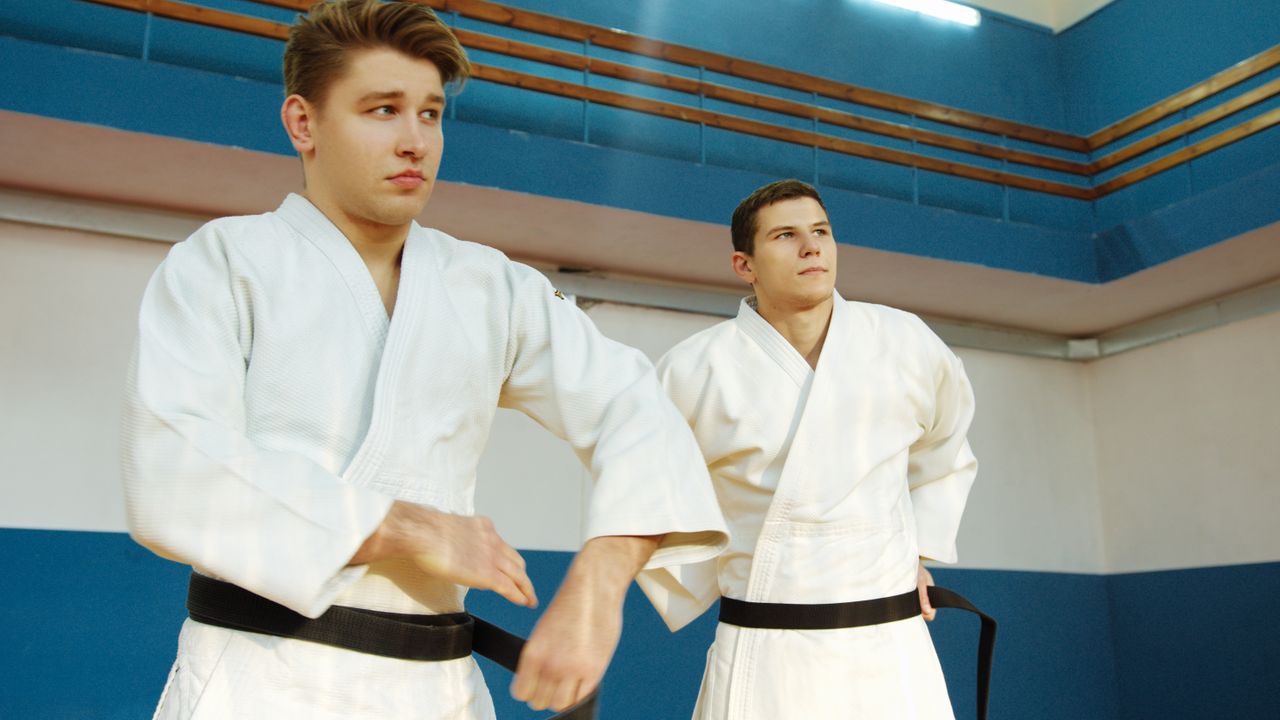
Judo also plays a visible role in the broader combat-sports landscape. Azerbaijani judo has produced international results, including Olympic success, and that tradition matters for MMA because judo develops throwing mechanics, grip fighting, body positioning, and upper-body explosiveness. In the cage, pure judo must be adapted because there is no gi and because failed throws can expose the back, but the physical intelligence carries over well. Fighters with judo backgrounds often understand how to punish forward pressure, redirect opponents, and create sudden transitions from clinch to ground control.
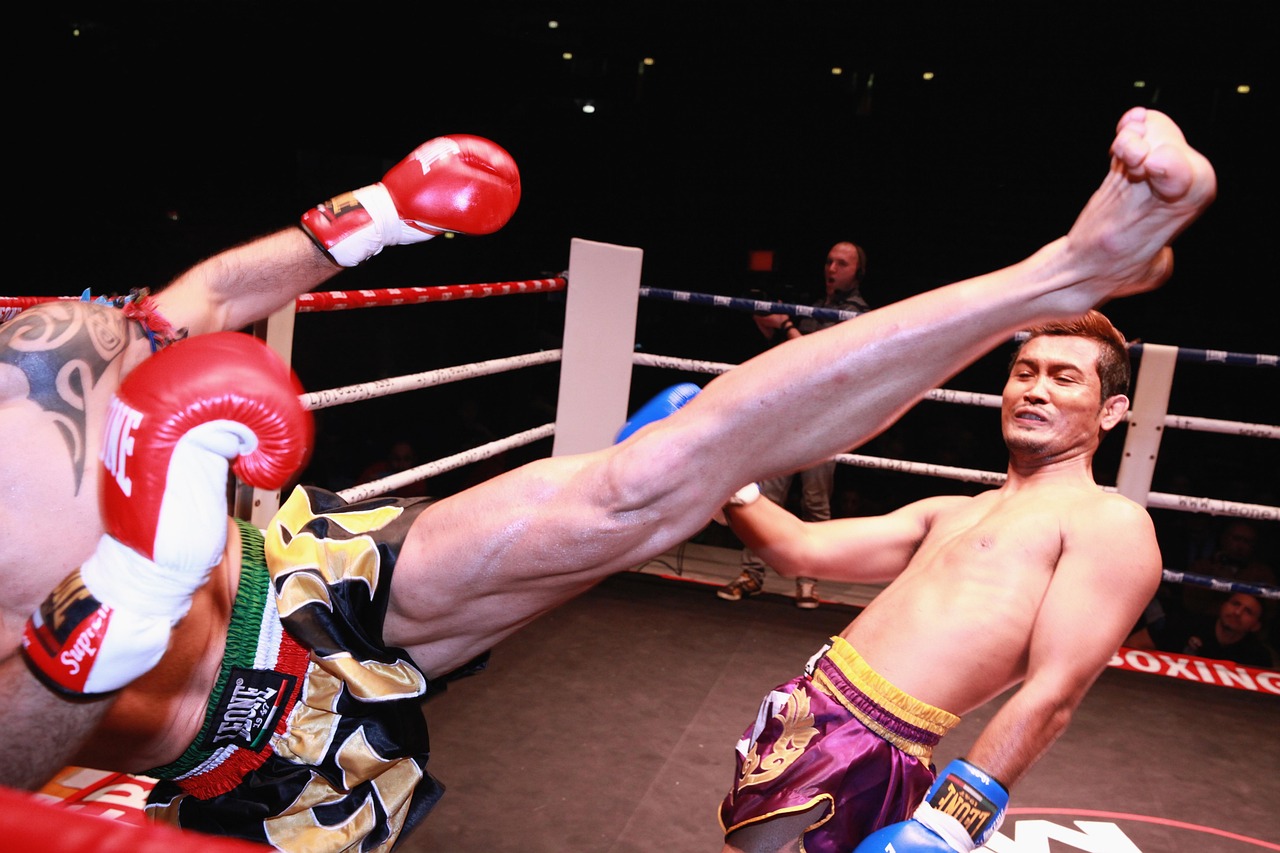
Boxing adds another layer. Azerbaijani boxing has produced international-level athletes, and the country’s striking culture gives MMA fighters a useful base when combined with wrestling or grappling. The difficulty in MMA is that boxing cannot remain pure boxing. Stance, defensive rhythm, and combinations must adjust for kicks, takedowns, clinches, elbows, and smaller gloves. Still, Azerbaijani fighters coming from boxing or kickboxing environments often bring a comfort with pressure and exchanges that helps them adapt.
This is why Azerbaijan’s MMA future is not dependent on inventing a fight culture. The country already has one. The challenge is conversion. Olympic wrestling, judo, boxing, karate, and taekwondo can all produce pieces of an MMA athlete, but MMA demands integration. A wrestler needs submissions and striking defense. A judoka needs cage wrestling and no-gi grappling. A boxer needs takedown defense, kicking awareness, and ground survival. A kickboxer needs clinch discipline and anti-wrestling habits.
Azerbaijan’s strongest MMA pathway is likely to come from athletes who begin in these established systems and then move early enough into full MMA training to become complete fighters rather than specialists trying to patch holes late in their careers.
The Fighters Who Gave Azerbaijan a Modern MMA Profile
Tofiq Musayev is one of the key names in Azerbaijani MMA because his career showed that fighters from the country could matter in major international organizations outside the narrow regional circuit. Musayev became especially associated with Rizin, where his aggressive style, finishing ability, and willingness to fight dangerous opposition gave him international credibility. He represented a version of Azerbaijani MMA built on forward pressure, heavy hands, physical confidence, and a comfort with hard exchanges.
Musayev’s significance is not only that he won fights. It is that he helped make Azerbaijani MMA visible to fans who may not have been following the country’s domestic scene. For many international viewers, he was one of the first Azerbaijani fighters they saw competing at a high level in a major MMA environment. That visibility matters in a developing MMA country because one fighter can create a reference point for the entire scene.
Vugar Karamov is another major figure. His career has been tied to the regional and international circuit, and his success helped strengthen the idea that Azerbaijan could produce more than isolated one-off talent. Karamov brought attention to the country’s ability to develop athletes with well-rounded skills, not only striking or wrestling in isolation. For a country trying to establish a deeper MMA reputation, fighters like Karamov are important because they show that the pipeline can extend beyond a single star.
Nazim Sadykhov gives Azerbaijan a more direct UFC-era connection. Sadykhov, who has represented the Azerbaijani flag in the UFC, became one of the country’s most visible names for fans who mainly follow the sport through the world’s largest promotion. His knockout win over Nikolas Motta at the UFC’s 2025 Baku event gave the home market a major moment on a global broadcast.
Rafael Fiziev’s relationship to Azerbaijani MMA is distinct. Fiziev was born in Kazakhstan, raised in Kyrgyzstan, and has Azerbaijani family roots, but he has also represented Azerbaijan in UFC competition. His elite striking made him one of the most technically respected lightweights of his generation, and his connection to Baku has given Azerbaijani fans a high-level figure to rally around on the UFC stage. Sportsnet noted in 2026 that Fiziev was the most notable UFC fighter waving the Azerbaijani flag, and he was scheduled to headline the UFC’s 2026 Baku return.
Together, these fighters give Azerbaijan a multi-track MMA identity. Musayev and Karamov show the importance of Japanese and regional international circuits. Sadykhov represents the modern UFC pathway. Fiziev connects Azerbaijan to elite lightweight striking and major-event visibility. None of these careers alone defines the entire country, but together they show how Azerbaijani MMA has moved from scattered recognition toward a more coherent international profile.
Baku as the Center of the Scene
Like many countries with a developing MMA structure, Azerbaijan’s fight scene is heavily centered around its capital. Baku is the country’s political, economic, media, and sporting hub, and that concentration matters. MMA grows best where athletes, coaches, sponsors, venues, media, and training partners can gather. In Azerbaijan, Baku is the natural place for that to happen.
The presence of the Azerbaijan MMA and Grappling Federation also points to formal organization around the sport. United World Wrestling lists the Azerbaijan MMA and Grappling Federation in Baku, with associated sports including grappling and amateur MMA.
That federation structure matters because MMA development is not only about professional fighters. It depends on amateur competition, coaching standards, athlete safety, grappling tournaments, youth participation, referee development, and the ability to create a route from early training to higher-level competition. Countries with a serious combat-sports base often have plenty of athletes who are physically capable of MMA, but they still need the institutional bridge that turns raw combat athletes into complete mixed martial artists.
Baku also offers the best environment for major events. The UFC’s 2025 event in Azerbaijan was staged in Baku, and the promotion’s return plans in 2026 again placed the capital at the center of the country’s global MMA profile.
This creates two different kinds of MMA identity in the same city. On one level, Baku is the home base for local gyms, amateur development, federation activity, and domestic fight culture. On another level, it is an international event city capable of hosting the UFC and bringing major global attention to Azerbaijani fighters.
That combination is valuable. Hosting a major event does not automatically create a deep MMA scene, but it can accelerate one. Young athletes see a realistic stage. Local gyms gain attention. Sponsors become more aware of the sport. Media coverage expands. Fans who previously followed MMA only through international broadcasts get a live national connection. Fighters from the country no longer feel as distant from the global center of the sport.
For Azerbaijan, Baku is not just where MMA is watched. It is where the country’s MMA infrastructure is most likely to be built.
The Regional Circuit and the Azerbaijani Fighter’s Road Abroad
Azerbaijani MMA has been shaped by geography. The country sits near several strong combat-sports regions, including the Caucasus, Russia, Türkiye, Iran, Central Asia, and Eastern Europe. That geography creates opportunity, but it also creates pressure.
The opportunity is that Azerbaijani fighters do not exist in isolation. They can compete across regional circuits, train with athletes from wrestling-heavy and striking-heavy cultures, and test themselves against opponents from some of the toughest MMA-producing areas in the world. The Caucasus and surrounding regions have become deeply important to modern MMA because they produce fighters with strong grappling, physical discipline, and competitive experience from a young age.
The pressure is that the competition is severe. A promising Azerbaijani fighter does not have an easy regional road. He may have to face athletes from Dagestan, Chechnya, Georgia, Armenia, Kazakhstan, Uzbekistan, Türkiye, Iran, Russia, and Eastern Europe long before reaching the UFC or another major global promotion. That environment can harden fighters quickly, but it can also make career development difficult. Losses come early. Matchmaking can be unforgiving. Fighters may need to travel, take short-notice opportunities, or compete in promotions where visibility is limited.
This is one reason the Japanese and Russian-language MMA circuits have mattered for Azerbaijani fighters. Rizin, ACA, Fight Nights, Bellator-linked opportunities, and other international or regional promotions have often served as proving grounds. These routes are not always smooth, but they allow fighters from Azerbaijan to build experience against serious opposition without relying entirely on domestic events.
For the best Azerbaijani prospects, the road often requires movement. They may train in Baku but also spend time abroad. They may represent Azerbaijan but fight out of gyms in Russia, the United States, Thailand, or elsewhere. They may develop their base in wrestling, judo, kickboxing, or boxing before joining an MMA team with better sparring depth.
That does not weaken Azerbaijan’s MMA identity. It is part of it. Smaller and mid-sized MMA nations often develop through networks rather than isolated domestic systems. The question is not whether every stage of a fighter’s career happens inside Azerbaijan. The question is whether Azerbaijan can consistently produce athletes with enough base skill, toughness, and support to survive the international climb.
Why Azerbaijani MMA Often Looks Physical and Pressure-Based
Azerbaijani fighters are not all stylistically identical, but the country’s combat-sports background tends to favor certain traits. The first is physical confidence. Wrestlers, judokas, and boxers often grow up in environments where direct competition is normal. That creates fighters who are comfortable with contact and less likely to be intimidated by clinches, scrambles, or exchanges.
The second is pressure. Azerbaijani athletes from wrestling and boxing backgrounds often understand how to move forward, take space, and make opponents react. In MMA, that can be a major strength, especially when paired with cardio and positional awareness. Pressure forces mistakes. It turns technical fights into physical fights. It makes opponents strike while backing up or shoot takedowns under stress.
The third is durability in transitional positions. Fighters from strong grappling cultures often handle awkward moments better than athletes who only train clean technique in open space. MMA is full of imperfect positions: half-finished takedowns, fence clinches, sprawls, body-lock scrambles, failed trips, and chaotic pocket exchanges. Azerbaijan’s broader combat-sports culture can prepare athletes for that kind of fight.
The risk is over-specialization. A strong wrestler who does not develop submission defense can be caught. A heavy-handed striker without cage wrestling can be controlled. A judoka who relies too much on upper-body throws can struggle against low singles and body-lock pressure. A kickboxer who stands too tall can be taken down. Azerbaijani MMA will improve as more athletes are trained from the beginning to blend disciplines rather than adding MMA late.
This is where the next phase of development matters. The country already has the ingredients. The challenge is building more gyms and coaching environments where young athletes are not simply wrestlers, boxers, judokas, or kickboxers trying MMA, but mixed martial artists from an earlier stage.
UFC Baku and the Value of a Home Stage
The UFC’s move into Baku changed the visibility of MMA in Azerbaijan. A country can produce good fighters for years, but a major home event gives the scene a different kind of legitimacy. It tells casual fans that the sport is not something happening far away in Las Vegas, Abu Dhabi, London, or Tokyo. It can happen in Baku, with Azerbaijani fighters walking out in front of a national crowd.
The 2025 UFC Fight Night in Baku included several Azerbaijani connections, with Rafael Fiziev defeating Ignacio Bahamondes, Nazim Sadykhov defeating Nikolas Motta, and Tofiq Musayev appearing on the card.
That kind of card does not just affect the fighters involved. It creates a marker for the local scene. Gyms can point to it. Young athletes can remember it. Media can cover the sport with a clearer local angle. Fans can attach MMA to national representation rather than only to foreign stars.
The scheduled 2026 return, headlined by Fiziev against Manuel Torres and including Sadykhov against Matheus Camilo, showed that Baku was not treated as a one-time curiosity. It positioned Azerbaijan as a viable UFC event market in the Caucasus and Caspian region.
For the sport’s long-term growth, repeat events matter more than single events. One major show creates attention. Multiple major shows help create expectation. If Baku continues to appear on international MMA calendars, Azerbaijani fighters will have more incentive to push toward major promotions, and local fans will have more reasons to follow the domestic scene before fighters reach the top level.
There is also a matchmaking advantage. When the UFC or another major promotion enters a market, it often wants regional athletes who can connect with the crowd. That can open doors for fighters who are already close to major-promotion level. It does not replace merit, but it can create opportunity. For Azerbaijani prospects, the existence of a Baku event pathway makes the global ladder feel slightly less distant.
The Next Step for MMA in Azerbaijan
Azerbaijan’s MMA future depends on whether it can turn individual success into a repeatable development system. The country has already proven that Azerbaijani fighters can compete internationally. It has visible names, a serious combat-sports base, federation activity, and a capital city capable of hosting major events. Those are important advantages.
The next step is depth. A mature MMA country does not rely only on a few stars. It produces amateur champions, regional professionals, coaches, referees, grappling specialists, striking coaches, wrestling-to-MMA adapters, strength programs, and gyms that can prepare fighters for different styles. Azerbaijan does not need to copy the American, Brazilian, Russian, or Japanese model exactly. Its best version will likely come from its own strengths: wrestling, judo, boxing, regional toughness, and Baku-centered organization.
The country also has a strong geographic opportunity. Azerbaijan can become an MMA bridge between the Caucasus, Türkiye, Central Asia, Eastern Europe, and the Middle East. Baku has the infrastructure and regional position to host events that appeal beyond the domestic market. Fighters from nearby countries can compete there. Promotions can use the city as a regional stage. Azerbaijani fighters can gain experience without always needing to travel far from home.
The most important development will be at the gym level. If young athletes in Azerbaijan can move from wrestling, judo, boxing, kickboxing, karate, or taekwondo into MMA earlier, the country can produce more complete fighters. If the local scene offers regular amateur competition, safe matchmaking, and serious coaching, the gap between raw talent and professional readiness will shrink.
Azerbaijan is not yet one of the world’s largest MMA powers, but it is no longer invisible. Its identity is becoming clearer: a combat-sports nation with a strong grappling and striking foundation, a handful of internationally respected fighters, a growing relationship with the UFC, and a capital city that can serve as a regional fight hub.
The future of MMA in Azerbaijan will not be defined only by whether the country produces one superstar. It will be defined by whether the next generation can make Azerbaijani fighters a regular presence across major promotions. The base is already there. The cage is now catching up to the country’s broader fight culture.