Boxing in Portugal has never been a mass national obsession in the way football has been, and it has never carried the same international weight as boxing cultures in Mexico, Cuba, the United States, the United Kingdom, Ireland, or the Philippines. Its identity is quieter, more uneven, and in some ways more revealing. Portuguese boxing is a club sport, a gym sport, an amateur sport, a Lisbon and Porto sport, a working-room sport, and a discipline kept alive by coaches, neighborhood associations, old sporting clubs, immigrant communities, and fighters willing to build careers without the machinery that exists in larger boxing markets.
That makes Portugal an interesting boxing country precisely because it is not a simple champion factory. The sport has a long history, but its modern presence is modest. It has produced memorable fighters, compelling boxing personalities, and serious amateur programs, but it has not consistently produced world-title stars at the scale of Europe’s larger boxing nations. Its boxing culture is therefore defined less by constant global headlines and more by continuity: the preservation of boxing knowledge, the maintenance of clubs, the slow development of athletes, and the stubborn belief that boxing still has a place in Portuguese sport.
For readers searching for boxing in Portugal, the best way to understand the country is not to look only for famous names. Portugal’s boxing story is about the relationship between history and infrastructure. The names matter, but so do the gyms. The national federation matters, but so do the trainers who work with young fighters long before anyone outside the building knows their names. The professional scene matters, but the amateur ring remains the backbone of the sport.
Portugal’s boxing identity is built around endurance rather than dominance.
From Lisbon Spectacle to Organized Boxing
Modern boxing arrived in Portugal in the early twentieth century, at a time when the sport was spreading across Europe through traveling fighters, athletic clubs, military influence, and public spectacles. Lisbon was the natural entry point. As the capital, a port city, and Portugal’s largest urban center, it had the venues, press attention, and sporting associations needed for boxing to gain a foothold.
The early image of Portuguese boxing was tied to spectacle. Major bouts were not yet part of a deep domestic system. They were events, curiosities, and public contests that connected Portugal to the broader European and Atlantic boxing world. Foreign fighters helped introduce the sport to audiences, while local clubs gradually began treating boxing as something that could be practiced, taught, and organized rather than merely watched.
The formalization of boxing in Portugal came with the creation of the Federação Portuguesa de Boxe in 1914. That institutional date matters because it gives Portuguese boxing a long official history, even if the sport’s popularity has risen and fallen across different eras. The federation gave the sport a framework: rules, championships, registration, officials, and eventually pathways for amateur competition.
Like many European boxing cultures, Portugal’s early development was connected to multi-sport clubs. Boxing did not grow in isolation. It was often housed inside broader athletic institutions that also supported gymnastics, football, weightlifting, wrestling, fencing, or other physical disciplines. That multi-sport setting shaped Portuguese boxing in an important way. It made the sport part of general athletic education rather than a fully separate commercial industry.
The result was a boxing culture that leaned heavily on clubs and coaches. Portugal did not become a country of huge fight venues and constant professional cards. Instead, boxing became one of the sports maintained inside local institutions, especially in urban areas. That club-based model still shapes the way boxing is practiced in the country today.
Lisbon, Porto, and the Geography of Portuguese Boxing
Boxing in Portugal is strongest where the country’s sporting infrastructure is strongest. Lisbon and Porto are the two obvious anchors, but the scene also stretches into places such as Setúbal, Aveiro, the Algarve, and other areas where regional associations and local clubs provide opportunities for athletes to train and compete.
Lisbon has the deepest symbolic connection. The city appears again and again in Portuguese boxing history: as the site of early public fights, as the setting for old clubs, as the home of fighters who became part of national sporting memory, and as the backdrop for one of the most famous cultural portraits of Portuguese boxing, Fernando Lopes’s 1964 film Belarmino. Lisbon boxing has often carried an urban, neighborhood quality. It is tied to small gyms, working-class districts, old associations, and the sense that boxing is learned in rooms where reputation is earned slowly.
Porto gives the sport another major base. The north of Portugal has a strong general sporting culture, and boxing benefits from that ecosystem. Porto’s role is not simply that of a second city following Lisbon. It is part of the national boxing network, with clubs, coaches, competitions, and athletes contributing to the amateur and professional landscape.
The Algarve adds a different dimension. In southern Portugal, boxing intersects with tourism, expatriate communities, fitness culture, and local combat-sports participation. That does not make the Algarve the heart of Portuguese boxing, but it does make it part of the sport’s modern expansion. Boxing gyms in resort regions often serve a wider mix of people: serious amateurs, recreational boxers, fitness clients, foreign residents, and combat-sports crossover athletes.
This geography helps explain why boxing in Portugal feels dispersed rather than centralized. There is no single Portuguese equivalent of Las Vegas, Mexico City, Philadelphia, or Belfast as a boxing capital. Lisbon is the historical and cultural center, but the sport survives through a network rather than one dominant fight city.
José Santa and the Heavyweight Dream
The most dramatic figure in Portuguese boxing history is José Soares Santa, better known as José Santa, Zé Santa, or Santa Camarão. He remains one of the most recognizable Portuguese boxers because his career had the size, mythology, and international reach that Portuguese boxing has rarely enjoyed.
Santa was a heavyweight from Ovar, and his physical presence made him stand out immediately. At more than two meters tall, he was one of the tallest heavyweights of his era. In a boxing culture that often remembers heavyweights as symbols of national strength, Santa gave Portugal something unusual: a fighter who could be presented internationally not just as a Portuguese boxer, but as a giant heavyweight attraction.
His career took him beyond Portugal and into a wider professional boxing world. That matters because Portugal’s domestic fight economy was limited. For a Portuguese boxer to chase serious professional opportunity, travel was often necessary. Santa embodied that outward-facing ambition. He represented a version of Portuguese boxing that wanted to compete beyond the country’s borders and be judged on a larger stage.
Santa’s significance is not only statistical. He gave Portuguese boxing a figure of scale. Most countries with deep boxing traditions have at least one early name who becomes a reference point, a fighter from a period when the sport was still forming its public identity. For Portugal, José Santa occupies that role. He is not remembered because Portugal became a heavyweight powerhouse after him. He is remembered because he showed that a Portuguese fighter could enter the international imagination.
That distinction is important. Portugal’s boxing history is not a continuous line of heavyweight contenders. Santa is more like a landmark: a reminder of what Portuguese boxing briefly looked like when it touched the larger professional fight world.
Belarmino Fragoso and the Soul of Lisbon Boxing
If José Santa represents the giant, outward-facing dream of Portuguese boxing, Belarmino Fragoso represents something more intimate: the boxer as a Lisbon figure, a gym product, a local champion, and a man caught between sporting promise and economic reality.
Belarmino became far more than a name in Portuguese boxing records because of Fernando Lopes’s film Belarmino, released in 1964. The film made him part of Portuguese cultural history, not only Portuguese sports history. It presented the boxer in a way that was raw, urban, stylish, and unsentimental. For many people, Belarmino is the most vivid portrait of what boxing meant in mid-century Portugal: ambition, poverty, charisma, exploitation, nightlife, discipline, and decline all occupying the same frame.
His importance to boxing in Portugal is therefore different from that of a world champion. Belarmino matters because he shows the human texture of the sport. He represents the fighter who is known locally, who has talent, who carries himself with pride, but who also operates in a small and unforgiving boxing economy. That has been a recurring theme in Portuguese boxing. Talent alone has rarely been enough. Fighters have needed management, opportunities, international connections, money, health, and timing.
The cultural afterlife of Belarmino also reveals something about boxing’s place in Portugal. In larger boxing nations, a former national champion might be absorbed into a crowded sporting archive. In Portugal, Belarmino became a lens through which artists and audiences could look at Lisbon itself. The boxer became a way to examine class, masculinity, performance, memory, and the promises that sport makes to people who may not receive the rewards they deserve.
For a boxing website, Belarmino is essential because he prevents Portuguese boxing from being treated as only a list of fighters. He shows that boxing in Portugal has had emotional and artistic significance even when it lacked commercial power.
The Amateur System Is the Backbone
The center of Portuguese boxing today is amateur boxing. Professional boxing exists, and Portuguese fighters do pursue pro careers, but the country’s most reliable structure is still the amateur system: clubs, national championships, regional associations, youth development, coaching education, and participation in European and international competition.
This is common in smaller boxing countries. The amateur system provides the architecture that the professional market cannot always supply. It gives fighters regular competition. It gives coaches a way to measure development. It connects athletes to national teams and international tournaments. It also keeps the sport alive when professional cards are irregular.
In Portugal, amateur boxing has to compete for attention with football, futsal, athletics, cycling, martial arts, and fitness sports. That makes the club environment especially important. A young athlete is unlikely to enter boxing because the country is saturated with boxing stars on television. More often, the pathway begins locally: a gym, a coach, a friend, a family connection, a neighborhood club, or a desire to train in a sport that demands discipline.
Boxing gyms in Portugal often carry multiple identities at once. They are training centers for competitive fighters, but they are also places for recreational boxing, youth mentorship, fitness classes, and social integration. That broader role matters because it gives boxing a community function beyond medals and records. In a smaller boxing country, survival often depends on being useful to more than just elite athletes.
The amateur system also gives Portuguese boxing its most realistic route toward international respect. A country does not need a large professional market to produce technically sound amateur fighters. It needs committed coaching, regular sparring, regional tournaments, access to international competition, and enough institutional support to keep athletes in the sport. Portugal’s challenge is not whether boxing knowledge exists. It is whether the system can consistently retain and develop talent long enough for fighters to break through.
Boxing Gyms in Portugal and the Culture of Training
The phrase “boxing gyms in Portugal” can describe many different kinds of spaces. Some are traditional boxing clubs focused on amateur competition. Some are attached to historic multi-sport institutions. Some are modern combat-sports gyms where boxing sits alongside kickboxing, Muay Thai, Brazilian jiu-jitsu, MMA, or functional training. Others are fitness-oriented studios that use boxing technique for conditioning rather than competition.
That variety reflects the modern reality of the sport. In Portugal, as in many countries, boxing has grown in visibility partly through fitness culture. People who may never compete still want to learn footwork, hit pads, use the heavy bag, improve conditioning, and train in a sport with a clear technical identity. This has helped keep boxing visible, but it also creates a separation between boxing as exercise and boxing as competition.
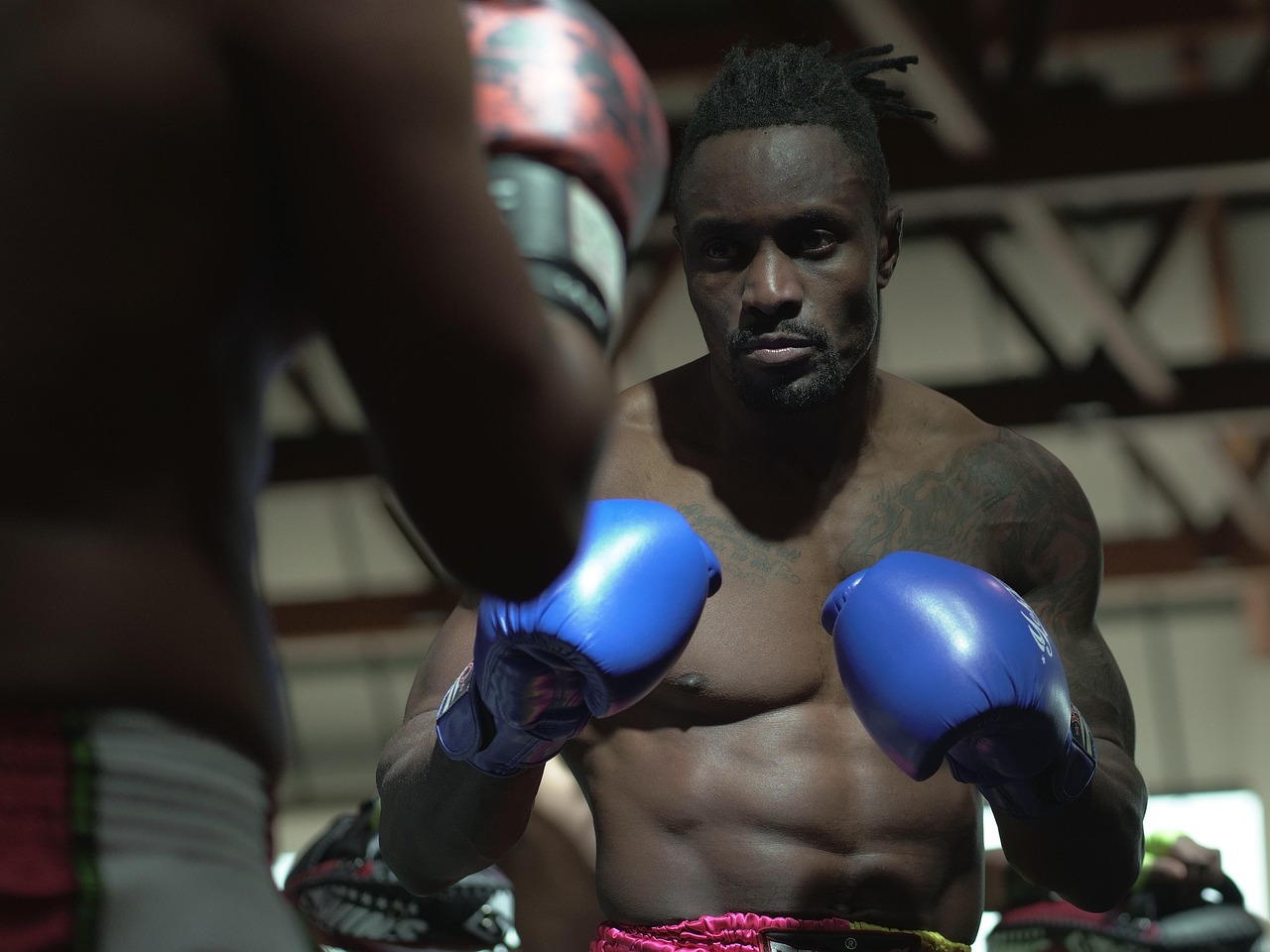
The competitive boxing gym remains a different environment. There, the rhythm is built around stance, guard, jab, balance, defense, sparring, conditioning, and ring craft. Fighters learn that boxing is not simply punching. It is distance, patience, timing, repetition, and emotional control. Portuguese gyms that produce real fighters must teach those fundamentals while also preparing athletes for the practical demands of amateur scoring and professional rounds.
Coaching is central. In a country without a constant stream of major professional boxing shows, the trainer’s role becomes even more important. A good coach is not only a technician. He or she is a recruiter, motivator, organizer, mentor, and sometimes the person who keeps the athlete connected to the sport when opportunities are limited. Portuguese boxing depends heavily on these coaches.
The gym culture also reflects Portugal’s broader social geography. In Lisbon and Porto, boxing can be urban and neighborhood-based. In smaller towns, it may be sustained by a handful of committed people. In regions with immigrant communities, boxing can become a meeting point for people from different backgrounds. In tourist or expatriate areas, it can become part of a broader international fitness and combat-sports scene.
This is why boxing training in Portugal should not be understood only through the lens of elite competition. The gyms are the sport’s foundation, but they are also the places where boxing remains socially relevant.
Professional Boxing in Portugal Is a Harder Road
Professional boxing in Portugal has always faced structural limits. The country does not have a large domestic pay-per-view economy, a deep pool of major promoters, or a regular calendar of internationally visible title fights. That does not mean professional boxing is absent. It means the pathway is narrower.
For Portuguese fighters, the professional road often requires movement across borders. Spain, France, the United Kingdom, Germany, and other European markets can become important depending on weight class, management, matchmaking, and promotional access. Fighters based in Portugal may need to travel for better opponents, bigger purses, or higher-profile opportunities. This is one of the defining realities of smaller boxing countries: the domestic scene can develop fighters, but the career-defining fights may happen elsewhere.
That creates a difficult balance. A fighter needs local support early, but international exposure later. A boxer may build a record at home, then need to test himself or herself in more active European boxing markets. Without that step, it is hard to move from national relevance to continental or world relevance.
The professional scene also depends on event viability. Boxing cards require venues, commissions, officials, medical standards, opponents, ticket sales, sponsorship, broadcast or streaming arrangements, and public interest. In a football-dominant country, building that ecosystem is not easy. Promoters must sell boxing as an event worth attending, not merely as a sport that exists.
Still, Portugal has advantages. It is connected to Europe. It has a strong tourism economy. It has major cities with venues. It has a Portuguese-speaking global network that links it culturally to Brazil, Angola, Mozambique, Cape Verde, Guinea-Bissau, São Tomé and Príncipe, and Portuguese communities abroad. If professional boxing in Portugal grows, it may do so through these international connections as much as through the domestic market alone.
The Portuguese-Speaking Boxing World Matters
Portugal’s boxing identity cannot be separated from the Lusophone world. Portuguese is spoken across countries and communities with their own combat-sports histories, and those connections give Portugal a broader cultural boxing map than its domestic population alone would suggest.
Brazil is the most obvious part of that map. Brazilian boxing has produced world champions and has a larger combat-sports profile because of the country’s success in boxing, MMA, jiu-jitsu, and kickboxing. For Portugal, Brazil offers both inspiration and contrast. It shows what Portuguese-language boxing can look like on a larger scale, while also reminding Portugal that language alone does not create a boxing industry.
African Portuguese-speaking countries add another layer. Angola, Mozambique, Cape Verde, and Guinea-Bissau have produced athletes across combat sports, football, athletics, and other disciplines. Migration between Portugal and Lusophone Africa has shaped Portuguese society, especially in the Lisbon area, and boxing gyms can reflect those communities. Fighters with African heritage, immigrant backgrounds, or cross-border family histories are part of modern Portuguese sport.
This matters because boxing often thrives in migrant communities. The sport is portable. It does not require expensive fields or large teams. It offers structure, discipline, and a competitive outlet. In countries where immigrant communities contribute heavily to urban culture, boxing gyms often become spaces where identity, ambition, and opportunity meet.
Portugal’s future boxing growth may depend partly on how well it embraces that wider Lusophone and diaspora reality. A Portuguese boxing scene that looks only inward will remain limited. A Portuguese boxing scene that understands its connections to Brazil, Lusophone Africa, Europe, and emigrant communities has a wider base from which to build.
Women’s Boxing and the Modern Participation Shift
Women’s boxing is one of the important growth areas for the sport globally, and Portugal is part of that broader shift. For much of boxing history, women were pushed to the margins, given fewer opportunities, and treated as exceptions rather than central participants. That has changed significantly in the twenty-first century, especially after women’s boxing became part of the Olympic program.
In Portugal, the growth of women’s boxing connects to several forces at once. One is competitive opportunity. As amateur structures expand female categories and international tournaments offer clearer pathways, more women have reason to train seriously. Another is fitness culture. Boxing has become attractive to women who want a demanding, technical, confidence-building sport. A third is visibility. The global success of women fighters has changed expectations inside gyms.
The key question is whether participation can turn into depth. A country can have women taking boxing classes without having a strong women’s competitive scene. The next step requires coaching, sparring partners, safe development environments, regular bouts, and serious matchmaking. Portugal’s opportunity is to build women’s boxing not as an add-on to the men’s scene, but as a core part of the sport’s future.
This is especially important for a country trying to grow its boxing profile. Smaller boxing nations can make progress faster when they invest in categories that are still developing globally. Women’s boxing gives Portugal a chance to create new names, new stories, and new international opportunities.
Boxing’s Place Inside Portugal’s Combat-Sports Landscape
Boxing in Portugal also exists alongside a wider combat-sports culture. Kickboxing, Muay Thai, MMA, jiu-jitsu, judo, karate, taekwondo, wrestling, and other disciplines all compete for athletes and attention. This can be a challenge, but it can also help boxing.
The challenge is obvious: a young combat-sports athlete in Portugal does not have to choose boxing. MMA gyms offer a broader skill set. Kickboxing and Muay Thai provide striking styles with kicks, knees, and clinch work. Judo and taekwondo have Olympic recognition and established youth structures. Brazilian jiu-jitsu has international appeal and strong links to Lusophone culture through Brazil.
But boxing benefits from its technical purity. Even athletes who compete in other combat sports often seek boxing training to improve their hands, defense, footwork, and striking discipline. In that sense, boxing can remain relevant even when it is not the dominant combat sport in a gym. It is a base skill, a specialist art, and a competitive discipline in its own right.
The danger is dilution. Boxing for MMA is not the same as amateur boxing. Fitness boxing is not the same as preparing for a sanctioned bout. Pad work is not the same as ring craft. For Portuguese boxing to develop serious fighters, it needs spaces where boxing is treated as boxing, not merely as a useful supplement.
The opportunity is crossover. A broader combat-sports audience can expose more people to boxing. Some athletes who begin in kickboxing or MMA may discover that their best path is the boxing ring. Some recreational participants may become fans of local fight nights. Some coaches may build hybrid gyms while still preserving serious boxing programs.
Portugal’s boxing future will depend on maintaining that balance: open enough to benefit from combat-sports growth, but disciplined enough to protect boxing’s own standards.
Why Portugal Has Not Become a Major Boxing Power
Portugal has the history, clubs, athletes, and federation structure needed to sustain boxing, but several factors have limited its rise as a major boxing country.
The first is sporting competition. Football dominates Portuguese sports culture. It absorbs media attention, sponsorship, youth dreams, and national conversation. Other sports can succeed in Portugal, but they do so in football’s shadow. Boxing has to fight for space in a crowded market.
The second is scale. Portugal is a relatively small country, and boxing is not one of its primary national sports. A smaller talent pool does not prevent success, but it makes consistency harder. Producing one outstanding boxer is possible. Producing generation after generation of elite fighters requires a larger and deeper system.
The third is professional infrastructure. Without frequent high-level domestic cards, fighters must look abroad. That makes development more complicated. Careers can stall not because an athlete lacks ability, but because the right fights, managers, promotional backing, or financial support are missing.
The fourth is visibility. Boxing needs stories. It needs recognizable athletes, rivalries, events, and moments that enter public conversation. Portugal has had memorable boxing figures, but not enough regular mainstream boxing moments to keep the sport constantly visible.
The fifth is retention. Boxing is demanding. Athletes train for years in a difficult sport with uncertain rewards. If the pathway is unclear, fighters may leave, shift to other combat sports, focus on work or school, or never move beyond recreational training.
These limitations do not make Portuguese boxing weak. They explain why its identity is different. Portugal is not a boxing superpower. It is a boxing culture that has survived because enough people inside the sport keep choosing it.
The Future of Boxing in Portugal
The future of boxing in Portugal is likely to be built gradually rather than through one sudden breakthrough. The country’s most realistic path is not to imitate Las Vegas, London, Mexico, or Cuba. Portugal needs a model that fits its own scale and strengths.
That model starts with clubs. Strong local gyms are the foundation. If clubs can recruit young athletes, support women’s participation, develop coaches, organize sparring, and keep fighters active, the national scene becomes healthier. Without that base, no professional dream can last.
The next step is better competition structure. Portuguese fighters need regular domestic bouts, regional tournaments, and international exposure. They need to face different styles. They need judges, referees, and coaches operating at high standards. They need a system where a talented teenager can see a pathway from the local gym to national competition and beyond.
Professional boxing also has room to grow, but it will probably grow best through selective ambition. Portugal does not need constant oversized shows. It needs credible cards, good matchmaking, safe regulation, and events that make local fans care. A strong domestic title fight, a well-promoted Portuguese rivalry, or an international card involving Lusophone fighters could do more for the scene than sporadic events with little connection to local development.
Digital media may also help. Smaller boxing countries no longer need to wait for traditional television to create visibility. Fighters, gyms, promoters, and federations can use streaming, social media, short-form video, and documentary-style storytelling to build audiences. Portugal’s boxing history has already shown the power of film through Belarmino. The modern version of that visibility may come through digital storytelling around gyms, fighters, and fight nights.
The country also has an advantage in location. Portugal is accessible, attractive, and internationally connected. Training camps, small international tournaments, boxing tourism, and Lusophone boxing events could all play roles in the sport’s growth if organized seriously.
Portugal’s Boxing Identity Is Built to Endure
Boxing in Portugal is not defined by endless world champions or a dominant professional circuit. It is defined by older roots, club loyalty, amateur discipline, urban gyms, cultural memory, and the difficult path from local training rooms to international opportunity.
José Santa gave Portugal a heavyweight figure who reached beyond the country’s borders. Belarmino Fragoso gave Portuguese boxing a face, a voice, and a place in national cinema. The Federação Portuguesa de Boxe gave the sport an institutional base. Lisbon and Porto gave it urban homes. Coaches and clubs continue to give it life.
That is the real shape of boxing in Portugal. It is not a loud boxing empire. It is a persistent boxing country, one where the sport survives through repetition, instruction, small competitions, and the belief that a fighter can still be made in a modest room with a ring, a coach, and enough rounds of work.
For anyone searching for boxing in Portugal, the answer is not only found in famous boxers or major events. It is found in the gyms, the amateur tournaments, the old stories, the clubs that keep their doors open, and the fighters who continue to chase a sport that has always demanded more than it gives back.
Portugal’s boxing future will depend on whether that foundation can become more visible, more connected, and more ambitious. The base is there. The history is there. The challenge is turning endurance into momentum.