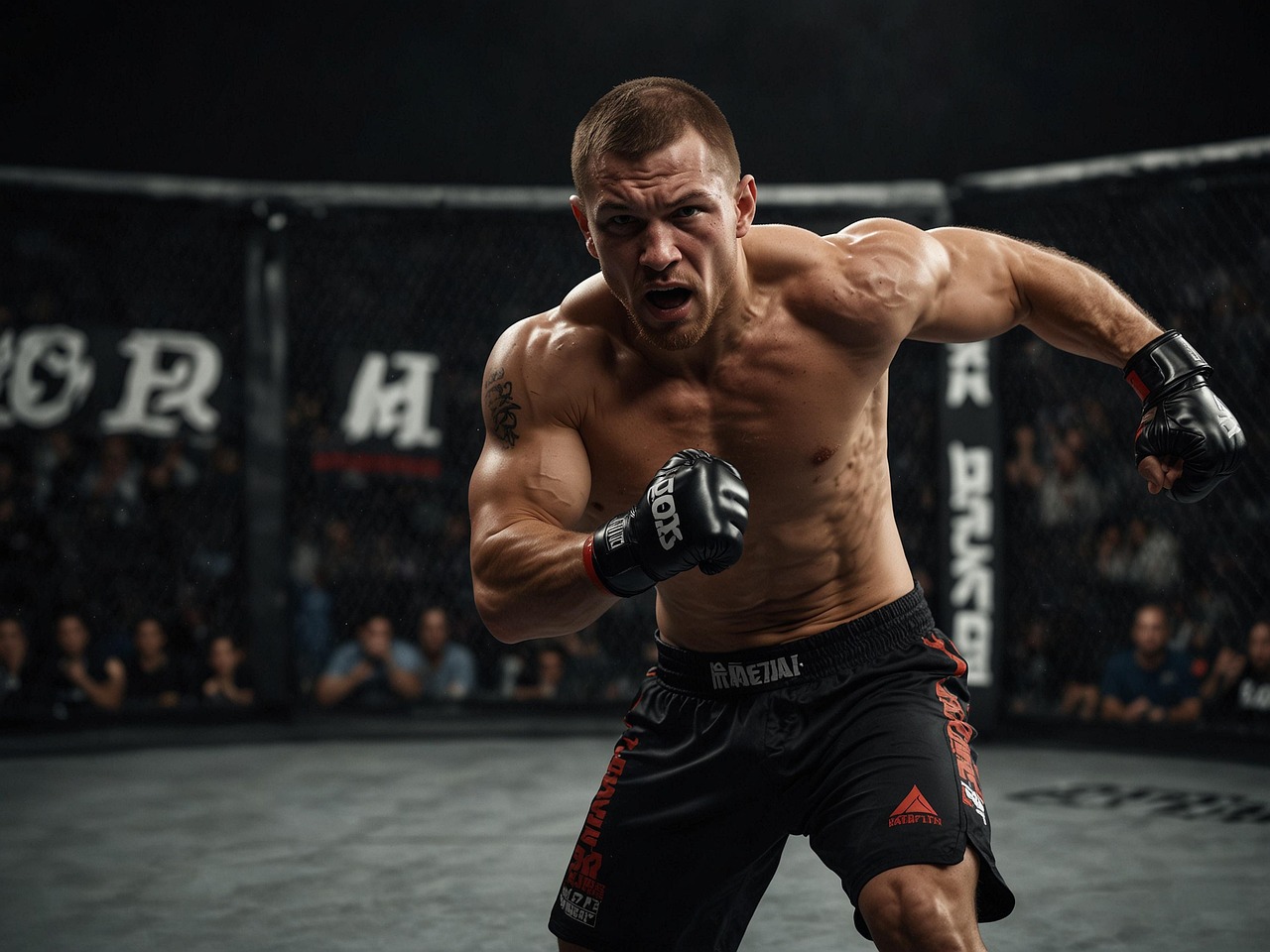
MMA in Australia has moved well beyond the novelty stage. What began as a niche combat sport sitting behind boxing, rugby league, kickboxing, Brazilian jiu-jitsu, and traditional martial arts has become one of the strongest MMA markets outside North America, Brazil, Russia, and Western Europe. Australia is not simply a place that hosts UFC cards. It has become a genuine fighter-producing country, a major pay-per-view destination, and one of the anchors of the wider Oceania MMA scene.
The Australian MMA identity is built around several forces working together. The country has produced UFC champions, elite contenders, fan-favorite heavyweights, durable regional veterans, and a steady stream of prospects moving through domestic promotions. It also has a strong event culture. Sydney, Melbourne, Perth, Brisbane, Adelaide, and the Gold Coast all matter in different ways, with the UFC using Australia as one of its most reliable international markets and local promotions giving fighters a way to build experience before moving onto global stages.
Australia’s MMA story is not centered on one old national fighting style in the way that Brazil is tied to Brazilian jiu-jitsu or Dagestan is tied to wrestling and sambo. Instead, Australia’s scene is layered. Boxing, rugby league physicality, kickboxing, Muay Thai, judo, wrestling, and BJJ all feed into the modern MMA gym. The result is a country whose fighters often arrive with strong toughness, practical striking, improving grappling, and a willingness to travel for higher-level training when needed.
From Combat-Sports Undercard to UFC Mainstay
For much of the early modern MMA period, Australia was a developing market rather than a central one. Combat sports already had a place in Australian sporting culture, especially boxing, kickboxing, and martial arts schools, but MMA needed time to build legitimacy. Like many countries outside the United States, Australia’s early MMA scene depended on small shows, local gyms, and athletes willing to compete before there was a clear professional pathway.
The UFC’s arrival helped change the public profile of the sport. UFC 110 in Sydney in February 2010 marked the promotion’s first trip to Australia, giving the local market a major international event and proving that Australian fans would support elite MMA live. That event at Acer Arena gave the country a clear before-and-after moment: MMA was no longer only a gym-level or underground curiosity, but a sport with mainstream commercial potential in Australia.
The next major leap came through stadium-scale events. UFC 193 in Melbourne became one of the defining nights in modern UFC history when Holly Holm knocked out Ronda Rousey in front of a massive crowd at what was then Etihad Stadium. The event drew 56,214 fans and, at the time, set the UFC attendance record. Four years later, UFC 243 at Marvel Stadium in Melbourne pushed the record higher with 57,127 fans for Robert Whittaker vs Israel Adesanya. Those two Melbourne cards made Australia more than a useful foreign stop. They showed that the country could produce UFC atmospheres as large and loud as anywhere in the world.
Sydney and Perth have become important pieces of that same story. Sydney gave the UFC its first Australian show and has remained a major combat-sports city. Perth has become increasingly important because of Jack Della Maddalena, Western Australia’s rising MMA culture, and major UFC events at RAC Arena. UFC 284 in Perth, headlined by Islam Makhachev vs Alexander Volkanovski, was especially significant because it placed an Australian champion-level fighter at the center of a global pound-for-pound conversation on home soil.
The Champions Who Changed Australia’s MMA Reputation
Australia’s MMA credibility changed most dramatically when its best fighters stopped being interesting regional stories and started winning UFC titles.
Robert Whittaker was the first major breakthrough. Raised in Australia and closely identified with Sydney’s fight scene, Whittaker became the first Australian representative to capture a UFC championship when he won middleweight gold in 2017. His rise mattered because it gave Australian MMA a champion who was not a one-dimensional specialist. Whittaker combined karate-influenced movement, sharp boxing, excellent takedown defense, and elite composure against some of the most dangerous middleweights of his era. His fights with Yoel Romero, in particular, helped establish him as one of the toughest and most respected champions of the modern UFC period.
Alexander Volkanovski then gave Australia a different kind of MMA icon. Coming from Shellharbour and training under Joe Lopez at Freestyle Fighting Gym, Volkanovski built his identity around pressure, conditioning, tactical discipline, and extraordinary fight IQ. His background as a rugby league player became part of his public story, but his MMA greatness came from how completely he rounded out his game. At featherweight, he became one of the division’s defining champions, beating elite opponents through pace, adjustments, clinch work, low kicks, defensive wrestling, and the ability to win long tactical fights.
Volkanovski also changed how Australian fighters were perceived globally. Before him, Australian MMA had toughness and talent. After him, it had a pound-for-pound standard-bearer. His lightweight title challenge against Islam Makhachev at UFC 284 in Perth, even in defeat, strengthened that reputation because he pushed one of the sport’s most dominant grapplers through a high-level five-round fight in front of an Australian crowd.
Jack Della Maddalena added the next layer. The Perth welterweight built his reputation through clean boxing, body work, finishing instincts, and a calmness that separated him from many action fighters. His May 2025 win over Belal Muhammad for the UFC welterweight title made him the third Australian to win a UFC championship, following Whittaker and Volkanovski. That mattered not only because it gave Australia another champion, but because it placed Western Australia directly into the country’s elite MMA geography.
Together, Whittaker, Volkanovski, and Della Maddalena created a three-part championship identity for Australian MMA. Whittaker gave the country its first UFC champion. Volkanovski gave it one of the greatest featherweights in the sport’s history. Della Maddalena showed that the next wave could still break through from Australian gyms and regional development pathways.
Beyond the Titleholders: Australia’s Broader Fighter Pipeline
Australia’s MMA scene is not only about champions. The country has produced enough UFC-level depth to be treated as a serious development market.
Tai Tuivasa is one of the most recognizable Australian heavyweights of the modern era. A Sydney fighter with Samoan and Indigenous Australian heritage, Tuivasa brought knockout power, personality, and heavyweight danger to the UFC. His rise gave Australian MMA a different kind of figure from Whittaker or Volkanovski: less tactical technician, more explosive finisher and crowd favorite. Heavyweight success is difficult for any country to produce consistently, so Tuivasa’s visibility helped broaden the image of what an Australian UFC fighter could look like.
The country’s second tier of notable fighters is also important. Jake Matthews has been a long-running UFC presence and one of the early examples of an Australian fighter growing up inside the modern MMA system rather than crossing over late. Jimmy Crute gave Australia a serious light heavyweight prospect with grappling power and finishing ability. Tyson Pedro brought athleticism and name recognition to the heavier divisions. Steve Erceg’s rise at flyweight gave Perth another elite-level representative and showed that Australia’s pipeline was not limited to the glamour divisions.
Australian women have also played a meaningful role in the country’s MMA visibility. Megan Anderson became one of the best-known Australian female fighters through her Invicta FC run and UFC career, including a featherweight title challenge. Bec Rawlings, Jessica-Rose Clark, and other Australian or Australia-based fighters helped build recognition for women’s MMA in the country during a period when global opportunities were still developing unevenly.
The newer generation includes fighters such as Jack Jenkins, Tom Nolan, Quillan Salkilld, Josh Culibao, Jamie Mullarkey, and others who have kept Australia visible on UFC cards and international broadcasts. Not all of these fighters will become title contenders, but that is not the only measure of a healthy MMA country. A strong scene produces champions, contenders, specialists, veterans, action fighters, and prospects. Australia now produces all of those categories.
Why Australian Fighters Travel, Adapt, and Cross-Train
Australia’s geography shapes its MMA development. The country is far from the biggest North American and European fight hubs, which means Australian fighters often need to become comfortable with travel earlier than their American counterparts. A fighter from Sydney, Perth, Melbourne, or Brisbane may begin locally, move through regional shows, then split time between Australian gyms and larger international camps.
This has created a practical, adaptive training culture. Australian fighters are rarely protected by a single dominant national system. They often build themselves from pieces: boxing coaches, BJJ academies, wrestling rooms, Muay Thai rounds, regional MMA teams, and overseas camps. That mixed pathway can create gaps, especially in wrestling depth compared with the United States, Russia, or parts of Central Asia, but it also produces fighters who are used to solving problems.
Freestyle Fighting Gym in Windang is one of the most important examples because of Volkanovski and Joe Lopez. It is not a giant American mega-gym, but it became globally respected through one elite fighter’s rise and a coaching structure built around discipline, game planning, and consistency. Scrappy MMA in Perth gained wider attention through Della Maddalena, whose development showed that an Australian fighter did not necessarily need to relocate permanently overseas to become world class.
The Gold Coast, Sydney, Melbourne, Perth, Brisbane, and Adelaide each contribute differently. Sydney has the population, media visibility, and combat-sports tradition. Melbourne has event history and a strong gym network. Perth has produced high-level talent and has grown into a major UFC destination. Queensland has long been important for fight sports, including striking, BJJ, and regional MMA. Adelaide and other markets may not be as visible internationally, but they still matter because Australian MMA depends on a distributed national structure rather than one dominant city.
The trans-Tasman relationship with New Zealand also matters. Australia and New Zealand are separate MMA markets, but they are often linked in practice through UFC scheduling, regional promotions, shared media attention, and training connections. Fighters, coaches, and fans often think in terms of an Oceania fight scene, especially when UFC cards are branded around Australia and New Zealand together. That regional identity has helped both countries punch above their population size in global MMA.
Local Promotions and the Regional Proving Ground
No country becomes a reliable UFC pipeline without a functioning regional circuit. In Australia, promotions such as Eternal MMA and Hex Fight Series have played a major role in giving fighters experience before they reach international opportunities.
Eternal MMA has positioned itself as a leading Australia-New Zealand promotion, running events across cities such as the Gold Coast, Perth, Adelaide, Sydney, Melbourne, and Auckland. Its importance is developmental: fighters need rounds, weight cuts, title fights, hostile crowds, and professional production before they are ready for the UFC, PFL, ONE Championship, or other global organizations. Eternal has helped provide that stage.
Hex Fight Series has also become a recognizable Australian MMA brand, especially around Melbourne. Its self-positioning as a premier Australian MMA organization reflects the way domestic promotions now compete not just to host fights, but to build a recognizable platform for prospects, coaches, and local fan bases.
These promotions matter because Australia’s MMA geography is demanding. A prospect in Perth is far from Sydney. A fighter in Brisbane may need to travel repeatedly to build a résumé. A Tasmanian or regional Australian fighter may need even more commitment to find consistent competition. A local circuit helps reduce those barriers, even if the best fighters still need international exposure.
The regional level also keeps MMA honest. Not every Australian prospect is ready for the UFC simply because the country has produced champions. Domestic promotions sort out who can manage pressure, who can wrestle after being hit, who can defend submissions late in rounds, and who can perform outside the comfort of the gym. For a country with a growing reputation, that proving ground is essential.
The Event Culture: Sydney, Melbourne, Perth, and the Big-Card Atmosphere
Australia’s MMA scene has a stronger event identity than many countries of similar population size. The UFC has repeatedly trusted the country with major cards, and Australian crowds have rewarded that trust.
Melbourne’s role is central because of UFC 193 and UFC 243. Those stadium shows did more than sell tickets. They created visual proof that MMA could occupy major Australian sports venues and generate a big-event atmosphere comparable to boxing, rugby league, cricket, and football spectacles. Rousey vs Holm became a global upset remembered well beyond Australia. Whittaker vs Adesanya became a regional superfight with Australian and New Zealand stakes, and it set a UFC attendance record.
Sydney brings a different value. It is the country’s largest city, a media center, and a natural gateway for international promotions. UFC 110 began the UFC’s Australian era there, and later Sydney cards reinforced the city’s importance as a reliable host market. UFC 312 at Qudos Bank Arena continued that pattern, with the UFC returning to Sydney for another major pay-per-view event.
Perth has become increasingly distinctive. For years, Perth could have been seen as geographically isolated from the country’s east-coast fight culture. Instead, it has become one of Australia’s most important MMA cities because of Della Maddalena, Steve Erceg, strong local support, and the success of major UFC events at RAC Arena. UFC 284 gave Perth one of the most important Australian fight weeks ever, and the city’s continued place in UFC scheduling shows that Western Australia is no longer peripheral to the national MMA story.
Australia’s Style: Toughness, Boxing, Takedown Defense, and Adaptability
Australian MMA does not have one uniform technical style, but patterns have emerged.
Many of the country’s best fighters are comfortable in hard, physical fights. Whittaker’s durability, Volkanovski’s pace, Della Maddalena’s pocket boxing, Tuivasa’s knockout threat, Matthews’ longevity, and Jenkins’ pressure all reflect different versions of that trait. Australian fighters often carry a sporting toughness shaped by rugby codes, boxing gyms, surf-coast conditioning, and a national sports culture that values resilience.
Boxing has become especially important. Della Maddalena is the clearest example, but Whittaker’s boxing-karate blend, Volkanovski’s pressure striking, and Tuivasa’s heavyweight punching all show how Australian MMA has leaned into practical stand-up skills. Even when fighters come from grappling or all-around MMA backgrounds, they often need clean striking to succeed internationally because Australia does not have the same wrestling infrastructure as the United States or the same sambo-wrestling pipeline as Russia.
That wrestling gap has forced Australian fighters to prioritize takedown defense, scrambling, wall work, and anti-grappling. Whittaker’s ability to defend takedowns against elite middleweights became a major part of his championship identity. Volkanovski’s wrestling defense and clinch intelligence helped him remain competitive against high-level grapplers. Della Maddalena’s title-winning performance against Belal Muhammad showed how far Australian fighters have come in blending boxing with defensive grappling under pressure.
BJJ remains a key part of the scene as well, particularly at the gym level. Australian grappling academies have grown significantly, and many MMA fighters come through BJJ rooms before rounding out their striking and wrestling. The challenge is not whether Australia has grappling talent. It does. The challenge is building enough high-level MMA wrestling and cage-specific grappling across the whole country so that prospects are not forced to learn those skills too late.
Where Australian MMA Goes Next
Australia’s MMA future looks stable because it now has the three things every serious MMA country needs: stars, infrastructure, and events.
The stars are obvious. Whittaker, Volkanovski, Della Maddalena, Tuivasa, Erceg, Matthews, Crute, Pedro, Jenkins, Mullarkey, Culibao, Nolan, Salkilld, and others have given the country enough visibility that Australian fighters are no longer treated as rare exceptions. The infrastructure is improving through gyms, coaching networks, regional promotions, and greater fan familiarity with the sport. The events are already proven, with the UFC repeatedly using Australia for major cards and local promotions continuing to build the domestic base.
The next step is depth. Australia has produced elite champions, but the country’s long-term strength will depend on whether it can develop more complete prospects before they reach the UFC. That means better wrestling rooms, more amateur competition, stronger judging and officiating consistency, more regional matchmaking, and more chances for fighters to face varied styles before they are thrown into international competition.
Australia is already one of the most important MMA countries in the Asia-Pacific region. It is not just a host market, and it is not just a country with a few famous fighters. It is a real MMA ecosystem with champions, contenders, local promotions, serious gyms, and one of the strongest fan cultures outside the sport’s traditional centers. Its identity is still evolving, but the foundation is no longer in doubt. Australian MMA has become a permanent part of the global fight map.