Joanna Jędrzejczyk and strawweight violence became connected because she changed how the UFC’s lightest women’s division was understood. When the strawweight title first entered the UFC, the division was still new, technical, and developing its public identity. Jędrzejczyk gave it a sharper edge. Her reign was built on pace, accuracy, takedown defense, clinch striking, and a willingness to keep exchanges uncomfortable for every round. She did not make strawweight important by being physically overwhelming. She made it important by showing how much damage, pressure, and skill could fit inside a 115-pound fight.
Before Joanna Champion, Strawweight Needed a Defining Identity
The UFC’s women’s strawweight division arrived with promise, but it still needed a figure who could make the weight class feel essential. Carla Esparza became the inaugural champion through wrestling, control, and consistency. That gave the division credibility. Jędrzejczyk gave it a different kind of visibility.
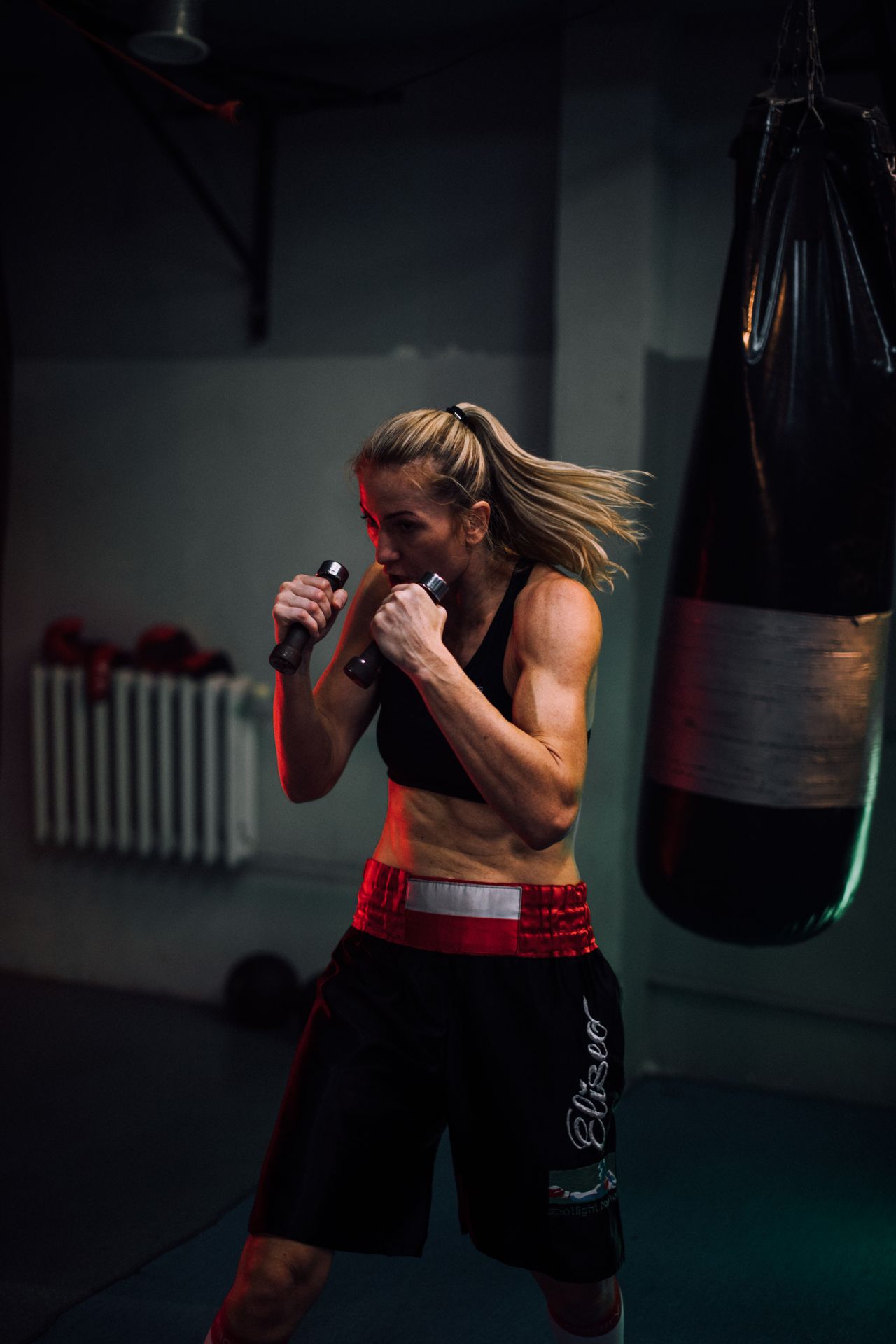
Her background helped explain why. Before becoming UFC champion, Jędrzejczyk had already built herself through striking. She came from Muay Thai and kickboxing, where rhythm, range, balance, and volume mattered long before she entered the Octagon. That mattered because early women’s MMA divisions were often framed around broad athletic traits: strength, toughness, grappling, or finishing power. Jędrzejczyk brought a more specialized striking identity.
She was not simply a kickboxer trying MMA. She became an MMA striker who understood the cage. Her stance, footwork, elbows, knees, and ability to punish entries made her difficult to wrestle cleanly. Opponents could not just wait out her combinations or shoot without consequence. Every failed entry became another chance for her to land. Every exchange became another layer of pressure.
That is why her rise mattered. Strawweight was not going to be a novelty division or a technical side room. With Jędrzejczyk at the center, it became a place where elite pace and sharp striking could define championship fighting.
Joanna Jędrzejczyk and Strawweight Violence Became the Division’s Signature
Jędrzejczyk’s title win over Carla Esparza at UFC 185 turned the division’s direction almost immediately. Esparza entered as champion, but Jędrzejczyk used takedown defense and striking pressure to take away the fight Esparza wanted. The result was not just a new champion. It was a new picture of what strawweight could be.
Her title reign then reinforced that picture. Against Jessica Penne, Valérie Létourneau, Cláudia Gadelha, Karolina Kowalkiewicz, and Jéssica Andrade, Jędrzejczyk defended the belt by making opponents deal with sustained offense. Her best performances were not built around one dramatic punch. They were built around accumulation. Jabs, crosses, elbows, knees, low kicks, clinch breaks, and constant resets became part of the same pattern.
That is where the phrase “strawweight violence” fits. It was not about size. It was not about spectacle for its own sake. It was about the way Jędrzejczyk made a fight feel relentless. She could win rounds through volume, but the volume was not empty. Her striking carried consequence. By the later rounds, opponents often looked as if they had spent the whole fight being slowly denied space.
Her rivalry with Rose Namajunas changed the arc of her career, and her classic fight with Zhang Weili later showed another side of her legacy. Against Zhang at UFC 248, Jędrzejczyk was no longer the defending champion. She was the former ruler of the division trying to take the belt back from a new global star. The fight became one of the most important in women’s MMA history because both athletes pushed the pace, absorbed damage, adjusted under pressure, and kept the title fight balanced until the final horn.
That fight did not restore Jędrzejczyk’s reign, but it added to her meaning. Her championship years had already made strawweight credible. The Zhang fight proved that the division could also produce a classic on the sport’s biggest stages.
Why Jędrzejczyk’s Strawweight Legacy Still Matters
Jędrzejczyk’s legacy is not only that she held the belt. It is that she gave the UFC strawweight division a standard. Future champions did not have to fight like her, but they had to exist in a division she helped define. Namajunas, Andrade, Zhang, Esparza, and the next wave of contenders all inherited a weight class that had already been made serious by Jędrzejczyk’s reign.
She also changed how fans discussed smaller fighters. At 115 pounds, finishing power was not always going to look like heavyweight power or bantamweight explosiveness. Jędrzejczyk showed that dominance could come from accuracy, pace, defensive layers, and the refusal to let opponents rest. Her fights made technique feel intense rather than delicate.
That matters in combat sports because divisions often need a first great identity. Some weight classes are defined by rivalries. Some are defined by one dominant champion. Strawweight needed both credibility and danger. Jędrzejczyk supplied them through a style that was technical enough for analysts and forceful enough for casual fans.
Her later Hall of Fame recognition confirms what her fights had already made clear. Joanna Jędrzejczyk did not just win in the strawweight division. She helped teach fans what the division could become.
Jędrzejczyk’s place in combat sports history rests on more than her record. She turned a young UFC division into a serious championship stage and made 115 pounds feel urgent, skilled, and demanding. That is why Joanna Jędrzejczyk and strawweight violence remain linked: her best work gave the division its edge.