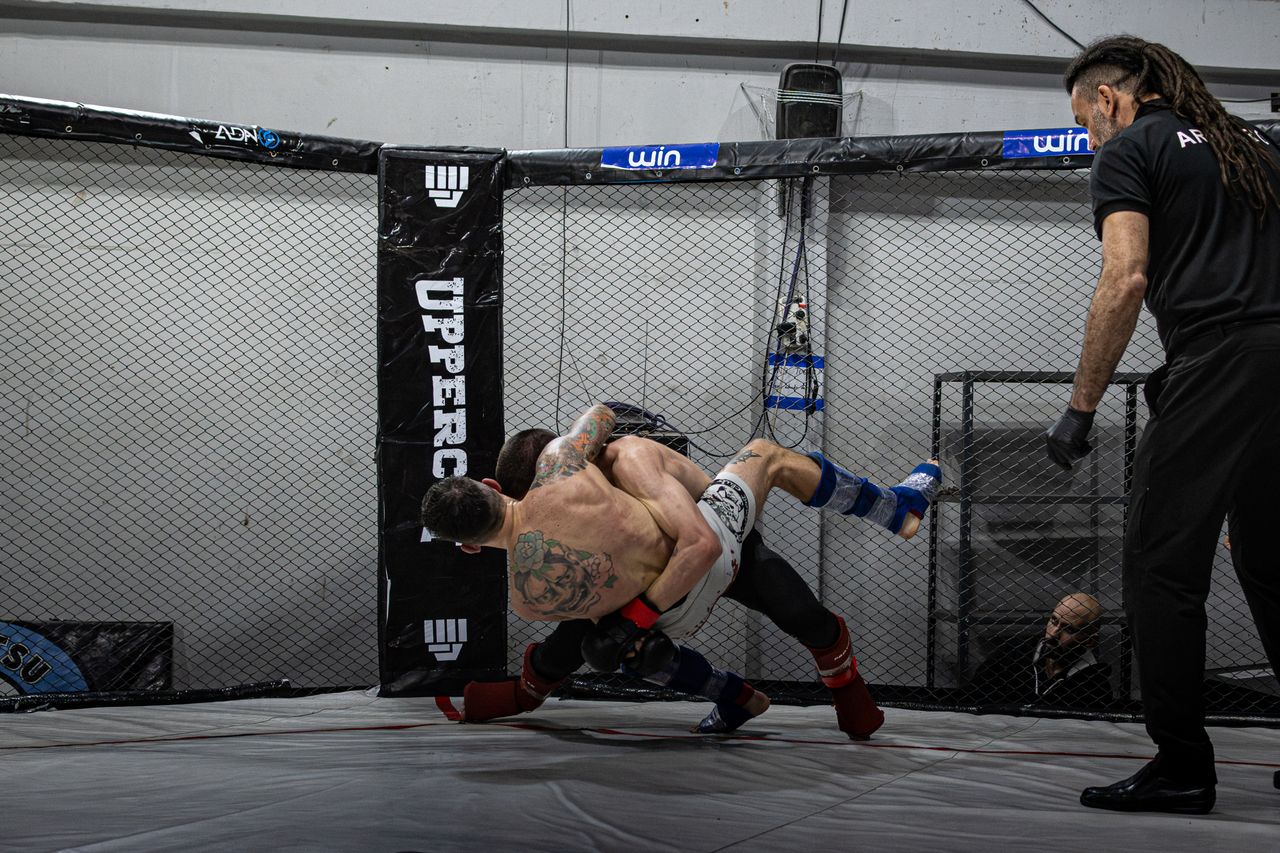
MMA in Italy occupies a particular place in the European fight landscape. It is not a mass-market national sport on the level of football, and it does not yet have the same global MMA identity as Brazil, Russia, the United States, or the United Kingdom. But Italy is not a blank space on the map either. The country has produced recognizable UFC-level fighters, developed active regional promotions, built a serious gym culture in major cities, and connected modern MMA to a much older Italian combat-sports tradition.
The Italian scene is best understood as a mature but still uneven European MMA market. It has enough depth to produce athletes for major international promotions, but not enough volume to make MMA feel mainstream across the country. Its strongest identity comes from a mix of combat-sports crossover, regional gym development, and a handful of fighters who pushed Italian MMA into global visibility.
Italy’s MMA story also reflects the way the sport developed across much of Europe. Fighters often arrived through boxing, kickboxing, judo, Brazilian jiu-jitsu, wrestling, or traditional martial arts before becoming complete mixed martial artists. The early infrastructure was scattered. A fighter in Rome, Milan, Bologna, Turin, Naples, Florence, or Venice could find serious training, but the pathway to elite international competition usually required travel, specialized coaching, and connections outside the local circuit.
That has changed over time. Italy now has a more coherent MMA culture than it did in the early UFC era. The country has recognizable gyms, experienced coaches, amateur development systems, and regional events that give fighters a competitive ladder before they test themselves internationally. The result is a scene that still feels selective rather than massive, but one that has become more professional and better connected to the wider European MMA circuit.
From Italian Combat Sports to Modern MMA
Italy’s modern MMA scene did not appear out of nowhere. Long before Italian fighters were entering cages, the country had deep roots in combat sports. Boxing has a long and serious Italian tradition, producing world champions, Olympic-level athletes, and strong local fight cultures in cities and working-class communities. Judo and karate also developed strong followings through clubs, martial arts schools, police and military sport, and youth competition. Kickboxing and Muay Thai later added another layer, especially for athletes drawn to full-contact striking.
Those older disciplines mattered because MMA in Italy did not grow first as a single unified sport. It grew as a meeting point. Strikers learned takedown defense. Grapplers learned how to deal with punches. Judoka, wrestlers, kickboxers, and Brazilian jiu-jitsu practitioners began to train together or transition into rulesets that rewarded more complete fighting.
Brazilian jiu-jitsu became especially important as MMA grew internationally. In Italy, as in much of Europe, BJJ helped formalize the grappling side of the sport. It gave athletes a technical foundation for submissions, positional control, guard work, and ground defense. Grappling tournaments and BJJ academies also created a competitive environment that could feed MMA gyms without every athlete needing to begin as a cage fighter.
The Italian MMA identity is therefore not based on one dominant national style. It is not as wrestling-centered as parts of the United States, not as sambo-driven as Russia, not as BJJ-rooted as Brazil, and not as Muay Thai-oriented as Thailand. Italy’s MMA culture is more hybrid. The better Italian fighters tend to emerge from cross-training environments where boxing, kickboxing, grappling, and conditioning are combined inside modern MMA gyms.
That hybrid nature can be a strength. Italian fighters who reach higher levels are rarely products of a single narrow system. They often have to become adaptable, because the domestic scene requires them to test themselves against different styles and then move into broader European competition. At the same time, the lack of one dominant pipeline can slow development. Without a massive collegiate wrestling system, a nationwide amateur MMA machine, or a single combat sport feeding elite prospects in huge numbers, Italy’s progress depends heavily on individual gyms and motivated fighters.
Alessio Sakara and the First Italian UFC Breakthrough
The first major name in the global Italian MMA story is Alessio Sakara. Sakara became the symbolic door-opener for Italian fighters in the UFC era. Known for his aggressive striking, Roman-inspired image, and long career across major promotions, he gave Italian fans a recognizable figure at a time when the sport was still finding its place in Europe.
Sakara’s importance goes beyond his record. He represented the possibility that an Italian fighter could compete on the sport’s biggest platform. In the mid-2000s and early 2010s, that mattered. European MMA was still developing unevenly, and many countries had only a few fighters who could reach the UFC or other major international promotions. Sakara gave Italy visibility before the country had a deep roster of globally known MMA athletes.
His style also fit one side of Italy’s combat-sports personality. He was a puncher first, comfortable in exchanges, and his identity connected naturally to boxing and full-contact striking. That made him accessible to Italian fight fans who were more familiar with traditional combat sports than with grappling-heavy MMA. He was not simply an Italian athlete appearing abroad. He carried an explicitly Italian image into international MMA.
Sakara also became important after his UFC run because he remained part of the broader Italian fight conversation. Fighters who become national reference points often do more than win fights. They create recognition. They make media coverage easier. They give younger athletes a name to point to. They help fans understand that MMA is not only an imported American or Brazilian product, but a sport in which Italian athletes can compete.
In that sense, Sakara’s career gave Italian MMA an early anchor. It did not instantly transform the country into a major MMA power, but it gave the scene a public figure and a benchmark. Later Italian fighters would enter the UFC with a clearer sense that the path existed.
Marvin Vettori and the Highest Italian Standard
If Sakara opened the door, Marvin Vettori raised the ceiling. Vettori became the most prominent Italian MMA fighter of the UFC era and the clearest example of an Italian athlete reaching the top tier of the sport. His rise in the middleweight division gave Italy something it had not previously had in MMA: a genuine contender associated with elite-level UFC competition.
Vettori’s significance is not just that he fought in the UFC. It is that he became relevant near the top of a major division. Middleweight is historically one of MMA’s most competitive weight classes, requiring size, durability, technical range, and five-round conditioning at the highest level. Vettori’s career placed an Italian fighter into that conversation.
His style also tells an important story about Italian MMA development. Vettori is not a flashy specialist. He built his reputation on pressure, toughness, grappling competence, physical strength, and an ability to stay competitive with elite opponents. That matters because it showed a different model from the pure striker archetype. Vettori’s success depended on becoming a complete mixed martial artist.
His move into major international training environments also reflects a common reality for fighters from countries with developing MMA infrastructure. To reach the highest level, Italian fighters often need to connect domestic foundations with elite training abroad. Vettori’s career demonstrated that Italy could produce the athlete, but that championship-level development often requires global movement, international sparring, and access to world-class coaching rooms.
For Italian MMA fans, Vettori became the first fighter who made UFC title relevance feel realistic. He gave the country regular representation in major UFC coverage and helped shift the conversation from “Can an Italian fight in the UFC?” to “Can an Italian become a UFC champion?” That is a major change in national MMA identity.
Even when results have been difficult, Vettori’s importance remains. He forced Italian MMA into the sport’s mainstream discussion. He showed that Italian fighters could headline major events, face elite opponents, and carry national expectations. For a country still building its MMA infrastructure, that kind of visibility is valuable.
The Italian UFC Lineage Beyond the Headline Names
Italian MMA should not be reduced to Sakara and Vettori alone. Alessio Di Chirico also played an important role in showing that Italian fighters could reach and remain within the UFC system. A Rome-based middleweight, Di Chirico represented the next wave of Italian athletes who entered the sport with a more modern understanding of MMA as a complete discipline.
Di Chirico’s career is useful because it reflects the grind of international-level MMA. Not every UFC fighter becomes a title contender or national icon, but simply reaching that platform requires years of training, regional competition, management, and competitive resilience. For a country like Italy, these careers matter because they normalize the pathway. They show that the UFC is not a one-off destination reserved for a single exceptional athlete.
Manolo Zecchini is another example of Italy’s continuing presence in high-level MMA. As a featherweight, he represents a different part of the competitive landscape than Vettori or Sakara. Lighter divisions often demand pace, athleticism, scrambles, and sharp transitional awareness. Having Italian fighters appear across multiple weight classes helps broaden the country’s MMA profile beyond one personality or one division.
The larger point is that Italian MMA has moved from isolated breakthrough moments toward a modest but recurring presence. The country is not producing dozens of UFC athletes at once, but it has produced enough recognizable names to establish continuity. That matters for young fighters. A prospect coming through an Italian gym today can look at a more defined road than fighters had twenty years ago.
Still, the gap between representation and depth remains important. Italy has UFC-level fighters, but it does not yet have a large, self-sustaining elite pipeline. The country’s next step is not proving that one Italian can reach the UFC. That has already been done. The next step is producing clusters of athletes who can reach major promotions in the same generation, train together, push each other, and create a deeper national standard.
Gyms, Regional Teams, and the Italian Training Map
Italian MMA development is heavily gym-driven. That is true in many countries, but it is especially important in a scene where the sport is not yet fully mainstream. A strong gym can become a local hub, a talent incubator, a promotional connector, and a cultural center for the sport.
Rome and Milan are natural centers because of population, media, transportation, and broader combat-sports infrastructure. Rome has produced major Italian MMA names and has the advantage of being a large capital city with a diverse martial arts culture. Milan, as a business and media center, has also played a role in the professionalization of Italian MMA and combat sports more broadly. Northern Italy, including areas around Veneto, Lombardy, Emilia-Romagna, and Trentino, has produced fighters and gyms connected to both Italian and wider European competition.
But the scene is not only about the biggest cities. Italian MMA also lives through smaller gyms, regional fight teams, grappling academies, kickboxing clubs, and local coaches who build athletes gradually. In many cases, a fighter’s development begins outside a pure MMA environment. Someone may start in boxing, karate, kickboxing, judo, or BJJ before entering a gym that can combine those tools into a cage-ready game.
That development process shapes the way Italian fighters compete. The best athletes usually have to become comfortable with technical blending. A striker cannot remain only a striker. A grappler cannot rely only on submissions. The domestic scene may offer early opportunities, but European MMA quickly exposes weaknesses. Fighters who want to move from Italian shows to Cage Warriors, Oktagon, KSW, Brave CF, Bellator/PFL pathways, or the UFC must show they can handle modern pace, cage wrestling, ground-and-pound, clinch work, and defensive grappling.
The coaching side is also central. Italy’s growth depends on coaches who understand MMA as its own sport rather than as a loose collection of disciplines. The difference is significant. A boxing coach can improve hands. A BJJ coach can improve submissions. A wrestling coach can improve takedowns. But MMA requires integration: striking into takedowns, grappling against the fence, submissions under strikes, defensive exits, round management, and tactical adaptation under mixed rules.
As more Italian gyms gain experience in that integration, the quality of fighters improves. This is one reason the country’s future may be stronger than its past. The first Italian MMA generation had to invent much of the pathway. The next generation can inherit more complete coaching systems, more experienced sparring rooms, and a clearer sense of what international promotions demand.
Promotions, Fight Nights, and the European Circuit
Italy’s domestic MMA scene depends heavily on regional promotions and European connectivity. Local fight nights are essential because fighters need competitive rounds before they can become serious prospects. Amateur bouts, early professional fights, and regional title opportunities create the base of the pyramid.
Promotions such as Venator FC have helped give Italian MMA a more visible professional platform. A domestic promotion does more than stage fights. It creates storylines, builds local names, gives athletes footage, attracts international opponents, and helps fans understand the national scene. Italy also benefits from its connection to broader European promotions and academy systems, including Cage Warriors-linked activity and regional events that allow Italian fighters to test themselves against athletes from neighboring markets.
That European circuit is especially important because Italy sits in a dense combat-sports region. Fighters can travel to compete in France, Spain, Germany, Austria, Switzerland, Slovenia, Croatia, Poland, the Czech Republic, the United Kingdom, and beyond. This matters because MMA development often accelerates when fighters face different styles. A prospect who only fights familiar domestic opposition may look strong locally but struggle internationally. A prospect who survives the European regional circuit is usually better prepared for major promotions.
Italy’s event culture is still developing compared with the biggest MMA markets. The UFC has not made Italy a regular major event destination in the way it has used London, Paris, Abu Dhabi, or major American cities. That limits mainstream exposure. A major UFC event in Italy would likely create a surge of attention, especially with the right Italian fighter on the card, but the domestic scene cannot depend only on that possibility.
For now, the regional layer matters more. Smaller shows build the fighters who eventually give major promotions a reason to invest. They also create local fan habits. MMA becomes more stable in a country when fans are not only watching UFC broadcasts from abroad, but also attending local cards, following national prospects, and understanding the gyms behind the fighters.
Why Italian MMA Still Feels Underrated
Italian MMA often feels underrated because the country’s broader sporting identity is so crowded. Football dominates national attention. Basketball, volleyball, cycling, motorsport, tennis, boxing, skiing, and Olympic sports all compete for space. MMA has grown, but it has had to fight for visibility in a media environment where established sports already have strong institutions and fan bases.
There is also a perception gap. Italy is famous for culture, football, fashion, food, motorsport, and historic cities, not for cage fighting. That outside image can make its MMA scene easy to overlook. But this is exactly why Italian MMA is interesting. It is not built on a single obvious national stereotype. It is a practical, gym-by-gym scene that has had to earn credibility through individual fighters and regional work.
The sport’s development has also been shaped by the difference between combat-sports participation and MMA visibility. Italy has plenty of martial arts activity, but not every boxing gym, karate school, judo club, kickboxing team, or BJJ academy feeds directly into MMA. The challenge is connecting those disciplines into a coherent talent pipeline.
When that connection works, Italy can produce serious fighters. When it does not, athletes may remain isolated inside their original discipline or lack the competitive opportunities needed to become complete professionals. The country’s long-term MMA growth depends on converting its broad martial arts base into more integrated MMA development.
That is why the next Italian breakthrough may not come from a single famous gym or one city alone. It could come from a striker who adds grappling early, a judoka who transitions smoothly, a BJJ athlete who learns to wrestle against the cage, or a young fighter who grows up training MMA from the beginning rather than assembling the sport later.
The Future of MMA in Italy
The future of MMA in Italy is not about becoming a sudden global superpower. A more realistic and meaningful goal is becoming one of Europe’s more reliable producer markets: a country that regularly sends fighters into major regional promotions, occasionally produces UFC-level athletes, and builds enough domestic infrastructure that fighters do not have to leave too early to develop properly.
Italy has several advantages. It has a large population, major cities, established combat-sports traditions, access to the European circuit, and enough successful examples to inspire younger fighters. It also has the cultural intensity to support fight sports when the right personalities emerge. Italian fans can connect strongly with athletes who carry national identity well, and MMA gives fighters a direct, individual stage for that connection.
The challenges are equally clear. MMA needs more mainstream visibility, more consistent amateur development, stronger regional matchmaking, deeper coaching integration, and more international-standard training rooms. The country also needs more fighters who can bridge the gap between domestic promise and major-promotion readiness. That is the hardest step in MMA development. Many countries produce tough regional fighters. Fewer produce athletes who can win consistently under global scrutiny.
Italy has already proven that it belongs on the MMA map. Alessio Sakara gave the country its early UFC symbol. Marvin Vettori gave it a true elite-era contender. Alessio Di Chirico, Manolo Zecchini, and other Italian fighters have helped show that the pathway is not closed. The domestic scene continues to build through gyms, grappling rooms, striking schools, regional shows, and European competition.
The identity of Italian MMA is still being written. It is not a finished product, and that is part of what makes it worth watching. Italy has the foundation of a serious European MMA country: combat-sports roots, recognizable names, local infrastructure, and a growing understanding of what modern mixed martial arts requires. The next stage is depth. If Italy can produce not just isolated stars but a steady stream of complete fighters, its place in European MMA will become much harder to overlook.