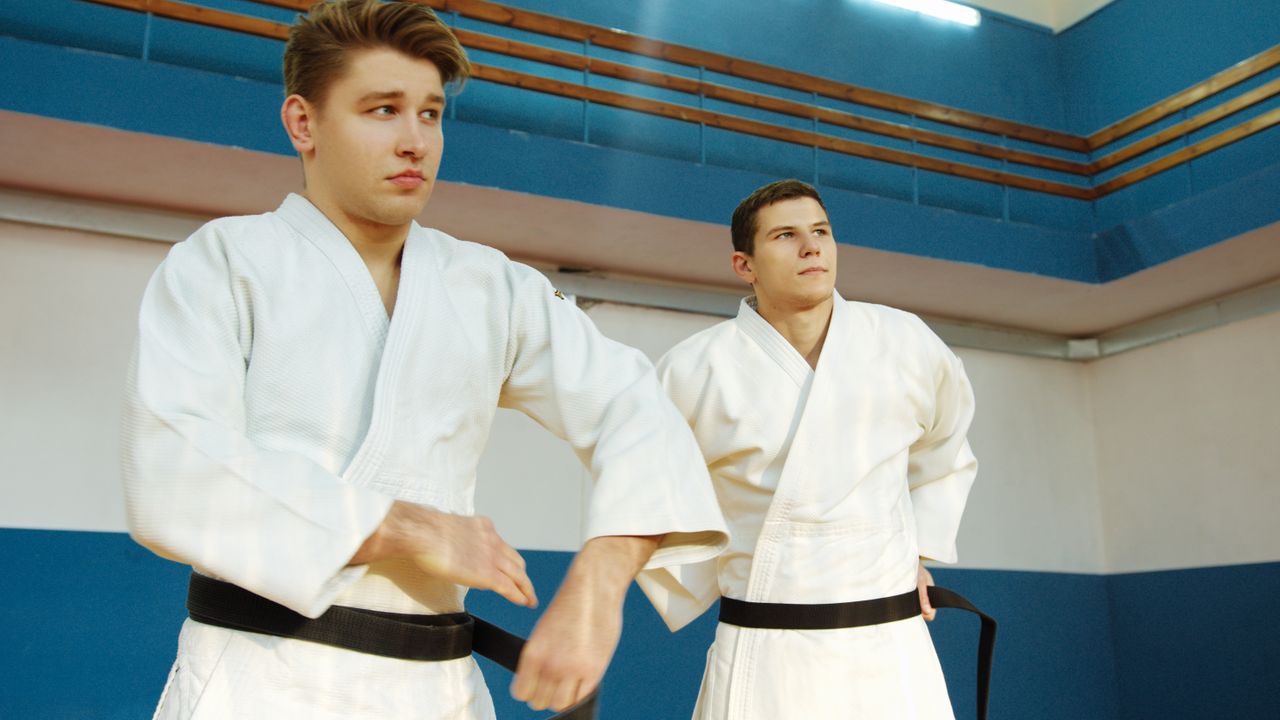
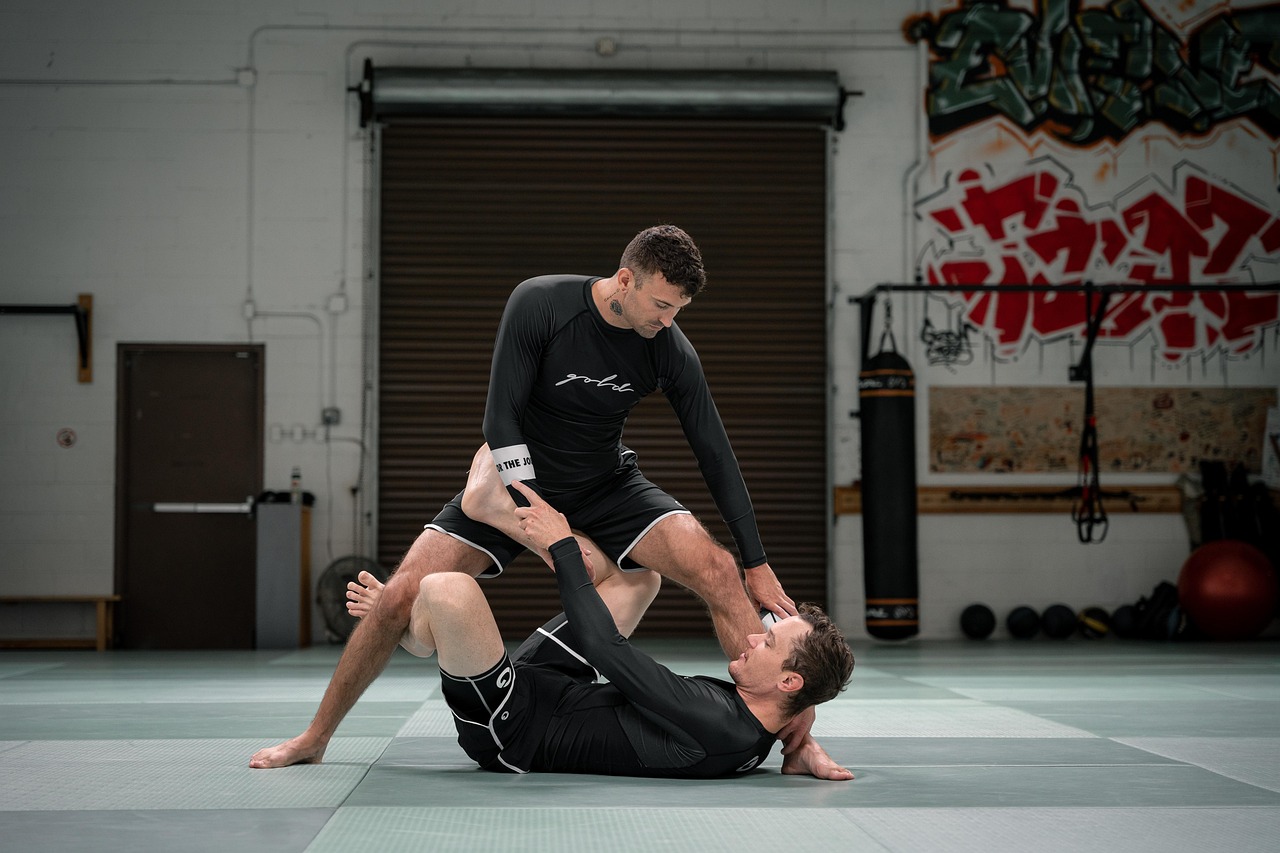
MMA in Mongolia is not built from the same foundation as MMA in the United States, Brazil, Japan, or Western Europe. It is not primarily a commercial gym culture, a television-first fight scene, or a country where mixed martial arts grew from a large domestic promotion. Mongolia’s MMA identity starts somewhere older and more physical: in wrestling, judo, sambo, boxing, and the national respect for combat sports that long predates the cage.
That makes Mongolia one of the more interesting developing MMA countries in Asia. Its modern MMA scene is still relatively small, but the raw materials are obvious. Mongolia has a deep grappling culture, a proven Olympic combat-sports tradition, and fighters who tend to bring a hard, pressure-heavy style into international competition. The country does not produce huge numbers of global MMA stars, but the fighters who do break through often carry a recognizable competitive personality: durable, clinch-aware, physically stubborn, and comfortable in the rougher phases of a fight.
The modern Mongolian MMA story is still being written through a handful of internationally visible athletes, most notably Narantungalag Jadambaa, Danaa Batgerel, Enkh-Orgil Baatarkhuu, and Nyamjargal Tumendemberel. Their careers have given Mongolia points of reference in ONE Championship and the UFC, while also showing the difference between having strong combat-sports roots and having a fully mature MMA infrastructure. Mongolia has the athletic culture. The long-term question is how consistently that culture can be converted into complete mixed martial artists.
The Combat-Sports Base Behind Mongolian MMA
To understand MMA in Mongolia, the first stop is not the cage. It is the wrestling field, the judo mat, the boxing ring, and the sambo room.
Mongolian wrestling, or bökh, carries a national importance that few combat sports have anywhere in the world. It is closely associated with Naadam, Mongolia’s great national festival, where wrestling stands alongside horse racing and archery as one of the traditional “Three Games.” Bökh is not MMA, and it does not transfer cleanly into cage fighting on its own, but it helps explain why grappling has such a strong cultural position in Mongolia. Balance, grip fighting, body control, toughness, and public respect for wrestlers all exist before an athlete ever thinks about modern MMA.
That matters because MMA rewards athletes who are already comfortable with physical contact and positional struggle. A fighter raised around a wrestling culture does not need to be convinced that clinching, pressure, and top control are central to fighting. Those instincts are already part of the country’s broader sporting language.
Mongolia’s Olympic combat-sports history reinforces that foundation. The country has won Olympic medals in freestyle wrestling, boxing, shooting, and judo, with wrestling and judo especially important to its fighting identity. Mongolia’s first Olympic medals came through wrestling, and its first Olympic gold medal came in judo through Naidangiin Tüvshinbayar in 2008. That history matters for MMA because it shows that Mongolia’s combat athletes have already succeeded in highly structured international systems. The country is not new to elite fighting sports. It is newer to blending those sports into MMA.
Sambo is another important part of the picture. Because of Mongolia’s historical and sporting ties to the Soviet sphere, sambo has had more relevance there than it has in many other countries. For MMA development, sambo is particularly useful because it sits between wrestling, judo, and submission grappling. A Mongolian athlete with wrestling, judo, or sambo experience may not automatically be ready for MMA, but they often enter with the type of base that coaches can build around.
The gap is usually not toughness or physical ability. It is integration. MMA requires striking defense, cage wrestling, submission awareness, round management, and the ability to transition between phases without pausing. Mongolia’s traditional strengths can create dangerous fighters, but the modern game demands more than being strong in one combat discipline. The country’s best MMA athletes are the ones who have taken that Mongolian grappling and toughness base and adapted it to the rhythm of international mixed martial arts.
Narantungalag Jadambaa and the First Major Mongolian MMA Breakthrough
Narantungalag Jadambaa remains one of the most important names in Mongolian MMA because he helped establish what a successful Mongolian mixed martial artist could look like on a major international stage. He was not merely a symbolic figure. He became a ONE Featherweight MMA World Champion and gave Mongolia a genuine world-level reference point in the sport.
Jadambaa’s importance goes beyond his record. He competed during a period when Asian MMA was becoming more organized and more visible, especially through promotions such as ONE Championship. For a country like Mongolia, which did not have the same promotional machinery as Japan, South Korea, or the United States, that visibility mattered. Jadambaa showed that Mongolian fighters could compete internationally, not just as rugged outsiders, but as serious, skilled professionals.
His style also fit the broader Mongolian combat-sports profile. He was durable, composed, and physically strong, with enough technical balance to succeed in a rule set that punishes one-dimensional fighters. In MMA terms, that is an important distinction. A wrestler can be tough. A judoka can be explosive. A striker can be dangerous. But a successful MMA fighter has to connect those tools under pressure. Jadambaa gave Mongolia an early model of that complete transition.
His role as a mentor has become just as important as his own competitive career. Enkh-Orgil Baatarkhuu has been identified through ONE Championship as a protégé of Jadambaa, which gives Mongolia something many developing MMA countries need: a visible line of sporting inheritance. A country’s MMA scene grows more quickly when one generation can teach the next not just techniques, but standards. How to train. How to travel. How to prepare for international opponents. How to handle the pressure of major promotions. Jadambaa’s value to Mongolian MMA sits in that bridge between pioneer and builder.
For many countries, the first major MMA figure becomes a name in the past tense. In Mongolia, Jadambaa’s influence remains part of the current scene because his work continues through fighters who came after him.
Mongolian Fighters on the International Stage
Danaa Batgerel gave Mongolia an important foothold in the UFC. Competing at bantamweight, he became one of the country’s most recognizable modern MMA exports and brought Mongolian representation into the world’s most visible MMA promotion. His UFC run helped attach Mongolia to the global MMA conversation, even if the country was still not producing a large wave of fighters.
Batgerel’s profile is useful because it shows both the promise and the difficulty of Mongolian MMA development. He had real finishing ability and international-level toughness, but the UFC’s bantamweight division is one of the deepest weight classes in the sport. At that level, athleticism and grit are not enough. Fighters must solve advanced striking systems, chain wrestling, cage defense, and high-paced tactical adjustments against opponents who have often spent years inside elite MMA-specific gyms.
That is the central challenge for Mongolian fighters. The country can produce strong combat athletes, but the UFC and other major promotions test the full MMA package. Batgerel’s presence in the UFC showed that Mongolia belongs in the conversation. It also showed the standards Mongolian fighters must meet to stay there.
Nyamjargal Tumendemberel represents another important piece of the modern picture. Competing as a Mongolian flyweight in the UFC, he brings a background that includes sambo and judo accomplishments, which fits the country’s broader pattern of grappling-based athlete development. His profile reinforces the idea that Mongolia’s MMA future is likely to come from athletes who begin in other combat sports and then sharpen themselves into full MMA competitors.
In ONE Championship, Enkh-Orgil Baatarkhuu has become one of the most important Mongolian fighters of the current era. His rise through Road to ONE: Mongolia and subsequent success in ONE gave the country another major promotional platform. His style also fits what international fans often expect from Mongolian fighters: pressure, clinch work, physical control, durability, and a willingness to fight through uncomfortable exchanges.
That combination of names gives Mongolia more than a single-fighter identity. It is not yet a deep MMA power, but it is no longer just an obscure country on the MMA map. Jadambaa, Batgerel, Baatarkhuu, and Tumendemberel have given the scene enough international reference points that future Mongolian fighters are not starting from zero. They are entering a sport where their country already has examples to follow.
Why Mongolian Fighters Often Look Built for Pressure
The most natural Mongolian MMA style is not flashy outside striking or long-range point fighting. It is pressure. That does not mean every Mongolian fighter has the same style, but the country’s combat-sports base points toward certain habits: closing distance, fighting for position, accepting contact, and making opponents carry weight.
That profile makes sense. Traditional wrestling rewards balance, body control, and the ability to disrupt another athlete’s posture. Judo rewards gripping, timing, and explosive transitions. Sambo rewards a blend of throwing, scrambling, and submission awareness. Boxing adds toughness and punching discipline. When those influences are combined for MMA, the result is often a fighter who wants to make the bout physical.
In the cage, that can translate into clinch pressure against the fence, level changes, short strikes in close range, and a grinding approach from top position. These are valuable traits, particularly in Asian regional MMA where stylistic diversity can be wide. A Mongolian fighter with good conditioning and competent striking defense can be difficult to manage because the opponent may not get the clean, open-space fight they want.
The limitation is that pressure has to be layered. Modern MMA punishes predictable entries. A fighter who charges forward without striking setups can be countered. A grappler who shoots from too far away can be sprawled on and forced to strike. A judoka who relies only on upper-body ties may struggle against opponents who understand cage positioning. Mongolian fighters at the next level need to turn natural physicality into repeatable MMA systems.
That is where coaching depth becomes crucial. Mongolia’s best long-term MMA pathway will probably not come from abandoning its combat-sports roots. It will come from modernizing them. The goal is not to turn Mongolian fighters into generic kickboxer-wrestlers. The goal is to keep the national grappling identity while adding the striking layers, cagecraft, submission defense, and tactical pacing that define elite MMA.
Training Culture in Ulaanbaatar and Beyond
Mongolia’s MMA infrastructure is concentrated most naturally around Ulaanbaatar, the capital and largest city. That is where fighters are most likely to find better coaching, more consistent training partners, more organized gyms, and access to the networks that connect local athletes with regional promotions. In a country with a relatively small population spread across vast territory, centralization matters. Serious MMA development requires daily training partners, coaches from multiple disciplines, medical support, and competitive opportunities. Those things are easier to build in the capital than in rural areas.
At the same time, rural Mongolia still matters to the country’s fighting identity. Some athletes come from physically demanding backgrounds where strength, endurance, and toughness are part of daily life before formal sport begins. That does not replace technical training, but it can create athletes with strong physical baselines. For MMA coaches, the task is to take those qualities and refine them into disciplined competition habits.
The strongest Mongolian MMA gyms and teams tend to function as hybrid environments. Fighters need striking, grappling, conditioning, and fight IQ in one training cycle. A boxer moving into MMA must learn takedown defense. A judoka must learn no-gi control and cage wrestling. A wrestler must learn submissions and striking entries. A sambo athlete must adjust to rounds, gloves, and the different positional incentives of MMA.
International travel also plays a role. Mongolian fighters who reach higher levels often need experience outside the domestic scene. Training abroad or competing in stronger regional circuits can expose them to different styles: South Korean pace, Japanese grappling craft, Chinese sanda and wrestling transitions, Russian and Central Asian sambo influence, Southeast Asian striking, and the broader global MMA game. That exposure is difficult but necessary.
The development question for Mongolia is not whether the country has tough fighters. It clearly does. The question is whether enough fighters can get consistent access to MMA-specific training at the right age, against the right partners, and under coaches who understand the modern international standard.
Promotions, Pathways, and the Regional MMA Map
Mongolia’s domestic MMA scene does not have the same scale as the United States, Brazil, Russia, Japan, or South Korea. That means Mongolian fighters often need regional pathways. ONE Championship has been particularly important because of its Asian focus and its willingness to highlight athletes from markets that the UFC has historically touched less consistently.
Road to ONE: Mongolia was a significant development because it created a direct competitive bridge from the Mongolian scene to a major international promotion. For athletes in developing MMA markets, these bridges matter enormously. Talent alone is not enough if fighters have no credible route to larger stages. A tournament or regional feeder system gives prospects a goal, raises local standards, and tells gyms what level their athletes must reach.
The UFC remains the most visible global platform, and Mongolian representation there carries symbolic weight. But for Mongolia’s practical development, Asia-focused promotions may be just as important. ONE, Rizin, Deep, Pancrase, Road FC, and other regional circuits create competitive environments where Mongolian fighters can gain experience before facing the deepest global opposition. The right matchmaking pathway can determine whether a prospect develops steadily or is thrown too quickly into fights they are not ready for.
Local fight nights and amateur competition are also essential, even when they do not attract international attention. MMA scenes are built from repetition. Fighters need early bouts. Coaches need to test methods. Referees and officials need experience. Fans need to learn the sport’s rhythms. A country cannot build a stable MMA pipeline from a few famous professionals alone.
For Mongolia, the regional map is both a challenge and an opportunity. The country is not isolated from combat-sports powers. It sits in a broader neighborhood connected to Russia, China, Japan, Korea, and Central Asia. That geography gives Mongolian fighters access to a wide range of styles, but it also means the competition becomes serious quickly. A Mongolian prospect moving into regional MMA may encounter elite wrestlers, polished kickboxers, sambo players, and disciplined judo-based fighters early in their career.
That environment can be unforgiving, but it can also accelerate development.
Fan Culture and National Pride in Mongolian MMA
MMA in Mongolia benefits from something that cannot be manufactured easily: national pride in combat athletes. In countries where fighting sports already have cultural respect, MMA does not have to explain why toughness, grappling, and one-on-one competition matter. The audience may need time to understand the rules and personalities of modern MMA, but the deeper idea of combat competition is already familiar.
That gives Mongolian fighters a strong emotional connection with fans when they appear on international cards. A Mongolian athlete in the UFC or ONE Championship is not just another name on a roster. He represents a country that has long seen combat sports as part of national identity. For a smaller population country, that visibility can feel especially concentrated. One successful fighter can become a national reference point much more quickly than in a larger market.
The challenge is converting that pride into a sustainable domestic MMA culture. Fans may follow major international fights, but local MMA requires its own ecosystem: promotions, media coverage, gyms, amateur shows, sponsors, and consistent storytelling around prospects. Without that, attention rises only when a Mongolian fighter appears on a major card.
Mongolia has the right emotional ingredients for MMA fandom. The sport’s harder task is institutional. The more local fighters can compete regularly, the more fans will have names to follow before they reach the UFC or ONE. That is how a scene becomes deeper than national pride alone. It becomes a sporting calendar.
The Future of MMA in Mongolia
Mongolia’s MMA future is promising, but it should be described accurately. This is not yet a major MMA power with dozens of elite professionals spread across every weight class. It is a combat-sports country with a growing MMA identity, a strong grappling foundation, and enough international breakthroughs to suggest that more success is possible.
The most likely path forward is not sudden mass expansion. It is steady conversion. Wrestlers, judoka, sambo athletes, and boxers will continue to test MMA as a professional route. The fighters who succeed will be the ones who enter MMA-specific training early enough to become complete competitors rather than specialists trying to adapt late.
Mongolia’s best prospects will probably continue to emerge from the lower and middle weight classes, where the country’s combination of toughness, grappling, and conditioning can be especially effective. The technical priorities are clear: better striking defense, sharper cage wrestling, more no-gi submission systems, deeper sparring rooms, and more exposure to international styles.
If those pieces improve, Mongolia can become a more consistent producer of dangerous Asian MMA talent. Its fighters already have an identity that translates well to the sport. They are not trying to invent a fighting culture from scratch. They are trying to modernize one.
That is what makes MMA in Mongolia worth watching. The country’s scene is still compact, but its combat-sports roots are unusually strong. The question is not whether Mongolia can produce fighters. It already has. The question is whether it can build enough structure around those fighters to turn isolated breakthroughs into a recognizable national pipeline.