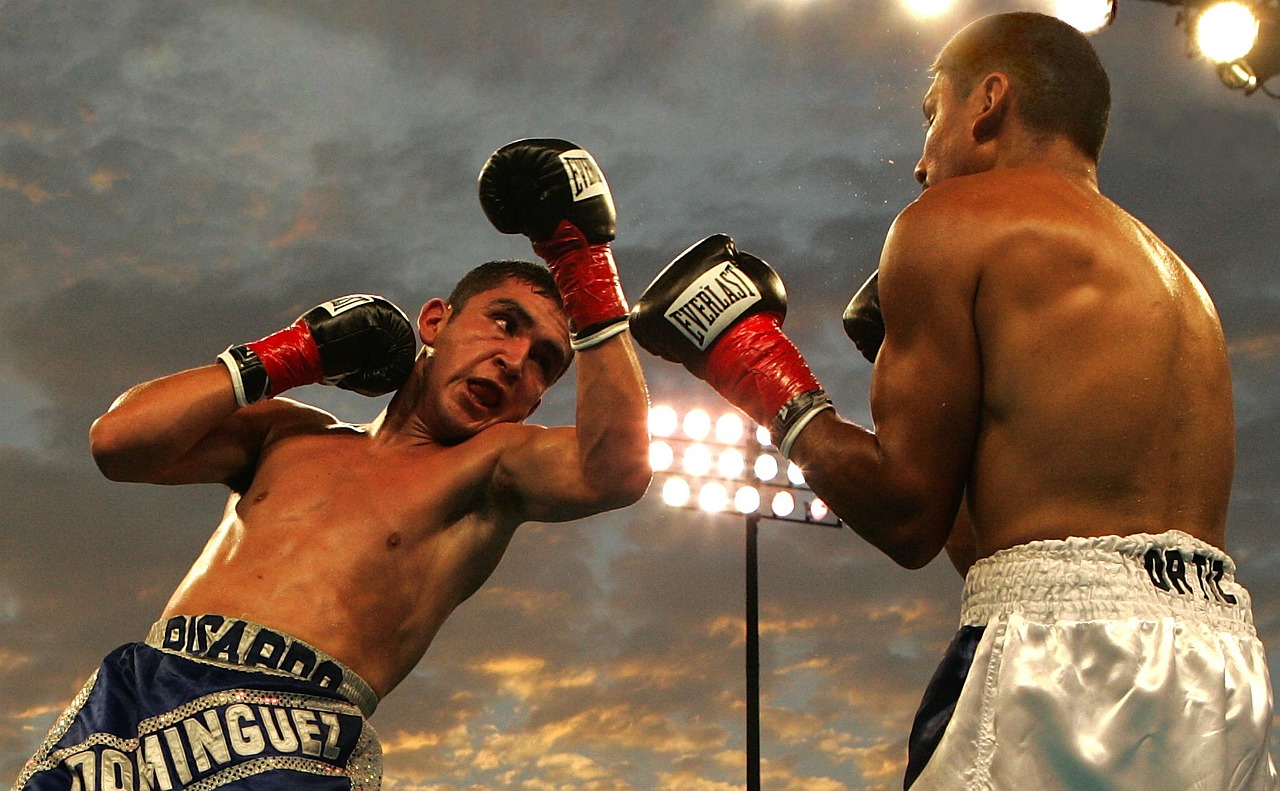
South Korea occupies a distinctive place in modern MMA. It is not simply an occasional exporter of fighters, and it is not only a country where global promotions visit when they want an Asian market. South Korean MMA has its own structure, its own training culture, and a recognizable competitive personality shaped by judo, taekwondo, kickboxing, boxing, Brazilian jiu-jitsu, wrestling, military service, and hard regional fight circuits.
The country’s MMA identity sits somewhere between established regional power and still-developing world contender. South Korea has produced UFC main-event fighters, long-term veterans, popular action fighters, women’s MMA standouts, regional champions, and prospects who have reached global platforms through the UFC, ONE Championship, Rizin, Road FC, DEEP, and other Asian promotions. At the same time, it has not yet become a volume producer on the scale of Brazil, Russia, the United States, Japan, or the Caucasus-heavy wrestling systems that dominate some divisions. That contrast is part of what makes MMA in South Korea interesting: the scene is real, mature, and respected, but still selective in the number of athletes who break through internationally.
South Korean MMA is also unusually tied to personality. Fans outside Korea often learned the country’s MMA identity through fighters who were easy to remember: Chan Sung Jung, “The Korean Zombie”; Dong Hyun Kim, “Stun Gun”; Choi Doo-ho, “The Korean Superboy”; Seo Hee Ham, “Hamzzang”; Jun Yong Park, “The Iron Turtle.” Those names were not just nicknames. They became shorthand for different sides of Korean MMA: toughness, pressure, technical grit, striking confidence, and the ability to survive in global promotions where Asian fighters have often had to win abroad to earn attention.
From Traditional Martial Arts to Modern MMA
South Korea entered MMA with a deep martial arts base already in place. Taekwondo is the country’s most famous combat-sport export, but South Korean MMA was never built on taekwondo alone. The local fight scene also drew from judo, hapkido, boxing, kickboxing, ssireum, Brazilian jiu-jitsu, and a broader culture of school, military, police, and club-based physical training.
That matters because Korean MMA fighters rarely present as pure stylists. The country’s better-known athletes tend to be hybrids: judoka who learned top control and clinch pressure, kickboxers who adapted to smaller gloves, grapplers who became willing brawlers, or strikers who developed defensive wrestling after facing stronger international opposition. South Korea’s MMA personality has often been defined less by one dominant art and more by the process of assembling functional skills under pressure.
The Japanese MMA scene also played an important role in the development of Korean fighters. Before the UFC had a strong Asian talent pipeline, Korean athletes often built their records in Japan through promotions such as DEEP, Pancrase, Shooto-related circuits, Sengoku, and other regional platforms. That cross-border route helped Korean fighters face experienced opposition early. It also exposed them to Japanese-style matchmaking, smaller-weight sophistication, submission grappling, and a fan culture that valued both technique and durability.
By the time the UFC began paying closer attention to South Korea, the country already had fighters who understood international MMA. They had fought in Japan, trained in Korean teams with serious coaching structures, and competed in regional shows where prospects had to mature quickly. South Korea did not arrive in global MMA as a blank market. It arrived as a country whose fighters had already been tested across East Asian combat sports.
The Korean Zombie and the Global Recognition Moment
No fighter shaped South Korea’s international MMA reputation more than Chan Sung Jung. The Korean Zombie became one of the most recognizable featherweights of his generation because his fights delivered the kind of drama that translated across language, geography, and promotional borders. He was aggressive, durable, technically dangerous, and almost always watchable.
Jung’s significance goes beyond popularity. He gave South Korean MMA a global face. His WEC and UFC fights introduced many international fans to Korean MMA for the first time, and his career reached a level few Asian fighters had touched in the modern UFC era. He fought for the UFC featherweight title, headlined major events, defeated high-level opponents, and became associated with some of the most memorable featherweight moments of the 2010s and early 2020s.
His style also mattered. Jung was not marketed as a careful point fighter or a narrow specialist. He was dangerous everywhere: capable of boxing exchanges, scrambles, submissions, and sudden finishes. His famous twister submission over Leonard Garcia became part of UFC highlight history, while his knockouts and wars reinforced the idea that South Korean fighters could bring both technique and violence to the highest level.
For South Korea, The Korean Zombie became both a symbol and an infrastructure figure. His later work as a coach, gym figure, media personality, and promoter helped keep him connected to the next generation. That is important for a country still trying to deepen its MMA pipeline. When a retired star remains active in gyms, content, and development, he can become more than a memory. He becomes a bridge between the first major wave and the next one.
Dong Hyun Kim and the Veteran Standard
If Chan Sung Jung gave South Korean MMA its most famous action identity, Dong Hyun Kim gave it one of its most important professional standards. Kim was among the first Korean fighters to build a long, credible UFC career. Fighting at welterweight, he competed in a division historically filled with strong wrestlers, heavy athletes, and experienced grapplers. For a Korean fighter to survive there for years was a significant achievement.
Kim’s base was different from Jung’s. He was associated with judo, clinch pressure, top control, awkward southpaw striking, and a physical style that made him difficult to manage. At his best, he could smother opponents, drag fights into uncomfortable positions, and use grappling to neutralize cleaner strikers. His presence showed that South Korean MMA was not only about wild featherweight action. It could also produce durable, disciplined, tactically mature fighters capable of grinding through elite competition.
Kim’s connection to Busan Team MAD is also central to the Korean MMA story. Team MAD became one of the country’s most important training centers, associated with multiple UFC-level athletes and a tough, practical style. The gym helped establish Busan as more than a secondary fight city. Seoul may be the country’s media and business center, but Busan has been a serious MMA development point, especially through Team MAD’s influence.
Kim’s later fame in Korean entertainment also had indirect MMA value. His move into television and popular culture made MMA less invisible inside Korea. A fighter who becomes a familiar public figure can normalize the sport for casual audiences, sponsors, and younger athletes. South Korean MMA still competes with baseball, football, esports, Olympic sports, and mainstream entertainment for attention, so crossover visibility matters.
Busan, Seoul, and the Gym-Based Development Map
The South Korean MMA map is not spread evenly across the country. Seoul naturally dominates because of population, media, business, and access to sponsors. Many fighters train, promote, or relocate through the capital region because the opportunities are concentrated there. Seoul is also where international media attention is easiest to gather, and where major events are most likely to land.
Busan, however, has been just as important in shaping the country’s fighter identity. Team MAD gave the city a reputation for serious MMA development, particularly through fighters such as Dong Hyun Kim, Seo Hee Ham, Kyung Ho Kang, and others associated with the broader Busan training ecosystem. Busan’s MMA reputation is built less on glamour and more on substance: hard rooms, practical coaching, and fighters who can compete abroad.
Korean Top Team has also played a major role in the country’s competitive structure. The team has been connected with UFC-level athletes and has helped give South Korea a recognizable professional training identity. For prospects trying to move beyond local and regional competition, affiliation with a serious team is often the difference between being a local fighter and becoming an international candidate.
The country’s development system is not identical to the American model, where college wrestling, large regional promotions, and dozens of major gyms create a wide funnel. South Korea’s funnel is narrower. A promising fighter often needs to find the right gym early, take regional fights, move through Road FC, Double G FC, AFC, Japanese promotions, or Road to UFC-style opportunities, then prove they can handle international matchmaking. That pathway can produce polished fighters, but it also means fewer athletes reach the global stage at the same time.
Road FC and the Importance of a Domestic Platform
A serious MMA country usually needs more than exported stars. It needs domestic promotions that can develop prospects, create local champions, and give fighters a reason to stay active without immediately leaving for foreign circuits. In South Korea, Road FC has been the most important name in that role.
Road FC helped professionalize the Korean scene by creating a recognizable domestic platform with regular events, local stars, international matchups, and a promotional identity tied to Korean MMA rather than simply borrowing attention from the UFC. It gave fighters a place to gain experience before moving abroad, and it gave Korean fans a consistent product to follow between UFC appearances by Korean athletes.
The promotion also mattered because South Korea needed a bridge between grassroots gyms and the global fight market. A fighter cannot become UFC-ready by training alone. They need rounds, weight cuts, media obligations, opponent variety, and the experience of performing in front of crowds. Road FC, along with other Korean and Asian promotions, helped provide that middle layer.
South Korea’s domestic MMA scene has never had the same global mythology as Japan’s PRIDE era or Brazil’s vale tudo lineage, but it has been practical and functional. It has given Korean athletes a base from which to enter Japan, China, Southeast Asia, the UFC, ONE Championship, and other international organizations. That infrastructure is one of the reasons South Korea has remained relevant in Asian MMA even when no Korean fighter holds a UFC title.
Women’s MMA and Seo Hee Ham’s International Career
Seo Hee Ham is one of the most important fighters in South Korean MMA history, and her career highlights a different side of the country’s fight scene. While much of the international attention around Korean MMA has centered on male UFC fighters, Ham built an elite career across several major Asian and global promotions, including DEEP, Jewels, Road FC, Rizin, the UFC, and ONE Championship.
Ham’s career is especially significant because women’s MMA in Asia has often developed through atomweight and strawweight divisions, where Japanese and Korean fighters have had more opportunities than in heavier classes. Her success showed that South Korea could produce not only action fighters and durable UFC veterans, but also technically experienced women capable of competing across different rule sets, promotional styles, and countries.
Her background in kickboxing and shootboxing helped shape a sharp, experienced striking game, while years of MMA competition gave her the composure needed for high-level international fights. She became one of the few Korean fighters, male or female, whose career can be discussed in truly pan-Asian terms. She was not just a Korean representative abroad. She was a major figure in the broader women’s MMA landscape.
Ham’s place in Korean MMA also points to a wider opportunity. South Korea has the athletic base, martial arts culture, and media infrastructure to support more women’s fighters, but the pipeline remains thinner than it could be. If domestic promotions, gyms, and international scouts continue to invest in smaller weight classes, South Korea could become a more consistent source of women’s MMA talent.
The Korean Superboy, The Iron Turtle, and the Modern UFC Layer
After Dong Hyun Kim and The Korean Zombie established the first major wave of Korean UFC recognition, fighters such as Choi Doo-ho, Jun Yong Park, Kyung Ho Kang, Da Un Jung, Ji Yeon Kim, and Hyun Sung Park helped show that South Korea was not a two-name MMA country.
Choi Doo-ho became internationally known for his timing, clean punching, and willingness to engage in high-risk fights. His nickname, “The Korean Superboy,” captured the way fans saw him at his breakout moment: fast, accurate, explosive, and dangerous in the opening exchanges. His fight with Cub Swanson became one of the defining action fights of the modern featherweight era and helped reinforce South Korea’s reputation for producing fighters who do not disappear under pressure.
Jun Yong Park represents another version of Korean MMA success. As a middleweight, he competes in a division where Korean fighters have historically had fewer international breakthroughs. His game is built around durability, pressure, clinch work, grappling, and pace rather than highlight-reel mythology alone. That kind of career is important because a mature MMA country needs more than stars. It needs dependable professionals who can win difficult fights, lose, adjust, and remain relevant.
Kyung Ho Kang gave South Korea a long-running presence at bantamweight, a division where speed, grappling, scrambles, and tactical discipline matter heavily. Hyun Sung Park, through the Road to UFC pathway, reflects a newer development route for Asian prospects. Instead of relying only on domestic hype or isolated short-notice opportunities, fighters can now enter a more structured tournament-style system aimed at finding UFC-ready talent across Asia.
This modern layer shows the Korean scene in transition. The country has already produced stars, veterans, and regional champions. The next step is producing more ranked contenders at the same time.
Why Korean MMA Fighters Often Travel Well
One reason South Korean fighters have earned respect internationally is that many of them travel well. They are used to fighting outside their home country, adapting to foreign promotions, dealing with language barriers, and competing in unfamiliar environments. That has been part of the Korean MMA experience from the beginning, especially because so many early opportunities came through Japan, regional Asian promotions, or overseas UFC cards.
This creates a certain competitive hardness. Korean fighters who reach the UFC or ONE Championship are often not protected prospects with inflated records. They have usually been through regional opposition, fought in different rule environments, and learned to handle the logistics of international competition. That does not guarantee championship success, but it does create fighters who are rarely overwhelmed by the stage itself.
The challenge is depth. South Korea can produce excellent individual fighters, but it still needs more volume across divisions. The country has had strong featherweights, bantamweights, welterweights, middleweights, and women’s atomweight or strawweight representatives, but not always enough simultaneous contenders to create the feeling of a national wave. Korean MMA often moves through eras: the Dong Hyun Kim era, the Korean Zombie era, the Choi Doo-ho surge, the Seo Hee Ham international run, the current Road to UFC and prospect layer.
A deeper amateur system could change that. More youth wrestling, more MMA-specific coaching, more regional shows, and more international partnerships would help South Korea turn its martial arts base into a broader professional pipeline.
UFC Events, Korean Crowds, and the Fight Market
South Korea has already proven it can host major MMA events. The UFC’s first event in Seoul in 2015 was a landmark moment because it placed the country directly on the global MMA calendar. The later Busan event in 2019, headlined by The Korean Zombie against Frankie Edgar, reinforced the idea that Korean fans could support high-level UFC cards when local stars were involved.
The event market, however, is still tied heavily to star power. South Korea is not Las Vegas, Abu Dhabi, London, or São Paulo, where the MMA event economy can operate at a massive scale regardless of one local fighter. Korean cards benefit greatly when recognizable Korean athletes are available. That creates pressure on the talent pipeline: the more UFC-level Korean fighters there are, the more realistic it becomes for major promotions to return regularly.
Domestic shows help fill that gap. Road FC, Double G FC, AFC, and other regional platforms keep the sport present locally even when the UFC is absent. These promotions are essential because they maintain fan familiarity, build prospects, and give media outlets reasons to cover MMA between international events.
South Korean fan culture is also shaped by the country’s broader sports and entertainment environment. Fans are comfortable following individual personalities, national representatives, and media-driven narratives. That can help MMA, especially when fighters have strong nicknames, compelling styles, or public profiles outside the cage. The challenge is keeping casual attention after a star retires or loses momentum.
The Future of MMA in South Korea
The future of MMA in South Korea depends on whether the country can convert its respected individual legacy into a deeper, more consistent development system. The ingredients are already there. South Korea has major cities, serious gyms, strong martial arts traditions, experienced coaches, domestic promotions, access to Japanese and broader Asian circuits, and a fan base that has already supported Korean fighters on global stages.
The next stage requires volume. South Korea needs more fighters entering the UFC, ONE Championship, PFL, Rizin, and other major organizations at the same time. It needs more prospects who are not only tough and technically solid, but also physically prepared for the wrestling, cage control, and pace of modern elite MMA. It needs more women’s divisions, more youth development, more amateur competition, and more coaches who understand how to build complete mixed martial artists from the beginning rather than converting athletes late from single disciplines.
The country’s best path is not to copy another MMA nation exactly. South Korea does not have to become Dagestan, Brazil, Japan, or the United States. Its strength is the combination of disciplined training, striking culture, judo and grappling influence, regional toughness, and a proven ability to produce memorable fighters. The goal should be to make that identity more systematic.
South Korean MMA has already produced names that belong in any serious discussion of Asian MMA history. The Korean Zombie gave the country a global icon. Dong Hyun Kim gave it a durable UFC veteran standard. Seo Hee Ham gave it one of Asia’s strongest women’s MMA careers. Choi Doo-ho gave it highlight-reel excitement. Jun Yong Park, Kyung Ho Kang, Hyun Sung Park, and others have helped extend the line into the modern era.
That is a real foundation. South Korea’s MMA scene is no longer emerging in the basic sense. It is established, respected, and still searching for its next great leap. The question is not whether South Korea belongs on the MMA map. It already does. The question is whether the next generation can turn a country known for memorable fighters into a country known for steady contender production across multiple divisions.