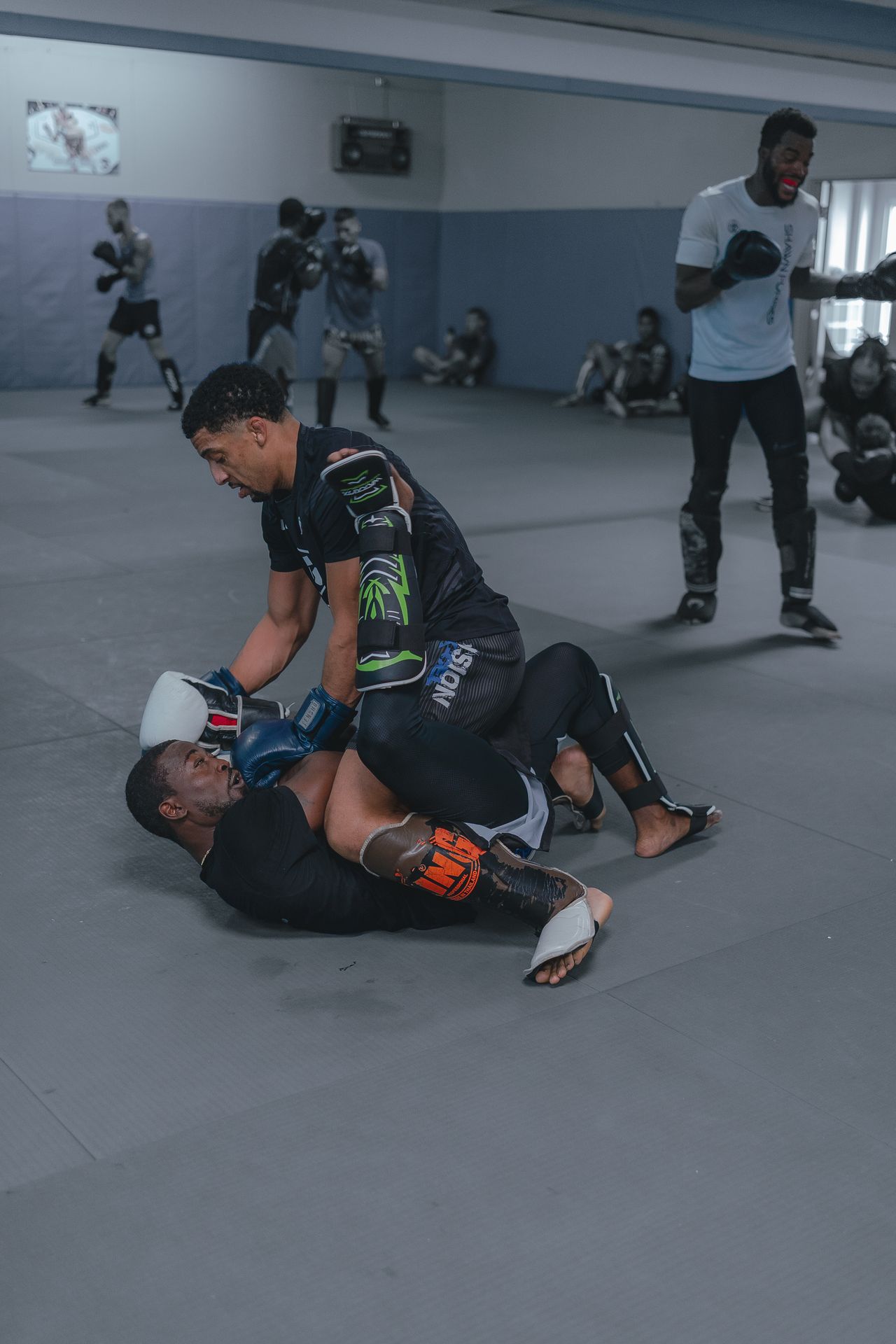
Yoel Romero as combat-sports science fiction works because his career often felt like something outside the normal athletic timeline. He was an Olympic medalist before he became an MMA contender, a world-class wrestler who sometimes fought like a patient counterstriker, and a middleweight whose explosions could change a fight in seconds. Romero’s story matters because he showed how strange elite fighting can look when world-level wrestling, unusual pacing, physical power, and late-career durability all meet in one athlete. He did not follow a clean prospect-to-champion arc. He became memorable because opponents, fans, and analysts often struggled to explain what they were watching until the fight had already changed.
The Olympic Wrestler Who Entered MMA With a Different Foundation
Before Yoel Romero became one of MMA’s most unusual contenders, he was already an elite freestyle wrestler from Cuba. That background matters because it gave him a base most fighters could not easily replicate. Olympic-level wrestling is not simply a skill set. It is years of balance, grip fighting, body control, pressure, timing, and explosive movement trained under intense international standards.
Romero’s wrestling credentials made him dangerous before he ever threw a punch in a major MMA fight. Yet what made his MMA career so unusual was that he did not always fight like a traditional wrestling-first athlete. Many elite wrestlers in MMA build their game around constant takedown threats, top control, and pressure against the fence. Romero could do those things, but he often chose a different rhythm.
He would wait. He would feint. He would give opponents long stretches where the fight seemed manageable. Then, without much warning, he could cover distance with a flying knee, a left hand, a sudden level change, or a violent burst that changed the entire emotional temperature of the bout. That contrast between stillness and eruption became central to his identity.
Romero’s age also made the story more unusual. He reached major MMA prominence later than most athletes in the sport’s lighter divisions. Middleweight is not a place where fighters usually get to rely on myth alone. The division has historically demanded speed, durability, power, cardio, wrestling defense, and technical striking. Romero remained dangerous because his physical gifts did not behave like ordinary aging curves.
Yoel Romero as Combat-Sports Science Fiction in the UFC
Yoel Romero as combat-sports science fiction became clearest during his UFC run. He was not just winning fights. He was creating moments that felt disconnected from normal fight logic.
Against Derek Brunson, Romero was behind in a difficult fight before turning the momentum violently. Against Tim Kennedy, the fight became controversial and chaotic, but Romero still finished with a burst that reinforced his reputation for late danger. Against Lyoto Machida, he showed how quickly a cautious fight could become damaging once he found the moment to attack. Against Chris Weidman, his flying knee became one of the clearest images of his career: a sudden athletic strike from a fighter whose wrestling background made the weapon even more difficult to predict.
That was the central problem Romero created. Opponents knew he could wrestle. They knew he was powerful. They knew he could explode. But knowing those things was not the same as surviving them. His pacing made him hard to read. He could appear inactive without being absent. He could lose minutes and still remain one exchange away from taking control.
His two fights with Robert Whittaker showed the full tension of his career. Whittaker’s discipline, movement, and toughness helped him survive and win narrow, punishing fights. Romero, even in defeat, created moments of danger that made the result feel physically expensive. That was often the Romero effect. Fighters could beat him, but they rarely made him seem solved.
The same pattern followed him into high-profile fights with Luke Rockhold, Paulo Costa, and Israel Adesanya. Each matchup carried a different version of the same question: how do you manage a fighter who may not fight at your rhythm, may not spend energy predictably, and may still be able to end the fight with one sudden sequence?
Romero’s career also carried complications. Weight misses affected major opportunities. Some performances frustrated viewers who expected constant offense. He was not a conventional action fighter in every appearance, and that is part of why he remains so interesting. His style was not built around pleasing rhythm. It was built around threat.
Why Romero’s Legacy Is Bigger Than a Title
Yoel Romero never became an undisputed UFC champion, but his legacy does not depend only on a belt. He became one of the clearest examples of how combat sports can produce athletes who resist simple categories. He was a wrestler who did not always wrestle. He was an aging fighter who remained explosively dangerous. He was a contender whose losses often added to the mystery rather than removing it.
That makes him different from fighters whose careers are easy to summarize through titles and defenses. Romero’s importance is partly aesthetic, partly tactical, and partly physical. He expanded the imagination of what a middleweight contender could look like. His fights forced opponents to respect threats that did not always appear on a steady schedule. His best moments showed that one sudden athletic act could undo several careful minutes of strategy.
Romero also belongs to a broader combat-sports lineage: Olympic wrestlers who crossed into MMA and changed what the sport demanded. But he was not a standard representative of that lineage. Daniel Cormier, Henry Cejudo, and other wrestling-based champions often showed how wrestling could structure entire MMA games. Romero showed something stranger. He showed how wrestling could exist beneath a more unpredictable surface, giving a fighter balance, explosiveness, and defensive confidence even when the fight looked like a striking contest.
That is why the “science fiction” label fits without reducing him to novelty. Romero was not memorable because he seemed unreal in a cartoon sense. He was memorable because he made elite fighting look unfamiliar. His body mechanics, timing, patience, and sudden violence gave his career a quality that analysts could describe, but never fully domesticate.
Yoel Romero remains one of MMA’s most distinctive figures because he turned contradiction into identity. He was decorated and unpredictable, patient and explosive, technical and physical, aging and dangerous. His career reminds combat sports fans that greatness is not always clean, linear, or easy to classify. Sometimes the lasting story is the fighter who made the sport look stranger than it was before.