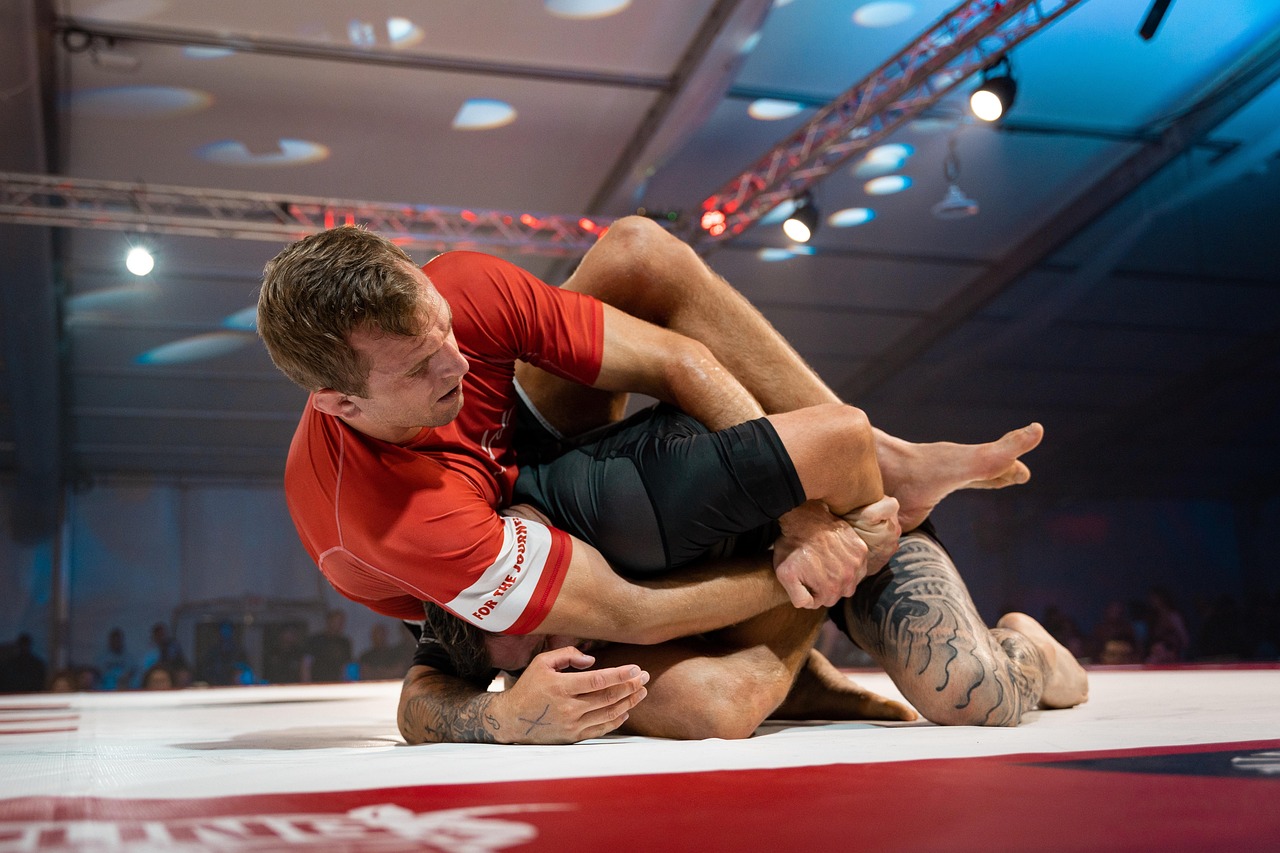
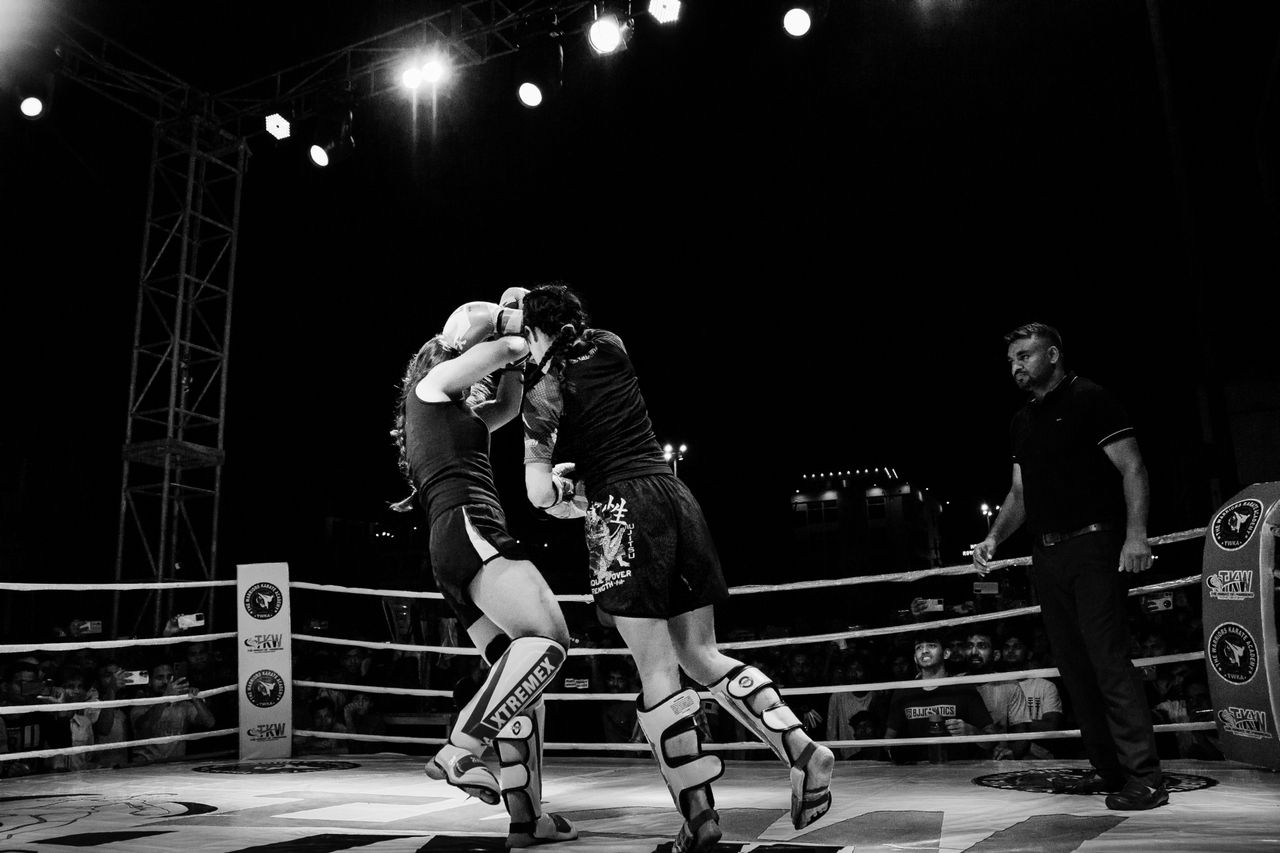
Latvia is not one of Europe’s largest MMA markets, but it has a clearer fight identity than its size might suggest. MMA in Latvia sits at the intersection of Baltic combat sports, Soviet-influenced grappling traditions, modern kickboxing, karate, boxing, and the practical reality that many of the country’s best fighters need to compete abroad to reach the next level. Riga is the center of the scene, but Latvia’s MMA story is not only about one capital city. It is also about how a small country produces durable fighters, sends athletes into larger European promotions, and uses regional competition to keep the sport alive between bigger international opportunities.
The Latvian scene is best understood as a compact, crossover-driven MMA market. It is not a mass participation MMA country on the scale of Poland, Russia, Brazil, or the United States. It is also not a blank map. Latvia has produced fighters with serious professional records, recognizable international experience, and strong links to kickboxing, karate, judo, wrestling, boxing, and pankration-style competition. Its modern MMA identity is shaped by fighters who often carry Latvia’s flag while training or competing in places such as Canada, England, Poland, the United Arab Emirates, and other European fight markets.
That gives Latvia a specific kind of MMA profile. The country is not defined by a single mega-gym, a deep UFC roster, or a massive domestic promotion. It is defined by resilient individual fighters, Riga-based amateur development, Baltic-level competition, and a combat-sports culture that has long valued toughness, discipline, and technical striking. The best Latvian MMA fighters often look like products of several combat worlds at once.
Riga as the Center of Latvia’s MMA Map
Most MMA development in Latvia naturally runs through Riga. As the country’s capital and largest city, Riga has the population base, training density, event infrastructure, and media visibility needed to support combat sports. For Latvian MMA, Riga functions as the practical center of gravity: the place where gyms cluster, fight nights are staged, amateur championships are organized, and visiting fighters from neighboring countries can be brought into the same competitive environment.
That matters because small-country MMA scenes need reliable regional hubs. A fighter in Latvia does not have the same domestic ladder that a fighter in the United States, Brazil, Russia, or Poland might have. There are fewer events, fewer full-time professionals, fewer weight-class peers, and fewer opportunities to build a long record without leaving the country. Riga helps solve part of that problem by serving as the main meeting point for clubs, promotions, amateur tournaments, and mixed combat-sports cards.
The Riga scene also reflects the broader shape of Latvian combat sports. MMA does not exist in isolation. It grows next to boxing, kickboxing, karate, wrestling, judo, Brazilian jiu-jitsu, pankration, and other hybrid competition formats. That creates an environment where many athletes enter MMA after first developing in another discipline. Some arrive with a striking background. Some come from grappling. Some learn MMA through clubs that teach a practical blend rather than treating each discipline as separate.
This is one of Latvia’s strengths. A small fight scene cannot always build deep specialization at every level, but it can produce adaptable athletes. Latvian fighters often need to become comfortable with difficult matchmaking, travel, short-notice opportunities, and opponents from larger systems. That can harden a fighter quickly. It can also make career development uneven, because the jump from domestic competition to major European promotions is significant.
The Combat-Sports Roots Behind Latvian MMA
Latvia’s MMA identity owes a great deal to older combat sports. Boxing has a strong place in the country’s modern fight reputation, especially because of Mairis Briedis, Latvia’s most internationally famous modern combat-sports figure. Briedis is not an MMA fighter, but his success matters to Latvian MMA because it raised the ceiling for what a Latvian fighter could represent on the world stage. His cruiserweight career gave Latvia a global boxing identity, brought major fight attention to Riga, and helped normalize the idea that a Latvian combat athlete could compete with elite international opponents.
Kickboxing and karate are also central to the Latvian MMA picture. Several Latvian fighters who crossed into MMA did so with striking-first identities. In a small market, that is a logical route. Striking gyms can produce athletes for kickboxing, K-1 rules, boxing, small-glove fights, and MMA. Fighters who begin with karate or kickboxing can move across formats when opportunities appear. That crossover culture is visible in Latvia’s heavyweight and lighter-weight histories alike.
Grappling also matters, though Latvia is not usually discussed as a wrestling pipeline in the same way as Dagestan, Georgia, Iowa, or parts of Russia. Judo, wrestling, sambo-influenced training, and Brazilian jiu-jitsu have all played roles in athlete development. For MMA, the most important point is not that Latvia has one dominant grappling identity. It is that Latvian fighters often have to assemble a complete game from multiple available systems. A fighter might begin in karate, add boxing, train grappling at an MMA club, and then gain experience through amateur tournaments or regional cards.
Pankration-style competition is another relevant piece. Across parts of Eastern Europe and the Baltic region, pankration and amateur MMA events have often served as bridges between traditional martial arts and professional mixed martial arts. These formats give young athletes a chance to learn positional control, submissions, ground-and-pound awareness, and rule-set adaptation before entering professional MMA. For Latvia, this matters because amateur infrastructure is essential. Without a steady amateur base, professional MMA becomes dependent on isolated individuals rather than a repeatable development system.
Misha Cirkunov and the Latvian-Born UFC Pathway
The most prominent UFC-linked name in Latvia’s MMA story is Misha Cirkunov. Born in Riga before later moving to Canada, Cirkunov became a successful light heavyweight in the UFC and one of the clearest examples of a Latvian-born athlete reaching the sport’s biggest platform. His career is also a useful reminder that Latvian MMA identity is partly diasporic. Some of the most visible Latvian-linked fighters built their careers outside Latvia while still carrying Latvian roots into international MMA.
Cirkunov’s style was heavily grappling-oriented. At his best, he was dangerous because of his physicality, submission skills, and ability to punish mistakes in transitions. His UFC run included wins that made him a serious light heavyweight name, and his path from Riga to Canada to the UFC showed one of the realistic routes available to fighters from smaller markets: leave home, find deeper training rooms, compete in a larger regional system, and then break into a global promotion.
That pathway is not unique to Latvia, but it is especially relevant for Latvian MMA. A country can have talent without having a complete professional ecosystem. Cirkunov’s career showed that Latvian-born fighters could reach elite MMA, but it also showed why migration, international coaching, and cross-border development matter. Latvia can produce the athlete, the toughness, and the foundation, but the final steps often happen in larger MMA economies.
For Latvian fans, Cirkunov gave the country a direct connection to the UFC era. Even though his professional identity became closely tied to Canada, his Riga background remains significant. In a small MMA country, one UFC-level fighter can change how the sport is perceived. It gives young athletes a reference point. It also proves that the distance from a Latvian gym to the UFC is long, but not imaginary.
Konstantin Gluhov and the Heavyweight Crossover Tradition
Konstantin Gluhov, also known by the nickname “Lāčplēsis,” represents a different part of Latvia’s MMA identity. His career sits closer to the heavyweight striking crossover world: kickboxing, K-1-style competition, and professional MMA across various promotions. For Latvia, Gluhov is important because he reflects the older European model of combat-sports athletes moving between rule sets before MMA became as specialized as it is today.
Heavyweight MMA has often been more forgiving to crossover athletes than lighter weight classes. A powerful kickboxer or karate-based striker with enough takedown defense, physical strength, and experience can build a long career even without emerging from a pure MMA academy system. Gluhov fit that tradition. His record, longevity, and willingness to fight across countries made him one of Latvia’s most visible professional MMA names.
His career also connects Latvia to the broader Eastern European fight circuit. Latvian fighters rarely develop in a sealed domestic market. They compete against Russians, Poles, Lithuanians, Estonians, Ukrainians, and other European opponents. They enter promotions where the level of experience can vary widely, but where toughness and adaptability are non-negotiable. For a heavyweight, that often means facing opponents with sambo backgrounds, boxing power, wrestling strength, or kickboxing experience.
Gluhov’s importance is not just statistical. He helped establish the idea of a Latvian fighter as a credible presence in international heavyweight combat sports. That matters in a country where MMA attention is split among several disciplines. His career sits alongside boxing and kickboxing as part of Latvia’s broader fight reputation.
Madars Fleminas and the Modern European Test
Madars Fleminas is one of the most relevant names for understanding Latvia’s modern MMA level. Fighting under the nickname “Latvian Express,” Fleminas built his career largely outside Latvia, including major experience in Cage Warriors and KSW. That matters because those promotions are serious proving grounds in European MMA. Cage Warriors has long been a launchpad for UFC-level talent, while KSW is one of Europe’s most important MMA promotions, especially for fighters who want big-stage experience without immediately entering the UFC.
Fleminas’ career shows the modern Latvian route more clearly than almost anyone else. He is not simply a domestic fighter with a padded local record. He has fought in difficult European environments, against experienced opposition, in promotions where the matchmaking can expose weaknesses quickly. That kind of career gives Latvia credibility because it places a Latvian fighter in the real European middle tier and upper regional tier, where fighters are tested by travel, hostile crowds, stylistic variety, and professional production pressure.
His KSW title challenge against Adrian Bartosiński was especially meaningful. Even in defeat, fighting for a KSW championship places a Latvian representative in one of Europe’s most visible MMA settings. For a small country, that kind of opportunity carries weight. It shows that Latvia can produce fighters who are not only appearing on regional cards, but challenging established names in major European promotions.
Fleminas also reflects the practical nature of Latvian MMA development. He has fought out of England and competed across European promotions, showing that the Latvian fight identity often becomes international by necessity. The domestic base matters, but the career is built across borders. That is one of the defining features of MMA in Latvia.
Edgars Skrīvers and the Karate-to-MMA Connection
Edgars Skrīvers adds another layer to Latvia’s MMA profile. Known as “The Bearslayer,” Skrīvers is strongly associated with karate and has competed at a high level in Karate Combat while also maintaining an MMA career. His background highlights one of Latvia’s most useful combat-sports pathways: striking specialists who adapt to broader rule sets.
Karate-based MMA is not always easy to develop. Traditional karate movement, distance management, blitz entries, and timing can be valuable, but MMA requires answers for wrestling, clinch fighting, cage pressure, low kicks, and ground exchanges. Skrīvers’ career is interesting because it sits between these worlds. He is not just an MMA fighter who once trained karate. He is a modern combat-sports athlete whose public identity has been shaped by karate competition and mixed-rules adaptability.
For Latvia, that matters because it broadens the country’s fight identity beyond the usual boxing and kickboxing conversation. Karate, especially when adapted for modern professional formats, gives Latvian MMA a different technical flavor. Fighters with karate backgrounds may bring unusual rhythm, stance switching, long-range entries, and counter timing. In a smaller scene, that kind of stylistic diversity can be valuable.
Skrīvers also represents the internationalization of Latvian combat sports. Like Cirkunov and Fleminas, his career cannot be understood only through domestic competition. He has fought from international bases and appeared in global-facing promotions. That is a recurring pattern: Latvian fighters often carry the country’s identity abroad rather than building their entire careers inside Latvia.
Amateur MMA, Pankration, and the Need for a Deeper Pipeline
Latvia’s long-term MMA growth depends less on one famous fighter and more on whether the country can sustain a deeper amateur pipeline. Professional names are important, but small MMA countries rise when they create regular competition for younger athletes. Latvia has signs of that structure through amateur MMA championships, pankration events, and club-based participation involving athletes from Latvia and neighboring Baltic countries.
This regional approach is essential. Latvia’s population limits the number of available opponents in each age group and weight class. If young fighters only compete domestically, development can stall. Bringing in Lithuanian, Estonian, and other regional opponents gives Latvian athletes more looks, more styles, and more realistic preparation. It also creates a Baltic combat-sports ecosystem rather than leaving each country isolated.
Amateur tournaments also help solve another problem: MMA is technically demanding. A young fighter cannot become complete by sparring in a gym alone. They need controlled competitive experience. They need to learn how to make weight, deal with nerves, fight under rules, respond to judges, manage rounds, and face opponents who are trying to impose different styles. Pankration and amateur MMA events give Latvian fighters that education before the professional level becomes too punishing.
The challenge is consistency. A single championship or occasional fight night can produce moments, but a pipeline needs rhythm. The more often Latvian fighters can compete safely and meaningfully, the more likely the country is to produce future professionals who are ready for Cage Warriors, KSW, Oktagon, Brave CF, PFL Europe, or other international platforms.
Events and Fan Culture in a Mixed Combat-Sports Market
Latvian MMA events often exist inside a broader fight-night culture. Cards may include MMA, boxing, kickboxing, small-glove striking, or hybrid rules. This is common in smaller European markets, where promoters need to appeal to a wider combat-sports audience rather than relying only on hardcore MMA fans. For Latvia, that mixed format can be both a strength and a limitation.
The strength is that it keeps fight culture active. Fans who come for boxing may see MMA. Kickboxing supporters may become familiar with grappling exchanges. Local personalities can bring attention to cards that also feature more serious competitive bouts. A mixed combat-sports event can create energy in a way that a small MMA-only card might struggle to do.
The limitation is that MMA can sometimes become one piece of a larger entertainment package rather than the clear center of the event. For elite development, fighters need consistent MMA-specific matchmaking, experienced referees, educated judging, and opponents who are preparing under the same rule set. Mixed cards can build attention, but the sport still needs dedicated competitive infrastructure.
Riga remains the obvious place for bigger events. It has the venues, transport links, and audience base. It also has a combat-sports public that has already supported major boxing and international fight events. If Latvia is going to grow as an MMA event market, Riga will almost certainly lead that process.
Latvia’s Place in the Baltic and European MMA Landscape
Latvia’s MMA future is tied to geography. The country is part of the Baltic region, but its fighters also look toward Poland, the United Kingdom, Scandinavia, Central Europe, and the wider post-Soviet combat-sports world. That gives Latvian MMA several possible routes.
The Polish route matters because KSW is one of Europe’s strongest promotions. A Latvian fighter who can succeed there gains immediate credibility. The British route matters because Cage Warriors and the UK regional scene have long helped European fighters move toward the UFC. The Baltic route matters because it provides realistic amateur and early professional competition. The broader Eastern European route matters because it offers tough opposition and combat-sports depth.
Latvia’s challenge is that it must compete for visibility against countries with larger fighter pools and stronger domestic promotions. Poland has KSW. Russia has a deep combat-sports base. The UK and Ireland have established MMA media and promotion structures. France, Germany, Spain, and the Nordic countries have larger markets or rapidly growing scenes. Latvia has to be more selective. It will not overwhelm European MMA with numbers. It has to produce fighters good enough to travel.
That is why Latvia’s most successful MMA identities have been individual and export-oriented. Cirkunov, Gluhov, Fleminas, and Skrīvers all show different versions of the same pattern: build a foundation, leave the small pond, and test yourself elsewhere. Latvia’s domestic scene matters most when it prepares fighters for that jump.
The Future of MMA in Latvia
The future of MMA in Latvia is not about suddenly becoming a European powerhouse. A more realistic goal is steady improvement: better amateur structure, more qualified coaching, stronger grappling depth, more regular events, and clearer pathways from Riga clubs to international promotions. Latvia does not need hundreds of professional fighters to matter. It needs enough serious athletes to keep appearing on credible European cards.
The country’s strengths are already visible. Latvian fighters are often tough, physically durable, and comfortable crossing between combat sports. The scene has striking credibility through boxing, kickboxing, and karate. It has examples of fighters who reached the UFC, KSW, Cage Warriors, PFL, and other international platforms. It has Riga as a natural hub. It has regional access to Baltic and Eastern European competition.
The weaknesses are also clear. The domestic professional scene is not deep enough to carry a fighter from debut to elite status without outside competition. The country needs more high-level wrestling, jiu-jitsu, and MMA-specific coaching depth if it wants to produce more complete modern fighters. It also needs stable event calendars so athletes can develop without long gaps or mismatched opportunities.
Latvia’s MMA identity is therefore best described as small but legitimate. It is a Baltic fight scene with real international names, a strong crossover tradition, and a development model that depends on regional competition and outward movement. The country’s best fighters have shown that Latvian athletes can survive in serious MMA environments. The next step is turning those individual cases into a more consistent pipeline.
For now, MMA in Latvia remains a compact, Riga-centered, combat-sports-driven scene. It does not need exaggeration to be interesting. Its story is in the details: the karate fighter adapting to MMA, the heavyweight striker crossing rule sets, the Latvian-born grappler reaching the UFC through Canada, the welterweight challenging for a KSW title, and the amateur athletes testing themselves against Baltic opposition. That is the real shape of Latvian MMA.