Germany’s MMA identity is not built around one single golden generation, one dominant gym, or one national fighting style. It is better understood as a disciplined European scene that has grown through layers: older combat-sports traditions, strong local gyms, immigrant and diaspora influence, regional promotions, and a steady push for broader acceptance inside a country that has historically treated combat sports with caution.
That makes MMA in Germany different from the sport in places where it exploded around a single superstar or where wrestling, jiu-jitsu, or Muay Thai already had an obvious national pipeline. Germany has boxing history, judo clubs, kickboxing schools, wrestling rooms, karate and taekwondo backgrounds, Brazilian jiu-jitsu academies, luta livre influence, and a broad martial arts culture, but mixed martial arts had to earn its space slowly. The sport did not arrive with instant mainstream approval. It developed through gyms, small shows, internet-era fight fans, and athletes willing to compete across borders before Germany itself became a major MMA event market.
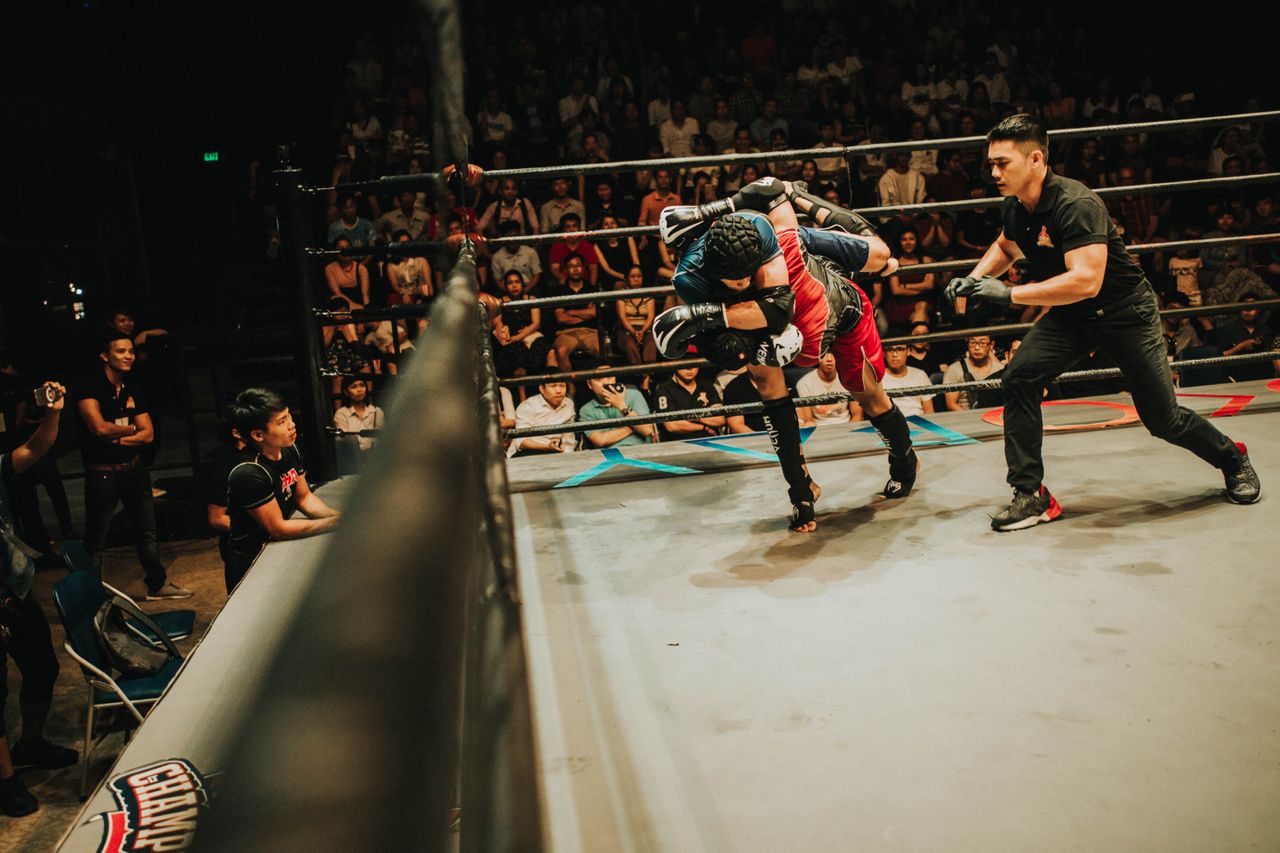
The result is a country with a quietly deep MMA ecosystem. Germany has produced UFC veterans, respected European contenders, strong regional champions, and a growing amateur infrastructure. It has also become one of the most important battlegrounds for European promotions trying to build beyond national borders. When a major MMA event fills a German arena or stadium, it shows how far the sport has moved from niche curiosity to a serious live-event product.
Germany is not yet a top-tier MMA superpower in the way Brazil, Russia, the United States, or the United Kingdom can claim to be. It is also not a minor scene. It sits in the increasingly important middle: organized, commercially attractive, technically diverse, and capable of producing fighters who can compete internationally when the right development path comes together.
Combat Sports Came First
To understand MMA in Germany, it helps to start with the country’s broader combat-sports base. German MMA did not appear in a vacuum. Boxing has long had a visible place in the country’s sports culture, particularly through heavyweight and cruiserweight eras that made fight nights familiar to German television audiences. Kickboxing and Muay Thai also built serious communities, especially in urban areas with strong martial arts clubs and immigrant sporting cultures. Judo, wrestling, karate, taekwondo, and later Brazilian jiu-jitsu gave German athletes different entry points into the mixed ruleset.
That variety matters because Germany does not have one obvious MMA feeder system. In parts of the United States, college wrestling supplies a clear athletic pathway. In Brazil, jiu-jitsu and vale tudo history gave MMA a native technical vocabulary. In Dagestan, freestyle wrestling, combat sambo, and national sport culture created an unusually direct route to the cage. Germany’s pathway has been more fragmented. A fighter might come from judo, boxing, kickboxing, BJJ, luta livre, sambo, or simply from a modern MMA gym that blends everything from the beginning.
That fragmentation has both helped and slowed the German scene. It helped because German MMA became technically varied. Fighters were not locked into one national style. Gyms could borrow from Dutch kickboxing, Brazilian jiu-jitsu, Eastern European wrestling, Japanese judo, American MMA systems, and local coaching methods. But it also slowed the creation of a dominant national identity. Germany had many martial artists, but the transition from martial arts participation to a unified MMA development pipeline took time.
The German sporting environment also shaped the pace of growth. MMA had to fight for legitimacy in a country where regulation, public perception, and media treatment mattered. Early fans and athletes often understood the sport before the wider public did. Gyms had to teach not only technique, but also the idea that MMA was structured competition rather than spectacle without rules. Over time, amateur ranking systems, national federations, formalized gyms, and professional promotions helped move the sport toward the center of the combat-sports landscape.
The First German Names That Reached the Wider MMA Audience
Germany’s first major MMA identity for international fans came through fighters who reached the UFC or built strong careers in European and global organizations. Dennis Siver remains one of the most recognizable names in that early wave. A compact, powerful striker with a spinning-back-kick highlight reel and a long UFC run, Siver gave German fans someone to follow at a time when European MMA was still establishing itself inside the UFC’s global expansion. He was not merely a token German representative. He fought elite opponents, stayed relevant across multiple divisions, and became one of the clearest bridges between German kickboxing-influenced MMA and the sport’s highest stage.
Peter Sobotta brought a different profile. Known for his grappling and Brazilian jiu-jitsu base, Sobotta represented the technical maturation of German MMA. His career showed that German fighters were not limited to striking backgrounds or toughness-based regional reputations. Sobotta’s UFC appearances gave the country another respected figure and helped normalize the idea that German MMA athletes could compete with polished international opposition.
Nick Hein also became an important German UFC figure, particularly because his story connected judo, law enforcement discipline, and MMA professionalism. Hein’s career had a distinct German feel: compact, physical, organized, and built around a strong martial arts base rather than a manufactured fight persona. He became one of the names most closely associated with the UFC’s German events and with the sport’s effort to reach a broader audience in the country.
Germany’s MMA identity, however, has never been limited to athletes with traditionally German surnames or backgrounds. Fighters such as Nasrat Haqparast, Abu Azaitar, Ottman Azaitar, Abus Magomedov, and others reflect a major reality of modern German combat sports: immigrant and diaspora communities are central to the scene. Germany’s cities are full of athletes shaped by Afghan, Moroccan, Turkish, Chechen, Kurdish, Balkan, Arab, Russian, Central Asian, and other backgrounds. In MMA terms, that creates a deep mixture of wrestling, kickboxing, boxing, grappling, and street-level athletic ambition moving through German gyms.
This is one of the most important parts of the German MMA story. The sport in Germany is not simply a national system producing one kind of fighter. It is an urban European combat-sports ecosystem where German infrastructure meets international fighting cultures. That is why the country’s MMA scene often feels broader than its list of UFC contenders alone.
Germany’s Regional Fighters Matter as Much as Its UFC Veterans
A country’s MMA strength cannot be measured only by UFC roster spots. Germany’s deeper scene is visible in fighters who built their names through Bellator, KSW, OKTAGON, GMC, and other European platforms. Daniel Weichel is one of the best examples. A long-time featherweight and lightweight competitor with a high-level European and international résumé, Weichel showed that German MMA could produce more than short-term UFC representatives. His career reflected durability, technical skill, and the kind of long professional development that comes through years of European matchmaking.
Stephan Pütz became another major figure in the German and European scene, particularly at light heavyweight. His career gave German MMA a bigger-bodied, physically imposing representative who carried domestic relevance and international respect. For many German fans, fighters like Pütz were essential because they were visible on cards that felt closer to home than distant UFC events. Regional heroes matter in MMA because they create continuity. They fight in front of local crowds, headline European shows, and help younger athletes see a ladder that begins in Germany rather than somewhere abroad.
Christian Eckerlin represents a different kind of German MMA figure: the modern local star with crossover appeal, regional drawing power, and a fan base connected to the event side of the sport. Eckerlin’s rise shows that Germany can create MMA personalities who matter beyond pure rankings. In a market where live-event energy and storytelling have become central, fighters like Eckerlin help turn MMA from a niche participant sport into a major night out for fans.
The same can be said for many athletes who have moved through German promotions without becoming global household names. Max Coga, Kerim Engizek, Hatef Moeil, Lom-Ali Eskijew, David Zawada, and others have contributed to the competitive reputation of German MMA. Some are German-born, some are German-based, some are connected through training, promotion, or residency rather than simple nationality. That distinction matters because Germany’s MMA scene is porous. Fighters move between Germany, Poland, Czechia, the Netherlands, Austria, France, the Balkans, the Caucasus, and the wider European circuit.
That cross-border reality is one of Germany’s advantages. A German fighter does not have to rely only on domestic matchmaking. The country sits in the middle of a dense European combat-sports map. A prospect can fight in Germany, Poland, the Czech Republic, Austria, the Netherlands, or the United Kingdom without leaving the broader European scene. This gives German MMA a competitive pressure that smaller or more isolated markets often lack.
Gyms, Cities, and the Shape of German Training Culture
Germany’s MMA infrastructure is spread across several urban and regional clusters rather than concentrated in one overwhelming fight capital. Berlin, Hamburg, Cologne, Düsseldorf, Frankfurt, Munich, Stuttgart, Dortmund, Leipzig, and other cities all contribute to the national picture. Each market has its own mix of MMA gyms, kickboxing schools, BJJ academies, boxing clubs, wrestling rooms, and hybrid combat-sports programs.
Berlin has obvious importance because of its size, international population, and martial arts diversity. It is a natural home for MMA because the city attracts coaches, athletes, students, expatriates, and creative sporting subcultures. Its gyms reflect the broader personality of the city: international, varied, and open to multiple combat-sports influences.
Hamburg has played a visible role through UFC events and northern German fight culture. Cologne and Düsseldorf sit inside the larger North Rhine-Westphalia combat-sports environment, one of the most important population centers in the country. Munich and Bavaria bring another layer, with established martial arts academies and access to central European competition. Frankfurt has become especially important as an event city, giving German MMA a stage large enough to change outside perceptions of the market.
The German Mixed Martial Arts Federation and its member-club structure show how broad the gym network has become. The federation lists members across Baden-Württemberg, Bavaria, Berlin, Hamburg, Hesse, Lower Saxony, North Rhine-Westphalia, Saxony, Schleswig-Holstein, and other regions, which points to a national scene rather than a single-city movement. That matters for long-term development because MMA needs more than famous gyms. It needs coaching standards, amateur opportunities, refereeing, judging, safety norms, and enough clubs for athletes to begin locally before moving upward.
German training culture often leans toward structure. That does not mean every gym is the same, but the broader environment favors organized classes, technical progression, and formal coaching. Fighters who emerge from Germany often have to become well-rounded because the country does not hand them one dominant technical advantage from birth. A German MMA athlete may need to build striking in one room, grappling in another, and cage-specific skill through sparring partners who are also learning the sport’s modern demands.
This creates a development challenge. The best German fighters often need international experience to sharpen their games. They may travel for camps, import coaching, train with foreign specialists, or take fights in tougher regional circuits. But this is also how a stronger national scene forms. Every athlete who leaves, learns, and returns brings knowledge back into the German gym system.
The Event Market Changed Germany’s MMA Reputation
For years, Germany was more respected as a place with potential than as a central MMA market. The UFC’s visits helped, especially events in Berlin and Hamburg. UFC Berlin in 2015 was historically notable because Joanna Jędrzejczyk defended the women’s strawweight title against Jessica Penne there, making the card one of the key European moments in the early rise of women’s MMA inside the UFC. Hamburg later hosted UFC events that brought German fans closer to the Octagon and gave local fighters a major home platform.
But the more recent story of MMA in Germany is not only about the UFC. It is about European promotions recognizing that Germany can be a major commercial territory. OKTAGON’s expansion into Germany has been particularly important. The promotion has presented itself as a leading European MMA organization and has made Germany a major part of its market presence. Its Frankfurt stadium event became a landmark moment for German and European MMA, showing that the country could support MMA on a scale far beyond the old assumption that it was only a niche gym sport.
That stadium-level success matters even for people who care more about fighter development than attendance numbers. Big events create visibility. Visibility brings sponsors, media attention, casual fans, better production, and more incentive for athletes to stay active. A young fighter in Germany watching a massive MMA show in Frankfurt does not have to imagine the sport as something that only happens in Las Vegas, Abu Dhabi, London, or São Paulo. They can see a major version of the sport at home.
German MMA Championship, often known as GMC, has also played an important role in the domestic ecosystem. Promotions like GMC give local and regional fighters a platform before they reach larger European or global organizations. That step is crucial. Without domestic promotions, fighters are forced either to travel too early or to stagnate. With domestic shows, a prospect can build experience, develop a fan base, and test whether he or she is ready for stronger competition.
We Love MMA, National Fighting Championship, and other regional platforms have also contributed to the country’s event culture. Not every promotion survives at the same level, and the German market can be competitive, especially when a major European organization enters with larger production and deeper resources. But competition between promotions is itself a sign that the market has become meaningful. Germany is no longer an afterthought on the European MMA map. It is a prize.
Why Germany Produces a Certain Kind of MMA Fighter
The typical German MMA fighter is difficult to reduce to one style, but there are patterns. Many are physically strong, technically serious, and comfortable in disciplined training environments. Some come from striking sports, particularly kickboxing, boxing, or Muay Thai. Others come from judo, wrestling, sambo, BJJ, or luta livre. Many are shaped by immigrant family backgrounds that bring different combat-sports traditions into German gyms.
What Germany has not yet produced consistently is the kind of endless high-level MMA pipeline seen in the world’s top fight nations. That gap is not about lack of toughness or interest. It is about systems. Elite MMA requires a chain: youth participation, amateur competition, experienced coaching, strong sparring rooms, regional matchmaking, professional management, medical and regulatory clarity, media exposure, and international opportunity. Germany has many pieces of that chain, but they are still becoming more connected.
This is why Germany’s best MMA athletes often feel self-made or gym-made rather than system-made. They do not always emerge from a nationally obvious route. A fighter may build a base in one martial art, discover MMA later, train in a German city, compete across Europe, and then either reach a major promotion or become a respected regional name. That pathway can work, but it is less efficient than a mature national pipeline.
The upside is that Germany has room to grow without needing to invent the sport from scratch. The gyms exist. The fans exist. The promotions exist. The European circuit exists. The missing piece is often continuity: more amateur depth, more high-level coaching exchange, more regular professional opportunities, and more examples of German-based fighters breaking through internationally.
The Role of Diaspora and Urban Fight Culture
Any serious account of MMA in Germany has to recognize the role of diaspora communities. German MMA is not only the story of athletes with deep local roots in one town or state. It is also the story of families and communities connected to Afghanistan, Morocco, Turkey, Lebanon, Chechnya, Dagestan, Iran, the Balkans, Eastern Europe, and other fight-rich regions.
This gives German MMA a layered identity. In many gyms, a fighter may be German by birth or citizenship, culturally connected to another country, trained by coaches from a third background, and competing on a European promotion based in yet another market. MMA absorbs that complexity better than many sports because fighting styles travel well. Wrestling, jiu-jitsu, sambo, kickboxing, boxing, and Muay Thai do not need a single national language to function inside a gym.
The Azaitar brothers are examples of how German-based MMA can intersect with Moroccan identity and wider international visibility. Nasrat Haqparast’s career reflects the Afghan-German layer of the scene. Abus Magomedov reflects the broader Caucasus and German-based combat-sports connection. These fighters complicate simple national labels, but they also make the German scene more interesting. The country’s MMA future may depend heavily on precisely this mix of local infrastructure and international identity.
Urban fight culture also gives Germany’s MMA scene energy. In cities such as Berlin, Frankfurt, Hamburg, Cologne, and Düsseldorf, MMA is connected not only to traditional martial arts students but also to fitness culture, immigrant neighborhoods, security work, nightlife, social media, and regional celebrity. That can produce both serious athletes and marketable personalities. For promotions, Germany offers more than technically competent fighters. It offers stories, fan bases, rivalries, and city identities.
Germany’s Place in European MMA
Germany’s MMA future is tied to Europe’s larger MMA future. The UFC remains the sport’s global summit, but European MMA is no longer dependent on the UFC alone for relevance. KSW in Poland, OKTAGON in the Czech and Slovak markets with major German expansion, Cage Warriors in the United Kingdom and Ireland, Ares in France, Brave CF’s European activity, PFL Europe, and other promotions have created more ways for fighters to become known before reaching the global elite.
This helps Germany. A German prospect does not need to wait for a rare UFC event or a direct UFC signing. They can build through regional shows, fight in front of European crowds, win domestic belts, appear on major continental cards, and develop a fan base. The European market is becoming more connected, and Germany’s population, economy, geography, and arena infrastructure make it one of the most attractive countries in that network.
Germany’s challenge is competitive quality. Large events can make a scene look stronger than it is if the athlete pipeline does not keep pace. To become a true European MMA power, Germany needs more fighters who move from amateur success to regional titles to major international relevance. It needs more gyms capable of producing complete fighters rather than athletes who must patch together development late. It needs more coaches with experience preparing athletes for five-round fights, elite grapplers, dangerous wrestlers, and world-class strikers.
Still, the country is closer than it used to be. The gap between German MMA and Europe’s strongest markets has narrowed. Germany now has the infrastructure and fan interest to support a deeper scene. The next step is turning that support into repeated competitive success.
The Outlook for MMA in Germany
MMA in Germany is in one of its most important periods. The sport has moved beyond the early legitimacy battle and into a more serious growth phase. It has recognizable fighters, established gyms, national amateur organization, domestic promotions, major European promotional investment, and proof that large German crowds will show up for the right event.
The next era will decide whether Germany becomes a true fighter-producing nation or remains primarily a strong event and regional market. The answer will depend on athlete development. If German gyms keep improving their wrestling, cage grappling, submission defense, striking integration, and fight-specific conditioning, the country will produce more internationally relevant fighters. If amateur competition becomes deeper and more consistent, prospects will enter the professional ranks with better experience. If promotions keep giving German athletes meaningful fights instead of only showcase opportunities, the standard will rise.
Germany’s MMA identity will probably remain plural rather than singular. It will not become a pure wrestling country, a pure jiu-jitsu country, or a pure striking country. Its strength is more likely to come from being a European crossroads: German organization, immigrant combat culture, regional promotion, city-based fan loyalty, and athletes willing to compete across borders.
That identity may not create a sudden wave of champions overnight. But it can build something durable. Germany already has the crowd base and the gym base. It has history now, from UFC veterans to European regional stars to stadium-scale events. It has enough fighters for young athletes to see a possible path.
MMA in Germany is no longer just a developing scene trying to prove that the sport belongs. It is a serious European market trying to define how far it can go. The answer will come from the next generation: the amateurs training today in Berlin, Hamburg, Frankfurt, Cologne, Düsseldorf, Munich, Stuttgart, Leipzig, and smaller fight towns across the country. If they turn Germany’s scattered strengths into a connected pipeline, German MMA can move from respected European market to genuine international force.