Japan is not just another country with an MMA scene. It is one of the places where modern mixed martial arts became organized, televised, mythologized, and taken seriously as a full combat sport. Long before MMA settled into the familiar cage, weight-class, unified-rules format associated with the UFC, Japan had already created its own fighting ecosystem through Shooto, Pancrase, Rings, PRIDE, DEEP, K-1 crossovers, and a deep national fascination with martial arts competition.
That makes MMA in Japan different from MMA in most countries. The Japanese story is not simply about producing fighters for the UFC. It is about building entire fight formats, presentation styles, gyms, rulesets, and fan cultures that shaped how the sport looked around the world. Japan gave MMA a theatrical scale, but also a technical seriousness. It connected pro wrestling, catch wrestling, judo, karate, kickboxing, Brazilian jiu-jitsu, shoot wrestling, and vale tudo into a fight culture that often blurred the line between spectacle and elite competition.
The result is a country with one of the richest MMA legacies in the world. Japan has produced all-time greats, cult heroes, major champions, legendary events, and some of the most influential promotions in combat sports history. Its modern scene is not as globally dominant as it was during the peak of PRIDE, but Japan remains one of MMA’s most important countries because its local fight culture has never been a copy of anyone else’s.
From Judo, Karate, and Shoot Wrestling to Early MMA
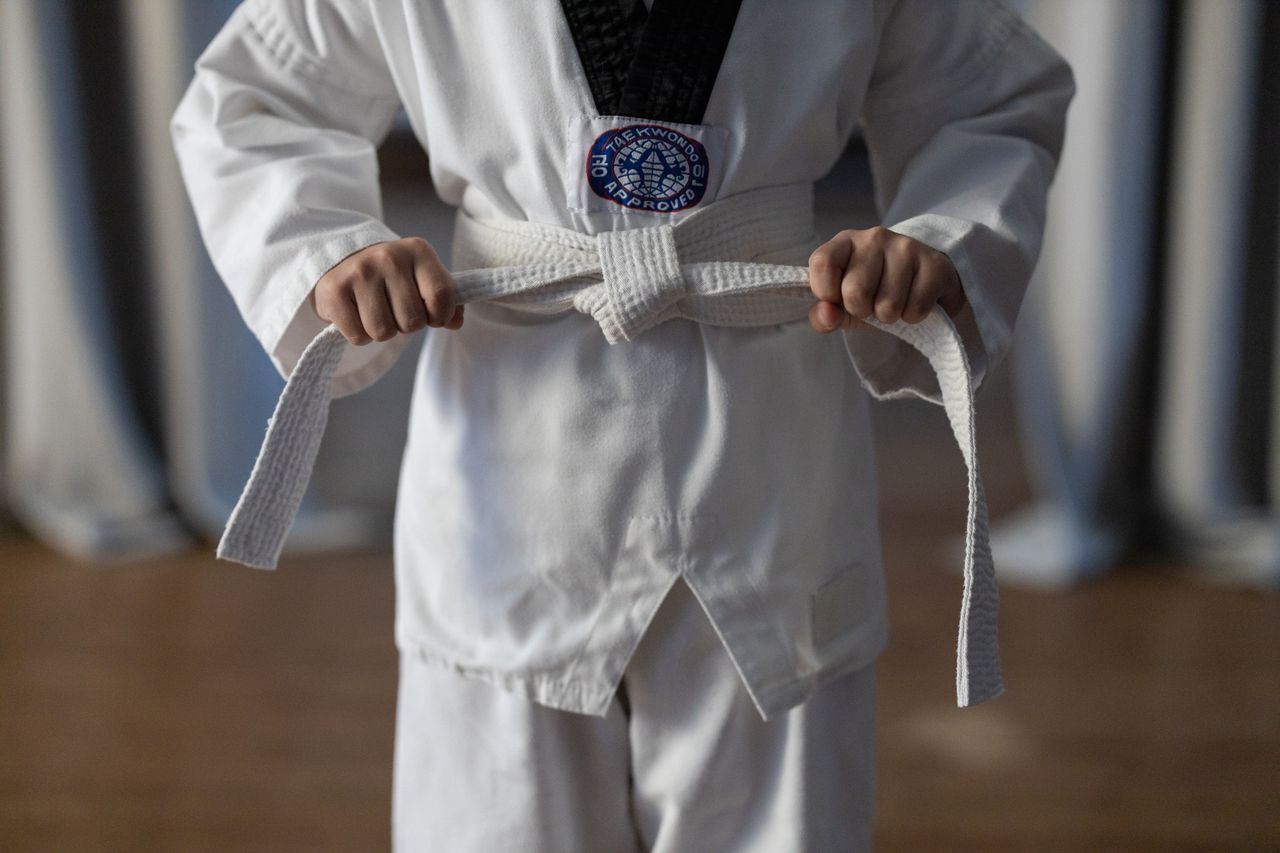
Japan’s MMA identity starts with older martial traditions. Judo, karate, sumo, kendo, and jujutsu have long shaped the country’s broader combat-sports imagination. Judo in particular gave Japan a major grappling foundation, producing athletes who understood balance, throws, pins, submissions, and competitive discipline. Karate helped establish a striking culture based around distance, timing, entries, and counterattacks. Pro wrestling, especially the Japanese shoot-style tradition, added something else: the idea that a public fight could combine technique, danger, performance, and national storytelling.
That shoot-style lineage matters. In Japan, the road to MMA did not run only through boxing gyms or Olympic wrestling rooms. It also ran through pro wrestling dojos where athletes trained in submissions, takedowns, conditioning, and realistic grappling exchanges. Organizations and figures connected to shoot wrestling helped create a Japanese appetite for contests that felt more open-ended than traditional striking or grappling matches.
Shooto became one of the earliest and most important expressions of that idea. Founded by Satoru Sayama, the original Tiger Mask, Shooto developed in the 1980s as a system and later as a promotion that combined striking, takedowns, and submissions in a way that closely resembled modern MMA. It was not merely a local curiosity. Shooto became a genuine proving ground, creating rules, rankings, champions, and technical expectations before MMA had settled into a global mainstream format.
Pancrase followed in the 1990s and became another pillar of Japanese MMA history. With its hybrid of submission fighting, palm strikes, rope escapes, and shoot-style presentation, Pancrase helped bridge the gap between professional wrestling culture and real mixed combat. It launched and hosted major names, including fighters who would later become important in the UFC and global MMA. Even when its rules looked different from modern unified MMA, Pancrase helped normalize the idea that athletes could compete across disciplines in a professional setting.
This early Japanese development gave the country a unique advantage. Japan did not need to import MMA as a finished product. It helped invent the environment in which MMA became viable.
PRIDE and the Golden Age of Japanese MMA
The defining chapter of Japanese MMA remains PRIDE Fighting Championships. Launched in 1997, PRIDE turned Japan into the center of the MMA world for much of the late 1990s and early 2000s. Its events were massive, dramatic, and technically loaded. The Tokyo Dome, Saitama Super Arena, and other major venues became stages for fights that still shape MMA memory.
PRIDE was not simply big because it had famous fighters. It was big because it made MMA feel grand. The entrances, the lighting, the tournament formats, the international rosters, and the scale of the crowds gave the sport a sense of occasion that few promotions have matched. PRIDE presented MMA as part combat sport, part martial arts festival, part national spectacle.
The fighter roster was extraordinary. Japanese fans watched Kazushi Sakuraba, Takanori Gomi, Hidehiko Yoshida, Kazuyuki Fujita, Hayato Sakurai, and other domestic stars compete alongside global legends such as Fedor Emelianenko, Antônio Rodrigo Nogueira, Mirko Cro Cop, Wanderlei Silva, Mark Coleman, Dan Henderson, and many others. This was not a closed national circuit. It was an international proving ground hosted on Japanese soil.
Sakuraba became the symbolic figure of this period. His victories over members of the Gracie family made him a national icon and one of the most important fighters in MMA history. He was not built like a modern weight-cutting specialist, and he often fought larger opponents, but his creativity, courage, and submission grappling intelligence made him the perfect Japanese MMA hero. He represented the country’s shoot-style inheritance better than almost anyone.
Takanori Gomi gave Japan another kind of star. At his peak, Gomi was one of the most dangerous lightweights in the world. His aggressive boxing, finishing instinct, and presence in PRIDE’s lighter divisions made him a defining figure for Japanese MMA’s competitive credibility. He was not just popular at home. He was globally respected.
PRIDE’s collapse changed the trajectory of MMA in Japan. When the promotion disappeared, the sport lost its biggest local engine. The UFC eventually became the dominant global brand, and Japan’s position shifted. Instead of being the center of the MMA world, it became a historic power trying to rebuild around new promotions, smaller circuits, and a changed international marketplace.
The Fighters Who Made Japan Matter Globally
Japan’s fighter legacy is deeper than one promotion. The country has produced athletes who influenced nearly every stage of MMA’s development.
Kazushi Sakuraba remains the country’s most mythic figure. His career was built on technical daring and extreme matchmaking. He was a submission artist, a showman, and a competitor whose best wins carried enormous symbolic value. In the history of Japanese MMA, no fighter is more closely associated with the sport’s heroic age.
Takanori Gomi stands as one of Japan’s greatest pure MMA competitors. His run in PRIDE made him one of the most feared lightweights of his era, and his style helped shape the reputation of Japanese lighter-weight fighters as fast, aggressive, and technically sharp.
Kid Yamamoto brought a different energy. With his wrestling base, explosive striking, and crossover celebrity, Norifumi “Kid” Yamamoto became one of Japan’s most charismatic combat-sports figures. He helped connect MMA to a younger audience and influenced the culture around lighter-weight fighting in Japan.
Shinya Aoki represents the technical grappling side of Japanese MMA. His submission game, flexibility, guard work, and willingness to attack unusual positions made him one of the most recognizable specialists in the sport. Aoki’s career across Japanese promotions, DREAM, ONE Championship, and international competition gave him a long global footprint.
Yushin Okami became one of Japan’s most successful UFC fighters. His strength, top control, clinch work, and disciplined style carried him to elite middleweight contention. Okami’s career showed a different route for Japanese MMA: less theatrical than PRIDE, more adapted to the UFC’s cage-and-wrestling environment.
Kyoji Horiguchi is the modern bridge between Japan’s domestic fight culture and the international elite. With a karate-influenced striking base, speed, wrestling development, and success in both RIZIN and Bellator, Horiguchi became one of Japan’s most accomplished modern fighters. His career matters because he proved that a Japanese fighter could remain connected to the domestic scene while also competing at the highest international level.
Tatsuro Taira represents the next-generation UFC path. A skilled flyweight with composure, grappling, and finishing ability, Taira has become one of the most important Japanese names in the current global scene. His rise is especially important because Japan has historically had tremendous lighter-weight talent, and the UFC’s flyweight and bantamweight divisions give those athletes a clearer international platform than previous eras did.
Kai Asakura, Mikuru Asakura, Hiromasa Ougikubo, Yuki Motoya, Rena Kubota, Seika Izawa, Ayaka Hamasaki, and others have also helped define the RIZIN-era scene. Japan’s modern MMA identity is not built around one star alone. It is built around a combination of veterans, social-media-era personalities, kickboxing crossovers, women’s MMA standouts, and domestic champions who keep the local circuit relevant.
Why Japanese MMA Has Always Looked Different
Japanese MMA has never been only about rankings. It has always cared about style, symbolism, and matchmaking drama. That is one of the reasons it became so influential, and one of the reasons it can look unusual to fans raised entirely on modern UFC logic.
In Japan, a fighter’s martial identity often matters as much as his or her record. A judoka, karateka, sumo wrestler, kickboxer, catch wrestler, or jiu-jitsu specialist may be promoted as a representative of a discipline, not merely as an athlete with a win-loss record. That approach comes from older martial arts traditions and from the country’s pro wrestling culture, where style-versus-style contests carried enormous narrative power.
This has created some strange matchmaking over the years, but it has also produced unforgettable fights. Japan has often been willing to stage bouts that other markets would avoid: openweight fights, grand prix tournaments, kickboxers crossing into MMA, grapplers fighting strikers under unusual conditions, and veterans matched against rising prospects. At its best, this gave Japanese MMA a sense of discovery. At its worst, it created competitive imbalance. Both realities are part of the country’s MMA identity.
The ring also shaped Japanese MMA. While the UFC made the cage the global standard, many Japanese promotions built their identity around ring-based competition. Fighting in a ring changes movement, takedown defense, ground positioning, restarts, and corner dynamics. Japanese fighters who moved from ring-based promotions to cage-based international MMA often had to adjust not just to different opponents, but to a different physical environment.
Rules mattered too. PRIDE allowed soccer kicks, stomps, and knees to the head of grounded opponents, while prohibiting elbows to the head. Those differences changed strategy. Fighters developed habits around front headlocks, turtle positions, guard passing, and finishing sequences that did not always translate cleanly to the unified rules used in North America. Japanese MMA was not simply “old UFC in Japan.” It was its own technical universe.
Gyms, Dojos, and the Training Culture Behind the Scene
Japan’s MMA training culture is layered. It includes traditional martial arts dojos, university judo programs, karate schools, kickboxing gyms, Brazilian jiu-jitsu academies, pro wrestling-influenced camps, and modern MMA teams. Unlike places where MMA developed mainly through large warehouse-style cage gyms, Japan’s scene often grew through smaller, discipline-specific environments that gradually connected to MMA.
Paraestra has been one of the important names in Japanese grappling and MMA development. Founded by Yuki Nakai, a respected figure in Japanese combat sports, the Paraestra network helped spread Brazilian jiu-jitsu and MMA training in Japan. Its influence reflects one of the country’s major strengths: technical grappling education built through dedicated academies rather than only through fight camps.
Krazy Bee, associated with Kid Yamamoto, became another important part of the Japanese MMA map. It represented the explosive, wrestling-and-striking style connected to Kid’s own fighting identity and helped develop athletes in the lighter weight classes.
AACC, Wajutsu Keishukai, Tribe Tokyo MMA, Carpe Diem, Triforce, and other gyms and teams have contributed to the broader training ecosystem. Some are more closely associated with MMA, others with jiu-jitsu or striking, but together they show how Japanese fighters often develop through a combination of specialized rooms rather than one standardized national model.
The country’s judo base remains important, even if judo-to-MMA transitions are not always simple. High-level judo gives athletes balance, clinch skill, throws, grip fighting, and ground awareness. But MMA requires adaptation: no gi grips, cage wrestling, striking defense, and positional control after throws. Japanese fighters who successfully make that transition tend to be those who expand beyond traditional judo habits.
Karate also continues to matter. Horiguchi is the clearest modern example of how karate-style movement can be adapted to MMA. His distance management, blitzing entries, stance switches, and timing reflect a Japanese striking identity that differs from Dutch kickboxing, Muay Thai, or American boxing-wrestling hybrids.
The biggest developmental challenge for Japan is not technical knowledge. Japan has plenty of technical knowledge. The challenge is building enough high-level, MMA-specific depth across wrestling, cage work, strength training, international sparring, and modern fight analytics to consistently produce UFC title-level athletes. The ingredients exist. The question is whether the system can connect them at scale.
RIZIN and the Modern Japanese MMA Stage
RIZIN is the central promotion in modern Japanese MMA. Created after the PRIDE era by figures connected to Japan’s earlier fight boom, RIZIN carries much of the old Japanese spirit into the current market. It uses major arenas, New Year’s Eve events, grand-prix formats, kickboxing crossovers, international guests, and a presentation style that still feels distinct from the UFC.
RIZIN’s importance is bigger than its roster alone. It gives Japanese MMA a domestic platform with visibility, production value, and cultural continuity. Without RIZIN, Japan would still have Shooto, Pancrase, DEEP, and other respected promotions, but it would lack a true national stage capable of creating mainstream fight moments.
The promotion has also become a home for fighters who sit between regional and global status. Some use RIZIN as a proving ground before moving to the UFC. Others return to Japan after international runs. Some become domestic stars whose value is highest in the Japanese market. This creates a different career logic than the UFC-only pathway. In Japan, a fighter can matter deeply even without becoming a UFC champion.
DEEP, Shooto, Pancrase, and DEEP Jewels remain important because they supply structure beneath the biggest stage. They give prospects rounds, rankings, belts, and local credibility. They also sustain the smaller venues and fight communities that keep Japanese MMA from becoming dependent on one promotion.
Women’s MMA has been particularly important in Japan’s modern scene. Fighters such as Megumi Fujii, Ayaka Hamasaki, Rena Kubota, Kanna Asakura, and Seika Izawa have helped give Japanese women’s MMA a serious identity. Japan has often been more willing than many markets to feature women prominently in major domestic events, especially through RIZIN and DEEP Jewels.
The UFC Question and Japan’s Global Position
Japan’s relationship with the UFC is complicated. The country helped build global MMA, but it has not produced UFC champions at the rate one might expect from such a historic combat-sports nation. That gap says less about talent and more about systems.
The UFC rewards certain developmental environments: cage wrestling, weight-cutting sophistication, international sparring, strong regional feeder circuits, and frequent exposure to opponents who fight under unified rules. Japan’s MMA infrastructure developed differently. Many athletes came through rings, tournaments, discipline-specific gyms, and domestic promotions with rules and incentives that did not always match the UFC’s demands.
That has made adaptation a recurring theme. Japanese fighters entering the UFC often face opponents with deeper cage-wrestling experience, more pressure-heavy boxing-wrestling combinations, and a more familiar relationship with judging under North American rules. Even elite Japanese talents have sometimes needed time to adjust.
Still, the current generation has a clearer path than previous generations. Taira, Horiguchi, Asakura, and other Japanese names have kept attention on Japan’s place in the lighter divisions. Flyweight and bantamweight are especially important because Japan’s best MMA athletes have often been smaller, faster, and technically refined. In modern MMA, those divisions are no longer side attractions. They are elite global weight classes.
Japan’s long-term UFC future may depend on whether its domestic system can produce fighters who are not only skilled martial artists but fully adapted modern mixed martial artists: cage-ready, physically prepared, comfortable with international travel, and tested against diverse styles before they reach the highest level.
Fan Culture, Spectacle, and the New Generation
Japanese MMA fans have a reputation for technical appreciation and respect. During the PRIDE era, crowds were often noted for their quiet attention during grappling exchanges and their explosive reactions to major moments. That atmosphere differed from many Western fight crowds, where noise, chanting, and nationalistic energy often dominate.
The modern fan culture has changed with streaming, social media, YouTube, and crossover celebrity. Fighters such as Mikuru Asakura have shown how Japanese MMA can connect to digital audiences beyond traditional fight promotion. This matters because the post-PRIDE era forced Japanese MMA to find new ways to create stars. Television once did much of that work. Now fighters often build their own audiences.
RIZIN has leaned into that reality. It combines serious MMA with kickboxing attractions, personality-driven matchups, and year-end spectacles. That blend can frustrate fans who want pure rankings-based matchmaking, but it reflects Japanese MMA’s historic personality. The sport in Japan has always lived partly in the space between martial competition and entertainment.
The key is balance. Japan’s best future is not in becoming a UFC imitation. It is in preserving the drama, ceremony, and technical curiosity that made Japanese MMA special while strengthening the competitive pipeline beneath it. The country does not need to abandon its style. It needs to modernize the infrastructure around that style.
The Future of MMA in Japan
MMA in Japan is no longer the undisputed center of the sport, but it remains one of the sport’s essential countries. Its legacy is too deep, its promotions too important, and its technical culture too distinctive to be treated as a secondary market.
The future will likely be built in three layers.
The first layer is RIZIN as the national showcase. If RIZIN continues to stage major events, develop stars, and connect domestic fighters with international names, Japan will retain a major platform that most countries do not have.
The second layer is the developmental circuit. Shooto, Pancrase, DEEP, DEEP Jewels, and other promotions must continue giving fighters real competitive experience. This is where prospects learn how to fight through adversity, manage weight cuts, handle five-minute rounds, and build professional records.
The third layer is international adaptation. Japan will continue producing skilled martial artists, but the fighters who break through globally will be those who combine Japanese technical roots with modern MMA requirements: cage wrestling, defensive grappling, strength and conditioning, international sparring, and tactical preparation for unified-rules judging.
Japan’s MMA identity does not need to be rebuilt from scratch. It needs to be connected more efficiently. The country already has the history, the audience, the martial arts base, the promotions, and the cultural memory. Few countries can claim that. The next era depends on turning that inheritance into a consistent pipeline of world-level fighters.
Japanese MMA remains a sport of ghosts and new names at the same time. PRIDE still shapes the imagination. Shooto and Pancrase still matter as foundations. RIZIN carries the major-event tradition forward. Fighters like Horiguchi, Taira, Asakura, Izawa, and others keep the present tense alive.
That is why MMA in Japan is still impossible to reduce to a simple rankings question. Japan is not merely trying to catch up to modern MMA. It helped define what modern MMA could become.