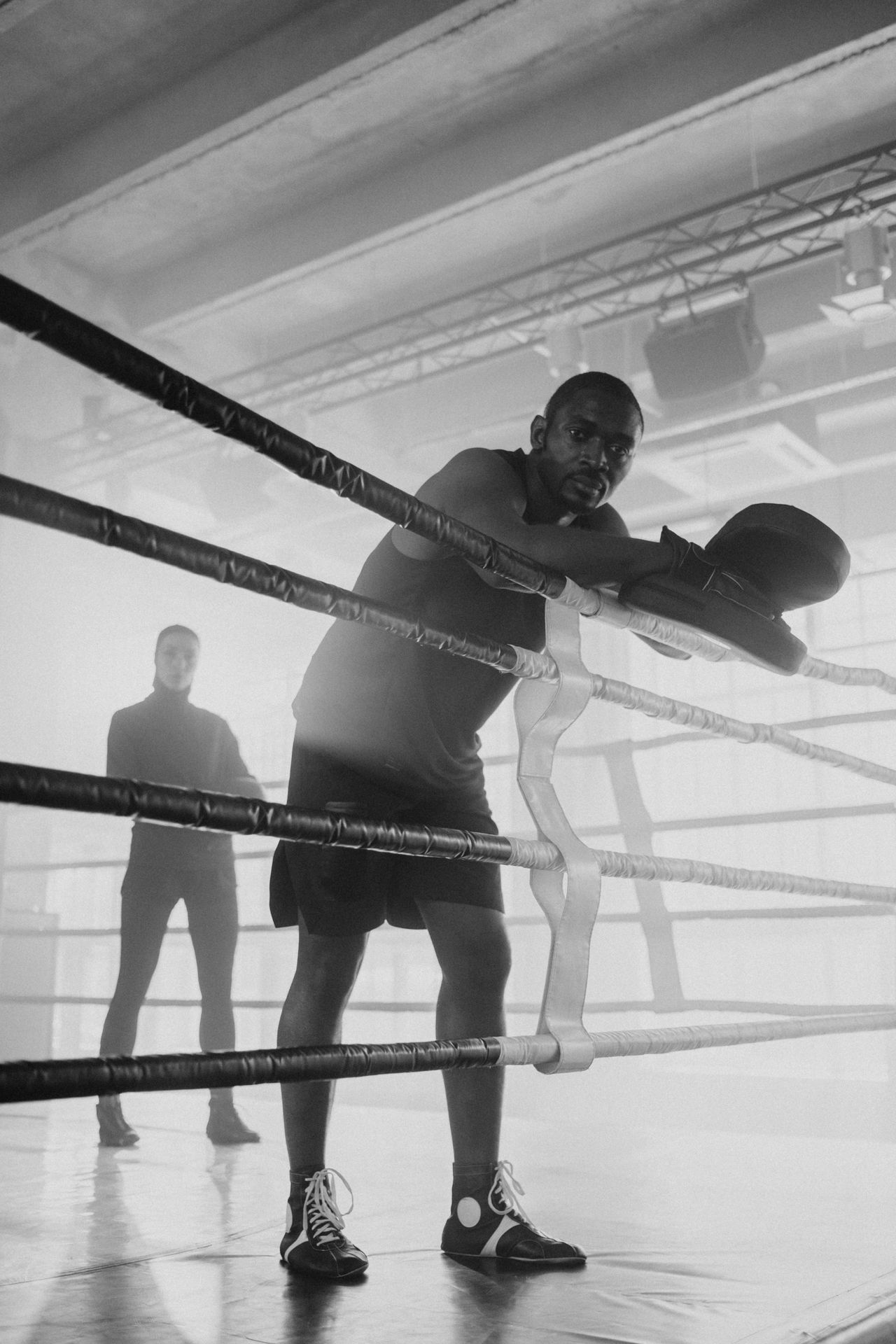
East Timor’s boxing identity is still young, but that is precisely what makes it interesting. This is not a country with a long professional boxing lineage or a deep catalog of famous champions. Timor-Leste is a developing boxing nation where the sport is tied to amateur participation, regional competition, national representation, and the gradual construction of a sporting pathway after independence. Boxing here is less about commercial prizefighting and more about presence: being seen, entering tournaments, producing firsts, and giving young athletes a way to compete internationally.
The country’s early Olympic connection gives its boxing story a distinctive starting point. Victor Ramos competed in the men’s lightweight division at the 2000 Sydney Olympics as part of the delegation of Individual Olympic Athletes connected to East Timor’s transitional status. That appearance came at a historically important moment, before Timor-Leste had the fully established sporting infrastructure of an older nation-state. Ramos’ participation gave boxing a place in the country’s earliest Olympic narrative, even if the sport itself still had years of development ahead.
For a small and relatively young country, international exposure matters enormously. Boxing cannot grow only through internal training. Fighters need to face different opponents, different rhythms, and different tactical problems. That is why Southeast Asian competition is central to East Timor’s boxing development. The SEA Games and Asian boxing events provide the country with benchmarks. They show where Timorese fighters are competitive, where they need more seasoning, and what kind of investment is required to move from participation to medals and from medals to deeper international runs.
Recent appearances by Timorese boxers in Asian competition have helped push the sport forward. When athletes from Timor-Leste enter major continental boxing events, the value is not only in the result. It is in the experience accumulated by the boxer, the coaches, and the federation. Each bout against a more established boxing country gives Timor-Leste a clearer sense of the technical and conditioning standards required. In developing boxing nations, these early steps are often the most important because they create institutional memory.
The training culture in East Timor is still forming. Boxing has to compete for attention with football, martial arts, athletics, and other sports that may have clearer participation networks. The gyms and coaches that do exist carry a heavy burden. They are responsible for basic boxing instruction, athlete discipline, tournament preparation, and often the broader work of convincing families and communities that boxing can be a legitimate sport rather than simply a dangerous activity. That education process is part of boxing development in many young sporting nations.
East Timor’s boxers also operate in a difficult regional neighborhood. Southeast Asia has serious boxing countries, including the Philippines, Thailand, Indonesia, and Vietnam, each with deeper combat-sports traditions and stronger competitive infrastructure. That makes the regional path demanding, but it also gives Timor-Leste valuable proximity to higher standards. A Timorese boxer does not have to travel to Europe or the Americas to find meaningful tests. The tests are already close by.
Professional boxing is not yet the center of East Timor’s boxing identity. The country’s more realistic short-term growth is likely to come through amateur tournaments, youth programs, national-team development, coaching education, and regional competition. Over time, a successful amateur or SEA Games medalist could inspire more fighters to enter the sport. That is often how small boxing nations build momentum: not through a full professional industry at first, but through a few visible athletes who prove that the pathway exists.
East Timor’s boxing future depends on continuity. The country needs more trained coaches, more regular domestic competition, stronger links with regional boxing bodies, and enough support to keep promising athletes active. The talent pool may be small, but small boxing nations do not need thousands of fighters to make progress. They need structure, repetition, and a few determined athletes who can turn early participation into lasting credibility. Boxing in Timor-Leste is still being built, but it already has the outline of a national story: first appearances, regional ambition, and the slow formation of a fight culture that belongs to the country itself.