Mixed martial arts in the United States is not just a local sports scene. It is the commercial, regulatory, promotional, and media center of modern MMA. The country did not invent every ingredient that built the sport, but it became the place where those ingredients were tested in public, reorganized into a regulated professional format, and sold to a global audience.
The American MMA identity is built from several overlapping traditions. Collegiate wrestling gave the sport its deepest domestic athlete pipeline. Boxing supplied its older prizefighting vocabulary, athletic commissions, venues, pay-per-view habits, and combat-sports audience. Brazilian jiu-jitsu changed the technical imagination of American fighters after the first UFC events. Muay Thai, kickboxing, karate, judo, sambo, catch wrestling, and taekwondo each found their place as the sport matured from style-versus-style experimentation into integrated cage fighting.
That blend makes the United States different from countries where MMA is primarily attached to one base discipline. In the U.S., MMA became an ecosystem. It has amateur circuits, regional promotions, elite destination gyms, collegiate wrestling rooms, suburban BJJ academies, urban boxing gyms, military-adjacent training communities, state athletic commissions, casino fight markets, major arenas, streaming cards, and the headquarters of the sport’s most influential promotion.
The United States is also a country of regional MMA identities. Las Vegas is the fight-business capital. Southern California helped shape the early gym culture and Brazilian jiu-jitsu boom. Iowa, Oklahoma, Pennsylvania, Ohio, New Jersey, and the Midwest remain tied to wrestling. Florida and Texas have become major training and event markets. New Mexico produced one of the sport’s defining destination gyms. Arizona, Colorado, New York, Louisiana, Georgia, Nevada, and California have all produced major fighters, coaches, and fight camps.
MMA in the United States is therefore best understood as both a national industry and a network of local fight cultures. It is where the sport became mainstream, but it is also where its most important internal tension remains visible: MMA is a global sport, yet the American system still shapes how many fighters are developed, promoted, regulated, and remembered.
From Denver Experiment to Regulated American Sport
The symbolic starting point for modern American MMA is Denver, Colorado, in 1993. The first UFC event introduced a broader American audience to a tournament format that placed martial arts styles against one another under a loose no-holds-barred identity. The early appeal was simple: boxing, karate, sumo, wrestling, kickboxing, and Brazilian jiu-jitsu could be tested in front of paying viewers without the old assumptions that had shaped martial arts marketing for decades.
Royce Gracie’s early UFC success forced a technical correction. American fighters, coaches, and fans had to confront the importance of grappling, submissions, positional control, guard work, and ground fighting. Brazilian jiu-jitsu schools expanded rapidly, and American martial artists who had trained mostly in striking or traditional systems began adding ground skills. At the same time, wrestlers recognized that their takedowns, balance, pressure, mat control, and scrambling ability could translate directly into the cage if they learned submissions and striking defense.
The sport’s early American period was unstable. It drew curiosity, but it also drew political and regulatory resistance. The old version of the UFC was marketed around danger and spectacle, which helped attract attention but created obvious problems with athletic commissions, cable distribution, and public legitimacy. For MMA to survive in the United States, it had to become more than a spectacle. It needed weight classes, rounds, medical standards, judging criteria, fouls, gloves, and a consistent rule set.
That transition changed everything. The adoption and spread of unified rules gave MMA a path into state-regulated combat sports. The sport became more legible to athletic commissions, broadcasters, sponsors, venues, and mainstream sports media. It also changed the athletes themselves. Fighters could no longer survive as one-style specialists. The American MMA athlete had to become a blended competitor: able to strike at range, wrestle against the fence, defend submissions, return to the feet, manage rounds, pace five-minute bursts, and understand judges’ scoring.
As MMA became more regulated, the United States turned into its main laboratory. The country’s state-by-state athletic commission system created complications, but it also gave the sport a way to grow through recognized oversight. Nevada became especially important because Las Vegas already had the casino, arena, boxing, commission, and pay-per-view infrastructure that prizefighting needed. Once MMA gained Nevada’s acceptance, the sport had a much stronger claim to legitimacy.
Wrestling Is the American MMA Backbone
The United States has produced great strikers, submission artists, and all-around fighters, but wrestling remains the country’s most important domestic contribution to MMA. No base discipline has shaped American MMA more consistently.
The reason is structural. The U.S. has a large scholastic and collegiate wrestling system that trains athletes long before they enter professional combat sports. High school and NCAA wrestling produce competitors who understand weight management, live resistance, pressure, conditioning, mat discipline, hand fighting, takedown chains, and competitive sacrifice. That background does not automatically create a complete MMA fighter, but it gives athletes a powerful base for controlling where a fight takes place.
American wrestling translated especially well to the cage. A boxer needs space. A kickboxer needs range. A jiu-jitsu player often needs either a clean takedown, a clinch entry, or a willing grappling exchange. A strong wrestler can decide whether the fight stays standing, moves to the fence, or goes to the mat. In MMA scoring, that control has often mattered enormously. Even when judging criteria evolved, the ability to dictate position remained one of the sport’s most valuable skills.
The list of American wrestling-to-MMA success stories is central to the country’s fight identity. Randy Couture, Matt Hughes, Dan Henderson, Tito Ortiz, Mark Coleman, Chuck Liddell, Cain Velasquez, Daniel Cormier, Jon Jones, Kamaru Usman, Colby Covington, Henry Cejudo, Frankie Edgar, Urijah Faber, Chad Mendes, Dominick Cruz, Ben Askren, Michael Chandler, Justin Gaethje, and many others either came directly from wrestling or were deeply shaped by wrestling culture.
Wrestling also gave American MMA a regional map. Iowa, Oklahoma, Pennsylvania, Ohio, Michigan, New Jersey, Minnesota, Missouri, Illinois, California, Arizona, and Oregon have all fed athletes into MMA through wrestling programs. Some fighters came from elite NCAA backgrounds. Others came from smaller college programs, junior colleges, high school wrestling rooms, or lifelong grappling environments that taught them how to compete physically before they ever entered an MMA gym.
This is why American MMA often looks different from Brazilian, Dutch, Thai, Japanese, Russian, or Dagestani MMA. The American fighter archetype is not always the smoothest technician in one traditional martial art. It is often the wrestler-athlete who learns striking, submission defense, cage pressure, and round management. At the highest level, that formula has produced champions across multiple eras.
Brazilian Jiu-Jitsu, Boxing, and the American Hybrid Style
If wrestling gave American MMA its domestic engine, Brazilian jiu-jitsu gave it a technical shock. The early UFCs demonstrated that many American martial artists were unprepared for submissions, guard play, back control, chokes, and joint locks. BJJ did not simply add a new discipline to the market. It changed what counted as a complete fighter.
Southern California became one of the most important centers of that transformation. The region’s martial arts culture, access to Brazilian instructors, entertainment economy, and large fitness market helped BJJ expand beyond small specialist communities. Over time, jiu-jitsu academies became part of the American MMA landscape in nearly every major metro area. Even fighters who never identified primarily as BJJ athletes had to learn enough grappling to survive.
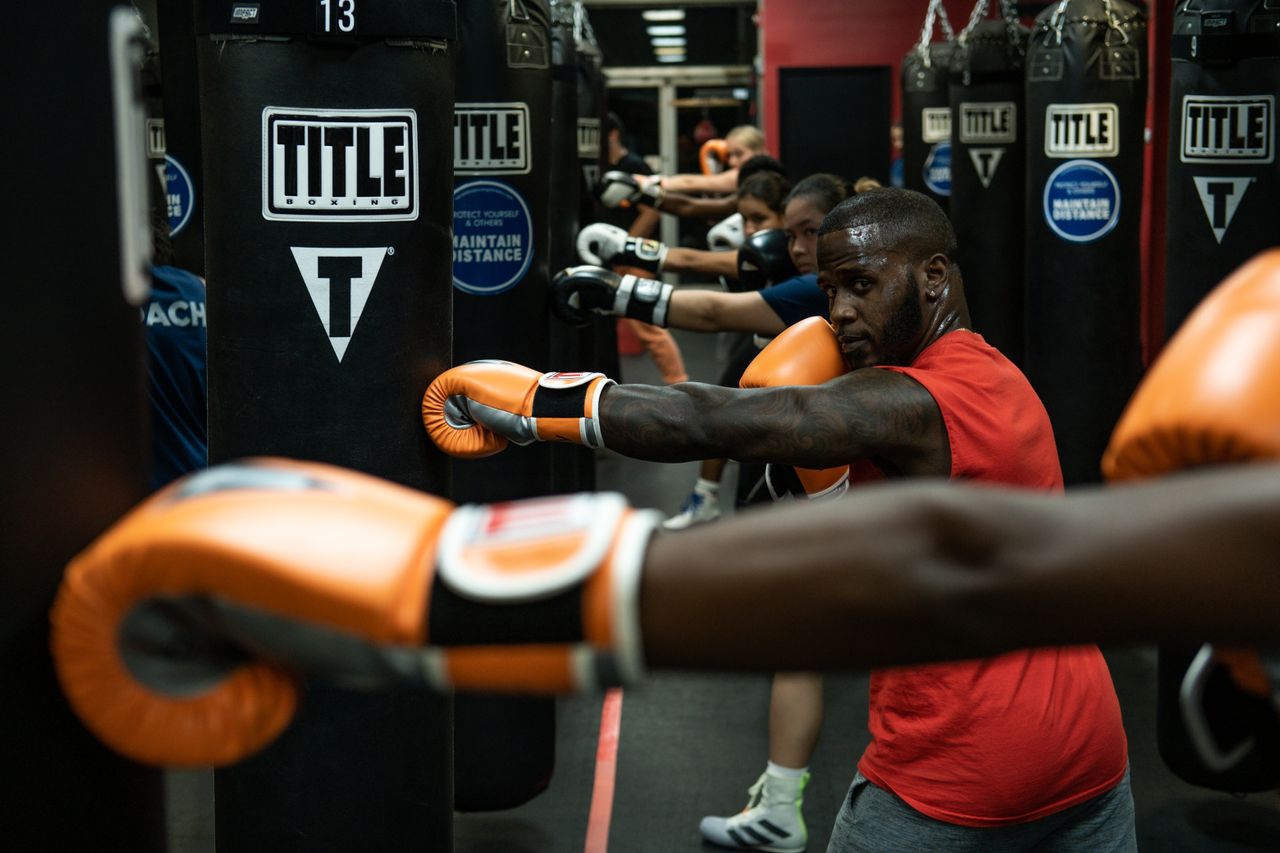
Boxing’s role was different but just as important. American boxing had the deeper professional tradition, the older gym culture, and the established prizefighting infrastructure. MMA borrowed from boxing’s promotional language, venue model, commission oversight, pay-per-view structure, and training habits. Many MMA gyms built their striking programs around boxing fundamentals: stance, jab, footwork, head movement, combinations, pocket defense, and conditioning.
But MMA striking in the United States developed into something distinct from pure boxing. Fighters had to account for takedowns, smaller gloves, kicks, clinch knees, cage pressure, and the risk of overcommitting. The American hybrid style became less about preserving the purity of one art and more about making techniques work under MMA constraints.
Kickboxing and Muay Thai also became essential, especially as the sport matured. Low kicks, body kicks, elbows, knees, clinch work, checking kicks, and stance-switching became normal parts of elite MMA. Karate and taekwondo contributed through distance management, blitzing entries, side kicks, spinning attacks, and unconventional rhythm, especially through fighters who used movement to disrupt wrestling-heavy opponents.
The result was the American MMA gym: part wrestling room, part jiu-jitsu academy, part boxing gym, part strength-and-conditioning facility, part tactical laboratory. The best programs stopped treating MMA as several arts stacked on top of one another. They trained MMA as its own sport.
The Gyms That Built the American MMA Map
The United States became a destination for fighters because of its gym infrastructure. Athletes from around the world have moved to or spent time in the U.S. to access coaching, sparring partners, performance facilities, management networks, and promotional visibility. That is one of the country’s biggest advantages: American MMA is not limited to American-born fighters. It is also a training market for global talent.
Several gyms and teams shaped the sport’s development. American Top Team in South Florida became one of the most important large-team models in MMA, drawing fighters across weight classes, nationalities, and disciplines. Jackson Wink MMA in Albuquerque helped define the destination-camp model, where fighters moved to a specific city to access elite coaching and high-level training partners. AKA in San Jose became closely associated with wrestling-heavy champions and pressure fighters. Team Alpha Male in Sacramento helped build a lighter-weight powerhouse around wrestling, scrambles, speed, and aggressive transitions.
Other programs have mattered in different ways. Xtreme Couture in Las Vegas connected fighter development to the city’s broader fight economy. Roufusport in Milwaukee carried a strong striking identity into MMA. The MMA Lab in Arizona became known for technical development and well-rounded coaching. Alliance MMA in San Diego, Kings MMA in Southern California, Serra-Longo in New York, Elevation Fight Team in Colorado, Factory X in Colorado, and many others helped make the U.S. a multi-center MMA country rather than a one-city scene.
Las Vegas sits above the rest as the American fight capital. It is not only a place where fighters train. It is where the UFC operates, where major fight weeks happen, where athletes come for media obligations, where management and promotion intersect, and where the sport’s business rhythm is most visible. The UFC Performance Institute added another layer by making Las Vegas a center for performance testing, recovery, nutrition, physical therapy, and sport science.
At the grassroots level, the American gym map is even wider. A fighter may start in a high school wrestling room in Pennsylvania, box in a local gym in Ohio, train BJJ in a suburban academy in Texas, take amateur MMA fights in the Southeast, move to Florida or Nevada for a deeper camp, and eventually fight on a regional card feeding into the UFC, PFL, LFA, Cage Fury, or another promotion. That mobility is a defining feature of American MMA.
Fighters Who Made the United States a Champion-Producing Country
The United States has produced champions in every major era of modern MMA. In the early years, fighters such as Ken Shamrock, Dan Severn, Mark Coleman, Randy Couture, Frank Shamrock, Tito Ortiz, Matt Hughes, Chuck Liddell, and Rich Franklin helped move the sport from spectacle toward recognizable competition. Many were not polished modern MMA athletes by today’s standards, but they were essential in building the American competitive identity.
The next phases brought deeper specialization and better-rounded champions. BJ Penn, though deeply tied to Brazilian jiu-jitsu, represented the American ability to absorb global techniques and produce elite MMA skill. Urijah Faber helped establish lighter-weight visibility in the U.S. before the UFC fully invested in those divisions. Dominick Cruz brought footwork, angles, and tactical movement to bantamweight. Frankie Edgar used pace, boxing, wrestling, and durability to become one of the defining lightweights and featherweights of his era.
Jon Jones became one of the most talented and controversial fighters in MMA history, combining reach, creativity, wrestling, clinch attacks, elbows, kicks, and fight IQ in a way that changed expectations for light heavyweight. Daniel Cormier brought Olympic-level wrestling, heavyweight toughness, broadcasting presence, and championship success across divisions. Stipe Miocic became one of the most accomplished heavyweights in UFC history while representing the blue-collar, wrestler-boxer side of American MMA.
Women’s MMA in the United States also shaped the global sport. Ronda Rousey became the central figure in bringing women’s divisions into the UFC mainstream, using Olympic judo and armbar dominance to become one of MMA’s biggest stars. Miesha Tate, Holly Holm, Rose Namajunas, Carla Esparza, Julianna Peña, Zhang Weili’s U.S.-based training connections, and many American-based fighters helped build the women’s side of the sport through title fights, rivalries, and visibility.
The U.S. has also produced major stars whose identities are tied to specific regions and fighting cultures: Nate and Nick Diaz in Northern California, Jorge Masvidal in Miami, Max Holloway as a Hawaiian icon within the American MMA landscape, Dustin Poirier in Louisiana, Justin Gaethje in Arizona and Colorado, Sean O’Malley in Montana and Arizona, Aljamain Sterling in New York, and Demetrious Johnson through the Pacific Northwest and broader American training system.
The depth matters more than any single list. The United States has produced wrestlers, strikers, submission specialists, champions, contenders, journeymen, prospects, coaches, and media personalities across every weight class. It is not the only great MMA country, but it remains the deepest professional MMA market in terms of infrastructure, opportunity, and promotional access.
Regional Promotions and the American Development Ladder
The UFC dominates public attention, but American MMA depends on the regional system beneath it. Most fighters do not begin on global broadcasts. They begin on local amateur cards, small professional shows, casino events, fairgrounds cards, tribal venue shows, athletic commission-regulated events, and regional promotions that help prospects build records.
Promotions such as LFA, Cage Fury FC, Fury FC, Titan FC, CES MMA, King of the Cage, Ring of Combat, Legacy FC, Resurrection Fighting Alliance, and many others have played roles in the American development ladder. Some became direct feeder systems for the UFC. Others helped regional fighters gain experience, test themselves against better opponents, and become visible to matchmakers.
The American system is uneven because combat sports regulation varies by state. Some states have long histories of active athletic commissions and frequent events. Others have smaller scenes or less consistent regional promotion. This creates different development realities. A fighter in California, Texas, Florida, Nevada, New Jersey, Pennsylvania, Ohio, or New York may have more accessible local opportunities than a fighter in a state with fewer shows and less MMA infrastructure.
The amateur scene is especially important. Amateur MMA allows athletes to test whether their wrestling, boxing, BJJ, or kickboxing skills actually hold up under full mixed rules. It also gives coaches a way to develop fighters gradually before the professional level. In strong regions, amateurs can build experience across multiple local promotions before turning pro. In weaker regions, fighters often travel across state lines or relocate to deeper markets.
PFL’s acquisition of Bellator also changed the American promotion landscape by consolidating two of the sport’s most visible alternatives to the UFC. The UFC remains the dominant global brand, but PFL, Bellator’s legacy roster, LFA, regional promotions, and international organizations all give American fighters multiple possible routes. Some chase the UFC directly. Others build careers through tournaments, international shows, short-notice opportunities, or cross-promotional movement.
Las Vegas, New York, California, and the Fight Economy
The United States is not only a fighter-producing country. It is the world’s most important MMA event market.
Las Vegas is the center of that market. The city’s relationship with boxing made it a natural home for MMA once the sport became regulated. Casino venues, arena infrastructure, tourism, sports betting, media access, and the Nevada commission all helped Las Vegas become the place where the UFC could stage major cards, build fight weeks, and turn championship bouts into destination events. T-Mobile Arena, MGM Grand Garden Arena, Mandalay Bay, and the UFC Apex each represent different parts of the city’s MMA identity, from major pay-per-view spectacles to controlled broadcast events.
New York became symbolically important after MMA was legalized in the state. Madison Square Garden cards gave the sport a powerful mainstream stage in one of the country’s most important media markets. California remains essential because of its fighter production, gym culture, martial arts history, and major-event capacity. Southern California in particular has long been one of the sport’s great training and talent regions.
Florida and Texas have grown into major event and training states. Florida combines large gyms, veteran fighters, international athletes, and a strong combat-sports audience. Texas offers major arenas, a large population, and an active regional scene. Arizona, Colorado, New Mexico, Ohio, Pennsylvania, New Jersey, Louisiana, Georgia, and the Pacific Northwest each add their own layers to the American MMA map.
The fight economy extends beyond the cage. MMA in the United States includes managers, broadcasters, gyms, supplement companies, apparel brands, podcasters, YouTube analysts, referees, judges, cutmen, nutritionists, strength coaches, physical therapists, photographers, journalists, and social media creators. That surrounding industry helps explain why fighters from other countries often spend time in the U.S. even when their fighting identity remains rooted elsewhere.
The American Fan Base and MMA’s Place in Sports Culture
MMA’s place in American sports culture is unusual. It is mainstream enough to fill major arenas, headline pay-per-views, generate debate on national sports shows, and produce crossover celebrities. At the same time, it still carries a subcultural edge. Its fan base includes wrestling families, boxing fans, BJJ practitioners, gamblers, military communities, fitness audiences, martial arts hobbyists, and viewers drawn to individual combat more than team sports.
The American fan base also tends to be promotion-aware. Many casual fans follow the UFC more closely than they follow MMA as a whole. That creates a brand-driven sports culture where the promotion can be more visible than the broader ecosystem. Hardcore fans track regional prospects, international organizations, grappling competitions, kickboxing crossovers, and gym affiliations. Casual fans often enter through UFC champions, viral knockouts, rivalries, reality television, short clips, or major pay-per-view events.
The Ultimate Fighter helped build the sport’s American audience by giving viewers a reality-TV doorway into training, weight cutting, coaching, house conflict, and the emotional structure of a fight career. Later, social media changed the fan relationship again. Fighters no longer needed only traditional sports coverage to build followings. They could create their own audience through interviews, podcasts, gym footage, trash talk, lifestyle content, and direct fan interaction.
American MMA fandom is also heavily regional when a fighter gives fans a reason to attach locally. Louisiana rallied behind Dustin Poirier. Hawaii treats Max Holloway as more than a standard contender. Stockton became inseparable from the Diaz brothers. Cleveland had Stipe Miocic. Long Island had Chris Weidman, Aljamain Sterling, and the Serra-Longo orbit. New Mexico became linked with Holly Holm, Carlos Condit, Diego Sanchez, and Jackson Wink. These local identities matter because MMA is an individual sport that often borrows emotional geography from hometowns, gyms, and states.
Where American MMA Goes Next
The future of MMA in the United States is not simply about whether the sport will grow. It is already established. The more important question is how the American system will evolve as MMA becomes more technically mature and more global.
The first major trend is specialization inside integration. Early MMA rewarded fighters who could combine a few major skills better than opponents. Modern MMA increasingly rewards athletes who have trained the sport from a younger age, understand cage-specific grappling, blend striking into takedowns, defend submissions automatically, and manage five-minute rounds with tactical precision. The next generation of American fighters is less likely to be a pure wrestler who adds boxing late or a pure BJJ player who learns takedowns after turning pro. More athletes are entering MMA gyms earlier.
The second trend is continued competition between domestic and international pipelines. The United States still has the best overall MMA business infrastructure, but other regions are producing elite fighters through wrestling, sambo, judo, Muay Thai, kickboxing, and national combat-sports systems. American fighters no longer compete in a world where U.S. training access alone guarantees an advantage. They face Dagestani wrestlers, Brazilian grapplers, British and Australian strikers, French athletes, Mexican boxers, African champions, Georgian grapplers, Central Asian prospects, and fighters from countries where MMA is now a serious professional path.
The third trend is the growth of performance science and professionalization. The UFC Performance Institute and similar high-end resources have changed expectations around recovery, nutrition, injury management, analytics, and training structure. At the same time, many fighters still come from modest gyms, regional teams, and financially difficult circumstances. American MMA contains both cutting-edge sport science and old-school grind culture.
The fourth trend is broader competition for attention. MMA now sits in a crowded combat-sports marketplace that includes boxing, bare-knuckle boxing, submission grappling, influencer boxing, kickboxing, Muay Thai, and hybrid events. The UFC remains the central brand, but the broader American fight audience is more fragmented than it once was.
Even with those changes, the United States remains the most important MMA country in the world by infrastructure and influence. It has the leading promotion, the deepest event economy, a massive wrestling base, major training destinations, a large fan market, and decades of accumulated fight culture. The American scene is too large to be reduced to one style, one city, one promotion, or one generation of fighters.
MMA in the United States began as a public argument about which martial art worked best. It became a regulated sport, then a television product, then a pay-per-view business, then a global athletic system. Today, its American identity is not just about producing champions. It is about shaping the sport’s rules, markets, gyms, media habits, athlete pathways, and competitive expectations. For any serious map of world MMA, the United States remains the central reference point.