Taiwan is not a classic professional boxing country in the mold of Mexico, Puerto Rico, the Philippines, Japan, or the United States. Its boxing identity is newer, narrower, and more strongly tied to the amateur and Olympic side of the sport. The island’s modern reputation has been built less through pay-per-view stars and more through disciplined international tournament fighters, especially women, who turned Taiwan from a quiet boxing participant into a legitimate medal-producing program.
That shift matters because boxing in Taiwan has often existed outside the country’s main sporting bloodstream. Baseball has the deeper national reach. Basketball has the schoolyard and professional-league visibility. Martial arts, taekwondo, judo, and fitness-oriented combat sports also compete for attention. Boxing had to carve its place through performance. It did that by producing elite fighters who could win at the Asian Games, World Championships, and Olympics.
The defining modern fact is simple: Taiwan’s boxing story changed when its women began winning. Lin Yu-ting’s gold medal in the women’s 57 kg division at Paris 2024 gave Taiwan its first Olympic boxing gold, while Chen Nien-chin added bronze at women’s 66 kg. Huang Hsiao-wen had already won bronze at Tokyo 2020, making the 2020s the strongest era in Taiwan’s Olympic boxing history.
Taiwan’s boxing identity, then, is not built around smoky arenas, long professional championship lineages, or a massive domestic fight economy. It is built around the amateur ring, the national team, technical development, and the rise of female fighters who have given the sport a much larger public profile.
From a Marginal Fight Sport to a Serious Medal Pathway
Boxing in Taiwan developed in a sporting culture where it rarely had first claim on the country’s best-known athletes. The sport existed through schools, military-style training habits, university programs, amateur clubs, and national competition structures, but it did not have the same broad professional ecosystem found in countries where boxing is a major commercial sport. For much of its history, boxing in Taiwan was respected more as a demanding discipline than followed as a mainstream entertainment product.
That made international competition especially important. In places with a limited professional scene, the national team becomes the sport’s public face. Fighters are not judged primarily by ticket sales or domestic celebrity. They are judged by whether they can win internationally against athletes from countries with deeper boxing infrastructure.
Taiwan’s breakthrough did not happen all at once. It came through the accumulation of amateur credibility. Boxers such as Chen Nien-chin, Huang Hsiao-wen, Lin Yu-ting, Wu Shih-yi, and Lai Chu-en gradually made Taiwan more visible in Asian and world boxing. Their results showed that Taiwan could compete not only as a participant, but as a country capable of producing technically prepared, mentally resilient tournament fighters.
The shift was especially clear in women’s boxing. Taiwan did not need a massive boxing industry to become relevant. It needed strong coaching, committed athletes, international exposure, and a structure that could turn promising fighters into medal threats. By the 2020s, that formula had given Taiwan one of the most interesting women’s boxing stories in Asia.
Lin Yu-ting and the New Standard for Taiwanese Boxing
Lin Yu-ting stands at the center of Taiwan’s modern boxing identity. Her Olympic gold at Paris 2024 was not just an individual achievement. It reset the standard for what Taiwanese boxing could claim on the world stage. Before Lin, Taiwan had Olympic boxing medals. After Lin, Taiwan had an Olympic boxing champion.
Her style also matters. Lin is not a symbol of raw power or brawling mythology. She represents the tournament boxer: long, composed, disciplined, defensively aware, and able to win rounds cleanly under international scoring. That type of fighter fits Taiwan’s boxing profile. The country’s best athletes often succeed through structure, distance control, tactical patience, and the ability to perform across several bouts rather than through a single dramatic knockout.
Lin’s success also expanded the public image of boxing in Taiwan. A sport that could seem niche or specialized became part of the national Olympic conversation. Her gold helped place boxing alongside Taiwan’s other international sporting successes and gave young fighters a visible model of where the sport could lead. The Sports Administration later named Lin Yu-ting Best Female Athlete at the 2024 Sports Elite Awards, another sign of how strongly her Olympic victory resonated beyond boxing circles.
The most important legacy of Lin’s gold may be practical. Olympic champions create credibility for gyms, coaches, federations, and youth programs. They make parents more willing to see boxing as a serious sport rather than only a risky activity. They make schools and athletic departments more willing to invest. They make young fighters believe that boxing from Taiwan can end on the biggest podium in the sport.
The Fighters Who Built Taiwan’s Modern Boxing Reputation
Taiwan’s boxing reputation is not a one-fighter story. Lin Yu-ting became the headline name, but the country’s rise was built by a generation of boxers who gave Taiwan credibility across multiple weight classes and tournaments.
Chen Nien-chin is one of the central figures. She was already important before Paris 2024, but her Olympic bronze in the women’s 66 kg division gave Taiwan another major boxing medal and reinforced the idea that the country’s women’s program had real depth. Chen later won Asian Boxing Championships gold in the women’s 65 kg final in Mongolia in 2026, showing that her Olympic success was part of a sustained international career rather than a single tournament peak.
Huang Hsiao-wen also belongs near the front of any Taiwan boxing discussion. Her bronze medal at Tokyo 2020 was a landmark result and helped set the stage for the wider recognition that followed in Paris. Huang has remained a major name in international women’s boxing, and her presence gives Taiwan a broader identity than one Olympic champion alone.
Wu Shih-yi adds another layer to the picture. She has been part of the same generation of Taiwanese women who raised the country’s boxing profile through international competition. Alongside Lin, Chen, and Huang, she represents the depth of the women’s national team and the way Taiwan’s boxing rise has been collective, not accidental.
On the men’s side, Lai Chu-en has been one of Taiwan’s more visible modern fighters. He competed at the Olympic level and won bronze at the 2022 Asian Elite Boxing Championships, a result reported as Taiwan’s first men’s medal at that event in 11 years. His career matters because it keeps the men’s program connected to the wider story, even as women’s boxing has clearly become Taiwan’s strongest international lane.
The Training Culture Behind Taiwan’s Boxing Rise
The foundation of Taiwanese boxing is not a sprawling professional gym circuit. It is a development structure built through schools, clubs, universities, coaches, and national-team pathways. That gives the sport a different feel from countries where boxing grows out of neighborhood gyms tied to local professional promoters. Taiwan’s model is more institutional and tournament-oriented.
Young fighters often enter boxing through school programs or local clubs before moving into higher-level competition. The pathway rewards discipline and repeatable technique. Footwork, balance, guard position, range control, and scoring efficiency matter because the main goal is to win amateur bouts under international rules. The gym culture is serious, but it is not always commercially visible to casual sports fans.
Universities and sports-focused educational institutions also play a role. Elite athletes in Taiwan often develop through a blend of academic, athletic, and national-team structures. For boxing, that creates a pathway where fighters can train at high intensity while still remaining connected to formal education and institutional support. This is one reason Taiwan’s boxing identity feels closer to Olympic sport development than to a professional prizefighting economy.
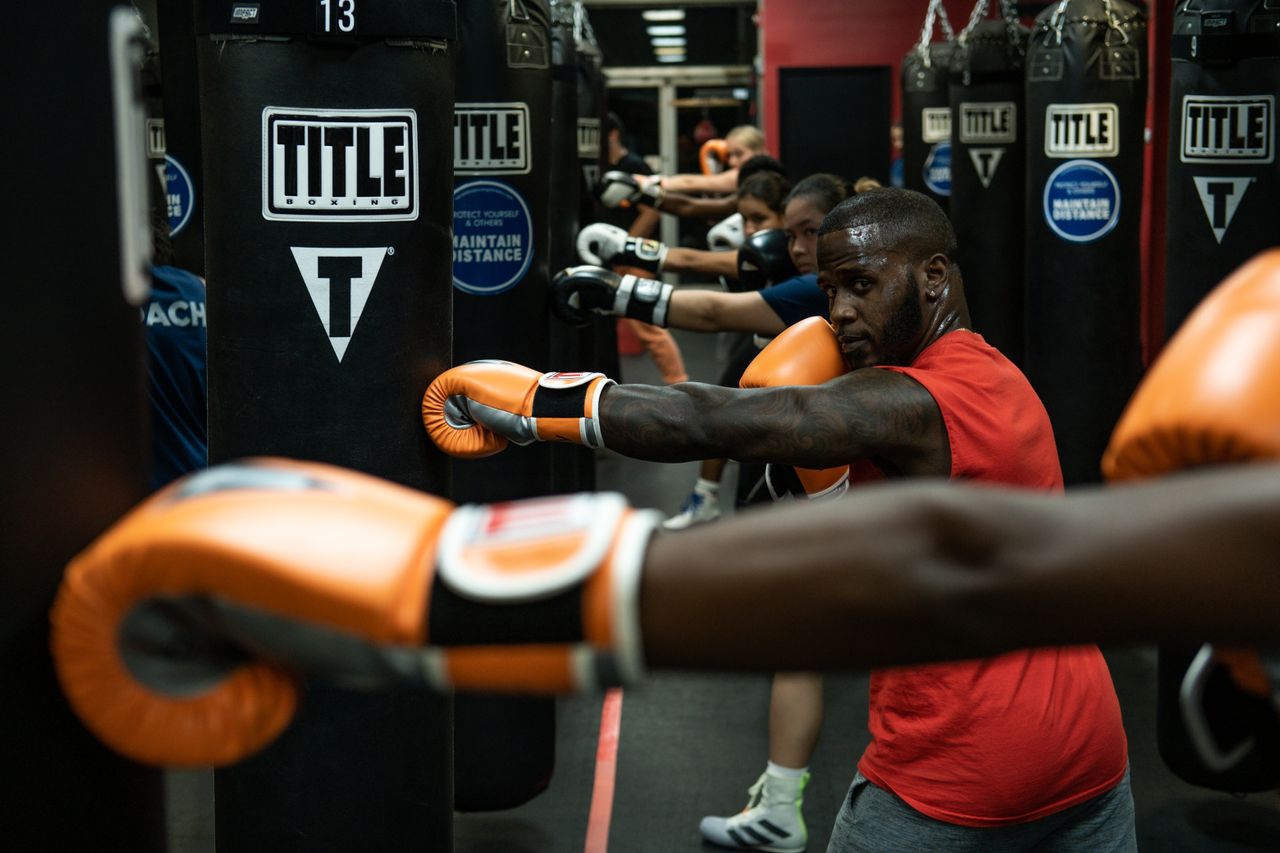
At the recreational level, boxing has also benefited from the broader fitness boom. In Taipei, New Taipei, Taoyuan, Taichung, Kaohsiung, and other urban centers, boxing is no longer only for competitive fighters. It is also a fitness discipline, a self-defense activity, and a combat-sports entry point for adults who may never compete. The growth of commercial boxing gyms gives the sport more public visibility, even if the elite competitive pipeline remains concentrated in amateur and national-team settings.
That split is important. Taiwan has two boxing worlds growing at the same time: the elite amateur world that produces Olympic-level fighters, and the urban fitness world that introduces boxing to a wider public. The more those worlds overlap through coaching, events, youth programs, and local shows, the stronger the sport’s domestic base can become.
Professional Boxing Is Still Finding Its Shape
Taiwan’s professional boxing scene remains much less developed than its amateur and Olympic profile. That does not mean professional boxing is absent. It means the professional side is still forming its identity, infrastructure, and audience.
The launch of Taiwan’s first professional boxing league, Carry Fighting Championship, in 2024 was a significant marker because it suggested a more organized attempt to build domestic pro boxing events. The league’s early cards in Taipei pointed toward a possible future where Taiwan could give local fighters more chances to compete professionally at home rather than relying mainly on overseas opportunities.
The challenge is that professional boxing requires more than fighters. It needs promoters, venues, sponsors, broadcasters, athletic regulation, matchmaking depth, and fans who understand the difference between amateur success and professional progression. Taiwan has athletes with credibility, but building a regular fight economy is a different project.
This is where Taiwan differs sharply from nearby Japan and the Philippines. Japan has one of the strongest professional boxing systems in the world, with deep gym structures, domestic titles, world champions, and regular fight cards. The Philippines has a massive boxing culture shaped by professional icons and regional fight circuits. Taiwan’s pro scene is smaller, newer, and still seeking its place.
That also creates opportunity. Taiwan does not need to copy another country exactly. Its professional boxing future could develop around Taipei-based events, international matchups, regional Asian cards, and fighters transitioning from the amateur system. If promoters can connect Taiwan’s Olympic credibility with watchable local fight nights, the sport could build a more stable domestic audience.
Women’s Boxing Gives Taiwan Its Strongest Global Voice
Women’s boxing is the defining advantage of Taiwan’s modern boxing scene. In many countries, women’s boxing has had to fight for attention after men’s boxing built the sport’s public identity. Taiwan’s path is different. The women became the proof of concept.
Lin Yu-ting, Chen Nien-chin, Huang Hsiao-wen, and Wu Shih-yi have made women’s boxing the most successful and recognizable part of Taiwan’s boxing program. Their achievements have given the country international medals, media visibility, and a clear competitive brand. Taiwan is now understood in boxing circles as a country that can produce high-level female amateur fighters.
That matters for recruitment. When young girls in Taiwan look at boxing, they can see athletes from their own country who have won at the highest level. That changes the psychology of participation. Boxing becomes less like an imported combat sport and more like a real pathway for Taiwanese athletes with ambition, discipline, and competitive toughness.
It also changes coaching priorities. A country with proven women’s boxing success has reason to keep investing in female development, weight-class depth, and international tournament exposure. The next stage is not simply finding another Lin Yu-ting. It is building enough depth that Taiwan can remain competitive across several divisions and Olympic cycles.
The strength of Taiwan’s women’s program also gives the country a distinctive identity in Asia. In a region with strong boxing nations such as China, India, Kazakhstan, Uzbekistan, Mongolia, Japan, Thailand, and the Philippines, Taiwan has found a lane where it can be taken seriously. It may not dominate the sport across every category, but in women’s amateur boxing, it has already become relevant.
Taiwan’s Place in Asian and World Boxing
Taiwan’s boxing future will be shaped by its place in Asian competition. The regional field is demanding. Central Asian countries bring deep amateur systems. Japan brings elite professional and amateur structure. The Philippines brings long boxing tradition. China and India bring scale, funding, and improving women’s programs. Mongolia, Thailand, South Korea, and other countries add further depth to continental events.
For Taiwan, that environment is both a challenge and an advantage. The competition is difficult, but it gives Taiwanese fighters regular exposure to world-class styles. A boxer who can win in Asia is already being tested against some of the strongest amateur boxing nations in the world.
Taiwan’s best path is likely to remain technical and selective. The country does not have the population size of China or India, nor the deep professional boxing culture of Japan or the Philippines. It has to win through coaching quality, athlete identification, international experience, and intelligent support around its top fighters.
That approach has already worked. Taiwan’s Paris 2024 Olympic team finished with two golds and five bronze medals across all sports, one of its best Olympic performances, and boxing was central to that result. Lin Yu-ting’s gold and Chen Nien-chin’s bronze made the sport part of Taiwan’s broader Olympic achievement rather than a side story.
Internationally, Taiwan’s boxers compete under the name Chinese Taipei in Olympic and many global sporting contexts. For fans at home, however, their victories are widely understood as Taiwanese sporting achievements. That gives boxing an added emotional dimension. When a Taiwanese boxer wins internationally, the result carries both athletic meaning and national visibility.
The Future of Boxing in Taiwan
Taiwan’s boxing future depends on whether the country can turn a golden era of individual achievement into a deeper sporting ecosystem. Olympic medals create attention, but attention has to be converted into participation, coaching, facilities, events, and long-term athlete support.
The first priority is sustaining the amateur pipeline. Taiwan’s strongest results have come from Olympic-style boxing, so the country needs to keep developing young fighters through schools, clubs, universities, and national competitions. The sport must also protect the coaching knowledge that helped produce its current generation. When a smaller boxing country finds a successful formula, retaining and spreading that expertise becomes essential.
The second priority is broadening the base. More recreational boxing gyms can help introduce the sport to adults and young athletes, but the competitive pathway has to remain visible. A person who starts boxing for fitness should be able to find amateur coaching if they show talent. A student who enters through a school club should be able to see a path toward national competition. The wider the base, the more likely Taiwan is to find its next elite fighters.
The third priority is developing the professional scene carefully. Taiwan does not need to become a major global prizefight capital to have a useful professional boxing market. Regular, well-run cards in Taipei and other cities would help fighters gain experience, give fans a reason to follow the sport domestically, and create opportunities for boxers who finish their amateur careers but still have competitive ambitions.
The final priority is making women’s boxing a permanent strength rather than a temporary peak. Taiwan has already produced a generation that changed the sport’s image. The next step is to make that success repeatable. If young fighters can follow Lin Yu-ting, Chen Nien-chin, Huang Hsiao-wen, and Wu Shih-yi into international competition, Taiwan will remain one of Asia’s most interesting women’s boxing countries.
Taiwan’s boxing story is still being written. It is not a traditional prizefighting nation, and it does not need to pretend to be one. Its identity is sharper than that: an island boxing program that found its global voice through the Olympic ring, technical discipline, and a remarkable generation of women who made the sport matter in a new way.